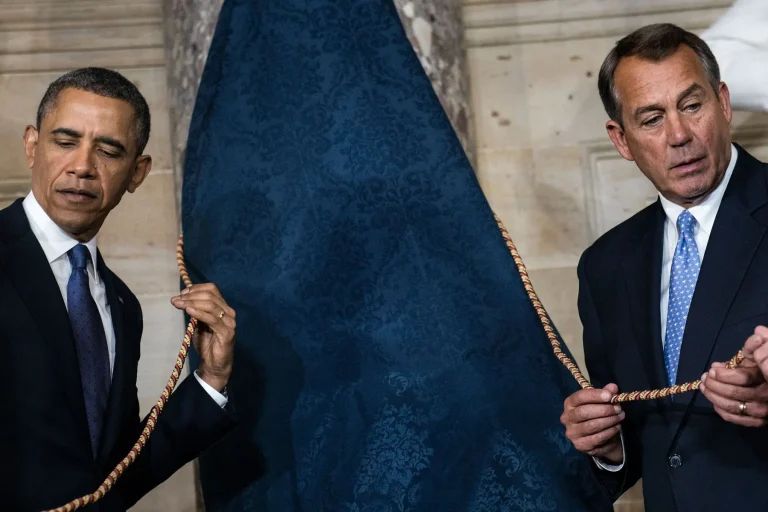
The U.S. political system operates as a federal republic characterised by the separation of powers across three distinct branches: the executive, legislative, and judicial. This architecture, inspired by Montesquieu’s work, facilitates a division of authority that aims to prevent any single entity from exerting autocratic rule. Each branch possesses its suite of powers and responsibilities, alongside a system of checks and balances designed to ensure that each can limit the actions of the others. This intricate structure is essential for maintaining the democratic principles upon which the United States was founded.
The U.S. operates predominantly under a two-party system, dominated by the Republican and Democratic parties, while also accommodating minor parties such as the Green Party and Libertarians. This political framework reflects the country’s commitment to federalism, whereby sovereignty is divided between the federal government and individual states. Crucially, the Tenth Amendment reserves powers not delegated to the federal government by the Constitution for the states and the people, acknowledging the role of state sovereignty within the federation.
Legal Framework (UK Perspective)
There is no specific legal framework emanating from the United Kingdom that governs American politics, as the U.S. operates as a sovereign entity guided by its Constitution. The principles of governance in the United States are independent of UK laws and regulations. Each state is mandated to uphold a republican form of government, although this does not necessitate adherence to the precise three-branch model found at the federal level.
From a UK observer’s perspective, the tripartite system presents a noteworthy contrast to the parliamentary systems typically observed in the UK. Congress serves as the legislative body, the President occupies the executive seat, and the Supreme Court represents the judiciary. This distinction arises out of the necessity for checks and balances that differ significantly from the UK system, where parliamentary supremacy prevails.
Responsible Authorities
Understanding the structure of the U.S. government necessitates a closer examination of each of the three branches and their respective authorities. Below is a summary of their key functions and responsibilities.
| Branch | Key Functions |
|---|---|
| Legislative Branch (Congress) | Responsible for writing laws, allocating funds, declaring war, regulating commerce, and controlling taxes and spending. Comprised of the House of Representatives (435 members) and the Senate (100 members). |
| Executive Branch | Led by the President, this branch enforces laws. The President, elected by an Electoral College, can veto legislation and nominates judges and agency heads. |
| Judicial Branch | Consists of the Supreme Court and lower federal courts, responsible for interpreting laws and the Constitution. Can rule laws as unconstitutional. |
Headquartered in Washington, D.C., all branches interrelate, relying on a system of checks and balances that ensure accountability and cooperation among them.
Current Rules (as of search data up to September 2025)
The structure of elections, lawmaking, and the overarching checks and balances within the U.S. political landscape are informed by a set of current rules. Electoral mechanisms, legislative processes, and the procedural workings of checks are crucial to understanding how the system operates.
-
Elections: Senators and Representatives are elected directly through popular vote, with direct elections for Senate formally established following the 17th Amendment in 1913. In contrast, the President is elected via the Electoral College, where electors are allocated based on congressional delegation, indicating that a candidate can win the presidency without securing the national popular vote.
-
Lawmaking: Proposed legislation must pass through both the House and Senate, where a majority vote is required. Any discrepancies between the two chambers are resolved in conference committees prior to presidential review. The President can either sign the bill into law or issue a veto.
-
Checks and Balances: A critical aspect of the U.S. political system, the checks and balances allow the President to veto laws while Congress holds the power to override such vetoes, confirm judicial nominees, and initiate impeachment proceedings against federal officials, including the President. The judiciary has the authority to assess the constitutionality of laws passed.
-
Bicameral Legislature: The House of Representatives apportions representation by population, while the Senate ensures each state has equal representation, thereby balancing the influences of populous and less populous states within the federal structure.
Recent Changes
Attention to changes in the political system is essential for comprehending its current status. Post-1913, there have been no major structural changes, especially regarding the mechanisms of electoral processes and legislative structures. The latest information accessible, up to September 2025, indicates a stable continuity in the operation of the three-branch model and the federalist structure essential to American governance.
Most significantly for observers and participants in the political system, the systems governing elections have not deviated from their established procedures over a century, reinforcing the deeply entrenched principles of the Constitution.
Risks
The U.S. political system, while intricately designed to prevent power concentration, is not without its risks and vulnerabilities.
-
Power Concentration: One potential risk is the concentration of power within a single branch, which could serve to undermine the effectiveness of the system of checks. An unchecked President, for instance, might operate without the necessary Congressional oversight or judicial review, leading to potential overreach.
-
Electoral College: The Electoral College presents an inherent risk to democratic representation. A candidate may secure the presidency without achieving a national popular vote majority, engendering feelings of disenfranchisement among voters.
-
Gridlock: Inherent to the bicameral structure, the potential for legislative gridlock emerges when control of the House and Senate is divided between opposing parties, or when majorities within each chamber differ on key legislation.
-
Impeachment and Removal: The processes for impeachment and removal are fraught with difficulties, which can make it challenging to hold leaders accountable. This rarity can also lead to perceptions of partisanship that deter meaningful checks on executive power.
Practical Implications
The practical implications of the U.S. political system are noteworthy, affecting governance efficiency, citizen participation, and the relationship between federal and state authorities.
-
Governance Efficiency: The checks and balances in place ensure that lawmaking is deliberative, yet they can also induce delays or crises during critical periods, such as budget negotiations. Delays in decision-making can jeopardise essential functions and services.
-
Citizen Impact: Representation varies substantially across both chambers of Congress, ensuring diverse perspectives but also engendering complexities in citizen representation. Voters exercise their influence primarily via direct elections; however, the impact of the Electoral College on presidential elections is a significant concern.
-
Federal vs. State Dynamics: While the federal structure allows for state-level governance of local issues, it can lead to tensions between federal and state authorities over jurisdiction, resources, and policy frameworks.
-
Two-Party System: The dominance of the Republican and Democratic parties creates broad political platforms that accommodate a range of views, but it simultaneously marginalises third-party options. This polarisation can foster division and limit comprehensive representation of the electorate’s diverse opinions.
-
For Immigrants and Observers: Understanding the U.S. political framework is crucial for civic participation, particularly for immigrants. Awareness of voting eligibility and other civic responsibilities is essential for meaningful engagement in the system.
With foundational principles stabilised since the Constitution’s ratification, the American political structure continues to reflect both the challenges and strengths inherent in a diverse and dynamic democracy. The ongoing dialogue surrounding electoral integrity, representation, and the balance of powers remains central to discussions about the future of the U.S. political landscape. Engaging with the system thoughtfully and informedly is vital for citizens and observers, particularly as political currents continue to evolve.
Additionally, for a broader perspective on political frameworks worldwide, you may find valuable insights in “Understanding Kano Politics: Key Insights into Governance and Electoral Structures in Nigeria” (https://www.mypoliticalhub.com/2026/01/01/kano-politics-electoral-system/), which discusses how local governance principles compare globally.
About The Author