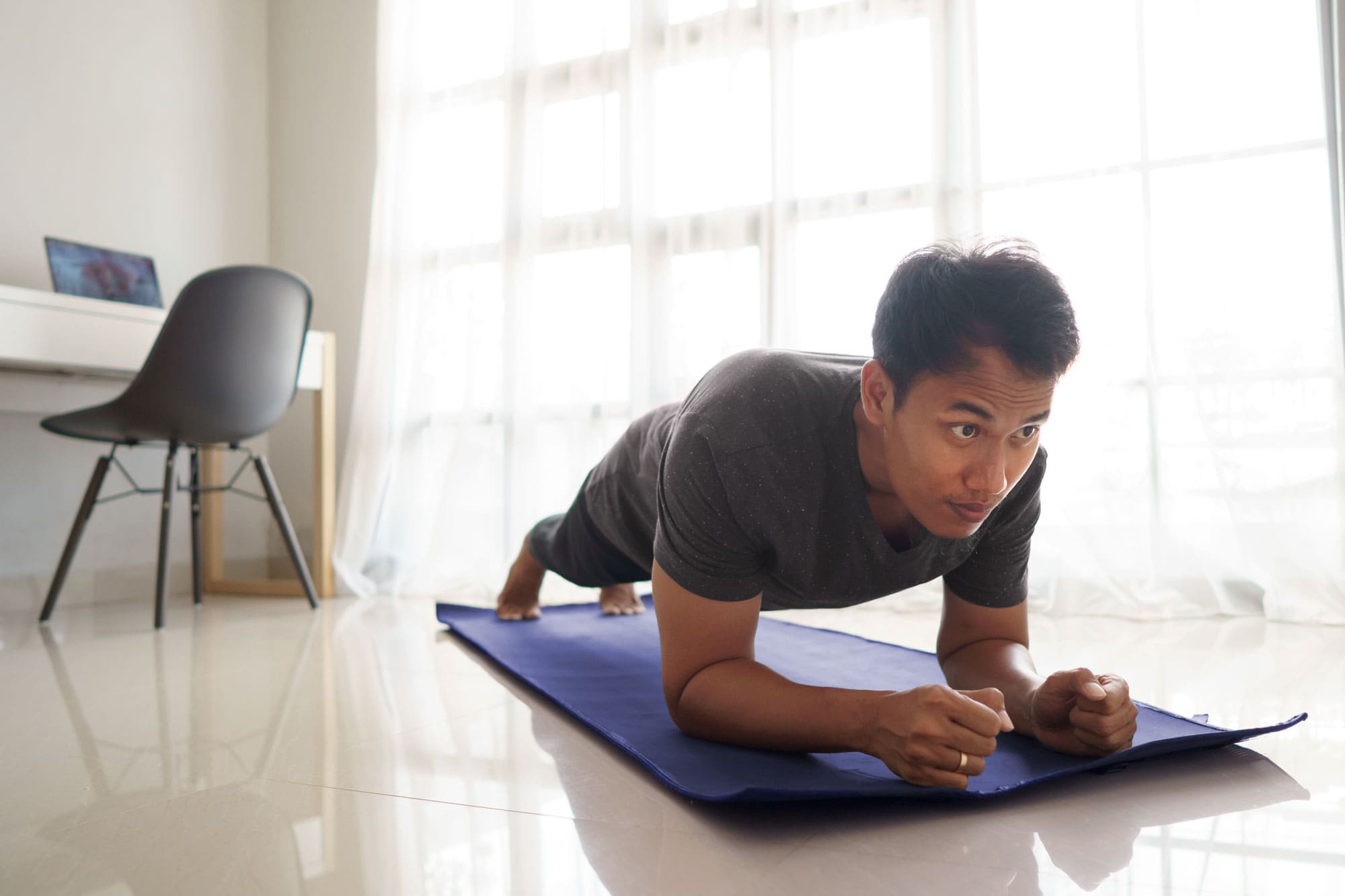
Home workouts without equipment are becoming increasingly popular, particularly as more individuals seek convenient ways to maintain their fitness levels in the comfort of their homes. With limitations on access to gyms and the rising costs associated with personal training, understanding how to effectively engage in bodyweight exercises is not only practical but also essential for overall health and wellness. This article provides a comprehensive overview of home workouts without equipment, emphasising their principles, benefits, potential risks, and practical implementation.
Definition
Home workouts without equipment refer to exercise routines designed to be performed indoors or in personal spaces, utilising minimal or no specialised fitness equipment. These workouts predominantly rely on bodyweight as the primary source of resistance. They leverage gravity and the inherent weight of the body to enhance strength, endurance, and cardiovascular fitness. This focus on bodyweight exercises allows for a highly adaptable and accessible approach to fitness that can suit various individuals, regardless of their experience levels or physical limitations.
Core Exercise Principles
Bodyweight exercises represent a form of resistance training that effectively stimulates muscles to adapt, strengthen, and grow without the necessity of conventional weights. Research published in the journal Physiology & Behaviour indicates that muscle growth can occur independently of external loads, provided that exercises are performed through their full range of motion. This means that fundamental movements executed accurately and thoroughly are sufficient to produce desirable fitness outcomes.
Circuit training formats, prevalent in no-equipment workouts, provide dual benefits. They not only promote cardiovascular fitness but also build muscle mass by incorporating compound movements that engage multiple muscle groups simultaneously. This method contrasts with traditional isolated exercises, allowing for a comprehensive workout in a shorter period, making it perfect for home environments.
Common No-Equipment Exercises
Numerous bodyweight exercises can be effectively integrated into home workout routines. Here is a concise list of standard exercises that require minimal space and no equipment:
- Squats (targeting quads, hamstrings, glutes, calves, core)
- Lunges (forward, reverse, and lateral variations)
- Push-ups
- Planks
- Burpees
- Glute bridges
- Sit-ups and crunches
- Bicycle crunches
These exercises cultivate strength across a range of muscle groups and can be performed in various combinations to target specific areas of concern or fitness goals. The minimal resources required for these workouts typically include space on the floor, and optionally, items like a chair or a workout mat can enhance comfort. For additional resistance and progression, common household items like water bottles or unopened food cans can serve as weights.
UK Framework and Responsible Authorities
In the UK, home workouts without equipment fall within the domain of public health rather than regulated fitness programmes. Although there may not be specific laws governing these exercises, the NHS plays a pivotal role by providing home workout guidance as part of its public health initiatives. They advocate for increased physical activity levels, especially within communities that may be disadvantaged in terms of access to fitness resources. Additionally, the British Heart Foundation (BHF) offers evidence-based strength exercise recommendations, aimed at encouraging home-based physical activities amongst the general population.
Such frameworks and resources illustrate a recognition of the importance of physical activity for overall health, which further legitimises the practice of home workouts as a vital component of public health strategy.
Recent Changes and Current Guidance
Although specific recent regulatory or policy changes directly affecting home workouts without equipment have not been identified, current guidance emphasises accessibility and inclusivity in fitness culture. The evolution of fitness regimes has steered towards breaking down barriers associated with gym memberships and specialised equipment. Home workouts without equipment offer an alternative that is both practical and beneficial, allowing individuals to engage in regular exercise regardless of their circumstances.
Positive feedback from various fitness bodies highlights that such no-equipment training methods are especially advantageous for those without the economic means or time to commit to a traditional gym environment. This focus on democratising fitness is essential in enabling a wider segment of the population to benefit from regular physical activity.
Health Benefits and Risks
Benefits
Engaging in home workouts without equipment presents several health benefits:
- Improved bone strength, cardiovascular health, and mood: Engaging in regular physical activity can lead to enhanced mental and emotional well-being, reducing the risk of anxiety and depression.
- Enhanced flexibility and muscle tone: Bodyweight exercises contribute to muscle toning while simultaneously improving overall flexibility, enabling individuals to perform everyday activities with greater ease.
- Reduced barrier to entry compared to gym-based training: The absence of required equipment means that anyone can start working out immediately, irrespective of their location or financial situation.
- Convenient fitness options: Home workouts can easily fit into various lifestyles, accommodating personal commitments, such as family or travel.
Risks and Modifications
While bodyweight workouts offer numerous benefits, it is vital to acknowledge potential risks associated with incorrect form or abrupt increases in exercise intensity. The following recommendations can help mitigate these risks:
- Form modification: Beginners should consider performing push-ups on their knees to reduce intensity until they build sufficient strength.
- Impact reduction: For individuals sensitive to high-impact movements, variations of exercises like burpees can be performed without jumping.
- Progression management: Advancing to more challenging variations, such as single-leg squats, should only occur after mastering basic movements to ensure confidence and safety.
- Cushioning: Using yoga mats or soft surfaces can protect vulnerable areas like knees and forearms during floor exercises.
- Recovery time: Incorporating rest intervals of around 20 seconds between exercises in circuit formats can enhance recovery and performance.
By adhering to these guidelines, individuals can engage in effective workouts while minimising the risk of injury or exercise-related complications.
Practical Implications
Home workouts without equipment stand as a robust alternative for those seeking to improve their strength and overall fitness levels. These workouts require minimal space or financial investment and can be effectively performed two to three times weekly as part of a comprehensive fitness programme. According to NHS and BHF resources, such practices are actively promoted as part of a broader public health strategy aimed at improving community health outcomes.
A well-designed home workout routine can ensure an individual remains motivated and challenged. Creating a balanced program which alternates between different exercise types and targets various muscle groups can aid in maintaining engagement while fostering continuous physical improvement.
Moreover, the flexibility of no-equipment workouts means they can be tailored to fit seamlessly into busy schedules, thus encouraging adherence and making it easier for individuals to establish routine physical activity.
Sample Home Workout Plan
Here’s a simple weekly structure for individuals looking to incorporate bodyweight exercises into their routine:
- Monday: Full-body circuit (Squats, Push-ups, Lunges, Planks)
- Wednesday: Core-focused workout (Sit-ups, Bicycle crunches, Glute bridges, Side planks)
- Friday: High-intensity interval training (HIIT) circuit (Burpees, Jumping jacks, Mountain climbers, Skaters)
This structure allows for a comprehensive approach to fitness, ensuring that multiple muscle groups are targeted while also providing chances for cardiovascular improvement.
Home workouts without equipment present numerous opportunities for individuals at all fitness levels to maintain or improve their health and well-being. They exemplify an accessible and effective approach, especially in an era increasingly characterised by busy lifestyles and limited access to fitness facilities. With careful planning, proper execution, and adherence to safety measures, the benefits of bodyweight exercise can be fully realised. Being educated about the available workouts, their potential, and how to safely incorporate them into one’s life can fundamentally transform personal fitness journeys, contributing to a healthier society.
For those exploring various fitness regimes, understanding how to incorporate circuit training formats (https://www.mypoliticalhub.com/worldwide-news/what-is-the-insurrection-act-in-politics/) might provide additional insight into optimizing effectiveness without the need for equipment.
About The Author