
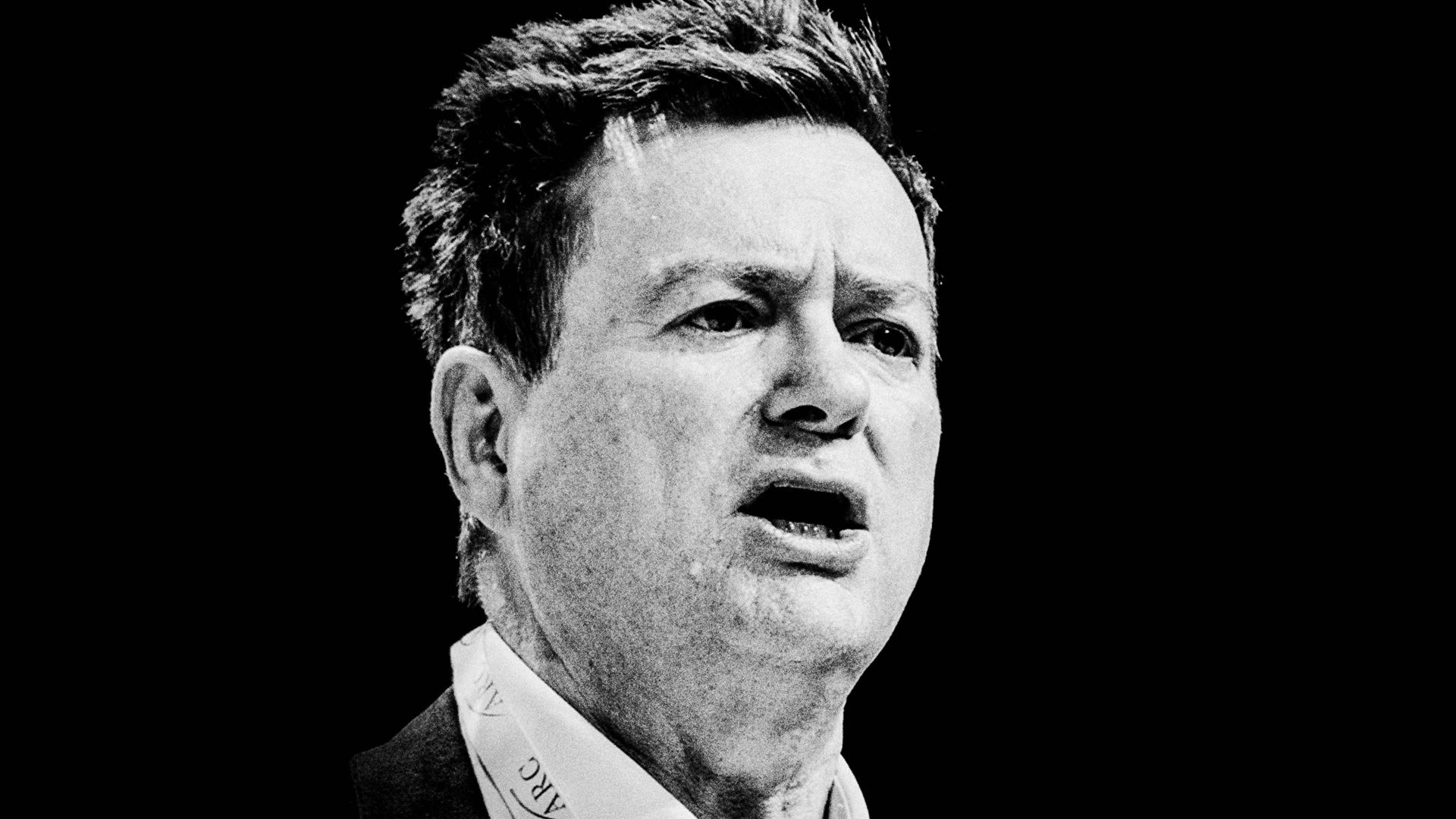
Winston Marshall: Political Views and Public Commentary
Winston Marshall has undergone one of the most publicly discussed transformations in recent British cultural life—from internationally celebrated musician to political commentator and podcaster. Best known as the banjoist of Mumford & Sons, the British folk-rock group that rose to fame in the early 2010s, Marshall parted ways with the band in 2021. His departure was prompted not by creative disagreements or musical ambitions but by an increasing desire to speak freely on political subjects he felt could no longer be discussed freely within the confines of celebrity or the arts industry.
The move marked a significant personal and professional pivot, separating him from a globally renowned band in favour of political independence, post-Brexit cultural dialogue, and public analysis of Western sociopolitical evolution. In doing so, Marshall has positioned himself at the intersection of several contentious cultural debates in the United Kingdom, using his platform to explore nationalism, populism, sovereignty, and the consequences of globalist ideology. This mirrors the recent trajectory of other public figures venturing into political commentary from cultural platforms, such as Scott Adams’ movement from cartoonist to political voice, navigating free speech battles and media controversy.
What Prompted the Change?
Background and Origins
Winston Aubrey Aladar deBalkan Marshall was born in December 1987 and achieved public prominence as a founding member of Mumford & Sons. The band’s success, propelled by albums such as Sigh No More and Babel, placed Marshall on the world stage. Yet, as the group’s fame grew, so did the scrutiny surrounding its members, especially as Western popular culture became more saturated with political sensitivity and claims of ideological policing.
In March 2021, Marshall praised Unmasked: Inside Antifa’s Radical Plan to Destroy Democracy, a controversial book by conservative American journalist Andy Ngo. The tweet led to public backlash accusing Marshall of endorsing far-right ideology, despite his insistence that he condemned extremism unequivocally. Though initially issuing an apology and stepping back temporarily to “examine blindspots,” Marshall ultimately chose to leave the band in June 2021. His primary reasoning was his belief in the value of open discourse and his desire to speak about political matters without affecting his colleagues.
In an essay announcing his departure, he stated that the decision allowed him to regain his own voice and personal agency in political conversation, rather than burdening the band with the ramifications of his beliefs. This act marked the beginning of a new phase of public engagement, where Marshall would offer commentary on a variety of issues central to democratic life, sovereignty, and identity.
Core Political Views and Doctrinal Positions
Winston Marshall’s political commentary highlights recurring preoccupations with national culture, democratic participation, internationalism, and the fragility of inherited institutions.
Populism and Democratic Legitimacy
One of Marshall’s most consistent themes is his defence of populism, specifically its role as an indicator of democratic vitality rather than an outright threat. In debates, particularly one held at the Oxford Union in 2024, he has contended that populism often arises when ‘elite’ structures cease to reflect popular will. Marshall has described Brexit as a popular reassertion of self-rule, noting that polling of Leave voters consistently showed distrust of remote governance and a desire to reclaim national agency.
This framing aligns with broader conversations about power and transnational governance, similar to ongoing debates addressed in explorations of the New World Order in politics—where global coordination often sparks concerns about democratic erosion and elite overreach.
Often invoking rhetoric used by commentators and political figures to disparage Leave voters—phrases such as “fruitcakes,” “racists,” and “loonies”—Marshall argues that these labels indicate a discomfort among elites towards grassroots democratic movements. He positions such disdain as a refusal to engage earnestly with the values and concerns driving mass political action.
Civic Nationalism Versus Ethno-Nationalism
Marshall also differentiates sharply between civic nationalism—grounded in shared responsibility, democratic participation, and common cultural heritage—and ethno-nationalism, which relies on racial or ethnic homogeneity. In his view, civic nationalism is essential to a thriving democracy. Encouraging public pride in national history, the English flag, or shared traditions should not be conflated with bigoted or exclusionary views.
He has spoken with concern about the tendency in recent years to dismiss national pride or cultural symbolism as inherently reactionary or bigoted. Instead, Marshall suggests that without common narratives and heritage, societies lose cohesion and the capacity for meaningful solidarity. This view resonates with cultural critics like Ricky Gervais, who maintains politically liberal values while resisting ideological conformity, often defending traditional institutions and social norms under fire from progressive critique.
Nationhood and Foundational Identity
British identity, according to Marshall, stems not from a single ideological document—as seen in the American context—but from a shared tradition of history, monarchy, and social evolution. Britain is understood not in terms of a declaration but as “a culture and a history.” This heritage, he believes, fosters continuity in times of social turmoil and provides the psychological and ethical bedrock of democratic life.
He argues that such rootedness offers a path out of polarisation: a culture that accepts disagreement without fragmentation. His claim is that citizens may disagree on policy and politics, but still be unified by shared customs, public rituals, and collective stories.
A Critical Lens on the “Open Society”
While affirming the core liberal values that followed the defeat of totalitarian regimes post-World War II, Marshall scores the ideology that took shape in the concept of an “open society.” First articulated by thinkers such as Karl Popper, its objective was to prevent the rise of autocracy by rejecting rigid hierarchies, closed traditions, and any unchallenged systems.
However, Marshall critiques this ideology’s extension into a suspicion of all organising social structures—family, church, nation, or historical narrative. He posits that if all such norms are pathologised as oppressive, individuals will be cast adrift in moral ambiguity and cultural dislocation.
Marshall claims this disintegration of coherent norms risks producing precisely the kind of instability or extremism that open society theorists sought to avoid in the first place. Ironically, the rejection of identity, culture, and institution may spawn the rise of reactionary politics as people seek personal anchoring. This pattern has also been observed in high-profile critiques of ideological extremism and political overcorrection, particularly within Scott Adams’ controversial political journey.
Sovereigntists Versus Globalists
Examining post-Brexit discourse, Marshall characterises contemporary ideological divides as a clash between globalists, who favour open immigration, cross-border governance, and transnational identity, and sovereigntists, who argue for the maintenance of national borders, democratic control, and cultural preservation.
He identifies modern technocratic governance, where supranational bodies override local democratic preferences, as a core challenge to sovereignty in the British context. The European Union’s treatment of national dissent, in Marshall’s view, exemplifies this issue. Populist movements, then, are framed not as regressions but as natural democratic responses to diminishing agency.
List of Winston Marshall’s Core Political Positions
To provide a clear overview of Winston Marshall’s frequently expressed political views, the following summary outlines the main themes within his public commentary, interview responses, and debate appearances:
| Theme | Position Held |
|---|---|
| Populism | Seen as a legitimate expression of democratic will. |
| Civic Nationalism | Supported and contrasted with the dangers of ethno-nationalism. |
| National Identity | Necessary for social cohesion, based on shared heritage and customs. |
| Open Society Ideology | Critiqued for undermining traditional structures and causing cultural dislocation. |
| Brexit | Portrayed as a democrat revolt against elite technocracy. |
| Cultural Pride | Argues expressions of patriotism have been wrongly labelled extremist. |
These positions form the backbone of Marshall’s ideological interventions, and they reveal a consistent narrative about the value of roots, continuity, sovereignty, and dialogue.
Who Listens and Who is Affected?
Marshall’s audience includes individuals typically marginalised in political culture—those often deemed socially conservative, patriotic, or anti-globalist. His work has attracted interest among working-class Britons, university students seeking alternative views, disillusioned Remainers open to debate, and new arrivals seeking cultural anchoring.
His podcasts and media appearances also reach younger demographics eager for more complex conversations around identity, sovereignty and the balance between tradition and change. Due to his music legacy, he also attracts viewers not typically engaged in politics but drawn to the clarity of his narrative style and personal backstory.
Marshall’s efforts to support incoming Hong Kongers, for example, reflect a blend of support for immigration contingent on shared values and national history—illustrating a type of civic nationalism inclusive, but still rooted in unity.
Warnings and Potential Pitfalls
Despite his emphasis on open dialogue, Marshall navigates dangerous terrain. His critiques of globalisation and progressive discourse risk appeal among reactionary groups who may co-opt his language for exclusionary purposes. While he has consistently disavowed extremism and acts of violence, any association with controversial literature or figures leaves commentators open to cultural rebuke in the current media environment.
Moreover, Marshall’s arguments, while intellectually grounded, do not yet constitute full political programmes or policy prescriptions. Instead, they provide a framework for rethinking current ideology. This can frustrate both sides of the spectrum—those demanding action plans from critics, and those seeking uncritical celebration of the status quo.
Recommendations for Engaging with Marshall’s Work
Engaging with Winston Marshall’s commentary involves a conscious effort to separate ideological substance from media reaction:
• Consider his arguments based on content rather than perceived associations.
• Understand the difference between identifying civilisational trends and promoting exclusion.
• Be aware of confirmation bias when evaluating populist or sovereigntist critiques.
• Approach his discussions as cultural, not purely political—Marshall often appeals to heritage, not electoral gain.
Marshall’s style invites reflection over reaction. He advocates for thoughtful listening even when difficult, highlighting the need to restore the culture of debate in democratic societies.
By grounding his political evolution in deliberation rather than dogma, he provides one possible route through polarisation—if his insights are engaged in good faith.
Winston Marshall is not a conventional political figure. His emergence results from a cultural moment in which more traditional public spaces became inhospitable to dissenting perspectives. His journey from pop culture acclaim to political commentary reflects broader tensions around free speech, national belonging, and institutional integrity in Britain. His critiques—though not uncontroversial—aim to reanchor conversation in common heritage, robust dialogue, and democratic engagement. Marshall may not provide all the answers, but his interventions supply a compelling starting point for those searching for balance in an era of ideological extremes.
About The Author

Highly rated post and high-quality post!
I admire your writing about Charlize Theron’s politics.
Thank you for your website!