Understanding Ricky Gervais’s Political Stance: Between Old-School Liberalism and Anti-Woke Critiques
Ricky Gervais, the British comedian, actor and writer best known for creating The Office and hosting the Golden Globes with biting wit, often finds his name associated with conflicting political ideologies. While he openly identifies as a lifelong Labour Party supporter and adherent of traditional left-wing values, Gervais has also gained support among right-wing circles for his critiques of modern progressive culture, particularly what is colloquially known as “woke” politics. These apparent contradictions have made his political identity the subject of both fascination and controversy.
This article offers a detailed, educational exploration of Ricky Gervais’s political affiliations, advocacy work, and interactions with contemporary sociopolitical movements. It draws a clear picture of how a self-declared “old-fashioned lefty” became a lightning rod in ongoing culture wars, especially in the UK and the broader English-speaking world.
What Ricky Gervais Says About His Politics
Gervais’s political identity is best summed up in his own words. In interviews and public commentary, he often refers to himself as a “champagne socialist”—a joking nod to affluent individuals who support leftist reform—and describes his beliefs as anti-sexist, anti-racist, and pro-equality. He opposes homophobia, supports animal rights, and believes in the welfare state, all central pillars of the British left. Notably, he also defines himself as a staunch believer in free speech, albeit with certain legal limits such as preventing hate speech, libel, or incitement to violence.
His liberal values, shaped in the 1970s and 80s, reflect a version of leftism that predates identity politics and the current intersectional discourse. This ideological foundation, combined with his support of the Labour Party, demonstrates the consistency of his political leaning in many areas.
Electoral Loyalty: A Labour Supporter
Politically, Gervais has long supported the UK Labour Party. He has publicly stated, “I’ve always voted Labour,” and in the 2017 general election, he endorsed Jeremy Corbyn, whom he saw as the best chance to replace then-Prime Minister Theresa May. This places him firmly within one of the UK’s two major political traditions, aligning with progressive taxation, social welfare policies, and public healthcare provisions championed by Labour governments over the years.
However, this unwavering endorsement has not precluded him from criticising aspects of Labour policy. For instance, he has expressed reservations over the party’s framing of inheritance tax, hinting at a more nuanced engagement with economic policy than mere partisan loyalty.
Championing Social Causes and Equality
In social matters, Gervais has been a consistent voice for equality and ethical treatment. He celebrated the legalisation of same-sex marriage in England and Wales as “a victory for all of us,” reinforcing his support for broad-based human rights legislation. His commitment to animal rights is particularly strong. He has collaborated with organisations such as PETA, regularly advocating against the use of fur and exotic animal skins in fashion. Veganism, animal welfare campaigns, and anti-hunting activism are also key intersections of his public advocacy. Readers interested in similar public figures who blend artistic careers with polarising political voice might relate to Scott Adams’s journey in politics, which illustrates the complexity of personalities caught between advocacy and controversy.
This deep engagement with ethical causes aligns him with traditional left-wing values, which champion the expansion of legal and cultural protections to vulnerable groups, whether human or animal.
Examples of Causes Gervais Champions
| Cause | Gervais’s Position | Supported Organisations |
|---|---|---|
| Same-Sex Marriage | Supportive of legal equality and marriage rights | General LGBTQ+ Rights Advocacy |
| Animal Rights | Vocal opponent of fur trade, animal cruelty, and hunting | PETA, various wildlife preservation efforts |
| Freedom of Expression with Caveats | Supports free speech but opposes incitement or defamation | Legal protections like UK’s Communications Act 2003 |
While Gervais promotes traditional left-leaning principles by backing systemic reforms and social justice, his ability to critique the changing cultural landscape, including the excesses of online activism and identity politics, often distances him from mainstream progressive movements.
Criticisms of “Woke” Trends and Gender Ideology
Gervais’s Netflix stand-up specials, particularly released during the early and mid-2020s, have drawn fire from certain leftist circles due to jokes involving transgender identities and generational stereotypes. In these routines, he lampoons what he sees as overreactions, cancel culture, and moral absolutism. At several points, his jokes have led to social backlash across media platforms, prompting accusations from critics like comedian Robin Ince, who labelled him an “alt-Right pin-up” for making anti-trans gender jokes. This mirrors wider debates surrounding free speech and cancel culture, which are explored in detail through the lens of other public figures such as Scott Adams and his controversial takes on sociopolitical themes.
Despite this criticism, Gervais insists he is not targeting marginalised groups but rather pushing back against what he perceives as authoritarian language shaping and enforced ideological subservience—ideas he argues should be open to discussion and satire. His supporters claim these performances are consistent with the free speech ethos of classical liberalism, where no belief should be exempt from scrutiny or humour.
The Celebrity Culture Clash
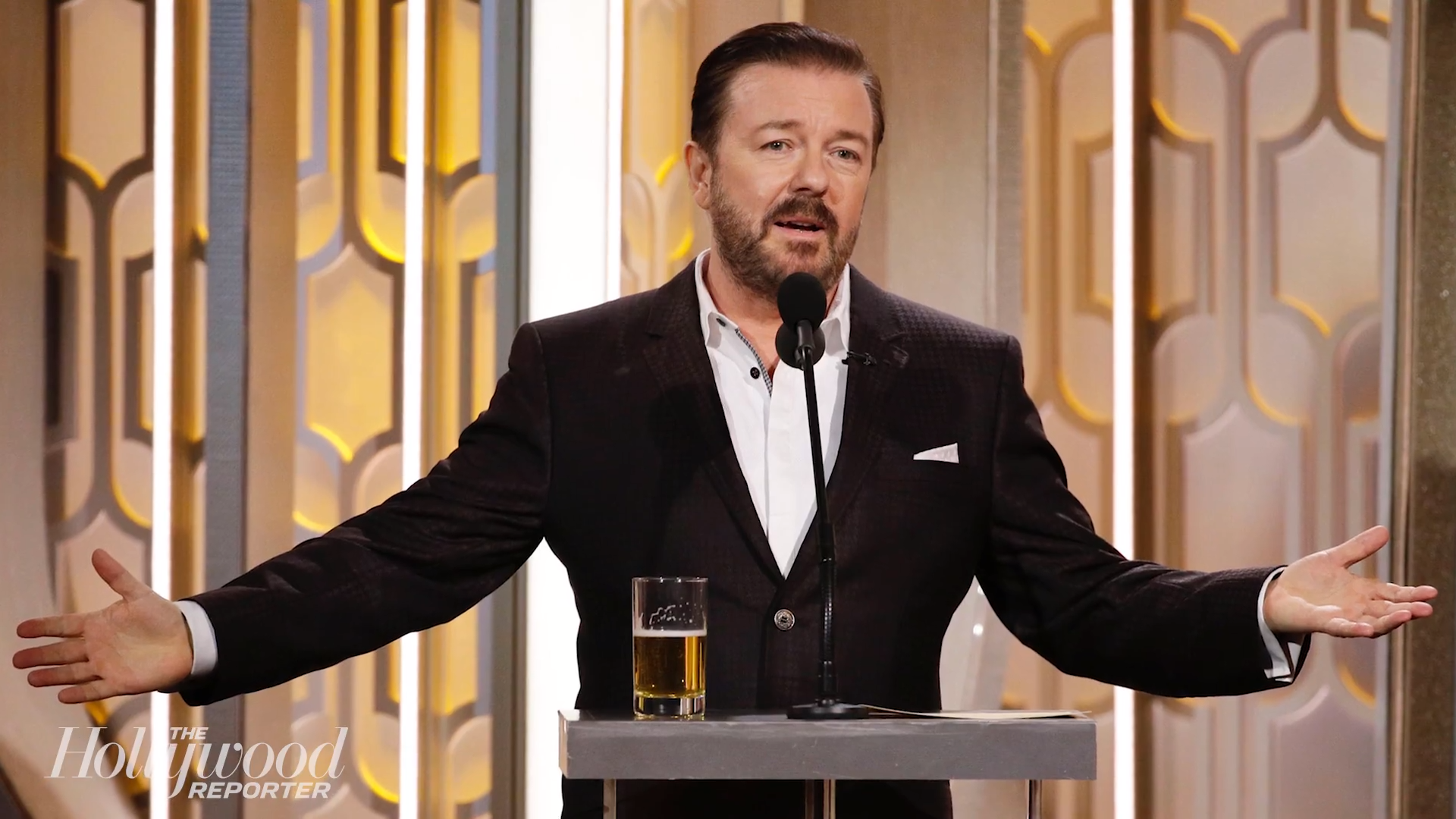
Another significant dimension of Gervais’s public persona is his open disdain for what he calls “performative celebrity activism.” At the 2020 Golden Globes and more recently in retrospectives on the 2026 Golden Globes, Gervais denounced the tendency of actors and filmmakers to use awards season as a platform for unsolicited political lectures. He famously said, “You know nothing about the real world. Most of you spent less time in school than Greta Thunberg.”
This type of critique earned both ire and praise. Some accused him of hypocrisy—arguing that he was similarly using the stage for political monologues under the guise of comedy. However, many applauded his sardonic pushback against what he framed as entitled elitism by celebrities out of touch with everyday working people. For further context on how figures across different contexts address political theatre and media narratives, review the story of media misrepresentation in the Denmark-Kosovo CNN disinformation case.
Recent Context and the 2026 Golden Globes
The conversation around Gervais’s politics intensified during the 2026 Golden Globes. The event reignited tensions when host Wanda Sykes received an award on his behalf for Mortality, taking a dig at his prior anti-trans material by thanking “God and the trans community” in irony. At the same event, various celebrities made impassioned statements against former US President Donald Trump and US immigration enforcement actions. These outpourings contrasted sharply with Gervais’s long-held views on award ceremonies as inappropriate stages for political campaigns.
Although Gervais skipped the ceremony, citing his general disinterest in such “vanity parades,” YouTube and podcast commentary circles hailed him for what they considered courage to stand against Hollywood’s self-righteousness. Notably, even some American liberals expressed admiration for his derision of elite groupthink, regardless of policy disagreements.
Summary of Public Reactions
| Source | Perspective on Gervais | Context |
|---|---|---|
| Mainstream Media | Mixed to critical; focused on his impact on “culture wars” | Responses to Netflix specials and trans jokes |
| Conservative Outlets | Supportive; hailed as anti-woke icon | Clips from 2020-2026 stand-up and Globes monologues |
| LGBTQ+ Advocates | Heavily critical; viewed as platforming transphobic humour | Gags involving gender identity in his specials |
The cycle of praise and outrage demonstrates how Gervais’s critiques resonate differently across ideological divides. Where some see free expression, others see harm through marginalisation. It’s a paradox emblematic of our times.
Who is Affected by Gervais’s Brand of Politics?
The key demographics engaging with Gervais’s political stance span several categories:
- Younger liberals: Often more critical due to Gervais’s jokes regarding gender identity and generational politics.
- Traditional leftists: Mixed responses, approving his anti-establishment critique but divided on his approach to modern progressivism.
- Libertarians and centrists: More receptive to his defence of free speech and scepticism of cancel culture.
- Conservatives: Often appreciate his pushback against identity politics and elite posturing.
Therefore, the impact is not ideological but generational and cultural. As British and global politics become increasingly polarised, figures like Gervais serve as bellwethers for the larger tensions shaping society’s understanding of comedy, activism, and censorship.
Recommended Approach to Understanding Gervais’s Position
Anyone seeking to understand Gervais’s views should avoid simplistic labels like “alt-right” or “radical left.” His political approach is firmly grounded in British liberal traditions, encompassing both a belief in egalitarian social policy and a resistance to moral authoritarianism in culture. He exemplifies a worldview that accepts multiple, sometimes opposing, values—equality and free speech; empathy and critique; community support and individual liberty.
When discussing figures like Gervais, the most constructive paths involve:
- Contextual analysis: Differentiating between performative satire and sincere belief.
- Legal literacy: Understanding UK laws on hate speech and defamation while respecting comedy as protected expression. For a broader discussion on legal frameworks affecting political discourse, such as disinformation and its detection, the case of Denmark and Kosovo via CNN Politics offers valuable insights.
- Listening across lines: Acknowledging the legitimacy of criticism even when supporting the speaker’s right to speak.
- Maintaining empathy: Recognising that expressions which offend some may resonate with others not out of hate, but shared cultural concern or humour norms.
Engaging with political commentary in comedy requires nuance, especially as British discourse adapts to global cultural tensions. Gervais remains a compelling case study in these shifting norms.
Ricky Gervais’s politics cannot be neatly categorised. Though a lifelong supporter of the Labour Party and animal rights advocate, his satire often places him at odds with mainstream progressive culture. His support for equality, free speech, and scepticism of celebrity political activism reflect a form of old-school liberalism rooted in personal liberty and responsibility. This combination draws diverse support while provoking sharp criticism. By understanding his words in context and evaluating issues rather than labels, individuals can better navigate the complex territory that public figures like Gervais inhabit. For policymakers, scholars and citizens alike, developing informed responses that embrace free discourse without abandoning compassion remains the goal.
About The Author