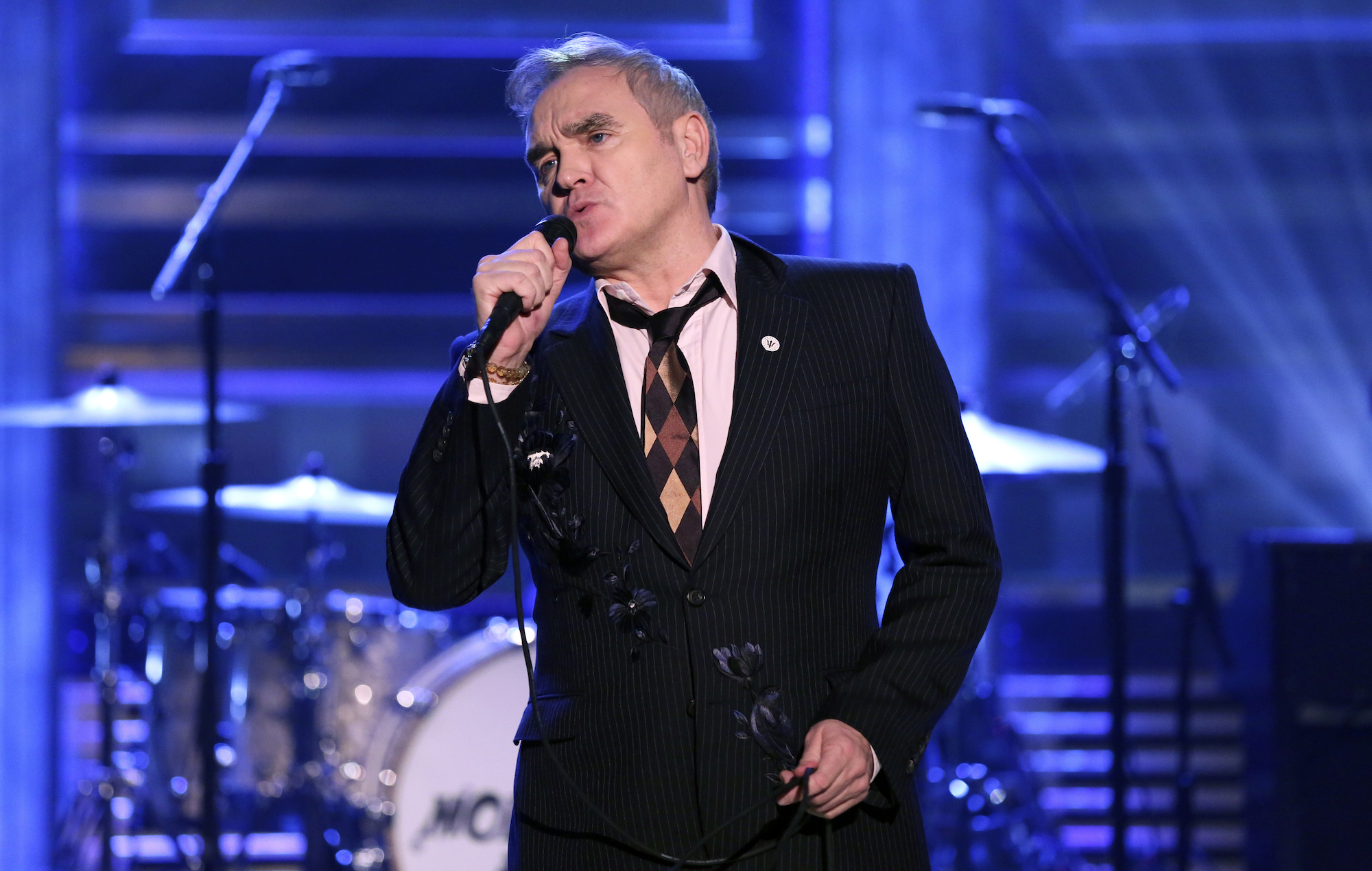
THE TONIGHT SHOW STARRING JIMMY FALLON -- Episode 1067 -- Pictured: Musical guest Morrissey performs on May 13, 2019 -- (Photo by: Andrew Lipovsky/NBC/NBCU Photo Bank via Getty Images)
Morrissey, the iconic musician and frontman of The Smiths, has been a polarising figure in both the music industry and the political landscape since at least the 1980s. His artistic expression has often intertwined with his political opinions, leading to a complex public persona that some support while others vehemently oppose. Particularly since 2018, Morrissey’s political engagement has intensified, especially regarding far-right political movements in the United Kingdom. This article delves into Morrissey’s political views and activities, highlighting his historical positions, affiliations, controversies, and their implications for free speech in the UK.
Historical Political Positions
Morrissey’s political commentary has long been woven into the fabric of his artistic identity. He has consistently critiqued both of the major UK political parties, notably expressing his disdain for former Prime Minister Margaret Thatcher. In a notable statement, he claimed that Thatcher “ignited the British public into street riots, violent demonstrations and a social disorder previously unseen in British history.” Over the years, his lyrical content has also incorporated nationalist themes, as exemplified in the song “Irish Blood, English Heart,” which underscores his complex relationship with British identity. For a broader context on political expressions in the arts, see our article on the intersection of cultural commentary and political belief in Ricky Gervais Politics Explained (https://www.mypoliticalhub.com/uncategorized/ricky-gervais-politics-explained/).
His critique of governmental policies extends beyond mere criticism. It often translates into reflections on societal issues, and he has taken a firm stance on various subjects tied to personal beliefs, which he articulates both through his music and interviews.
Support for For Britain (2018 Onwards)
Key Endorsement and Activities
In a significant pivot in 2018, Morrissey declared his allegiance to the far-right political party For Britain, led by Anne Marie Waters. He commended Waters for her commitment to British heritage and freedom of speech, expressing grievances over mainstream political parties’ neglect towards these issues. Morrissey stated that Waters “believes in British heritage, freedom of speech, and she wants everyone in the UK to live under the same law.” This endorsement was a turning point that gained considerable media attention, particularly in light of the ongoing political discourse surrounding nationalism and identity in the UK. Such political shifts in celebrity culture can be compared to the journey of figures like Scott Adams, who transitioned from their creative realms into controversial political commentary (https://www.mypoliticalhub.com/uncategorized/who-is-scott-adams-politics/).
Morrissey has made his affiliation with For Britain more than just a vocal endorsement. He has publicly sported For Britain badges in appearances related to his Broadway residency and on American talk shows. His support has not gone unnoticed; the For Britain party has commercially leveraged his endorsements, promoting him on their website and encouraging donations and membership based on Morrissey’s name recognition.
Stated Rationale
Morrissey has defended his support for For Britain primarily through the lens of animal welfare. He argued that the party represents the most robust approach to animal welfare, claiming that no other political party even bothers to address the issue. He contends that voting for For Britain is not merely a political choice but a moral one concerning the rights of animals, particularly arguing against halal and kosher slaughter practices endorsed under European Union regulations. For more insights into how personal beliefs intersect with political advocacy, see our piece on Angela Rippon’s role in political media (https://www.mypoliticalhub.com/uncategorized/angela-rippon-career-overview/).
This intersection of political activism and animal welfare illustrates how Morrissey’s political motivations are layered and multifaceted, drawing both fervent support and considerable criticism.
Controversial Statements
Morrissey is no stranger to controversial statements, many of which have drawn significant scrutiny from both supporters and detractors alike. Some of his more contentious remarks include:
-
He controversially connected the Manchester Arena bombing of 2017 to Theresa May’s immigration policies, asserting that “halal slaughter requires certification that can only be given by supporters of ISIS.” This statement not only implicates broader political narratives around Islamophobia but also raises critical discussions about the rhetoric employed in public discourse. The societal implications of such remarks echo broader conversations about political communication, as discussed in our article on UK Fact Check Politics (https://www.mypoliticalhub.com/uncategorized/uk-fact-check-politics-guide/).
-
Morrissey has grouped unrelated practices such as halal slaughter, female genital mutilation, and child marriage together, accusing both Labour and Conservative politicians of remaining silent due to the “Islam vote.” This amalgamation of issues has faced backlash for oversimplifying complex cultural practices and the challenges faced by minority communities.
-
He has openly rejected the notion of ‘white privilege’ and persistently compared major publications like The Guardian and The Independent to the Ku Klux Klan, signalling his frustration with mainstream media portrayals of his political views.
-
Moreover, in recent interviews, he has propagated conspiracy theories, including the assertion that the fire at Notre Dame was a result of arson, further exacerbating his controversial public image.
The repercussions of these statements have sparked debates on the boundaries of free speech and the social responsibilities of public figures, particularly those with considerable influence.
For Britain Party Context
The For Britain party, which Morrissey supports, is typically characterised as a far-right political movement. It espouses a manifesto that critiques Islamic influence, attributing “unimericable cruelty” to women, atheists, apostates, children, and animals. The party articulates a perspective that mass immigration has led to a fragmented Britain, where the native population feels insulted and degraded.
This political framing highlights the party’s anti-immigrant and nationalist sentiments, which resonate with a section of the British populace that feels alienated by contemporary sociopolitical dynamics. Morrissey’s support of such a party raises critical questions about the normalisation of far-right views in the UK, particularly regarding the implications for tolerance and inclusion in an increasingly multicultural society. For a comparative view, consider the discussions surrounding Dolly Parton’s unique political approach (https://www.mypoliticalhub.com/uncategorized/dolly-parton-politics-explained/).
Career Impact and Free Speech Claims
Morrissey has asserted that his unabashed political stances have adversely affected his commercial viability. He has claimed, “nobody will release my music anymore” due to being a “chief exponent of free speech.” He argues that the current climate can lead to repercussions for those expressing dissenting opinions, suggesting that free speech is “now criminalised” in England.
However, while Morrissey’s assertions regarding the impact of his views on his career reflect a broader cultural conversation about free speech, a detailed assessment of the UK’s speech laws is needed to ascertain specific frameworks or regulatory measures that might limit artistic expression. The absence of specific legal parameters in the current discussion reflects a significant gap in understanding Morrissey’s claims within the context of existing laws governing freedom of expression.
Limitations
Despite extensive media coverage of Morrissey’s political statements and affiliations, there remains a lack of comprehensive legal analysis concerning the implications of political speech in the UK. Regulatory authorities and statutory frameworks that govern political expression, particularly in the arts, warrant further examination to fully contextualise Morrissey’s assertions on freedom of speech.
Additionally, the dialogue around Morrissey’s views often polarises opinion, focusing heavily on sensationalist reports rather than nuanced discussions that dissect the implications of his alignment with a far-right party. Without balanced discourse, the broader conversation about political expression in entertainment becomes stifled and incomplete.
List of Notable Controversial Statements by Morrissey
| Date | Statement | Context |
|————|——————————————————————————————————————————-|——————————————————————————————-|
| 2017 | Linked the Manchester Arena bombing to Theresa May’s immigration policies. | Comment presumed to generalise about Muslim communities and their practices. |
| 2018 | Claimed halal slaughter certification can only be granted by ISIS supporters. | Controversial for its implications regarding Islamic practices in Britain. |
| Ongoing | Compared The Guardian and The Independent to the KKK. | Indicates deep-seated frustration with media misrepresentation. |
| 2019 | Suggested the Notre Dame fire was a result of arson. | Conspiracy theories often lead to misinformed perceptions and public outrage. |
Discussion surrounding each of these quotes underpins the complexities of public figures expressing political opinions while navigating societal sensitivities.
Analysis of Morrissey’s Political Statements
Morrissey’s statements and political engagements evoke a multitude of responses, from fans who resonate with his outspoken views to critics who perceive his remarks as harmful or divisive. The polarized reception reflects broader social fractures within the UK regarding issues of immigration, race, and free speech.
While Morrissey attempts to frame his political stances as rooted deeply in personal convictions like animal rights, his actions and words have often been overshadowed by allegations of radicalism and insensitivity to minority communities. This disconnect raises essential questions regarding the responsibilities that come with celebrity status, and whether entertainers should remain apolitical or engage with societal issues.
Morrissey’s case underscores the delicate balance between freedom of expression and the potential backlash from controversial statements. His experiences may spark discussions about the extent to which public opinion and political alignments should influence the artistic sphere, and the consequences artists may face as a result.
Recommendations for Understanding Political Expression
-
Encourage Dialogue: Society should foster open discussions about the implications of public figures’ political statements, without resorting to simplistic characterisation of opposing views.
-
Legal Framework Education: Increased awareness of the legal frameworks surrounding free speech in the UK can provide context for understanding the repercussions of political expression in media and the arts.
-
Support Responsible Commentary: Fans and followers of artists like Morrissey should engage critically with his work, understanding the broader implications of the messages conveyed in his music and public statements.
-
Acknowledge Artistic Freedom: The interplay between art and politics is inherently complex; recognising this can lead to more informed and nuanced discussions among audiences, critics, and artists alike.
-
Critique Media Sensationalism: Media outlets should ensure balanced reporting that encapsulates the full scope of an artist’s expressions rather than focusing disproportionately on sensationalised aspects of controversial statements.
Morrissey’s evolving political stance represents a microcosm of larger societal debates in the UK, illustrating the challenges of navigating free speech amidst rising political tensions. His case raises critical conversations regarding the impact of public engagement on personal and professional spheres, particularly within the realm of music and the arts. Understanding these intricacies can facilitate a more informed public dialogue around such contentious issues, shaping perspectives for future generations.
About The Author