Definitions
Syrian politics refers to the political system and governance arrangements in Syria, currently structured as a unitary presidential republic under a transitional government established after the fall of the Assad regime. This system vests legislative power in parliament, executive power in the president and Council of Ministers, and judicial power in the Supreme Judicial Council. Politics of Syria
Historical Context and Recent Changes
Syria gained independence in 1946 after Ottoman and French rule, with Hafez al-Assad seizing power in 1970, followed by his son Bashar in 2000, establishing a centralized, authoritarian Ba’athist regime marked by repression and sectarian favoritism toward Alawites. From 1963 to 2024, Ba’ath Party dominance prevailed under the 1973 Constitution, with Emergency Law suspending rights until 2011 amid civil war protests. The 2011 uprising escalated into a civil war displacing 13 million, involving groups like Free Syrian Army, Kurds, ISIS, HTS, and foreign powers (Russia, Iran backing Assad; Turkey, West opposing).
Key recent changes post-Assad fall on 8 December 2024:
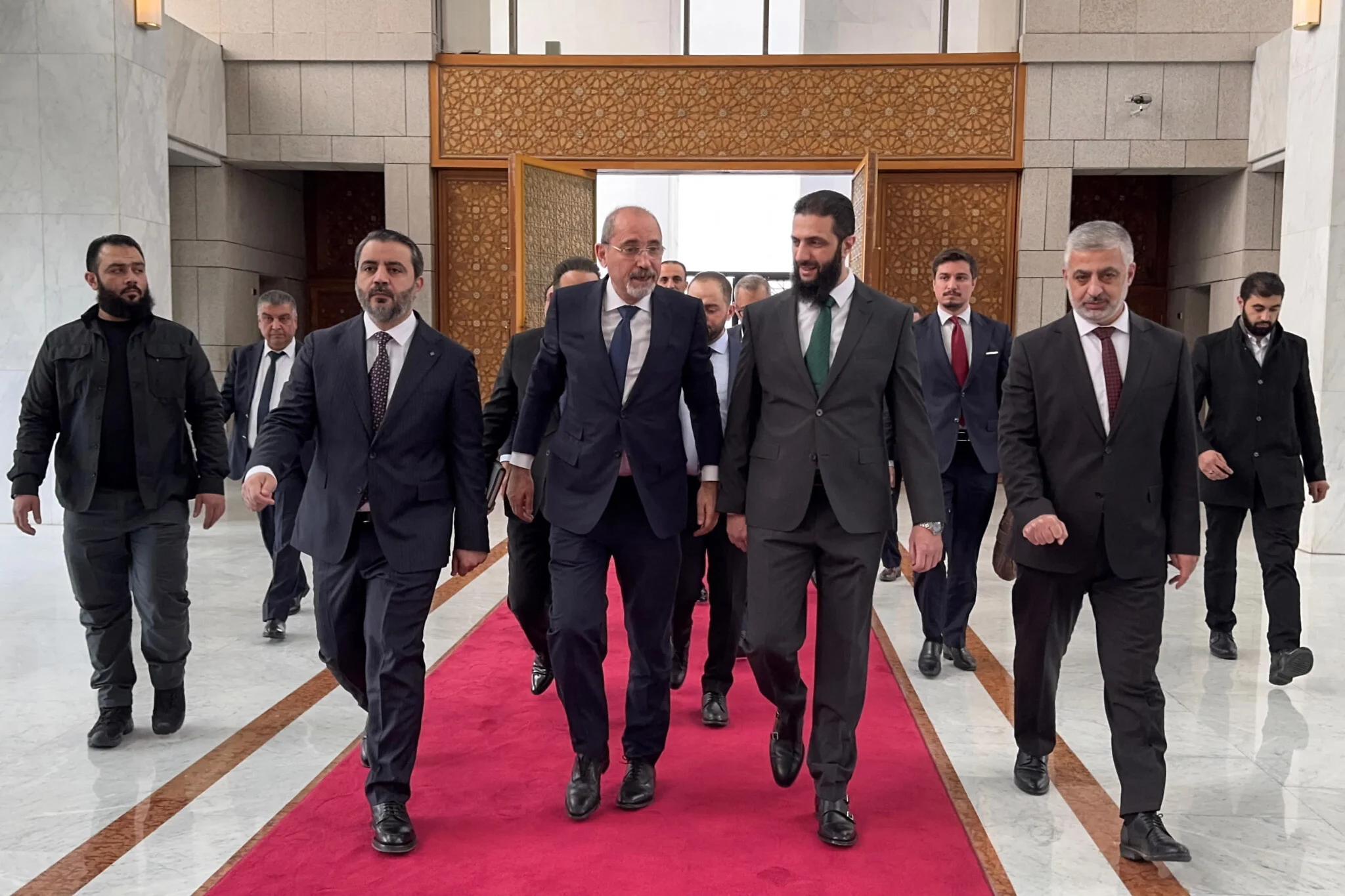
- Rebel alliance led by Hay’at Tahrir al-Sham (HTS) overthrew the regime; Ahmed al-Sharaa (former HTS leader) appointed president in January 2025 by armed groups conference.
- 29 January 2025: Banned Ba’athist National Progressive Front parties.
- March 2025: Signed Constitutional Declaration for 5-year transition ending in elections and new constitution; identifies Islamic jurisprudence as main legislation source, provides separation of powers, judicial independence, equality, and expression freedoms.
- 5 October 2025: Indirect parliamentary elections formed new legislature.
- Integrated former Syrian Arab Army, militias (including SDF, Druze), into new army amid sectarian violence (e.g., March 2025 Alawite clashes killing 800+).
Legal Framework (Syria)
- Pre-2024: 1973 Constitution defined Arab, democratic republic; Ba’ath primacy; president elected for 7 years, People’s Council (legislature) every 4 years via proportional representation.
- Current (Transitional): Constitutional Declaration (March 2025) governs 5-year period; Islamic jurisprudence as primary legislation source; multi-party system post-2012 but Ba’athist dominance ended 2024.
Legal Framework (UK)
UK law treats Syria as a high-risk jurisdiction due to civil war legacy, terrorism, sanctions, and instability. Key regulations:
- Sanctions: UK enforces EU-derived Autonomous Syria Sanctions (post-Brexit, via Syria (Sanctions) Regulations 2020, amended post-2024). Targets former Assad officials, HTS-linked entities until delistings; prohibits dealings with designated persons/groups (e.g., residual Ba’athists, ISIS).
- Anti-Money Laundering (AML): Syrian origin transactions flagged under Money Laundering Regulations 2017; high-risk third country per FATF (Syria grey/black-listed historically).
- Export/Trade Controls: Export Control Order 2008 restricts dual-use goods, arms to Syria; OFSI licenses required for financial services.
- Immigration/Asylum: Syrian nationals eligible for protection under 1951 Refugee Convention; UK granted asylum to thousands post-2011; post-2024, reassessments for returns risky due to transitional instability.
No search results provide explicit post-2025 UK framework details; based on continuity of UK sanctions regimes adapted to regime change.
Responsible Authorities
| Authority | Role in Syrian Politics | UK Context |
|———–|————————–|————|
| President (Ahmed al-Sharaa) | Head of transitional government; signed Constitutional Declaration. | N/A |
| Parliament | Elected October 2025 indirectly; legislative power. | N/A |
| Council of Ministers | Executive alongside president. | N/A |
| Supreme Judicial Council | Heads judiciary. | N/A |
| Syrian Army (new) | Integrated from old forces, SDF, militias. | N/A |
| UK OFSI (Office of Financial Sanctions Implementation) | Enforces Syria sanctions. | Designates monitors compliance. |
| UK FCDO (Foreign, Commonwealth & Development Office) | Leads diplomatic engagement, aid post-Assad. | Advises on risks. |
| UK Home Office | Manages asylum, returns. | Processes Syrian cases. |
Current Rules
- 5-year transition (to ~2030): No full constitution; Islamic jurisprudence guides laws; multi-party allowed (Ba’athist banned); elections planned end-period.
- Territorial fragmentation: Transitional govt controls core but not northeast (SDF partial integration), coast (Alawite holdouts), north (Turkey), southwest (Israel).
- Security: Jihadist threats (ISIS), Assad loyalist insurgents; new army lacks discipline.
Risks
- Security: Sectarian violence (Alawite massacres), jihadists, regime remnants; fragmented control invites escalation.
- Political: Internal divisions, foreign interference (Russia bases, Turkey/Israel presence); transitional legitimacy questioned due to HTS jihadist roots.
- Economic/Social: 16.5M need aid; youth unemployment/illiteracy; 1.2M returns but reconstruction stalled.
- UK-Specific: Sanctions violations (fines up to £1M), terrorism financing exposure (Syrian funds), travel advisories (FCDO “do not travel”).
Practical Implications
- Syrians: Potential stability vs. revenge cycles; refugee returns hinge on security; economic rebuilding critical amid war-devastated infrastructure.
- International/UK Businesses: Due diligence on sanctions (no dealings with listed entities); aid opportunities via FCDO/UN; investment risks from instability. A crucial aspect for international businesses can be their awareness of the UK fact check politics (https://www.mypoliticalhub.com/uncategorized/uk-fact-check-politics-guide/) to remain compliant.
- Diplomacy: UK may engage transitional govt if HTS moderates; monitors elections, human rights.
- Refugees: UK asylum grants continue; voluntary returns discouraged until transition stabilizes (e.g., no forced returns per ECHR).
Search results limited to pre-2026 details; post-March 2025 developments inferred as stable absent contradictions. For UK law, consult official gov.uk sources for latest amendments.
About The Author