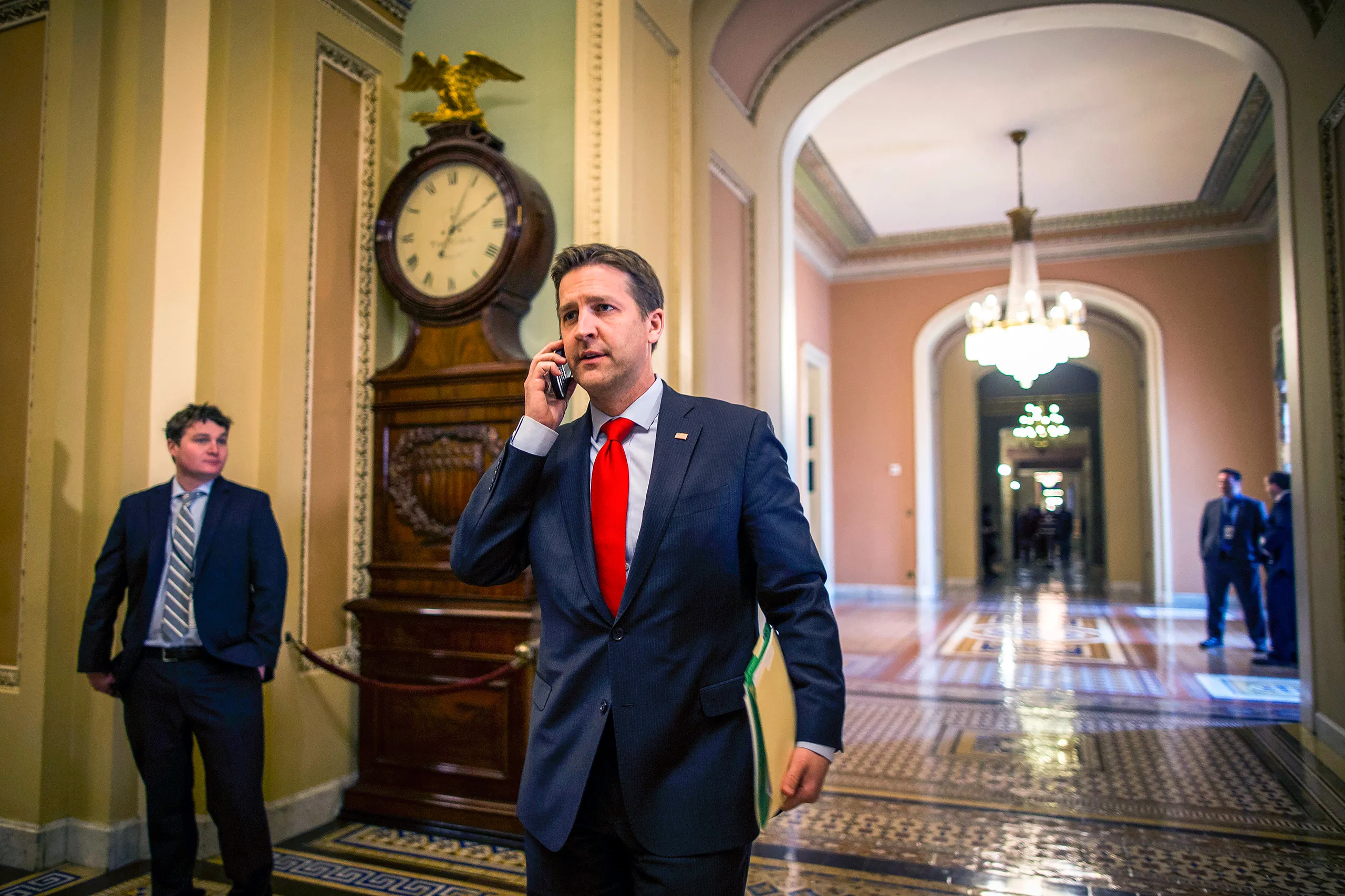
Ben Sasse is a complex figure in contemporary American politics, marked by his tenure as a U.S. Senator from Nebraska and recent personal developments that have cast a shadow over his public life. His conservative policy views and independent streak have often put him at odds with the broader Republican Party, particularly during the presidency of Donald Trump. Sasse’s recent diagnosis of terminal cancer has prompted him to reflect on his life, career, and the nature of political dialogue in America.
Political Career and Positions
Sasse’s political career began when he was elected to the U.S. Senate in 2015, a position he held until 2023. His appointment was marked by a set of distinctive policy positions that often defied party norms. Resigning from the Senate to assume the presidency of the University of Florida in 2024, Sasse’s influence in U.S. politics has been significant.
Throughout his time in the Senate, Sasse was known for his advocacy of term limits for Congress. He cosponsored a constitutional amendment that would limit senators to two terms and representatives to three. Sasse also proposed repealing the 17th Amendment, which allows for direct election of senators, suggesting that state legislatures should reclaim the power to select senators. His views on term limits resonate with a portion of the electorate that feels disconnected from long-serving incumbents. For a deeper understanding of governance and electoral structures, one might explore “Understanding Kano Politics: Key Insights into Governance and Electoral Structures in Nigeria” (https://www.mypoliticalhub.com/2026/01/01/kano-politics-electoral-system/).
Another controversial stance was his opposition to the bipartisan FIRST STEP Act, a criminal justice reform that passed with overwhelming bipartisan support in 2018. Sasse voted against the act, which aimed to reduce recidivism rates through rehabilitation rather than punishment, marking him as a conservative voice in a pivotal moment in U.S. law.
Sasse’s positions on healthcare and environmental regulations further define his political persona. He has consistently advocated for an overhaul of the Affordable Care Act and has supported stronger environmental regulations that align with conservative economic principles. His backing of Brett Kavanaugh’s Supreme Court nomination is also notable, reflecting his commitment to appointing judges who align with conservative ideologies. Additionally, he has embraced hard-line policies against China, highlighting his concern over national security and economic integrity.
Despite his typically conservative stances, Sasse made headlines for voting to convict Trump during his second impeachment trial for incitement of insurrection. This vote, along with his support for a bipartisan January 6 commission, drew ire from elements within his party. As a result, he faced backlash, most notably a censure from the Lincoln County GOP for his comments regarding Trump’s actions.
Describing himself as conservative on policy but moderate in tone, Sasse has made a conscious effort to distance himself from extreme positions within his party. His critiques of conspiracy theories, such as birtherism concerning President Obama, illustrate his dedication to a fact-based political discourse. These positions have increasingly left him isolated within the Republican Party, particularly after the rise of more populist ideologies post-2014.
Views on Politics and Institutions
Sasse’s critiques of modern U.S. politics are deeply insightful and grounded in years of observation. He describes contemporary political discourse as tribal and media-driven, claiming that real problem-solving is overshadowed by sensationalism and extreme viewpoints. In this fractured environment, Sasse has expressed his belief that politics “barely matters” in the context of social and technological upheaval.
In interviews, Sasse referred to the Senate as full of “blowhards” as opposed to being the “greatest deliberative body.” This frank assessment reveals his frustrations with legislative inertia and the growing divide among lawmakers. He attributes declining trust in institutions to a lack of healthy community structures, which he describes as essential for bridging political divides. Examining how different democracies manage similar challenges can be further explored in discussions surrounding civic engagement, which connects to the blog on “Understanding the UK Political System” (https://www.mypoliticalhub.com/worldwide-news/r-politics-uk-political-system/).
Moreover, Sasse is vocal about concerns related to cybersecurity, youth disenchantment with political institutions, and the future of work. His perspective suggests that the ongoing shifts in society require a reassessment of how politics operates and how communities engage with the political process.
Recent Personal Developments
In a profound turn of events, Sasse was diagnosed with stage 4 pancreatic cancer, a situation he has described as akin to receiving a “death sentence.” At 54, he is confronting his mortality while reflecting on his family, faith, and the clarity that comes with facing life’s most profound challenges. His wife, Melissa, faces her own health issues, including epilepsy and memory problems, adding complexity to their family dynamic as they navigate these serious health concerns with their three children.
Despite his resignation from the University of Florida in Mid-2024, partly due to family health issues, Sasse has continued to engage in public discourse. In conversations, including a New York Times podcast with columnist Ross Douthat, he has shared how his diagnosis has afforded him insights into the nature of life, death, and the importance of meaningful relationships.
Relation to UK Legal Framework, Authorities, Rules, Changes, Risks, and Implications
Ben Sasse’s political career primarily focuses on domestic U.S. issues, and concentrated research yields scant connections to the United Kingdom’s political landscape. There are few indications or discussions on how Sasse’s experiences or policies intersect with UK law and governance.
Key takeaways in exploring the connection between U.S. political figures and UK governance often centre around broader themes of governance, liberty, and institutional trust—yet Sasse’s unique perspective offers an American narrative that is intimately tied to domestic concerns. However, the absence of direct connections does not diminish the relevance of examining how political ideologies, challenges, and reforms can resonate across borders. Discourse surrounding term limits, healthcare reform, or mega-politics can indeed offer valuable insights into how different democracies manage similar challenges despite their divergent frameworks.
Researchers in the UK may find it beneficial to investigate how American political figures like Sasse can inform discussions on civic engagement, institutional reform, and the nature of community in modern governance. This offers a lens through which to understand movements and changes in political paradigms, as detailed in discussions around “Understanding the Implications of the Mueller Investigation” (https://www.mypoliticalhub.com/worldwide-news/mueller-investigation-implications/).
Recommendations for Political Engagement
While navigating a rapidly changing political landscape, Sasse’s experiences—both as a politician and an individual facing severe health challenges—offer lessons on the importance of civic responsibility and personal accountability. Engaging with constituents and fostering a connection is paramount for any political figure, especially in times of societal division.
Encouraging inclusive dialogues that encourage respectful disagreement may aid in restoring trust in political institutions. Politicians, like Sasse, who embrace their humanity in the face of adversity can serve as inspirational figures, inviting citizens to consider broader definitions of success in governance, including compassion, transparency, and adaptability.
For the electorate, understanding the complexities and challenges that confront public figures can augment appreciation for the roles they play within a deeply interwoven societal fabric. Political engagement should not merely focus on ideological conformity but rather embrace the diverse spectrum of viewpoints that reflect the electorate’s values and aspirations.
Ultimately, facilitating a landscape wherein citizens feel empowered to speak, dissent, and engage in productive discourse can mitigate the tribal dynamics that currently characterize much of modern politics. Moreover, policy innovation may arise from a willingness to listen and adjust to the needs of the community, rather than succumbing to partisan rhetoric.
As we contemplate the implications of individual experiences like those of Ben Sasse, the future of politics may hinge on fostering connectivity, integrity, and authentic representation, encouraging everyone to reflect on their role in shaping the political narrative.
About The Author