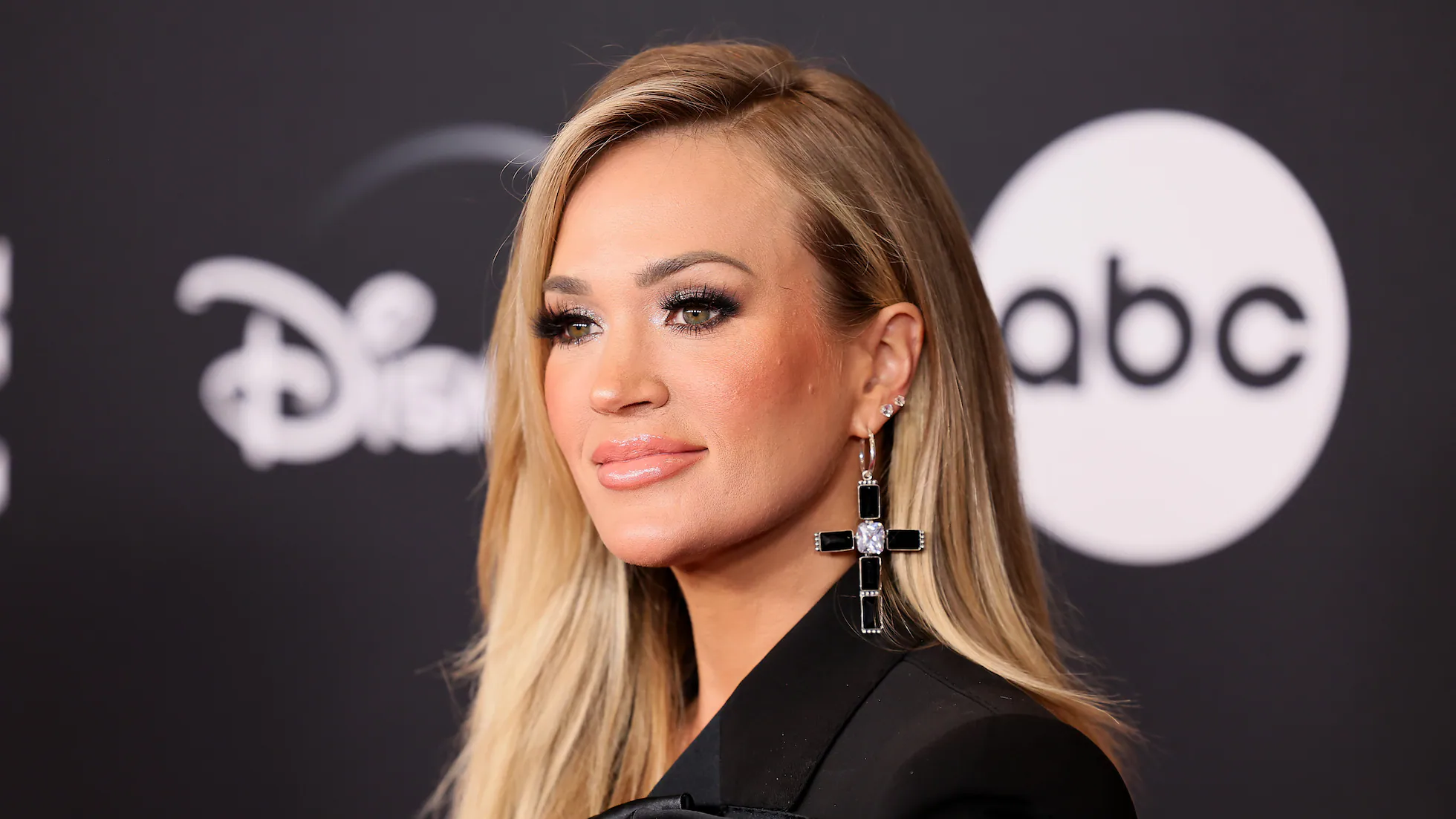
Country music star Carrie Underwood has long struck a chord with audiences worldwide, not just for her powerful vocals but also for her reserved and careful public persona. When it comes to political discourse – a space many celebrities navigate vocally or with fervent partisanship – Underwood has chosen a markedly different route. She consistently maintains a non-partisan stance, often expressing a desire to stay out of political conversations altogether. This positioning has, however, not insulated her from scrutiny, especially when her performances or lyrics are perceived as politically charged.
The complex intersection between celebrity culture and political expression is particularly pronounced in the United States, where values such as freedom of speech and artistic expression are constitutionally protected. Given that Underwood is an American artist, her public expressions fall under US-based legal and cultural frameworks, distinctly different from those in the United Kingdom. This article explores Underwood’s cautious approach to politics, investigates the public reactions to her choices, clarifies her statements, and outlines how this approach compares to regulatory and societal conditions in the UK.
What Is Carrie Underwood’s Political Stance?
Unlike a growing number of celebrities who openly endorse political candidates or movements, Carrie Underwood has deliberately avoided confirming any explicit political position. She has been vocal about this in interviews, referring to politics as an area she would rather avoid altogether.
In a notable 2019 interview with Good Morning America, Underwood stated that she tries to “stay far out of politics if possible” because “nobody wins” when artists take sides. She commented further that people try to “pin [her] places politically,” but she prefers not to be categorised. This reluctance highlights a fundamental tension between public expectation and an artist’s personal desire for neutrality.
Key Statements on Politics: Clarity Versus Interpretation
In the same interview, Underwood addressed misinterpretations of her 2018 song The Bullet. Many had speculated that the song was a veiled form of gun control advocacy. However, Underwood countered such interpretations, clarifying that the song was intended to explore the emotional aftermath of tragic violence – including that experienced by military families and law enforcement communities. According to her, The Bullet was neither an attack on gun rights nor a political statement.
Her statements underscore a frequently overlooked point in media analysis: not all artistic expression is meant as political commentary. Still, as many celebrities have found, public perception does not always follow artistic intent.
How Does This Compare to Political Engagement and Celebrity Involvement in the UK?
In the United Kingdom, the interaction between public personalities and political expression is governed by different rules and cultural expectations. The UK media landscape – governed partly by broadcast regulators such as Ofcom – holds certain standards when it comes to impartiality.
For example, during election periods, UK broadcasters are legally obliged to maintain neutrality. Celebrities who appear on these platforms are either vetted or asked to refrain from endorsing parties implicitly. Unlike the United States, where individual freedom of expression via the First Amendment is central, the UK places more emphasis on broadcasting standards and has a tighter alignment between regulation and political commentary. This contrast is particularly relevant when examining figures like Winston Marshall, whose departure from Mumford & Sons was influenced by cultural commentary intersecting politics in the UK.
In the UK, few celebrities openly engage in political endorsements during active campaign periods on major platforms. When they do, there are no legal restrictions against it in their private capacities, but public broadcasters and regulated platforms are constrained by limitations on political advocacy.
Carrie Underwood at the 2025 Trump Inauguration: A Source of Speculation
Despite her consistent claims of staying apolitical, Underwood’s decision to perform at Donald J. Trump’s second presidential inauguration in January 2025 led to renewed public scrutiny. These inauguration ceremonies are, by nature, politically charged, especially in the modern American landscape where political identity is increasingly polarised.
Underwood acknowledged the “honour” of participating in what she described as a “historic event.” She further stated that her performance was a gesture of unity, not partisanship. Nonetheless, her appearance led to a significant wave of online debate and speculation. Some interpreted her participation as an implicit endorsement of Trump or Republican ideals, though no explicit political statements were made by Underwood herself.
This scenario is a case study in how neutral acts can be politicised due to the context in which they occur. It also draws attention to the difficulty public figures face when engaging in culturally or politically significant events while attempting to remain neutral. A similar discourse surrounds other performers like Scott Adams, whose commentary has challenged ideas of neutrality and political alignment.
First Amendment Protections in the United States
To understand the context in which Underwood operates, it is essential to consider the constitutional landscape of celebrity expression in the US. The First Amendment to the United States Constitution guarantees freedom of speech, which includes speech that may be unpopular or politically biased.
This protection allows artists like Underwood to express political views, endorse candidates, or otherwise comment publicly without fear of legal repercussions. However, the same protection also allows critics to speak against them, creating a perpetual imbalance between expression and backlash.
In contrast, the United Kingdom does not have an absolute free speech guarantee akin to the US First Amendment. Speech in the UK is subject to certain legal restrictions, including libel laws and policies prohibiting hate speech. Additionally, the UK’s electoral regulations, such as those under the Electoral Commission and Ofcom, limit the ways in which broadcasters and performers can engage with political narratives during sensitive periods like elections. This legal reality has been clearly explored in the context of Rob Schneider’s free speech claims, illustrating how differently UK law treats political expression.
Instances Where Political Neutrality Is Misinterpreted
Carrie Underwood’s career has included multiple moments where her attempts at non-partisan neutrality were labelled politically significant by observers. Apart from her inauguration performance, her lyrics and philanthropic work have occasionally led to miscategorisations.
For example, her support for animal rights and vegan lifestyle choices has drawn speculation from both ends of the political spectrum. While animal rights are not inherently political, they intersect with various socio-political conversations related to environmentalism, corporate regulation, and ethical consumerism.
Moreover, Underwood’s Christian faith – which she has openly discussed – has led to assumptions about her political leanings in a country where religious expression is often viewed through a political lens. Yet again, Underwood has refrained from converting personal beliefs into political commentary. This apolitical stance aligns somewhat with figures like Dolly Parton, whose non-partisan approach—dubbed “Dollytics”—has similarly defied categorisation while still making a significant cultural impact.
Who Is Affected by Celebrity Political Silence?
Carrie Underwood’s approach sits within a broader discussion about the responsibilities of public figures in times of political tension. In both the US and UK, the public’s expectations of celebrities have evolved. For many, silence can be interpreted as complicity or indifference.
The affected parties in such scenarios include:
- Fans: Fans often look up to public figures for guidance or moral direction. A lack of voice on pressing issues can feel disappointing to some followers.
- Media Outlets: Ambiguity makes it harder for media houses to categorise celebrities or align opinions for commentary, thereby creating more speculation than fact.
- Other Artists: When one artist remains neutral, it may influence expectations around others or create comparative backlash when others speak out.
- The Artists Themselves: Constant scrutiny about statements, performances, or affiliations creates pressure and may impact mental health or public relations.
In the UK, these issues are shaped by a slightly different media culture, which historically respects boundaries between private convictions and public platforms – particularly on traditional broadcasters such as the BBC, which enforces strict impartiality. Similar to the analysis of celebrity advocacy explored through Catherine O’Hara’s political views, public figures remain under constant observation, whether they choose to speak or stay silent.
Breakdown of Key Elements Related to Carrie Underwood’s Political Engagement
The following table outlines major events and positions relevant to Underwood’s political neutrality and the responses they triggered.
| Event/Statement | Public Reaction | Clarification Offered? |
|---|---|---|
| Performance at Donald Trump’s Inauguration (2025) | Online backlash, speculation about support for Trump | Yes – stated purpose was unity, not political endorsement |
| Interview stating “nobody wins” in politics | Mixed – some praise for staying neutral, others critical | Yes – articulated intent to stay “far out of politics” |
| Release of The Bullet (2018) | Misread as gun control advocacy | Yes – clarified it was about collective loss and grief |
| Public Christian faith and vegan activism | Fuelled assumptions about political alignment | No – has not addressed political implications explicitly |
This table confirms a consistent pattern: Underwood primarily engages with socially resonant or symbolically meaningful opportunities or themes but without direct advocacy or alignment with political causes or parties.
Practical Lessons from Underwood’s Approach
For other public figures and commentators, Underwood’s journey offers important considerations:
- Silence is Still Communication: Choosing not to speak on political matters does not exempt celebrities from being analysed or judged.
- Context Matters More Than Content: A performance at a political event or a socially-themed song can be interpreted as a statement simply due to timing or setting.
- Clarification Is Key: Where possible, addressing public misinterpretations can help refocus narratives around artist intent.
- Consistent Messaging Builds Credibility: Repeating a clear narrative – in Underwood’s case, political neutrality – reinforces public perception and reduces ambiguity over time.
UK musicians and celebrities can draw parallels but must navigate a media environment shaped more directly by regulatory constraints and cultural expectations around media impartiality. The line between support and silence has similarly been dissected in profiles exploring figures like Ricky Gervais, who challenge current divisions while avoiding complete partisan affiliation.
Recommendations for Public Figures Navigating Politically Sensitive Terrain
- Clearly Define Your Position: Whether it’s neutrality or advocacy, articulate it transparently to reduce misinterpretation.
- Know the Regulatory Environment: Especially true in the UK, where election laws and broadcasting codes define boundaries of political comment.
- Engage Responsibly: Even neutral positions can be platforms to support unity, empathy, or community healing without direct political endorsement.
- Anticipate Public Reaction: Acceptance that public personas are subject to interpretation – and prepare accordingly with spokespersons or media strategies.
Carrie Underwood’s interviews and actions reveal someone who deeply values unity and personal authenticity over political tribalism. Her refusal to be pinned to a party line, while controversial to some, reflects a growing segment of public figures who wish to inspire without dividing. As the public becomes more reliant on high-profile figures for moral cues, even non-political messages are now interpreted through a political lens.
This reality highlights the growing need for media literacy and public dialogue that allows artists and entertainers room for nuance, reflection, and complexity. Whether in the United States or the United Kingdom, the line between cultural and political influence remains complex and ever-evolving.
About The Author