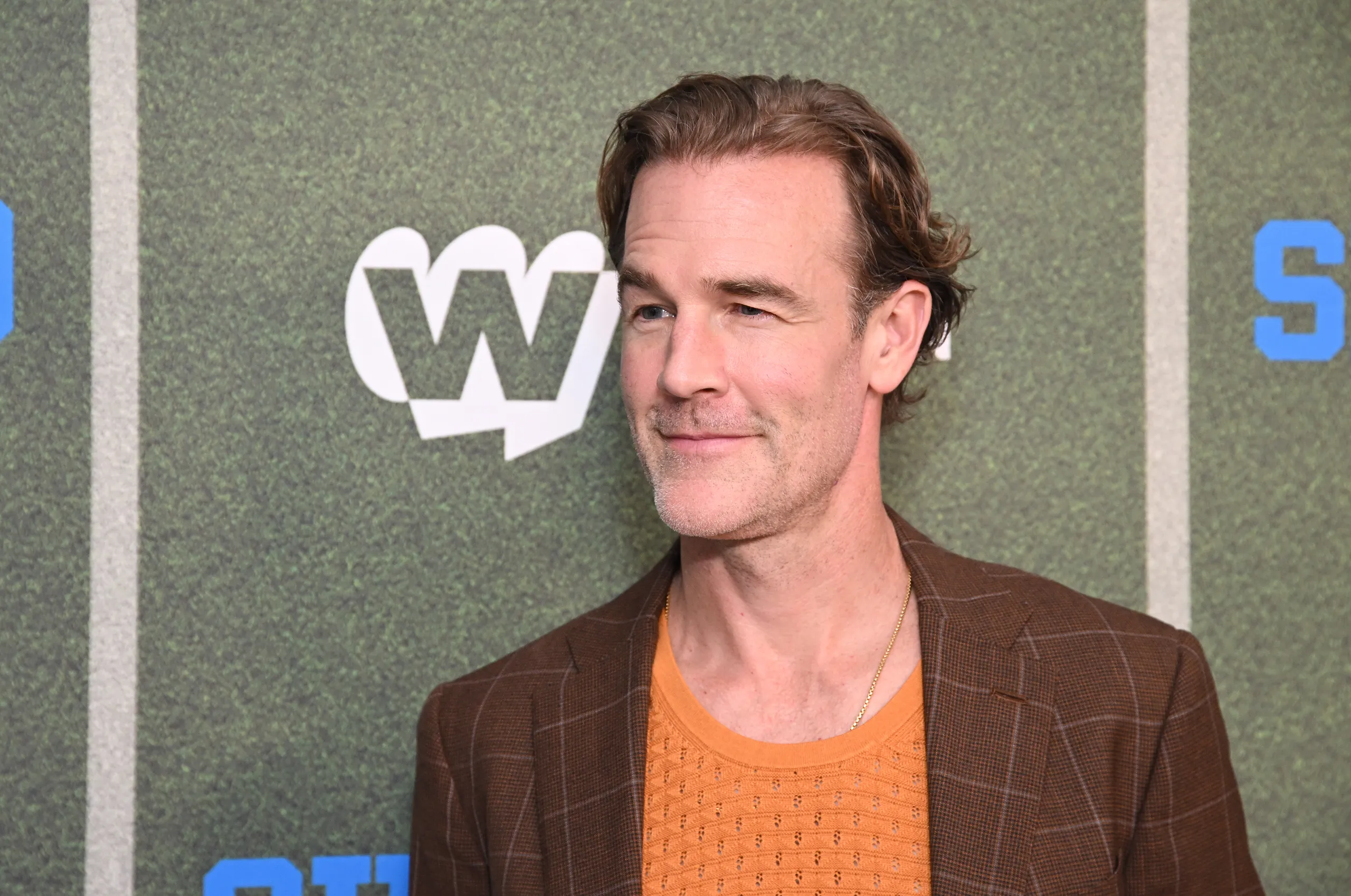
James Van Der Beek’s public commentary in 2023 stirred attention across social and traditional media platforms, not necessarily due to the fame he earned through acting roles such as Dawson Leery in Dawson’s Creek, but rather because of the political tone and style of his remarks. His outspoken criticism of United States political practices, particularly those concerning the Democratic Party and incumbent President Joe Biden, pushed him into a relatively new public light – that of a politically-engaged public figure challenging institutional decisions in America’s democratic process.
This analysis delves into James Van Der Beek’s 2023 political statements, their context, public and media interpretation, and how his personal life, particularly his wife’s known scepticism towards vaccination and his apparent political shift after 2016, may have coloured public perception. Crucially however, this article also examines whether his views or influence bear any relevance under United Kingdom political frameworks, laws, or systems – a necessary distinction in an era where global celebrity influence often seems to spill across national boundaries.
Public Political Statements: A Shift in Rhetoric
Van Der Beek’s most notable political intervention occurred on Memorial Day in May 2023 through TikTok, where he released a video strongly criticising the Democratic National Committee (DNC) for not hosting primary debates ahead of Joe Biden’s proposed re-election bid in 2024. He claimed that bypassing debates was “undemocratic” and that Biden, in his estimation, was suffering from declining mental faculties.
What set the clip apart from typical celebrity commentary was its populist and arguably conspiratorial tone, raising concerns about backroom deals and a supposed erosion of democratic values. In the video, Van Der Beek questioned:
- Why are there no Democratic primary debates being scheduled?
- Are voters being denied the opportunity to push for a better candidate?
- Is this reflecting an open system or a manufactured consensus?
Despite the emotive rhetoric, DNC’s practice of skipping debates for an incumbent president is not without precedent. Incumbent presidents – including Bill Clinton in 1996, George W. Bush in 2004, and Donald Trump in 2020 – have similarly faced limited or no primaries within their own party due to practical political unity at the time.
This context, however, did not prevent the media from interpreting the video as strange or off-kilter. Media outlets like indy100 labelled it “bizarre” and highlighted its confusing presentation, especially to fans more familiar with Van Der Beek’s scripted performances than engagements on contemporary American politics. Similar cultural crossovers, such as Scott Adams’s transition from cartoonist to commentator, offer a lens on how audiences respond when entertainers weigh in on political discourse.
Spousal Influence and Historical Digital Footprints
Some observers drew attention to the evolving political direction Van Der Beek appeared to be taking. Key to this transformation may be the role played by his wife, Kimberly Van Der Beek. She has been publicly described as having promoted anti-vaccine views since at least 2016. Her posts have included unfounded links between vaccines and autism, promotion of ivermectin as a COVID-19 treatment, and attributing rapper DMX’s death to vaccine complications – claims widely debunked by scientific and medical authorities.
Given the emotionally resonant narratives found in wellness and holistic communities, where many celebrities now actively participate, such views can shape not only personal health choices but also larger political and ideological outlooks. It stands to reason that consistent exposure to sceptical or conspiracy-leaning material may have contributed to Van Der Beek’s embrace of more conservative and critical stances. We’ve seen comparable ideological shifts before, such as Ricky Gervais’s layered critiques of political correctness and free speech entering culture war debates.
There’s also an indication that Van Der Beek’s views have shifted over time. Following Donald Trump’s 2016 presidential win, he tweeted about the “pain” the result had caused. That contrasts sharply with the 2023 persona advocating fairness in Republican-aligned language against Democratic processes. The trajectory resembles that of other prominent figures who began on the political left or centre but later drifted rightward after disillusionment with institutional politics or personal discontent.
Recapping the Key Developments
To clarify James Van Der Beek’s political evolution and related commentary, the following list captures the central episodes:
- May 2023: Posts viral TikTok video criticising the Democratic Party’s failure to hold 2024 primary debates.
- Biden Critique: Claims Biden is mentally unfit, suggesting the process is being manipulated.
- Media Reaction: Mainstream outlets describe the “rant” as unusual or difficult to follow.
- Kimberly Van Der Beek: Promotes anti-vaccine rhetoric and conspiracy-style thinking since 2016.
- Post-2016 Shift: Expressed disappointment at Trump victory but now appears aligned with some right-wing talking points.
This detailed record illustrates how Van Der Beek’s political views moved from mainstream liberalism (characteristic of most Hollywood celebrities) to more suspicious, structurally critical positions increasingly adopted by populist and conservative commentators. A similar arc can be seen through figures like Winston Marshall, who faced scrutiny for his pivot away from mainstream music to cultural and political commentary rooted in nationalism and populism.
No Relevance Within the United Kingdom’s Political Framework
Despite significant attention within American cultural media circles, there is no evidence to suggest that Van Der Beek’s political commentary or beliefs intersect with UK electoral frameworks, political parties, campaign organisations, laws, or democratic institutions.
The United Kingdom, governed under parliamentary democracy and subject to laws such as the Representation of the People Act 1983 and later amendments like the Political Parties, Elections and Referendums Act 2000, has rigorous mechanisms around political donations, campaigning, endorsements, and even foreign interference. To understand how such boundaries function, readers may find it helpful to explore the UK fact-checking ecosystem, which underscores the country’s commitment to digital transparency.
Van Der Beek, as a U.S. citizen and private individual, would have no legal standing to engage politically within British mechanisms unless via exceptional circumstances such as acquiring UK citizenship or taking residence and participating as a voter under specific eligibility criteria. Moreover, no public action has been documented linking Van Der Beek with any UK party or political movement, online or offline.
The Electoral Commission in the UK, which maintains oversight of national elections, party finances, and conduct of campaigns, has issued no statements or enforcement actions even remotely related to the actor. Nor does his social media record suggest any engagement with British political life.
To give clarity to UK-centric readers unfamiliar with the relevant frameworks, the following table summarises key UK political governance instruments and why Van Der Beek’s commentary does not fall under them:
| UK Legislation/Agency | Purpose | Relevance to James Van Der Beek |
|---|---|---|
| Representation of the People Act 1983 | Regulates UK electoral processes, constituencies, and voting rights. | Not applicable – Van Der Beek is not a UK citizen or voter. |
| Political Parties, Elections and Referendums Act 2000 | Monitors party funding, campaign transparency, and donations. | No donations or affiliations to UK parties from Van Der Beek. |
| Elections Act 2022 | Introduced voter ID rules and addressed foreign donations. | No evidence suggests Van Der Beek’s influence reached UK elections. |
| Electoral Commission | Regulatory body overseeing UK democratic integrity. | No records or actions involving Van Der Beek. |
Who Is Affected by Celebrity Political Expression?
The phenomenon of celebrities expressing political beliefs – especially in the age of social media and instant virality – primarily affects digital audiences. In Van Der Beek’s case, a combination of fans, critics, and politically-engaged social media users became the interpreting public.
Where this becomes more contentious is among followers who may lack the time or resources to verify claims or differentiate between opinion and evidence. The danger then is not just misinformation, but misplaced trust. While Van Der Beek did not directly misinform in his video, the style of his rhetoric and references to opaque deals evoke classic populist themes common in disinformation campaigns, especially during election years. Readers interested in online deceptions may want to explore parallels in high-profile misinformation cases like the Denmark-Kosovo derecognition hoax.
In contrast, the UK regulates celebrity endorsements of political parties more closely under electoral law. Direct celebrity involvement in campaigning must be properly declared in party election expenses, and paid endorsements open channels for scrutiny.
Yet, given Van Der Beek’s exclusion from the UK electorate and political community, his influence is effectively null in formal British settings.
Recommendations for Engaging Celebrity Political Commentary Responsibly
Given the complexity of political environments and the broad platform celebrities command, several practices can guide more informed engagement:
- Verify information: Check sources that align with regulatory facts and avoid emotive rhetoric as primary evidence.
- Understand jurisdiction: Recognise that political systems differ – the DNC’s approach is irrelevant to UK party politics or legal obligations.
- Critically assess tone: Watch for populist language or conspiracy cues often deployed to provoke rather than inform.
- Consider influence channels: Celebrities have access to global digital platforms, but legal and political influence is still bound by national laws.
- Prioritise local relevance: Especially in the UK, political decisions depend on British legal frameworks and citizen participation rather than global online trends.
James Van Der Beek’s later years were marked not only by political engagement but serious health challenges. Diagnosed with colorectal cancer in 2023 (publicised a year later), he succumbed to the illness in February 2026. Reports suggest he sold personal memorabilia in late 2025 to help cover medical expenses – a final act that reminded many fans of his humanity beyond the media storm.
Although Van Der Beek’s political contributions offered insight into American dissatisfaction with establishment politics leading into 2024, they remain entirely borne of the U.S. civic environment. For audiences within the UK, his example serves more as a cultural case study on influencer engagement than a subject of direct political concern. There is no intersection between his views and British laws, election practices, or political parties, and none suggested by formal documentation or public record.
In a time defined by instant digital communication and borderless social reach, understanding the limits of influence – legal, jurisdictional, and ethical – is more important than ever. Observing celebrity political speech with a cautious but open mind allows for cultural engagement without legal or democratic confusion, particularly across separate political systems like those of the UK and the US.
About The Author