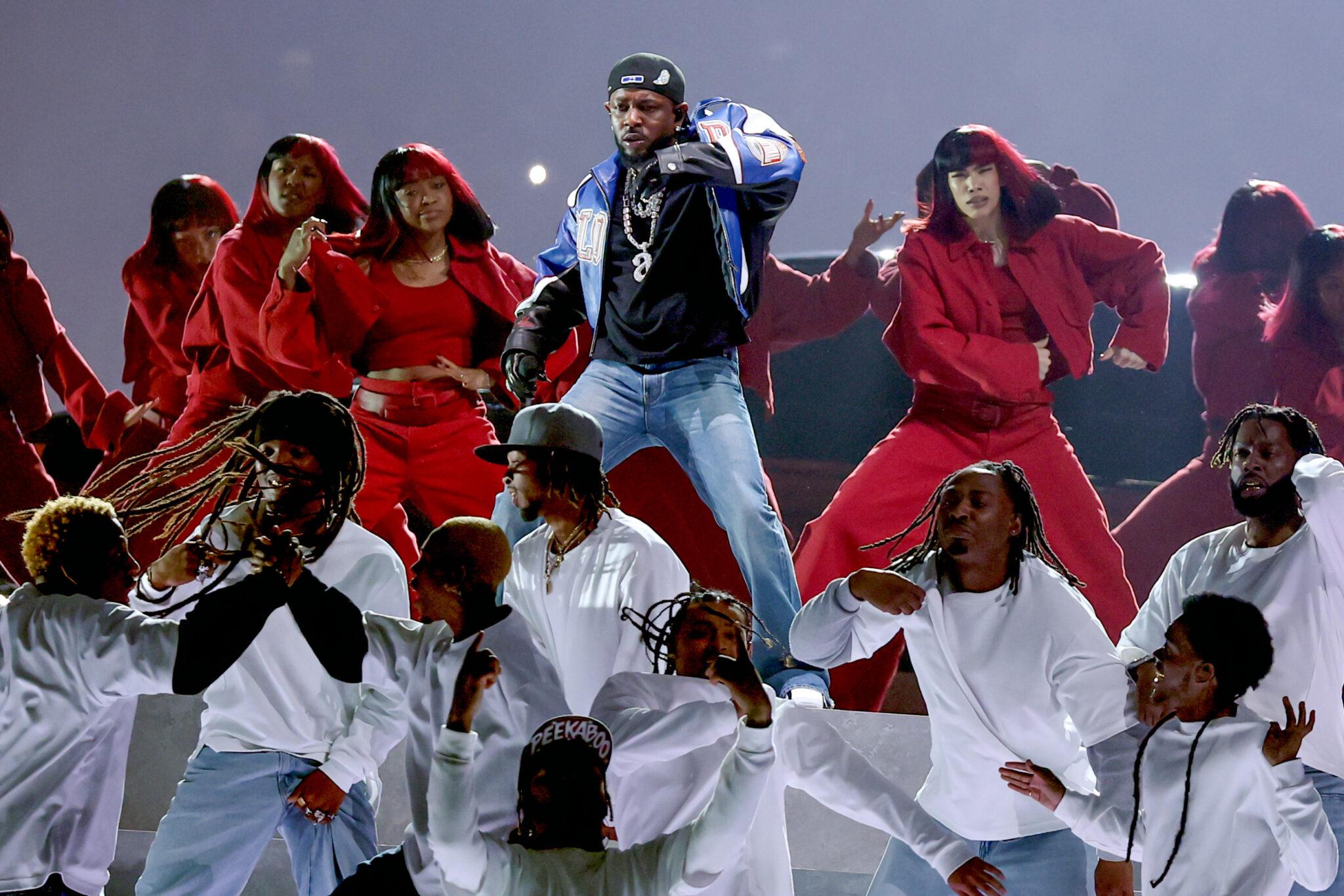
NEW ORLEANS, LOUISIANA - FEBRUARY 09: Kendrick Lamar performs onstage during Apple Music Super Bowl LIX Halftime Show at Caesars Superdome on February 09, 2025 in New Orleans, Louisiana. (Photo by Jamie Squire/Getty Images)
Jelly Roll – the American country rapper known as Jason DeFord – has made headlines not only for his music but also for his distinctive stance on politics. This apolitical approach positions him as an intriguing figure within the broader narrative of citizen participation in democracy, especially concerning those disenfranchised by the very systems meant to empower them. His disinterest in engaging in political discourse is compounded by personal experiences related to his past felony convictions, which bar him from voting and contribute to a narrative of political disconnection.
Definitions and Background
To better understand Jelly Roll’s position, it’s essential to define a few key concepts. Jelly Roll, born Jason DeFord, has gained notoriety within the music industry, notably winning the Grammy for Best Contemporary Country Album in 2026. Throughout various interviews, he has been candid about his aversion to politics, often mockingly suggesting that individual votes carry little weight in a two-party system dominated by entrenched interests. This sentiment underlines his belief that the result of elections is predetermined by greater forces outside an individual’s control.
What emerges from his narrative is the idea of a “third class” of politically disengaged individuals who exist outside the conventional definitions of Democrats and Republicans. These individuals, although not actively participating in the electoral process, could wield considerable influence if mobilised. Jelly Roll’s own experiences provide a lens through which to examine the disenfranchisement that many citizens feel, particularly those with past transgressions that have barred them from the voting process.
In acknowledging his personal narrative and views, it is essential to analyse their broader implications within society, particularly in the United States. Understanding the broader context around voting rights and disenfranchisement can shine a light on the obstacles many face, similar to those discussed in stories from individuals in different spheres of influence, such as that of Dolly Parton (https://www.mypoliticalhub.com/uncategorized/dolly-parton-politics-explained/), who has also navigated the complexities of public engagement.
The Mechanism of Political Disengagement
The mere existence of a vibrant political landscape does not ensure active participation from all segments of the population. In fact, many individuals find themselves disengaged from the political process for various reasons, including disillusionment, alienation, and practical barriers such as felony convictions. One of Jelly Roll’s significant points of contention is the two-party system, where he believes that voters are often compelled to choose between candidates who do not necessarily represent their values or interests.
Rather than conceptualise politics through the binary lenses of Republican and Democrat, individuals like Jelly Roll reflect a growing awareness of what it means to belong to a “third class” of non-participants. This group arguably holds a unique perspective on the political climate of the nation, as they navigate the complexities of both their disenfranchisement and political apathy, similar to some movements highlighted in discussions around Kano Politics (https://www.mypoliticalhub.com/2026/01/01/kano-politics-electoral-system/).
Warnings and Signs of Political Apathy
In examining the phenomenon of political disengagement, it becomes important to recognise the signs and implications of this trend. Public figures like Jelly Roll can face considerable backlash for avoiding political questions in the public arena. Throughout interviews, he has been pressed on topics, including former President Trump and the importance of voting. By consistently sidestepping these conversations, Jelly Roll risks alienating potential fans who might expect engagement with prevailing socio-political issues.
Several warnings and signs characterise this form of political apathy:
- Disinterest in Voting – Many individuals disillusioned by the political process choose not to vote, believing their choice holds negligible impact.
- Lack of Political Awareness – Without engagement, individuals may become uninformed about policies that directly affect their lives.
- Increasing Polarisation – When citizens disengage, the divide between the extremes of the political spectrum widens, further marginalising centrist voices.
- Social Media Echo Chambers – Individuals may find themselves surrounded only by like-minded opinions, reinforcing their disengagement from broader political discussions, which has been exemplified in the discussions on CNN Politics (https://www.mypoliticalhub.com/uncategorized/cnn-politics-denmark-kosovo).
Who is Affected? Audience Participation
The reach of Jelly Roll’s message extends beyond his music; it taps into a fibre of society that resonates with those who feel similarly marginalised. Many individuals find themselves resonating with his apolitical stance, particularly among demographics that share his background of identification with community, experience of disenfranchisement, or disillusionment towards conventional political practices.
The audience most affected by the lack of engagement in politics typically includes:
- Felons and Former Offenders – Like Jelly Roll, many individuals with felony convictions are disenfranchised, leading to feelings of hopelessness regarding political participation.
- Young Voters – Younger generations may view the political landscape as unrepresentative of their values and concerns, contributing to lower turnout rates.
- Moderates and Centrists – Those caught between party lines may feel disinclined to engage in a system that appears to neglect their perspectives.
- Low-Income Citizens – Economic hardships can amplify feelings of disconnection from politics when individuals are focused on immediate survival rather than political action.
Understanding the demographics of those affected by political apathy allows us to analyse the potential ripple effects on voter turnout and community engagement, especially when considering the motivations that lead to political activism as highlighted in the broader political discussions across different platforms and movements.
Recommendations and How to Act
Encouraging political engagement can be especially challenging, but it remains essential to revitalise the democratic process. Active efforts must be taken to include those who feel disenfranchised, particularly in light of narratives similar to that of Jelly Roll. Below are recommendations for re-engagement:
- Increase Education on Voting Rights – Many individuals are unaware of their rights to vote, especially those with felony convictions. Providing clarity on the pathways to restoration of rights can empower disenfranchised citizens.
- Promote Grassroots Movements – Support local organisations that promote civic engagement among young and disenfranchised populations. This enables them to reclaim their voices in the political landscape, with examples seen throughout higher politics (https://www.mypoliticalhub.com/worldwide-news/higher-politics-past-papers).
- Encourage Open Dialogue – Create safe spaces for discussions about political engagement and disenfranchisement. These conversations can lead to greater awareness and can break down barriers of apathy.
- Leverage Social Media – Utilize digital platforms to share stories like Jelly Roll’s, which can resonate with many individuals. These narratives can provoke dialogue and inspire action.
The evolving landscape of political participation necessitates thoughtful strategies that can address the core challenges surrounding apathy and disengagement. Through the promotion of educational initiatives, grassroots organisations, open dialogue, and the creative use of social media, avenues can be created for a broader segment of society to engage meaningfully in the democratic process, similar to efforts highlighted in discussions about American Politics News (https://www.mypoliticalhub.com/worldwide-news/american-politics-news-overview/).
Current Rules and Recent Changes
While there may not be formal rules or directives influencing Jelly Roll’s stance on politics, societal perceptions and movements are continually evolving. The Grammy comments he made in 2026 further emphasised his longstanding avoidance of political engagement due to personal choices and experiences. The implications of such perspectives can be profound, perpetuating a cycle of disenfranchisement and apathy.
To understand the broader context, it is crucial to analyse how discussions around voting rights, particularly among felons and politically disengaged communities, are increasingly coming to the forefront in the United States. Advocacy groups are tirelessly working to highlight the need for reforms in voting legislation to mitigate barriers faced by millions. As these discussions evolve, the resonance of stories akin to Jelly Roll’s can facilitate meaningful dialogue on disenfranchisement and the importance of mobilising politically active citizens.
Risks and Practical Implications
The risks associated with political disengagement are multi-faceted. Public figures like Jelly Roll may face criticism for avoiding political topics, and this apathy can reinforce negative perceptions about democratic processes among the general public. This alienation not only raises concerns about personal identity as citizens but also represents a broader societal issue.
The practical implications extend beyond personal opinion and can impact political turnout, particularly in a binary electoral environment like that of the United States. A continued disengagement from political discourse has already shown impacts on voter turnout among disenfranchised communities, which in turn can heavily influence the outcomes of elections and the shaping of policy.
To elucidate these issues further, consider the following points:
- Reinforced Apathy – The act of avoiding conversations surrounding political engagement can perpetuate a culture of disinterest, particularly among followers who resonate with Jelly Roll’s experiences.
- Who’s Counting the Votes? – The disengagement of large populations implies that critical votes are not counted, which can lead to unrepresentative outcomes that neglect the needs of those communities, as illustrated by discussions within the political landscape that echo sentiments shared in piker politics (https://www.mypoliticalhub.com/worldwide-news/piker-politics-explained/).
- Commodification of Political Dialogue – Celebrities and public figures, while influential, risk commodifying political conversations rather than fostering authentic community engagement.
Recognition of these risks can serve as a rallying point for increased conversations addressing the significant barriers to engagement.
The apolitical stance exhibited by Jelly Roll offers valuable perspectives on the interconnected themes of disenfranchisement, alienation, and political apathy.
Influenced heavily by his past experiences, Jelly Roll’s narrative highlights the importance of understanding the broader implications of political disengagement within society. By fostering dialogue, raising awareness of disenfranchisement, and advocating for meaningful change, the potential exists for a more inclusive political landscape where all voices can be heard and represented.
Recognising the barriers many face when trying to engage in the political process is the first step toward fostering a more active citizenry. As history has shown, participation matters – and every voice has the potential to sway the future of democracy.
About The Author