Post Malone’s Political Views and Statements
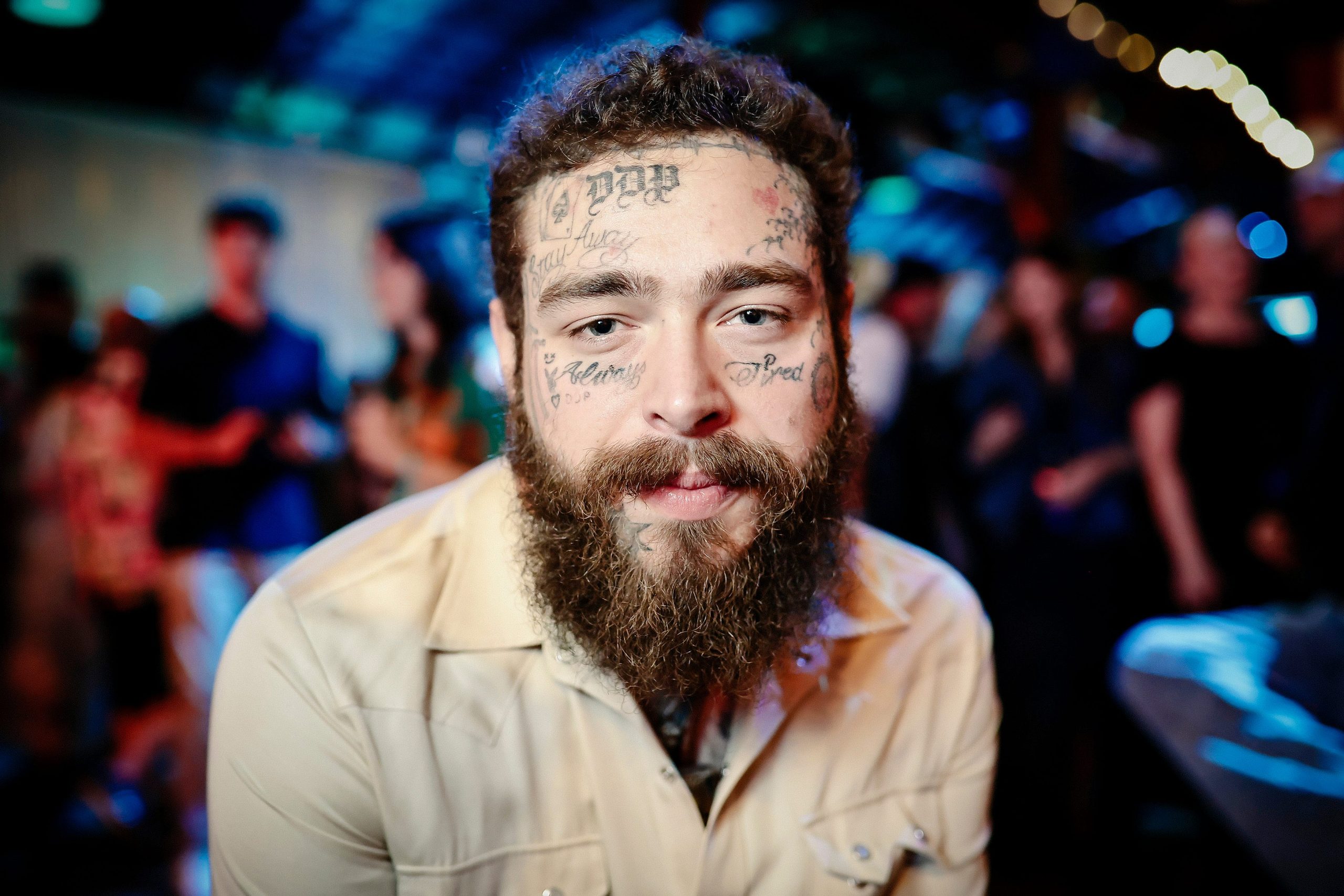
In recent years, celebrities have increasingly used their platforms to speak out on political and social issues. However, not all public figures engage with politics in the same way. Post Malone, born Austin Richard Post on 4 July 1995, is an American rapper, singer, songwriter, and producer whose political commentary has been sporadic, nuanced, and often apolitical. While he has occasionally expressed political opinions – especially during the heightened political environment in the United States between 2016 and 2017 – Malone has largely maintained a distance from traditional activism compared to some of his peers.
His statements over the years, though limited in quantity, offer insight into a perspective shaped by scepticism towards mainstream political figures, concern about government corruption, and a libertarian leaning on individual freedoms, particularly gun ownership. His views have not aligned squarely with any one political ideology, nor has he made significant endorsements in recent elections following 2017.
This article presents an in-depth look at Malone’s political commentary across the years, highlighting the statements he has made, their context, and any implications they might have. It’s important to underscore that the scope of his political expression is grounded in U.S. matters and carries little direct relevance to the UK framework.
What Are Post Malone’s Political Views?
To understand the nature of Post Malone’s political attitudes, we must examine the rare but pointed comments he has made publicly. These are few in number but insightful in content. Despite his influence and global fame, Malone has neither pursued political advocacy nor attempted to shape policy. What emerges is a picture of a celebrity cautious of making political alignments while maintaining strong feelings about individualism and governmental mistrust.
Admiration for JFK and Criticism of Corruption
Among his most overt political statements was his admiration for John F. Kennedy. Malone has a tattoo of the late President on his arm, which he justifies by saying Kennedy was “the only President to speak out against the crazy corruption stuff that’s going on in our government nowadays.” This sentiment reflects a deep interest in perceived systemic corruption. However, it also signals reliance on historical figures rather than contemporary political actors as symbols of integrity.
This ideology aligns loosely with conspiracy theory rhetoric, which Malone has not shied away from. Rather than championing particular reforms, he exhibits a sceptical view towards the truthfulness or transparency of government, suggesting an awareness – or belief – in hidden agendas or classified misinformation.
Views During the 2016 Election and Inauguration
The 2016 U.S. presidential election saw an unusual mix of candidates and intense cultural division, influencing many celebrities to take clear stances. Post Malone, however, voiced distrust in both major candidates: Hillary Clinton and Donald Trump. In a December 2016 interview, he disclosed that he didn’t believe either was fit for presidency. Moreover, while he did not object to performing at Trump’s inauguration, he clarified that he supported Bernie Sanders, the independent senator from Vermont noted for his progressive policies.
This combination of political views – favouring Sanders’s outsider stance but open to performing at Trump’s political event – reveals a general disaffection with the mainstream political spectrum. It also underscores Malone’s pragmatism in engaging with public events while maintaining personal ideological reservations, reflecting a stance not unlike Dolly Parton’s politics of cultural influence without polarisation.
Comments in 2017: Guns, Dislike for Trump, and Conspiratorial Thinking
In a Rolling Stone interview from November 2017, Post Malone became more explicit in his political cynicism. He stated bluntly, “Donald Trump is a piece of [expletive],” revealing his disregard for the then-U.S. President. Concurrently, he defended the right to gun ownership emphatically, describing it as a fundamental American right. He possesses an expansive collection of firearms and sees their ownership as both protective and symbolic of liberty.
Furthermore, he indulged in vague but expressive references to conspiracy theories, stating, “There’s crazy stuff that goes on that we can’t explain,” and describing the U.S. government as “a fucking reality show.” This imagery paints a view of governmental operations as theatre rather than governance, indicating deep mistrust in political authenticity. This sense of political spectacle echoes themes also explored in the public life of Scott Adams and other controversial commentators who blur the lines between cultural critique and political expression.
Criticism of Hip-Hop’s Lack of Substance
Although not strictly political, Malone’s criticism of modern hip-hop for lacking messages about “real stuff” stirred controversy in 2017. While he refrained from connecting the critique to policy or activism, it could indirectly reflect a desire for greater substance in artistic expression – something often incited by political engagement. Nevertheless, this commentary received backlash from within the hip-hop community, with rappers like Lil B and Vince Staples offering sharp rebuttals. That pushback mirrors how entertainment figures like Ricky Gervais and others have navigated highly divided public reactions to politically-adjacent creative commentary.
The Bud Light Boycott Controversy (2023)
More recently, in 2023, Post Malone responded to the conservative boycott of Bud Light. The boycott followed a marketing partnership between the brand and Dylan Mulvaney, a transgender influencer. While reactions across the entertainment industry varied – some being strongly in support or against the campaign – Malone appeared to tread a moderate path.
He adopted a position akin to that of podcast host Joe Rogan, condemning the intensity of the boycott without fully endorsing the marketing campaign. His comments tacitly acknowledged marketing miscalculations by Anheuser-Busch but refrained from making overt ideological assertions. This positioning further illustrates his tendency to avoid extreme partisan displays, instead focusing on balance and criticism of spectacle politics. Similar cultural balancing acts have also been observed in other artists’ responses to new age polarisation, a theme explored in Winston Marshall’s political journey.
An Overview of Post Malone’s Key Political Statements
To distil his political perspectives, the following table summarises Malone’s most cited political views and statements across different years.
| Year | Statement/Event | Political Implication |
|---|---|---|
| 2016 | Support for Bernie Sanders; reluctance on Clinton and Trump | Shows anti-establishment sentiment; preference for outsider candidates |
| 2016 | Willingness to perform at Trump’s inauguration | Reflects pragmatism and non-partisan approach to performance gigs |
| 2017 | Criticism of Trump; support for gun ownership | Libertarian leanings; concern for civil liberties; deep scepticism of authority |
| 2017 | Interest in conspiracy theories and government dissatisfaction | Distrust in government; attraction to alternative narratives |
| 2023 | Commentary on Bud Light boycott | Avoids polarising stances; highlights commercial sensitivity |
This table underscores that while Post Malone communicates discontent with governmental systems and respects certain individual freedoms, he doesn’t comfortably situate himself within conventional political binaries.
Minimal Impact in a UK Context
Post Malone’s political declarations are distinctly American in nature. They cover subjects such as presidential elections, U.S. gun rights, and American marketing strategies in the wake of culture wars. As such, there are almost no implications, risks, or alignments relevant under UK laws or regulatory frameworks—unlike figures such as Mike Murphy who while similarly rooted in U.S. politics, frequently engage in commentary on global systems.
Legal and Regulatory Irrelevance to the UK
Because Malone is not a UK citizen, and his statements concern United States policy and politics, the subject does not fall under the purview of any British governmental body. Agencies like:
- The Electoral Commission (which monitors political financing and fairness in the UK)
- OFCOM (which manages broadcasting standards)
- The Home Office (which is generally concerned with national security and policing)
have no jurisdiction over commentary made by Malone. His ongoing career and legal status are unaffected by UK legislation, much like other transatlantic personalities whose public remarks stay within the bounds of opinion rather than incitement, as seen in issues addressed about Rob Schneider and UK free speech.
No Risk of Breach of UK Broadcasting or Political Guidelines
Should Post Malone’s views be broadcast on British media, such as through BBC Radio or ITV interviews, British networks would still bear ultimate responsibility for editorial standards. Yet nothing he has stated approaches the threshold of legally problematic commentary – such as hate speech – under UK law. His political comments are opinionated but non-inflammatory in a UK framework.
Who Might Be Affected by His Views?
Given Malone’s global reach as a chart-topping musician, his cultural influence is undeniable. However, his modest foray into politics is unlikely to significantly sway public opinion or legislative developments in the UK. Still, his statements may influence the following groups:
- Fans and followers, especially younger individuals, may frame their perceptions of government and political cynicism through his commentary.
- Entertainment brands and sponsors, who are often sensitive to public relations implications of a celebrity’s expression.
- Fellow artists, particularly in the hip-hop industry, might be affected by the ripple effects of his cultural criticism, which sometimes collides with broader societal narratives.
Even within these groups, however, Malone’s political positioning is more likely to initiate discourse than determine positions. He neither preaches activism nor encourages mobilisation.
Public Figures and Political Neutrality
Post Malone’s general trend toward neutrality reflects a larger strategic shift observed in entertainment, where many public figures tread carefully between fan bases with diverse values. Particularly after the era of politicised consumer campaigns and cancel culture, neutrality became an implicit brand protection mechanism.
In particular, the 2023 Bud Light boycott highlighted how even minor political expressions could cascade into financial and reputational losses. Malone’s response – neither attacking nor endorsing – seemed designed to express individual opinion while minimising brand alienation. This approach contrasts strongly with figures like Kid Rock, who took firm, highly visible stances that more explicitly polarised audiences.
This kind of quiet diplomacy aligns with a broader industry recommendation: artists are advised by media managers to refrain from incendiary views and instead focus on the art unless they are prepared for possible division among their audience.
Post Malone has never endorsed a UK party, commented on UK government policy, or visited Parliament – making his political footprint in the United Kingdom negligible. Any analysis of his views must remain rooted in his American identity and its correspondent sociopolitical climate.
As such, those seeking political insight in the UK context should not consider Malone a thought leader, but rather an observer of modern American discontent.
Through a careful reading of his sparse public political remarks, one gathers that Post Malone is cautiously engaged: sceptical of authority, responsive to the cultural climate, but intentionally avoiding entrenched positions. His political sentiments neither champion a cause nor vilify an individual unequivocally. For readers and fans alike, his philosophy might best be summarised as: question the system, but do so from outside the fray.
This balanced yet critical approach offers one model of public interaction with politics – especially for those uninterested in diving deeply into the political arena. While not an advocate, Post Malone serves as a mirror to many who feel disenchanted with traditional politics but are wary of intense public declarations.
About The Author