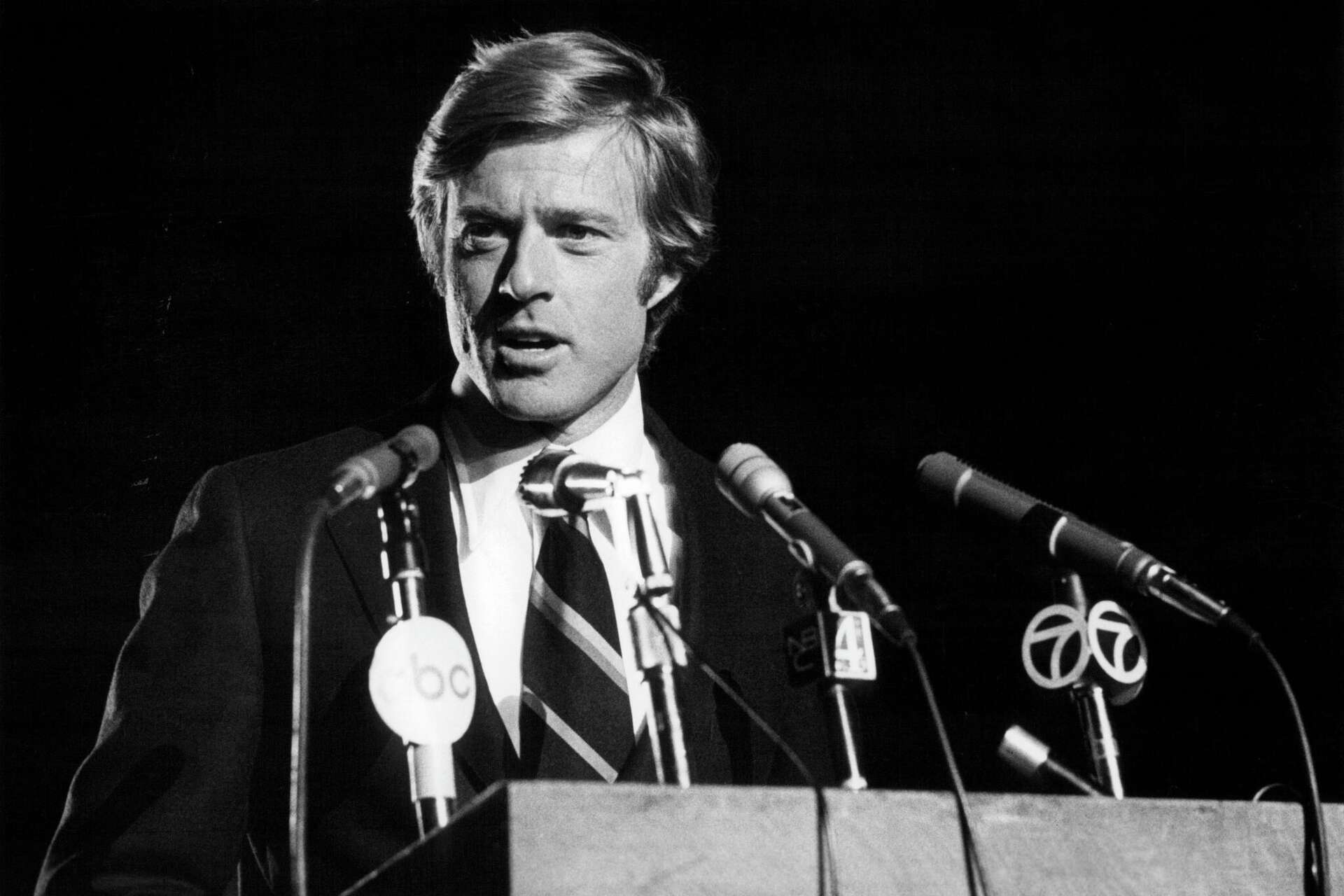
Robert Redford was a lifelong political activist and advocate whose engagement with political issues spanned more than five decades, primarily focused on environmental protection, democratic accountability, and media integrity. Rather than seeking formal political office, Redford expressed his political convictions through filmmaking, activism, and public commentary on governance and social issues.
Environmental Activism
Redford served as a trustee of the Natural Resources Defense Council for five decades, making environmental protection his primary political focus. He was a vocal critic of climate change denial, attributing resistance to environmental action to fear of change and a desire to preserve outdated approaches to governance. His activism extended to specific infrastructure concerns; he appeared on 60 Minutes in 1976 to protest the proposed construction of power plants in Utah that would have damaged public wilderness areas.
Redford’s commitment to environmentalism can be observed through several critical initiatives he promoted:
- Establishing the Sundance Institute, which focuses on supporting independent filmmakers with a commitment to telling stories about social and environmental issues. This aligns with themes explored in Understanding Protectionism in the UK regarding the importance of community engagement.
- Advocating for sustainable energy solutions in film production, thereby raising awareness of environmental issues in both the industry and wider society.
- Campaigning against legislation that threatens natural habitats, ensuring that environmental voices are heard in legislative discussions.
Through these efforts, Redford became an iconic figure in the environmental movement, using his platforms to amplify important messages about conservation and sustainability.
Political Commentary and Filmmaking
Redford’s political views were consistently expressed through his film work rather than party affiliation. He refused to align himself with either Republicans or Democrats, instead using cinema as a vehicle for political critique. His filmography explored systemic political problems, illustrating the influence of media and power dynamics in society.
His film contributions include:
-
The Candidate (1972): This satirical film satirized the subordination of political principles to image management and media strategy, portraying how electoral success depends on selling candidates’ appearances rather than their convictions.
-
All the President’s Men (1976): This film examined investigative journalism’s role as a check on executive power, showcasing the courage it takes to confront corruption in government.
-
Truth (2015): This film addressed threats to press freedom when journalism challenges political authority, emphasising the vital role of an independent media in a healthy democracy.
These films not only entertained but also provoked thought and discussion regarding the integrity of politics and the responsibilities of the press, similar to the analysis found in Understanding American Politics News.
Critique of Money in Politics
Redford identified money as the primary driver of political outcomes, expressing concern that wealthy interests were directing electoral strategy and policy in directions he considered narrow-minded. He noted that the exponential increase in campaign spending represented a fundamental distortion of democratic representation, leaving ordinary citizens feeling powerless to influence their government.
In light of this, Redford advocated for reforms to campaign finance laws to curb the influence of money in politics, thereby reclaiming agency for citizens and restoring faith in democratic processes. He highlighted the importance of transparency in funding political campaigns, arguing that voters should be aware of who financially supports candidates and their agendas.
Democratic Concerns
In a reflective statement made in 2025, Redford expressed alarm about the erosion of civil discourse in American politics. He warned that the normalization of “bigotry, mean-spiritedness, and mockery” as political tools was discouraging young people from civic participation and public service. Redford believed that the disconnect between declared values and actual political behaviour represented a structural problem in American democracy.
His advocacy for civil discourse aimed at revitalising democratic values, encouraging dialogues that are respectful, informed, and rooted in understanding—principles he viewed as essential for a functioning democracy. By engaging citizens with media and art that inspire responsibility and empathy, he sought to bridge the gaps in society’s discourse.
Views on Accountability
Redford was particularly critical of the George W. Bush administration’s role in the Iraq invasion, specifically targeting Dick Cheney for lack of accountability. He questioned the absence of investigations into the individuals responsible for major foreign policy decisions, expressing bewilderment that such figures continued to receive platforms for public speech without facing their actions.
This concern for accountability resonated with Redford throughout his career, underscoring the need for transparency and responsibility in political leadership. He underscored the importance of holding leaders accountable not only to the public but also to the ethical standards expected from those in positions of power, echoing sentiments found in Understanding Politics Monday PBS.
Key Distinction
It is important to note that Redford’s political engagement was expressed through cultural and activist channels rather than formal political engagement or UK legal frameworks. As an American citizen and filmmaker, his political activities operated within U.S. constitutional protections for free speech and political activism.
In the UK, similar movements can be observed with various cultural figures advocating for social change through film, art, and public discourse. These figures often draw parallels with the challenges posed by wealth in political structures, underscoring that the influence of money in politics is not confined to any single nation.
Public and Cultural Impact
Robert Redford’s career demonstrates how the intertwining of art and activism can foster social change. His films not only engaged audiences on entertainment levels but also served as vehicles for crucial discussions about accountability, media integrity, and environmental sustainability. Through his multifaceted career, he became a cultural icon representing the power of storytelling in advocating for social justice and political reform.
This intersection of art and activism encourages individuals and communities to critically engage with societal issues. By fostering dialogue and reflection on pressing political matters, Redford’s legacy continues to inspire future generations of activists and filmmakers to use their platforms responsibly.
Recommendations for Civic Engagement
-
Support Independent Art: Engaging with and supporting independent artists and filmmakers who touch on social and political issues can amplify conversations about accountability, representation, and democracy, similar to themes presented in Understanding Kano Politics.
-
Advocate for Community Initiatives: Individuals can take part in local initiatives focused on environmental conservation or democratic processes, thereby becoming active participants in their communities.
-
Engage in Civil Discourse: Promoting respectful discussion around contentious topics nurtures a culture of understanding and empathy, critical for the health of any democracy.
-
Raise Awareness about Political Spending: Encouraging transparency in campaign financing and advocating for reforms can help curb the influence of money in politics, ensuring that democratic processes reflect the will of the people.
Through these concerted efforts, individuals can contribute to a more equitable society, echoing the values that Robert Redford championed throughout his life.
Redford’s life exemplifies the impact of cultural activism on community consciousness. He not only paved the way for many filmmakers to incorporate social commentary into their work but also demonstrated the essential role of arts in democratic engagement. Whether through the nuanced portrayals in his films or the direct activism he championed, Redford’s legacy serves as a reminder of the power of art to inspire action and foster change.
About The Author