Belgium Slams the Door: What Brussels’ Rejection of Russian Asset Use Means for Ukraine and Europe
 Sophie Gesture
A single headline, published by Euractiv on 30 August 2026, landed with the weight of a vault door closing. “Belgium slams door on using Russian assets for Ukraine.” In the compressed grammar of political journalism, few phrases carry more finality than “slams door.” It does not mean delays, reconsiders, or expresses reservations. It means no — and, for now at least, no emphatically.
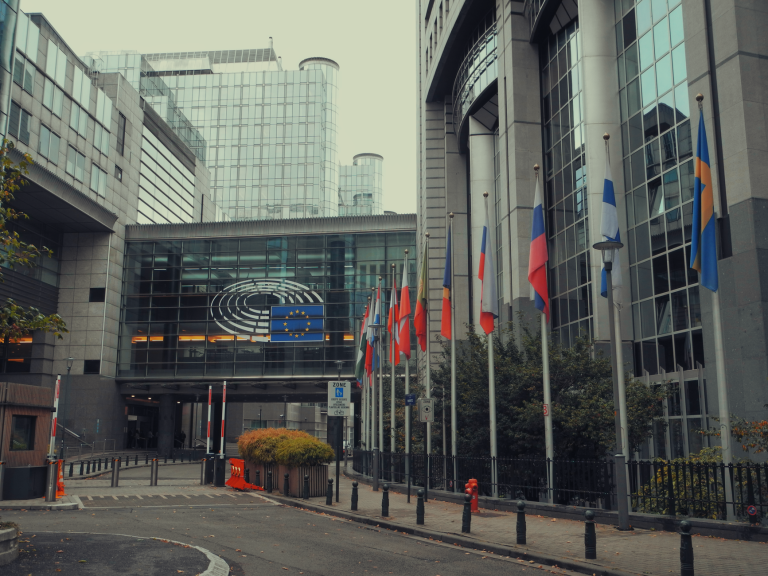
That one sentence, attributed to one of Europe’s most authoritative specialist outlets on EU affairs, is enough to set alarm bells ringing across Brussels, Kyiv, and every chancellery in between. Because Belgium is not simply any member state. It is the country where Euroclear, one of the world’s largest securities depositories, is headquartered — making Brussels ground zero for the long and legally tortured debate about what Europe should do with the hundreds of billions in immobilised Russian sovereign assets that have been sitting frozen since Moscow’s full-scale invasion of Ukraine.
What exactly Belgium decided, and through which mechanism, has not been detailed in the material available at the time of this report. What is clear is the signal the decision sends: that the road to using those assets — whether through seizure, windfall taxation, collateralisation, or direct transfer — has just become considerably longer and more complicated.
A Headline That Carries Its Own Argument
Political journalism often turns on the interpretation of language, and the language here is precise. The verb “slams” removes ambiguity. This is not a story about Belgium hedging its position or requesting further legal analysis. The framing implies a firm, active, and probably consequential rejection.
Euractiv’s decision to lead with this story on 30 August 2026 — the first working days after the European summer recess, when governments and institutions traditionally return to business with fresh urgency — gives the decision additional weight. The post-August political season in Europe is when real decisions begin to land. For Belgium to deliver this verdict at the opening of the autumn political cycle suggests it is not a holding position but a considered stance.
The significance of the outlet itself matters too. Euractiv is not a general wire service running political colour. It is a specialist publication embedded in Brussels’ institutional ecosystem, read closely by officials, lobbyists, diplomats, and legislators who need to understand where European policy is actually heading. When Euractiv frames something as a door being slammed, that framing reflects a considered editorial judgement about the nature of the decision — not a loose metaphor borrowed from a tabloid.
Why Belgium’s Position Is Uniquely Consequential
To understand why this particular national decision carries European weight, it is necessary to understand Belgium’s structural position in the debate over Russian assets.
- Belgium is home to Euroclear, the international central securities depository through which an enormous share of the frozen Russian assets have been held and administered.
- That geographic and institutional fact has placed Belgian law, Belgian regulators, and the Belgian government at the centre of every serious legal and political discussion about what can be done with those assets.
- Any EU-level scheme that involves the mobilisation, seizure, or repurposing of frozen assets would, in practice, require Belgium’s cooperation — not merely its political assent, but active legal and administrative participation.
- Belgium’s position is therefore not one vote among twenty-seven on a qualified majority question. On this issue, it functions more like a veto player, regardless of formal treaty arrangements.
This is what makes 30 August 2026’s headline more than a bilateral story between Brussels and Kyiv. It is a story about the structural limits of European solidarity when that solidarity requires the active participation of the specific country where the legal and financial machinery happens to sit.
The Broader Policy Debate This Fits Within
The question of what to do with frozen Russian sovereign assets has been one of the most legally and politically contested issues in European policy since 2022. The debate has never been simple, and understanding why requires laying out the terrain.
The Main Proposals That Have Been Discussed
Across the debate — which this story sits within, even if the specific Belgian decision cannot be precisely characterised without further reporting — several categories of approach have been floated at various EU levels:
| Approach | Core Mechanism | Primary Legal Risk |
|---|---|---|
| Outright confiscation/seizure | Transfer asset ownership permanently to Ukraine or EU | Violation of international property law, sovereign immunity |
| Windfall profit tax | Tax the interest generated by frozen assets | Lower legal exposure, but raises questions over precedent |
| Collateralisation | Use assets as security for loans to Ukraine | Does not transfer assets; complex to unwind if loans default |
| Direct transfer of interest/profits | Route earnings from frozen assets to Ukraine | Mid-risk; has been partially implemented in some frameworks |
Each of these carries different legal, diplomatic, and financial risks. The legal community across Europe has been divided for years over whether any of these approaches is robustly defensible under international law. Critics have warned about the precedent set for the international reserve system and the rule of law. Supporters have argued that the scale of Russian aggression and the established illegality of the invasion provide sufficient justification.
Belgium’s apparent rejection, as reported by Euractiv, suggests that at least one of these approaches — or possibly more than one — has now been ruled out in a formal Belgian context. The specific mechanism rejected is not available in the source material, which means the precise legal or constitutional reasoning behind Brussels’ position also cannot be confirmed. But the direction of travel is unmistakable.
What Rejection Signals About European Solidarity
There is a version of this story that is a purely legal one — a government concluding that a particular mechanism does not survive constitutional or international legal scrutiny and acting accordingly. Governments are entitled to make those calls, and legal caution is not inherently a political statement.
But there is another version: one in which Belgium’s decision reflects a deepening fatigue, or a political calculation about the risks of being the country most exposed to the consequences of an ambitious asset policy. A country that hosts the infrastructure of European finance has different skin in the game than a country that does not.
Consider the pressures that could be operating simultaneously on any Belgian government in this position:
- Legal exposure: Being the jurisdiction of record for Euroclear means that any seizure or transfer mechanism that is later successfully challenged in an international court would likely generate claims directly against Belgium.
- Financial system stability: Concerns about the precedent set for international investors who use Belgian-hosted infrastructure to hold sovereign assets.
- Diplomatic pressure: Pressure from EU partners and from Ukraine to hold the line of solidarity; countervailing pressure from the financial and legal community about the risks of acting outside settled international norms.
- Domestic politics: The Belgian political landscape is famously complex, with coalition governments that must balance multiple party positions on any significant foreign policy question.
Any one of these pressures alone could produce hesitation. In combination, they could produce a decision to close the door.
Who Stands to Lose Most
The ripple effects of Belgium’s reported position extend well beyond Brussels. Ukraine remains the most obvious party with the most direct stake in the outcome.
- Ukraine has been seeking every available source of international financing as the war has ground on. The possibility of mobilising frozen Russian assets has represented, in principle, a substantial revenue stream that does not depend on the continued political will of Western governments to pass fresh aid packages.
- European Commission and EU partners who have invested political capital in constructing frameworks for asset use now face the prospect of those frameworks being blocked at a critical implementing node.
- EU credibility on the question of long-term Ukraine support is implicated when member states begin to pull in different directions on mechanisms that were presented as collective policy.
- Russia benefits — to whatever extent it does — from any fragmentation of European unity on this question, since that fragmentation reduces the financial and political pressure generated by the asset freeze.
A Moment That Fits a Larger Pattern
This story does not arrive in a vacuum. The late August and early September 2026 period has been characterised by a series of decisions across European member states that collectively suggest the wartime consensus of 2022 is under sustained pressure. Iceland’s voters rejected the government’s proposal to resume EU accession talks on 29 August 2026, in a result that carries its own message about where European integration ambitions currently stand. Across the continent, the politics of Europe feel less settled than at any point since the initial solidarity of the invasion’s aftermath.
Belgium’s reported decision on Russian assets fits within a pattern — not of hostility to Ukraine, but of individual national governments drawing lines around what they are legally and politically prepared to do, even when those lines cut against collective European positioning. For readers following EU political news, this autumn has the character of a stress test for European unity that was always coming; it has simply arrived.
Four Scenarios for What Happens Next
Without knowing the precise nature of Belgium’s decision or the mechanism it has rejected, four broad scenarios suggest themselves for the coming months. These are analytical projections, not predictions.
| Scenario | What It Would Require | Likelihood Signal |
|---|---|---|
| EU finds legal workaround that does not require Belgian action | Commission constructs mechanism that bypasses Belgian legal exposure | Technically complex; politically attractive to some |
| Other member states follow Belgium’s lead | Rejection cascades across sceptical capitals | Possible if Belgium’s legal reasoning is shared |
| Diplomatic pressure reverses Belgian position | EU Council or allied governments extract a compromise | Depends on what specific mechanism was rejected |
| Asset question is effectively suspended | European governments quietly shelve the issue pending the war’s outcome | Would represent a significant shift in public messaging |
What Each Scenario Would Mean in Practice
- If a workaround is found: The EU would effectively be demonstrating that collective European institutions can absorb member-state resistance on a critical policy — a reassuring signal for institutional capacity, though the legal robustness of such a route would need rigorous scrutiny.
- If Belgium’s rejection cascades: The asset debate could collapse not because the law is clear that it cannot be done, but because the politics in host-country jurisdictions make it impossible to execute even where legal frameworks have been constructed. This would be the most damaging outcome for Ukraine and for European credibility.
- If diplomatic pressure reverses the decision: The story would move from a closed door to a negotiated compromise. Given the language used by Euractiv — “slams door” — this scenario may require a significant change in the political conditions that produced the original decision.
- If the question is suspended: This would represent a quiet acknowledgement that the asset debate has reached its political ceiling, and that European support for Ukraine will need to find other instruments. It would leave Brussels open to criticism that years of legal and political work on asset mobilisation produced nothing actionable.
The Questions That Remain Open
- Does Belgium’s decision reflect a constitutional ruling, a government position, or a parliamentary vote — and how reversible is it depending on the answer?
- Has the decision been formally communicated to EU partners, or did Euractiv’s reporting bring it into the open?
- Is there a specific mechanism Belgium has rejected while leaving others theoretically available?
- What is Ukraine’s formal response, and how does it affect Kyiv’s relationship with Brussels in the near term?
None of these questions can be answered responsibly without the full article text. They are the questions any serious journalist would be pursuing on the morning of 31 August 2026.
The Shape of the Problem
The deeper issue that Belgium’s reported decision throws into relief is one that European policymakers have circled for years without resolution: the gap between collective political ambition and the legal and institutional architecture that would be needed to execute that ambition.
It is relatively easy for twenty-seven heads of government to agree in a summit communiqué that frozen Russian assets should serve Ukraine’s reconstruction. It is considerably harder when the practical implementation of that commitment falls on the shoulders of a single member state whose legal system, financial institutions, and regulatory framework sit directly in the path of execution. Belgium has now, apparently, made its view of that burden clear.
The door may not be sealed permanently. In European politics, few decisions are truly final. But the signal sent on 30 August 2026 is that the path through Brussels — through the country that sits at the heart of this entire question — is blocked, at least for now. That is not a minor footnote. It is the story of whether Europe can convert its stated commitments into actual policy when doing so requires the hard political work of sharing, rather than merely declaring, the cost.
Europe’s credibility on Ukraine has never been cheap. Belgium just made it considerably more expensive.
About The Author