Burnham’s “We Didn’t Start the Fire”: What a Defiant Headline Tells Us About Britain’s Relationship With Europe
 Sophie Gesture
A single headline, published in the early hours of 25 August 2026 and indexed across Google News under the European Politics banner, carries more political charge than its six words might first suggest. “Burnham: We didn’t start the fire.” It is a classic of the deflection genre — a politician reaching for a phrase that simultaneously acknowledges a burning crisis and disclaims responsibility for it. That it was filed under European Politics, and that it ran in Metro alongside separate GB News reporting confirming that Andy Burnham had called for Britain to “be bolder to get closer to the EU,” tells you something important about where the UK’s fraught post-Brexit conversation now sits.
This is not a story that lives only on the comment pages. It is a story about blame, about who owns the wreckage of a decade of British European policy, and about whether the political class is finally willing to say out loud what polling and economic data have been whispering for years: that the distance between Britain and the European Union is a problem that requires solving, not merely managing.
The Headline and What It Signals
Political language rarely travels without luggage. The phrase “we didn’t start the fire” is borrowed from the idiom of crisis deflection — the rhetorical move of a politician who wants to be seen engaging with a problem while simultaneously repositioning themselves outside its origin story. The first-person plural matters here. Burnham did not say “I didn’t start the fire.” He said “we.” That collective framing is deliberate.
What that “we” encompasses is the central interpretive question. It could refer to:
- The Labour Party as a governing or post-governing force
- The Greater Manchester political project that Burnham has led as mayor
- A broader coalition of metropolitan, pro-European voices within British public life
- The UK as a whole, implicitly directing blame outward — toward Europe, or toward the architects of Brexit
The GB News reporting, running alongside Metro’s story on the same date, confirmed that Burnham explicitly called for Britain to “be bolder to get closer to the EU.” That pairing — denial of original responsibility plus a forward demand for closer ties — is a recognisable rhetorical structure. It says: we inherited this distance, but we are not content to maintain it.
Universities had, at the same time, raised concerns over European student fees, adding a concrete institutional dimension to what might otherwise seem an abstract political positioning exercise.
Why the European Politics Tag Matters
Google News and PressReader do not tag stories arbitrarily. The categorisation of Burnham’s Metro interview under “European Politics” — rather than UK domestic politics or even UK-EU relations — signals something about how editors and algorithmic classifiers read the story’s weight. It places a British regional and national politician into a continental conversation, not merely a Westminster one.
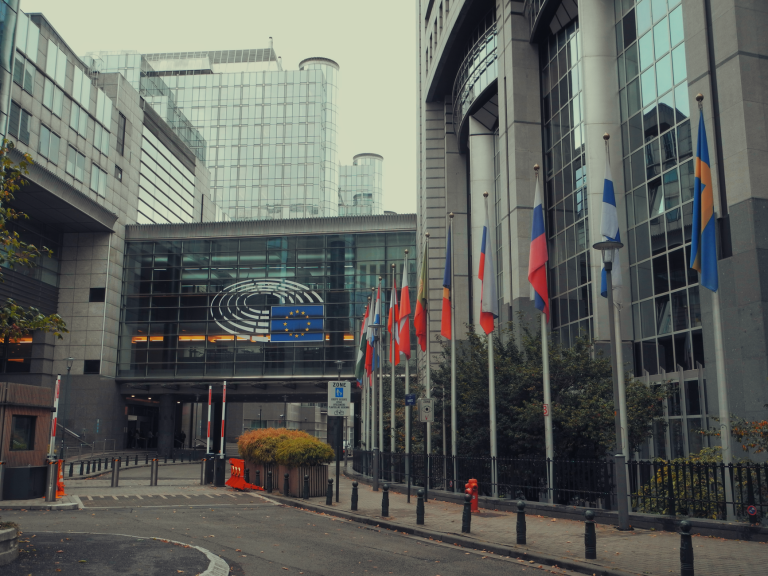
That framing is significant at a moment when, as separate current reporting confirms, Germany’s possible departure from the Schengen zone is being described as having “serious consequences” for Poland, and when Czech and Montenegrin EU accession timelines are being publicly discussed. Europe is in a moment of structural renegotiation. Where Britain fits into that renegotiation — or whether it fits at all — is not a settled question.
The “Bolder” Demand: What Closer UK-EU Ties Would Mean
Burnham’s call for Britain to be “bolder” in pursuing proximity to the EU arrives in a political context already thick with competing anxieties. The Sun’s coverage of the same story framed it in terms of “Brexit betrayal fears,” which tells you immediately that the story is being consumed differently across the British media ecosystem.
That divergence is not incidental. It maps directly onto the fault lines of British political identity that have not closed since the 2016 referendum.
The Competing Political Narratives
There are, broadly, three positions being staked out in British public debate on EU proximity at this moment:
- The re-engagement position — associated with voices like Burnham’s, which holds that the distance from Europe is economically and institutionally damaging, that pragmatic realignment is both possible and necessary, and that the political cost of pursuing it is lower than the political cost of continued stagnation.
- The Brexit-defence position — captured in The Sun’s “betrayal” framing, which holds that any closer alignment with EU structures represents a rolling back of a democratic mandate, regardless of how it is packaged or incrementally pursued.
- The institutional-concern position — represented in this news cycle by universities raising alarms over European student fees, which takes neither a grand political stance nor a referendum-era position, but asks practical questions about what realignment does or does not deliver for specific sectors.
These are not three equally matched positions in terms of public opinion. But they are three positions that any British politician seeking to advance a pro-European argument must navigate simultaneously — which helps explain why Burnham’s language is as careful as it is combative.
| Political Position | Dominant Media Voice | Core Argument | Risk if Ignored |
|---|---|---|---|
| Re-engagement / closer EU ties | GB News report (critical framing), Metro | Distance from EU is damaging; boldness needed | Economic and institutional stagnation |
| Brexit-defence / anti-realignment | The Sun | Closer ties betray 2016 mandate | Democratic legitimacy questions |
| Sector-specific concern | University sector | Student fees, research access, mobility | Loss of institutional competitiveness |
Why This Moment, Why This Story
The 25 August 2026 timestamp places this exchange at a point when multiple European political pressures are converging simultaneously. Examining the broader current headlines alongside Burnham’s intervention reveals a European political landscape under exceptional strain.
Germany is being reported as contemplating — or at least debating — withdrawal from the Schengen zone, a development that Polish Foreign Minister Sikorski has publicly described as carrying “serious consequences.” NATO is reportedly weighing the costs of shooting back at Russian drone incursions. Czech Prime Minister is expressing firm hope that Montenegro will join the EU in 2028. The continent is, in other words, engaged in a simultaneous debate about its internal architecture, its eastern borders, and its security posture.
Into that context, a senior British political figure insisting that the UK must be bolder in moving toward the EU is not simply making a domestic argument. It is an intervention in a European conversation about what the European project means, who belongs to it, and on what terms proximity is granted or withheld.
The University Question as a Test Case
The concerns raised by universities over European student fees deserve more than a footnote. Fee structures and student mobility arrangements are among the most concrete and measurable dimensions of UK-EU proximity — or distance. When universities raise concerns, they are not engaging in abstract Europhile sentiment. They are reporting specific institutional damage: lost students, reduced research partnerships, funding gaps, and competitive disadvantage relative to continental peers.
The inclusion of this concern in the same news cycle as Burnham’s broader political argument is not coincidental. It provides the kind of granular, sector-specific evidence that gives the “bolder” argument its practical grounding. Politicians can debate direction of travel all they like; universities are already living in the consequences of the current position.
Key concerns that the university sector has raised in this context include:
- The cost barriers created by fee structures for European students considering UK study
- The competitive disadvantage UK institutions face relative to EU counterparts
- Research collaboration frameworks that have been disrupted or complicated by the post-Brexit settlement
- The longer-term reputational consequences for UK higher education as a destination of choice
The “Fire” Metaphor: A History of Blame in British European Politics
The Billy Joel reference embedded in Burnham’s phrase — whether conscious or not — is doing serious political work. The song “We Didn’t Start the Fire” is a catalogue of historical events presented as pre-existing conditions, forces beyond any one generation’s control. The political deployment of that image suggests Burnham is positioning the current state of UK-EU relations not as a failure of his political tradition, but as an inherited condition — one that others lit and his side is now being asked to manage or extinguish.
This is a familiar structure in post-Brexit British politics. The question of who “owns” Brexit — its consequences, its costs, its renegotiation — has been a defining fault line since 2016. The Conservatives negotiated the withdrawal agreement and the subsequent trade deal. Labour has governed since. Each side has, at different moments, sought to disclaim ownership of the outcomes while claiming credit for any improvements.
Burnham’s intervention is consistent with a Labour-adjacent political strategy that involves:
- Acknowledging publicly that the current relationship with the EU is not working optimally
- Attributing the original damage to predecessors (the “fire” they didn’t start)
- Positioning closer EU ties as a pragmatic, non-ideological correction rather than a reversal of democratic will
- Using high-profile regional platforms — Greater Manchester being one of the most visible — to make arguments that the central government may find more electorally constrained
| Rhetorical Move | Political Function | Electoral Risk |
|---|---|---|
| “We didn’t start the fire” | Deflects blame for current UK-EU distance | Could read as evasion to pro-Brexit voters |
| “Britain must be bolder” | Frames closer ties as ambition, not surrender | Triggers “betrayal” framing in right-leaning press |
| University fee concerns | Grounds abstract argument in institutional damage | Energises pro-European professional classes |
| European Politics categorisation | Elevates the story beyond domestic debate | May alienate voters wary of EU “entanglement” |
Critical Analysis: What Burnham Is Actually Attempting
Reading the available evidence — headline, categorisation, GB News report, The Sun framing, university concerns — a clearer picture of the political operation underway begins to emerge.
Burnham is attempting something that has eluded most British politicians who have tried it since 2016: making a pro-European argument without triggering the full defensive reflex of the Brexit electorate. The “we didn’t start the fire” construction is designed to do precisely that — to say, in effect, that this is not about relitigating 2016, but about managing the consequences of decisions that have already been made.
Whether that argument lands depends heavily on who is doing the listening.
- For pro-European voters and institutions — universities, businesses with cross-Channel exposure, younger demographics — the argument is likely to resonate as an honest acknowledgement of damage and a credible offer of repair.
- For Brexit-committed voters — particularly those for whom the 2016 vote was as much an identity statement as a policy preference — the “fire” metaphor may register as condescension, and the “bolder” demand as threat.
- For European interlocutors — institutions, governments, and officials who have grown accustomed to managing British ambivalence — the intervention may be welcome in tone while remaining uncertain in substance.
That three-way tension is not unique to Burnham. It is the structural problem facing any British politician who wants to move the UK-EU relationship forward while remaining viable across a fractured electorate. The question is not whether the argument is right. The question is whether there is a political path that allows it to be pursued.
Four Scenarios for What Comes Next
Given the constraints of what the available reporting confirms — and without projecting beyond what the evidence supports — there are several plausible trajectories for this story and the broader argument it represents.
Scenario One: The Argument Gains Institutional Momentum University concerns, business pressure, and regional voices like Burnham’s coalesce into a sustained lobbying effort that forces concrete policy movement on specific aspects of the UK-EU relationship — student mobility arrangements, research frameworks, professional recognition. Progress is incremental and technically framed rather than politically branded.
Scenario Two: The “Betrayal” Framing Dominates The Sun’s framing proves more electorally durable than Burnham’s intervention. Closer EU ties become a wedge issue in the next electoral cycle, with right-leaning parties using any movement toward Europe as evidence of establishment bad faith. Political caution reasserts itself in Westminster.
Scenario Three: European Structural Change Creates New Conditions Developments on the continent — German Schengen debates, Montenegrin accession, evolving NATO postures — reshape the EU itself in ways that alter what “closer ties” with Britain would actually mean. A different EU may create different opportunities or constraints for UK realignment, independent of domestic British politics.
Scenario Four: The Argument Remains in the Regions Burnham’s intervention, and others like it, remain politically significant at the level of English regional devolution and metro-mayoral politics, but fail to translate into national policy movement. The UK’s European relationship changes slowly and technically, without the “bolder” political moment Burnham is calling for.
None of these scenarios are inevitable. All of them are consistent with the evidence available. Explore more of our coverage across EU political news for the broader European context in which this debate is unfolding — including the AfD’s demands that Germany leave the Euro and Schengen, a development that illustrates how profoundly the European architecture Burnham wants to move closer to is itself in flux.
The fire, whatever its origins, is still burning. And the argument about who lit it is far from settled.
About The Author