Sophie Gesture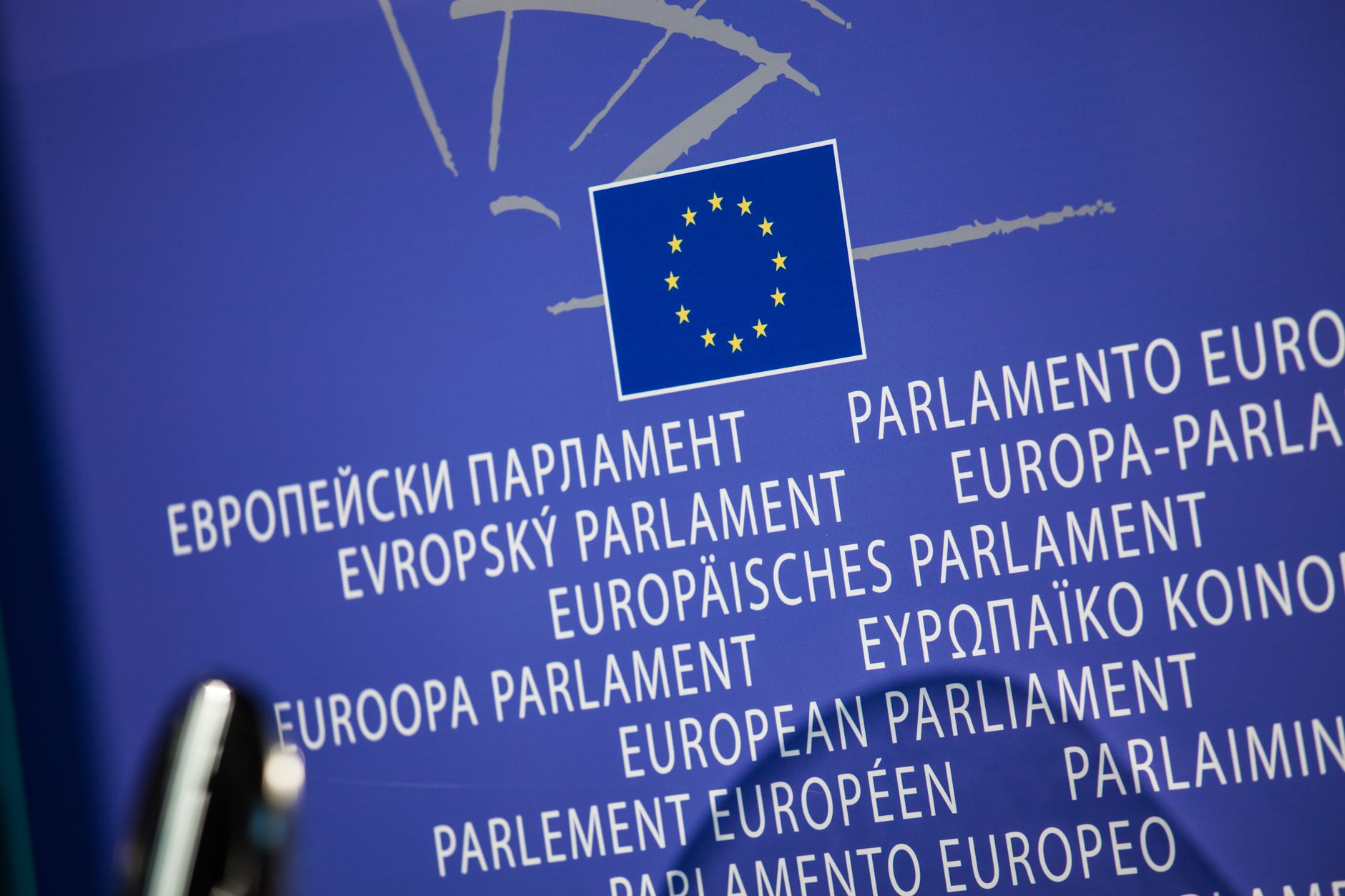
The European Union (EU) is a supranational political and economic union of member states located primarily in Europe, operating through a hybrid system that blends intergovernmental cooperation with binding authority exercised by EU-level institutions. Formally established by the Maastricht Treaty in 1993 and subsequently reformed through successive foundational treaties, the EU currently comprises 27 member states following the United Kingdom’s departure. It is the world’s most advanced example of voluntary regional political and economic integration among sovereign nation-states.
Overview
The EU traces its origins to post-World War II efforts to bind European economies together as a structural guarantee against future continental conflict. The process began with the European Coal and Steel Community (1951) and the European Economic Community (1957), both of which pooled specific industrial and trade competences among a small founding group. Successive rounds of enlargement and treaty revision progressively extended the Union’s membership, deepened its policy scope, and reformed its institutions.
The Maastricht Treaty (1992, in force 1993) formally created the European Union, introducing the concept of EU citizenship, establishing the framework for monetary union, and adding cooperation on foreign policy and justice and home affairs alongside the existing economic community. The Treaty of Amsterdam (1997), Treaty of Nice (2001), and Treaty of Lisbon (2007) each refined the institutional architecture, adjusted voting rules, expanded the legislative role of the European Parliament, and clarified the distribution of competences between the Union and its member states.
Today, EU membership carries rights and obligations defined by treaty: member states accept the primacy of EU law in areas where competence has been pooled, contribute to the Union’s budget, and participate in its political institutions.
Why the European Union Matters in Politics
The EU matters to political science and to practical politics for several interconnected reasons.
Scale and structural novelty. No comparable polity exists elsewhere. The EU exercises binding legal authority over approximately 450 million citizens across 27 sovereign states, yet it is not a federation in the classical sense. Its hybrid architecture — combining a directly elected parliament, an intergovernmental council of ministers, an appointed executive commission, and a supranational court — constitutes a genuinely novel form of governance that scholars continue to debate and classify.
Economic weight. The EU’s single market — encompassing free movement of goods, services, capital, and persons — is among the largest integrated economic areas in the world. EU trade policy, competition regulation, and agricultural support affect not only member states but also global trading partners. The eurozone, in which a subset of member states shares the euro as a common currency managed by the European Central Bank, has made EU monetary policy a significant variable in global financial conditions.
The integration-versus-sovereignty tension. The EU is defined structurally by an ongoing contest between the impulse toward deeper supranational integration and the determination of member-state governments to preserve sovereign authority, particularly in taxation, social policy, and defence. This tension produces recurring political conflicts both within EU institutions and in relations between Brussels and member capitals. It also animates the EU’s most consequential external event in recent decades: Brexit, the United Kingdom’s withdrawal following a 2016 referendum.
Democratic legitimacy debates. The EU’s institutional design generates persistent questions about democracy and accountability. Because the executive arm — the European Commission — is not directly elected by citizens, critics argue the Union suffers from a “democratic deficit,” in which consequential decisions are taken by bodies insufficiently accountable to the populations they govern. Defenders point to the growing co-legislative role of the directly elected European Parliament and to the indirect democratic accountability of the Council of Ministers, whose members are accountable through their respective national governments.
Purpose and Functions
The EU’s stated purposes include promoting peace, the welfare of its citizens, and an area of freedom, security, and justice. In practical terms, the Union exercises authority across a wide spectrum of policy areas, though the degree of supranational control varies significantly by domain.
Exclusive Competences
In certain areas, only the EU may legislate; member states act solely as implementers. These include customs union, competition rules necessary for the functioning of the internal market, monetary policy for eurozone members, and common commercial (trade) policy.
Shared Competences
In the largest category of policy areas, both the EU and member states may legislate, but member-state law is displaced where EU law operates. This category includes the single market, environmental policy, energy, transport, consumer protection, and aspects of social policy.
Supporting and Coordinating Competences
In areas such as education, culture, tourism, and civil protection, the EU may only support or coordinate member-state action, without overriding national law.
Foreign and Security Policy
Common Foreign and Security Policy (CFSP) occupies a special category subject primarily to intergovernmental rules, with decisions typically requiring unanimity. This arrangement limits the Union’s capacity for swift, coherent external action and makes EU foreign policy particularly susceptible to internal disagreement among member states. The EU has progressively developed instruments for civilian and military crisis management, though a unified defence capacity remains a subject of political debate rather than established institutional fact.
Structure and Principal Institutions
The EU’s governance rests on seven principal institutions defined by treaty, each with distinct functions and sources of authority.
| Institution | Composition | Primary Function |
|---|---|---|
| European Commission | Commissioners from each member state; headed by a President | Proposes legislation; implements policy; guardian of EU law |
| European Council | Heads of state or government of member states | Sets broad political direction; does not legislate |
| Council of the European Union | Ministers from member-state governments | Shares legislative and budgetary authority with Parliament |
| European Parliament | Directly elected MEPs representing EU citizens | Co-legislates; democratic oversight of Commission |
| Court of Justice of the EU | Judges appointed by member states | Ensures uniform interpretation and application of EU law |
| European Central Bank | Governing Council of eurozone central bank governors | Manages monetary policy for eurozone member states |
| Court of Auditors | Members from each member state | Audits EU finances and accounts |
The European Commission initiates almost all EU legislation, giving it a uniquely powerful agenda-setting role. The European Parliament and the Council of the EU then act as co-legislators in the ordinary legislative procedure, the principal law-making process. This triangular relationship — Commission proposes, Parliament and Council dispose — reflects an attempt to balance supranational initiative with democratic oversight and intergovernmental accountability, though critics note it does not map cleanly onto any conventional separation of powers doctrine.
The Schengen Area and Free Movement
One of the EU’s most politically visible achievements is the Schengen Area, a zone of passport-free travel that encompasses the majority of EU member states alongside several non-EU countries. Schengen operates on the principle that internal border controls are replaced by reinforced external border management, with participating states cooperating on security, immigration data, and policing.
The political sustainability of Schengen is a recurring subject of contention. Episodic crises involving irregular migration at EU external borders — including the EU’s southern maritime borders and land borders adjoining non-member states — have prompted some member states to invoke emergency provisions allowing temporary reintroduction of internal border controls. The structural debate concerns whether the principal threats to Schengen integrity arise from migration volumes or from the failure of member states to apply common rules and share burdens consistently — a distinction with significant implications for the design of EU-level policy responses.
Enlargement
Enlargement — the accession of new member states — has been a recurrent dimension of the EU’s political history. The Union has grown from six founding members to its current 27, absorbing states from southern, northern, and central-eastern Europe through successive rounds of enlargement. Each accession requires candidate countries to demonstrate alignment with EU legal, democratic, and economic standards, a process codified in the Copenhagen Criteria.
Following the United Kingdom’s departure (Brexit), political debate has continued regarding both the future of UK–EU relations and potential future enlargements. The EU maintains formal candidate or prospective candidate relationships with a number of countries, including several in the Western Balkans and, more recently, Ukraine and Moldova. Iceland, already a member of the European Economic Area and the Schengen Area, has at various points been discussed as a potential accession candidate; any such development would primarily concern political and monetary union rather than the single market, in which Iceland already participates.
Structural Tensions and Ongoing Debates
Several structural tensions define the EU’s political condition across time, independent of any specific political moment.
Integration depth versus national sovereignty. The foundational question of how much authority member states are willing to pool at the supranational level remains unresolved and is continuously renegotiated through treaty revision, legal interpretation, and political negotiation.
Euroscepticism and nationalist politics. Throughout the EU’s history, political movements and parties advocating reduced integration, the repatriation of competences to national governments, or outright withdrawal from the Union have exercised varying degrees of influence. The pattern in recent decades has shifted in some cases from external opposition to representation within EU institutions themselves, as Eurosceptic and nationalist parties have secured seats in the European Parliament and formed or joined governing coalitions in member states. This creates a dynamic in which critics of the Union’s direction participate in shaping it from within.
Democratic accountability. The debate over the EU’s democratic legitimacy is unlikely to be permanently resolved given the structural novelty of the Union’s institutional design. Reforms to strengthen the Parliament’s role, proposals for direct election of the Commission President, and initiatives for greater citizen participation have all been advanced at various points; none has produced a final settlement.
Cohesion and burden-sharing. Whether the subject is migration policy, fiscal transfers, climate adaptation, or external security, the EU repeatedly confronts the challenge of converting a common interest into common action when member states face different domestic political pressures, geographic exposures, and economic circumstances.
Key Facts
| Attribute | Detail |
|---|---|
| Founded | 1993 (Maastricht Treaty); predecessor communities from 1951/1957 |
| Current member states | 27 |
| Headquarters | Brussels, Belgium (principal); Strasbourg (Parliament plenary) |
| Official languages | 24 |
| Currency | Euro (eurozone members); national currencies (non-eurozone members) |
| Population (approximate) | ~450 million |
| Key foundational treaties | Treaty of Paris (1951); Treaty of Rome (1957); Maastricht (1993); Amsterdam (1997); Nice (2001); Lisbon (2007) |
| Principal legislative procedure | Ordinary legislative procedure (co-decision by Parliament and Council) |
| Notable departure | United Kingdom (Brexit, formal withdrawal 2020) |
Frequently Asked Questions
What is the difference between the European Union and the eurozone? The EU is a political and economic union of 27 member states. The eurozone is a subset of EU members — those that have adopted the euro as their common currency and are subject to the monetary policy of the European Central Bank. Not all EU members use the euro; some retain national currencies either by treaty opt-out or because they have not yet met the convergence criteria for euro adoption.
What is the difference between the European Council and the Council of the European Union? The European Council consists of the heads of state or government of member states and is responsible for setting the EU’s broad political direction. It does not pass legislation. The Council of the European Union (also called the Council of Ministers) consists of ministers from member-state governments and shares legislative and budgetary authority with the European Parliament. These are two distinct institutions despite their similar names.
What is the “democratic deficit”? The democratic deficit refers to the perception that the EU’s institutional structure lacks sufficient direct democratic accountability to citizens. Because the European Commission — the EU’s executive — is not directly elected, and because much EU decision-making has historically taken place through intergovernmental or technocratic processes, critics argue that EU citizens have limited ability to influence or remove those who make binding decisions. The term is contested: proponents of the EU’s design argue that accountability is exercised through the elected Parliament and through member-state governments in the Council.
What is the Schengen Area and how does it relate to EU membership? The Schengen Area is a zone of passport-free travel among participating countries. It is legally distinct from EU membership: some EU member states are not full Schengen participants (such as Ireland), while some non-EU countries do participate (such as Norway and Switzerland). Membership of the EU does not automatically or immediately confer Schengen membership.
What happened when the United Kingdom left the EU? The United Kingdom voted in a 2016 referendum to leave the EU and formally withdrew in 2020. The withdrawal, known as Brexit, was followed by a period of negotiation over the future relationship, resulting in a Trade and Cooperation Agreement. Brexit reduced EU membership from 28 to 27 states and prompted ongoing debate in the UK about the terms of its future relationship with the Union.
Can a country rejoin the EU after leaving? EU treaties do not contain explicit provisions for re-accession, but the standard enlargement process — under which any European state that meets the Copenhagen Criteria may apply for membership — would in principle apply. Re-accession would therefore require a formal application, accession negotiations, and ratification by all existing member states, making it a lengthy and politically complex process.
About The Author