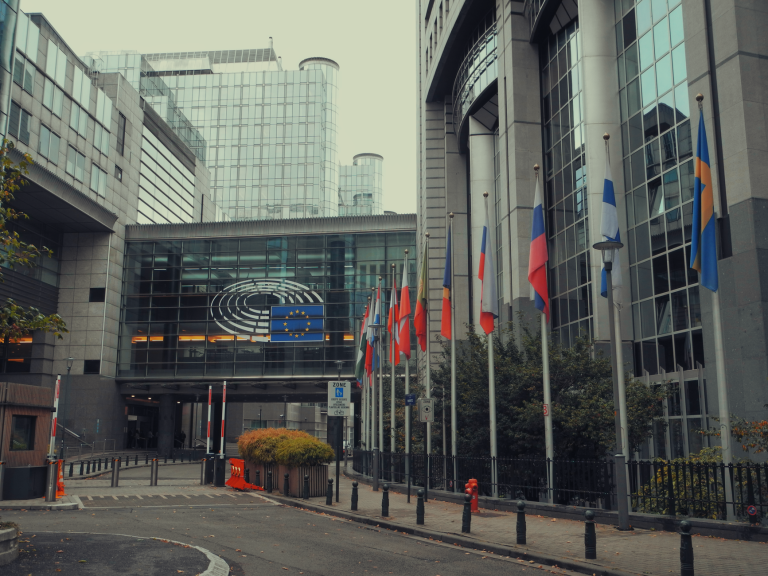
Germany Warns US Against Election Interference with MAGA-Aligned Grants Scheme
 Sophie Gesture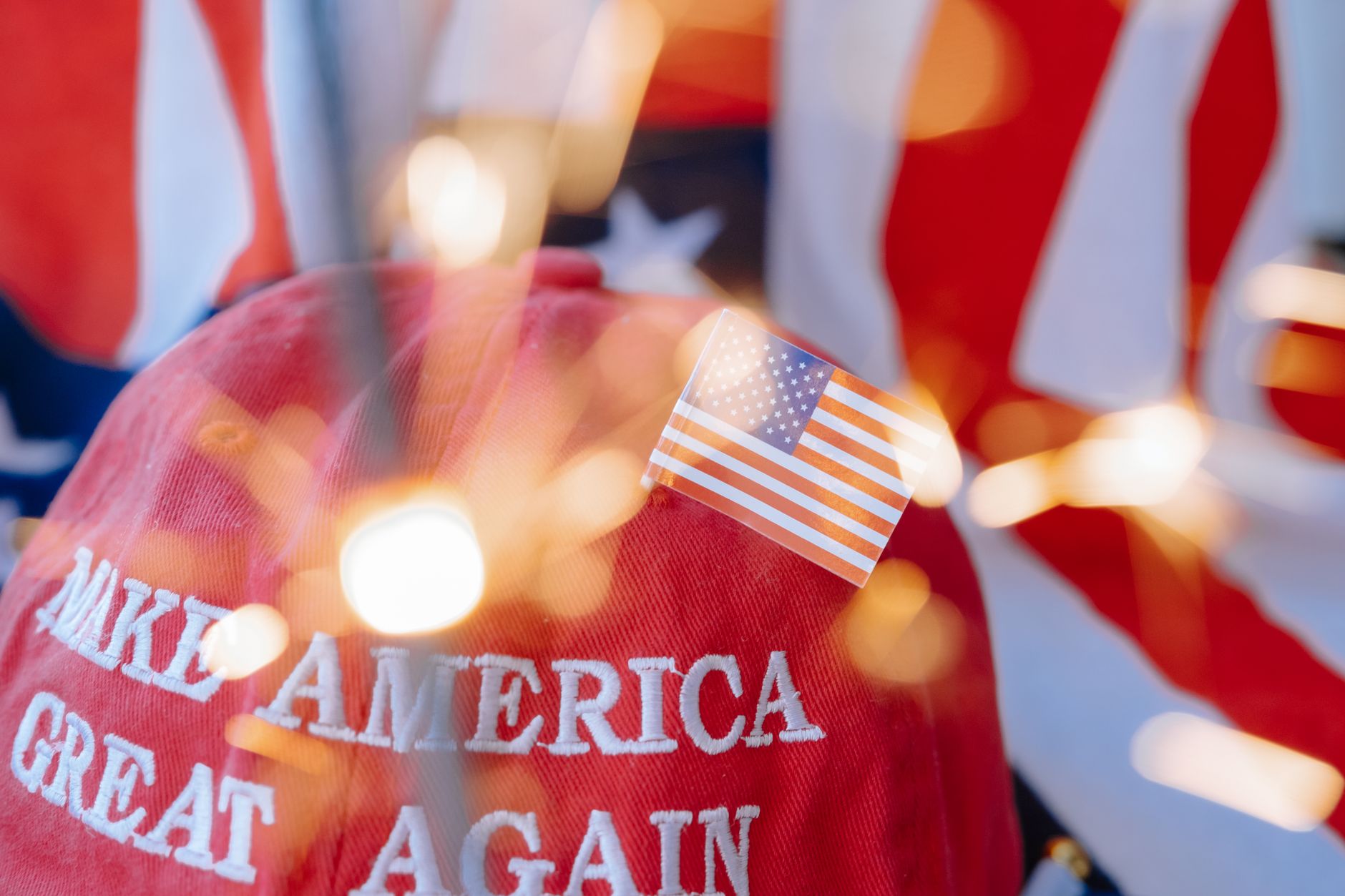
The United States — the country that built the post-war architecture of democratic norms, that spent decades condemning Soviet and Russian interference in allied elections — has now been formally accused by its most important continental ally of running a structured programme to reshape European politics in its own ideological image. That is not hyperbole. That is what Berlin said on July 15, 2026.
This isn’t a diplomatic spat about tariffs or troop deployments. What Germany’s federal government has put on the table is a direct challenge to the foundational assumption of the transatlantic relationship: that the United States and Europe share a commitment to democratic self-determination. The MAGA-aligned grants scheme, channelled through US government-aligned bodies to European civil society organisations, think tanks, and media outlets, represents something qualitatively different from previous tensions. It is the institutionalisation of foreign interference by an ostensible ally. The mask, if there ever was one, is off.
How Elon Musk’s AfD Cheerleading in 2025 Became a Bureaucratic Pipeline by 2026
The story of how Washington went from informal MAGA cheerleading to a structured grants architecture targeting European civil society takes less than 18 months to tell — and it’s a fast, alarming one. When Elon Musk used his platform on X throughout late 2024 and early 2025 to openly campaign for Germany’s far-right Alternative für Deutschland (AfD), attacking then-Chancellor Olaf Scholz by name and calling for his removal, European officials treated it as the eccentric overreach of a billionaire who had too much time and too large a megaphone. Deeply alarming, yes. Systematic? Not yet.
Then JD Vance arrived at the Munich Security Conference in February 2025 and lectured European heads of government — in their own city, on their own turf — about free speech and migration, explicitly endorsing populist parties that mainstream European politicians had spent years trying to contain. That was a signal, not an accident. What followed, according to reporting published by The Guardian on July 15, 2026, was the construction of a formal grants mechanism: US government-aligned bodies offering funding to European organisations that broadly align with MAGA ideological priorities, including Euroscepticism, anti-immigration positions, opposition to climate policy, and hostility to liberal establishment institutions.
The Bertelsmann Stiftung noted in a June 2026 report that foreign funding of political-adjacent NGOs in Europe had increased by over 40% since 2024, with a significant new US-origin component. The progression from informal influence to bureaucratic pipeline is now documented.
| Phase | Timeframe | Nature of Interference | Key Actor |
|---|---|---|---|
| Informal social media intervention | Late 2024 – Early 2025 | Musk campaigns for AfD on X; attacks Scholz publicly | Elon Musk / X platform |
| Official ideological intervention | February 2025 | Vance lectures European leaders at Munich Security Conference | JD Vance / Trump administration |
| Structured civil society funding | Mid-2025 – 2026 | Grants channelled to Eurosceptic, anti-climate, anti-immigration groups | US government-aligned bodies |
| German diplomatic protest | July 15, 2026 | Berlin formally warns Washington; US Ambassador summoned | Friedrich Merz / Johann Wadephul |
For broader context on how the Trump administration’s geopolitical repositioning has been rattling European capitals across multiple fronts simultaneously, see the reporting on how the NATO summit is reshaping Europe’s strategic calculations — a process now dramatically complicated by the grants controversy.
Berlin Summons the US Ambassador as France, Sweden, and the Netherlands Watch Closely
On July 15, 2026, Germany’s Foreign Ministry summoned the US Ambassador for consultations. That is a serious act. It sits below a full diplomatic recall but well above a politely worded press statement. German Foreign Minister Johann Wadephul of the CDU is believed to have delivered formal representations to the US State Department, framing the grants programme as an unacceptable violation of European democratic sovereignty.
The specific allegations are damning in their detail:
- Recipient groups in Germany, France, Austria, and Italy had already received or been solicited for funding from US government-aligned bodies
- The funded organisations broadly align with MAGA priorities: Euroscepticism, hardline immigration restriction, climate policy opposition, and attacks on liberal institutional structures
- The US State Department’s response — framing the grants as “support for civil society and democratic values” — used language nearly identical to how Washington characterised its own democracy promotion programmes during the Cold War, a comparison European officials found both ironic and infuriating
- Germany’s 2025 federal elections, which brought Friedrich Merz and the CDU/CSU to power, had already been shadowed by Musk’s public AfD advocacy, setting the political context for Berlin’s hypersensitivity on this issue
The European Commission began internal discussions about whether the scheme could violate EU sovereignty norms or election integrity regulations, with a potential referral to the European External Action Service (EEAS), the bloc’s foreign interference monitoring body. France, the Netherlands, and Sweden are monitoring the situation and considering whether to join a coordinated European response. The question is not whether this escalates. It is how fast, and in which direction. For readers following the full sweep of EU political news, this story connects directly to the broader acceleration of European strategic autonomy debates.
Merz, Wadephul, Vance, and Rubio: Four Men Defining a Transatlantic Breaking Point
Friedrich Merz (German Chancellor, CDU)
Merz is in an awkward position that he has navigated with more firmness than many expected. He is a pro-American conservative who spent years cultivating transatlantic ties as a counterweight to his domestic political opponents. The grants scheme puts him in the position of having to publicly confront a US administration that technically shares his anti-left, pro-market instincts — but that has decided Germany’s internal politics are fair game for reshaping. His response has been notably unambiguous. Berlin’s formal warning on July 15 carries his authority. He is not trying to paper over this.
Johann Wadephul (German Foreign Minister, CDU)
Wadephul is the operational face of Germany’s protest. Summoning the US Ambassador is his call, and delivering formal representations to Marco Rubio’s State Department is not a move career diplomats make lightly. He has reportedly framed the grants scheme in language that draws an explicit parallel to Russian interference operations — a comparison designed to maximise political pressure on Washington by invoking the very framework the US built to condemn Moscow.
JD Vance (US Vice President)
Vance has been the primary face of outreach to European populist movements since January 2025 and is widely seen in European capitals as the ideological architect of the administration’s pro-nationalist foreign policy doctrine. His Munich Security Conference speech in February 2025 was not a one-off improvisation. It was a preview. The grants scheme, in the view of many European analysts, is the institutional delivery mechanism for the worldview Vance articulated in that speech.
Marco Rubio (US Secretary of State)
Rubio is managing the diplomatic fallout — a task made considerably harder by the State Department’s decision to issue a statement that essentially confirmed the programme while refusing to call it interference. That framing satisfied nobody. European allies read it as brazen. MAGA supporters read it as insufficiently aggressive. Rubio has the unhappy job of defending a policy he did not design, in a relationship he cannot afford to blow up entirely, with partners who are rapidly losing confidence in American intentions.
Why Neither Washington Nor the European Mainstream Gets to Claim the Moral High Ground Here
Let’s be direct about something that the outrage on both sides is designed to obscure. The United States has a long and not particularly glorious history of funding civil society organisations in other countries to advance American geopolitical interests. The National Endowment for Democracy, founded in 1983, was explicitly designed to do in peacetime what the CIA had done covertly during the Cold War. The Open Society Foundations, which the MAGA world endlessly invokes as evidence of left-wing foreign interference, operates on a model that American policymakers spent decades legitimising when the money was going to pro-Western groups in Eastern Europe.
The Trump administration is not doing something categorically new. It is doing something familiar in an unfamiliar direction — pointing the interference apparatus at allied democracies rather than authoritarian adversaries, and funding nationalist rather than liberal civil society. That distinction matters enormously in terms of political impact. But it does not give European governments a clean rhetorical position.
Here is the full picture of where each actor actually stands:
| Actor | Official Position | What They’re Not Saying |
|---|---|---|
| German/EU mainstream | Scheme is a sovereignty violation and election interference | Europe has accepted US-origin liberal civil society funding for decades without complaint |
| Trump administration | Programme supports free speech and democratic civil society | The ideological targeting of recipients directly contradicts the “neutral” framing |
| AfD / European far-right | Welcomes attention; avoids looking like foreign instrument | Domestic political benefit of US legitimisation is enormous |
| Centrist foreign policy analysts | Unprecedented structural challenge to transatlantic relations | The precedent problem cuts both ways — this validates Chinese and Russian interference arguments |
The core analytical problem is this: if the US faces no meaningful consequences for running a grants scheme designed to shift European electoral politics toward MAGA-aligned positions, then every argument Washington has made against Russian and Chinese interference operations becomes incoherent. Beijing and Moscow will simply point to this. They already are. US-European tensions that move financial markets are one thing; tensions that undermine the entire normative architecture of democratic self-determination are quite another.
Four Scenarios for How Germany’s Warning Actually Plays Out Before 2027
The diplomatic warning was issued. The US Ambassador was summoned. The European Commission is deliberating. What happens next is genuinely uncertain — but the range of plausible outcomes is narrower than the current noise suggests.
- Scenario 1 — Quiet Climb-Down: Washington scales back the grants programme discreetly, reframes remaining funding through more neutral-sounding channels, and both sides agree not to escalate further. Most likely in the short term if Rubio’s diplomatic instincts prevail over Vance’s ideological ones. Germany gets a face-saving win; the structural problem persists underground.
- Scenario 2 — EU Legislative Response: The European Commission accelerates its Defence of Democracy package and expands the Foreign Subsidies Regulation to explicitly cover non-EU state funding of political-adjacent NGOs. This creates a legal framework that constrains the grants scheme without requiring a direct bilateral confrontation with Washington. The slow path. But potentially the durable one.
- Scenario 3 — Full Escalation: Germany convinces France, the Netherlands, and Sweden to join a coordinated European diplomatic protest. The EEAS launches a formal foreign interference investigation. European bond and currency markets react — as they have to other Trump-era transatlantic shocks. The relationship takes a structural hit that accelerates strategic autonomy timelines by two to three years.
- Scenario 4 — Domestic German Paradox: The revelation paradoxically helps the AfD. Its base reads US interest as validation. Meanwhile, the mainstream German electorate — facing Brandenburg and Thuringia state elections later in 2026 — reacts to perceived American meddling by consolidating around CDU/CSU and SPD. The AfD’s ceiling holds, but the political atmosphere becomes more toxic and polarised regardless.
| Scenario | Probability (Near-Term) | Transatlantic Damage | EU Autonomy Acceleration |
|---|---|---|---|
| Quiet Climb-Down | Medium | Low–Medium | Minimal |
| EU Legislative Response | Medium–High | Medium | Significant |
| Full Escalation | Low–Medium | High | Rapid |
| German Domestic Paradox | High (runs concurrently with others) | Medium | Moderate |
The deepest irony of this entire episode is not lost on anyone paying attention. The United States spent eighty years constructing the normative and institutional infrastructure of the liberal international order — the rules, the bodies, the rhetoric — precisely to make foreign electoral interference illegitimate. Washington used that infrastructure to condemn Moscow relentlessly, and rightly so. Now Berlin is using that same infrastructure to condemn Washington. The student has become the teacher, except neither side particularly wants to acknowledge what that means for the classroom they both built. Germany issued a warning. The real question is whether anyone in Washington is listening — or whether the entire transatlantic assumption just quietly broke, while everyone was too busy arguing about the paperwork.
About The Author