Labour Leadership Jostling Puts Brexit Back Under Political Spotlight
 Sophie Gesture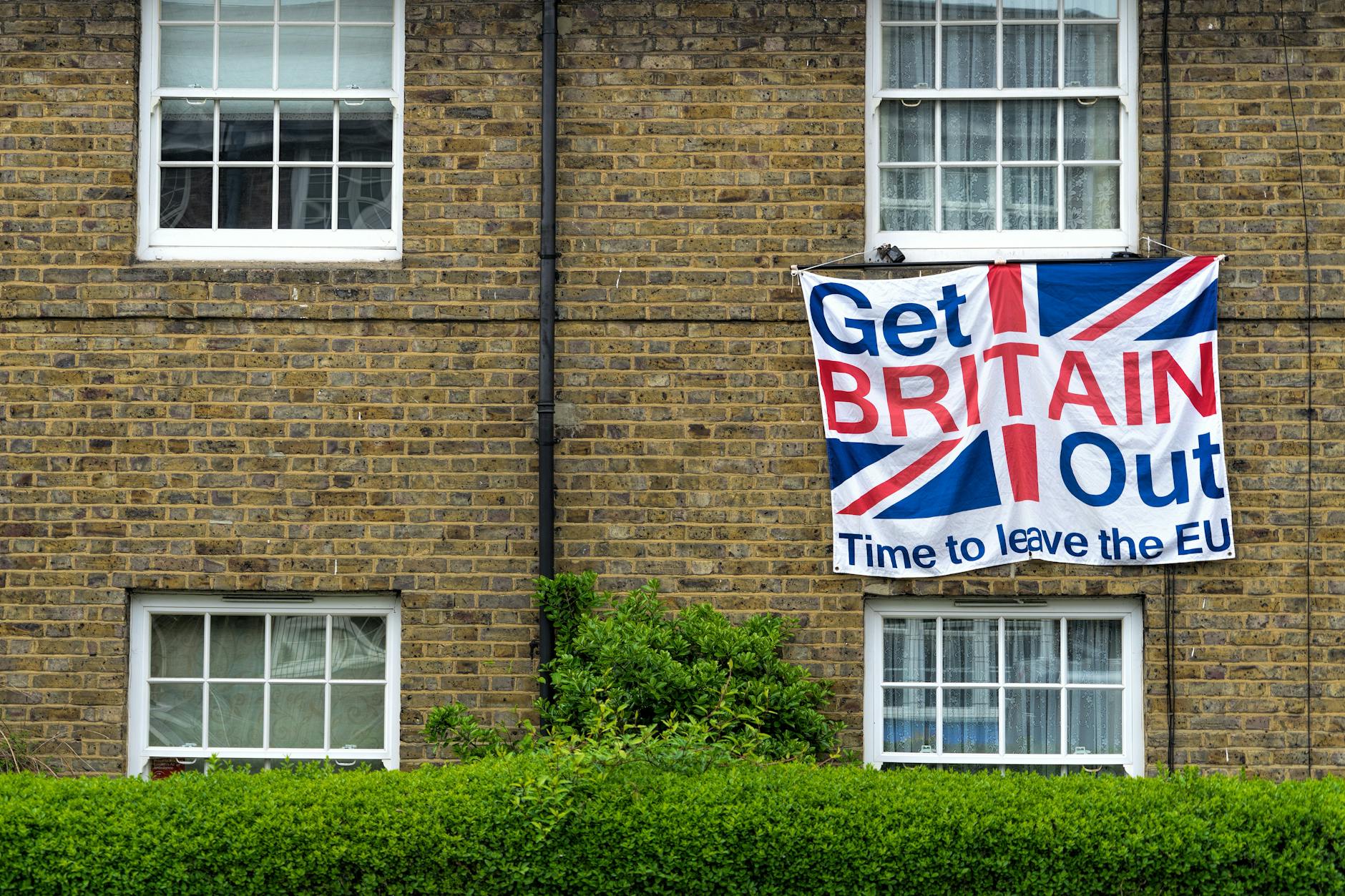
Fifty-six percent of British adults now believe Brexit was a mistake. That’s not a protest number — that’s a structural shift in public opinion, and every ambitious Labour Cabinet minister knows it.
What that figure represents, politically, is opportunity and danger simultaneously. The quiet scramble for position within Labour following Keir Starmer’s sliding approval ratings — net negative 22 in some April 2026 polls — has resurrected the one question British politics supposedly buried: how close should the United Kingdom actually be to the European Union? The leadership jostling isn’t just about personalities or welfare policy or who looks better on a Sunday morning interview sofa. It’s about whether the next Labour leader will be the person who finally moves the Overton window on Europe, or the person who successfully persuades the country that Brexit’s damage can be managed without touching the third rail.
Background
Britain formally left the European Union on January 31, 2020. The Trade and Cooperation Agreement was signed on December 24, 2020 — a Christmas Eve deal that settled the legal architecture but not the political argument. For the next four years, both major parties operated under a kind of enforced omertà on the subject. Admitting Brexit wasn’t working risked electoral punishment from Leave voters. Championing it risked mockery from an increasingly Remain-leaning professional class.
Sir Keir Starmer won the July 4, 2024 general election with 412 seats — Labour’s largest majority since Tony Blair’s 1997 landslide — partly by refusing to touch the Brexit consensus. His formula: make it work, seek a reset, don’t reopen the wound. The May 2025 UK-EU Summit at Lancaster House, the first bilateral summit of its kind since Brexit, produced a Security and Defence Partnership and opened negotiations on a Sanitary and Phytosanitary veterinary agreement to ease food trade friction. It was progress. It was also, by almost any honest measure, modest.
The economic backdrop has not been kind to the case for Brexit-as-settled-matter. UK-EU trade stands at roughly £900 billion annually, but post-Brexit non-tariff barriers have added an estimated £6–7 billion per year in costs to UK exporters. The UK economy grew just 0.1% in Q1 2026. The business lobby — the CBI, Make UK — consistently estimates Brexit red tape alone costs exporters £4.7 billion annually. Against that backdrop, the argument that Brexit’s terms are permanently fixed starts to look less like pragmatism and more like denial.
| Metric | Pre-Brexit (2019) | Post-Brexit (2025–26) |
|---|---|---|
| UK-EU goods exports growth | +3.2% annually | -1.1% annually |
| Non-tariff barrier cost to exporters | Negligible | Est. £6–7bn/year |
| Public opinion: Brexit was a mistake | ~42% (2019) | 56% (May 2026) |
| UK GDP growth (annual) | 1.6% | 0.3% (2025 full year) |
| UK-EU Summit bilateral meetings | Multiple per year | First since Brexit: May 2025 |
The numbers tell a story that ambitious politicians are now quietly — and sometimes not so quietly — beginning to read aloud.
What’s Actually Happening
The formal Labour leadership contest hasn’t started. Nobody has announced a challenge. Starmer hasn’t resigned. And yet the positioning is unmistakable to anyone who has spent time watching Westminster’s internal weather.
Approval ratings are the tell. When a prime minister hits net -22 in polling and his party begins to haemorrhage support in local elections, Cabinet members don’t just loyally stay in their lanes — they start thinking about what story they’ll tell about themselves when the time comes. The EU question has emerged, with uncomfortable clarity, as a dividing line in those calculations.
Three specific flashpoints are driving this:
- The youth mobility scheme: A proposal allowing under-30s to live and work across the UK and EU, still unresolved after the May 2025 summit. Progressive Labour MPs want it. More cautious voices — terrified of the phrase “freedom of movement by another name” — want it buried. Where a leadership candidate stands on this scheme is now effectively a proxy vote on their broader European philosophy.
- Dynamic alignment on goods standards: Some Cabinet voices, particularly around the trade and energy portfolio, are pushing for regulatory alignment with EU goods standards that updates automatically — the so-called “Swiss-style bilateral” model. Critics within the party say this is the Single Market through the back door. Supporters say it’s just common sense for exporters.
- The SPS veterinary agreement: Negotiations are ongoing. A deal would reduce checks on food and agricultural products crossing the Channel, benefiting farmers and supermarkets. But it requires the UK to accept EU food safety rules without a vote on them — sovereignty hawks inside Labour are deeply uncomfortable, even if they won’t say so publicly.
Reform UK, under Nigel Farage, is polling at 20–24% in early 2026. That number haunts every Labour strategist’s dreams. Any leadership candidate who moves visibly toward Europe risks handing Farage a campaign poster that writes itself: Labour is betraying Brexit. Again.
The Key Players
Sir Keir Starmer
The Prime Minister’s position is structurally awkward. He won in 2024 on a platform that explicitly ruled out rejoining the Single Market or Customs Union. His EU reset strategy has been calibrated to deliver tangible economic benefits — fewer border checks, defence cooperation, youth mobility discussions — without triggering the political tripwires. The Lancaster House summit was his proof of concept. The problem is that proof of concept isn’t the same as proof of results, and with economic growth at 0.1% in Q1 2026, patience inside the parliamentary party is thinning. Starmer is simultaneously too pro-European for Red Wall MPs and too cautious for the Europeanist wing. That’s a difficult place to govern from.
Wes Streeting
The Health Secretary is the most openly positioning figure in Cabinet — and he’s doing it with the practiced plausible deniability of a man who has been watching leadership contests since he was a student union president. Streeting has positioned himself as a centrist moderniser, telegraphing electability over ideology. On Europe, he’s cautious bordering on opaque. He won’t champion Single Market re-entry. He won’t wave the EU flag. His calculation: the path to Number 10 still runs through Stoke-on-Trent and Bolsover, and those voters aren’t asking for closer EU ties. What they’re asking for is jobs, and if he can argue that his version of EU engagement delivers jobs without the freedom-of-movement framing, he has a pitch.
Bridget Phillipson
The Education Secretary is another circulating name, seen as temperamentally and ideologically aligned with Starmer’s cautious reset approach. Phillipson has not broken cover on Europe. Her positioning is more about competent delivery and educational reform than foreign policy architecture. She represents the continuity-with-a-different-face option — the candidate for people who want to change the leadership without changing the direction. On Brexit, she’d likely inherit Starmer’s framework rather than challenge it.
Ed Miliband
The Energy Security Secretary is the most explicitly Europeanist voice currently sitting in Cabinet. Miliband has championed deeper cooperation on green energy, offshore wind, and the emerging European electricity grid integration discussions. His political identity — shaped by the 2015 leadership defeat and a genuine ideological commitment to European solidarity — makes him the candidate the Labour left would rally around if a contest became open. His problem is electability. His 2015 loss is still a wound in the party’s collective memory, and the Reform threat makes a visibly pro-EU standard-bearer a risky bet for a general election.
Nigel Farage and Reform UK
Farage isn’t running for Labour leader, obviously. But he is the most important external variable in this entire calculation. At 20–24% in national polls, Reform UK has changed the geometry of British politics. Every Labour leadership hopeful is essentially triangulating against Farage as much as against the Conservatives. His framing — that any EU movement is “Brexit betrayal in slow motion” — disciplines the entire Labour debate. The irony is that Farage, a man with no formal role in Labour’s internal politics, may be the single biggest constraint on what the next Labour leader can say about Europe.
What Each Side Gets Wrong
The pro-EU Labour wing makes a coherent economic case and then overreads it politically. Yes, 56% of British adults say Brexit was a mistake in May 2026 polling. Yes, the trade costs are real and measurable. But “Brexit was a mistake” does not automatically translate into “please take us back into the Single Market.” Public opinion on Brexit’s consequences and public appetite for reversing it are not the same thing, and conflating the two has been the Remain movement’s cardinal error since 2016. Voters can simultaneously believe a decision was wrong and have absolutely no desire to relitigate it.
The cautious centrist faction — Starmer’s current approach, likely Streeting’s future one — makes the opposite error. They treat the 2024 mandate as a permanent instruction rather than a moment-in-time permission slip. Electoral mandates don’t have infinite shelf lives. A mandate from July 2024 is operating in a different economic context by May 2026, and the assumption that Leave voters in Doncaster or Stoke will punish any EU engagement ignores the degree to which those same voters care about their household finances, their NHS waiting times, and their local economy — things that closer EU trade ties could materially improve.
The Conservatives under Kemi Badenoch are making their own miscalculation: betting that Brexit is still a unifying rather than a divisive issue for the right-of-centre electorate. With Reform UK having colonised the hardline Eurosceptic space, the Tories have no natural home on this issue. Badenoch’s instinct is to compete with Farage on Brexit purity — a race she cannot win on his terrain.
And Farage himself? His error is structural. Reform UK can win arguments and drain votes. Governing requires building coalitions. His entire political identity depends on Brexit remaining an open wound. If it heals — economically or politically — his reason for existing diminishes.
What Happens Next
The autumn 2026 party conference season is the inflection point. That’s when whisper becomes declaration — when the think-pieces about leadership become platform speeches, when Cabinet members stop being carefully vague and start being carefully explicit. The EU question will not stay abstract for much longer.
Here are the realistic scenarios:
- Scenario 1 — Controlled drift toward deeper alignment: Starmer survives in post, the SPS veterinary agreement is concluded before end of 2026, youth mobility passes in modified form, and Labour gradually tightens EU regulatory alignment without ever calling it that. Leadership candidates accept this as the baseline and fight on other ground. Brexit recedes again — until the next economic shock.
- Scenario 2 — Leadership contest triggered by 2027 mid-term crisis: Continued economic stagnation and local election losses force Starmer out before the next general election. A contest opens with Europe as the defining fault line. A Streeting-style cautious candidate wins, maintains current reset approach, and fights 2028/29 election on domestic ground.
- Scenario 3 — Pro-European insurgency: A combination of economic data, business lobbying, and generational shift in polling emboldens the Labour left and the Lib Dems to push harder on Single Market re-entry. A leadership candidate breaks cover and explicitly champions deeper alignment. This scenario hands Reform UK and the Tories their cleanest attack line, but also potentially consolidates the 56% majority on a positive European platform. High risk, high reward.
- Scenario 4 — Brexit stays frozen: Nothing breaks dramatically. Starmer completes his term. The EU reset delivers incremental gains. The leadership question stays latent. Brexit becomes what the Iraq War became for New Labour — the thing nobody talks about directly but that shapes every calculation in the background.
| Scenario | Probability (Est.) | Brexit Outcome | Electoral Risk |
|---|---|---|---|
| Controlled drift toward deeper alignment | 35% | Closer ties, no formal Single Market entry | Medium — Reform can frame as betrayal |
| Leadership contest, cautious successor | 30% | Status quo reset maintained | Low-Medium — continuity argument holds |
| Pro-European insurgency | 15% | Possible Single Market re-entry pledge | High — but potential coalition upside |
| Brexit stays frozen | 20% | Minimal change, managed friction | Low short-term, rising long-term |
The next general election is due by January 2029. That’s roughly 32 months from now — enough time for the economic picture to either vindicate or condemn the current approach. If UK growth remains anaemic and the EU continues to grow at a faster clip, the political cost of Brexit becomes impossible to obscure with careful language about “resets” and “partnerships.”
The calculation that Labour’s leadership hopefuls are making right now, in private conversations and briefings and Sunday lunch seminars they’ll all deny attending, comes down to a single question: is Brexit still the third rail of British politics, or has enough time passed — and enough damage accumulated — that the politician who names the problem honestly is rewarded rather than punished?
Get that answer wrong, and you hand Nigel Farage another five years of relevance. Get it right, and you reshape British politics more fundamentally than anything since 1997. The jostling has begun. The stakes are higher than most of the people jostling seem willing to admit.
About The Author