AfD’s Weidel Moves to Cut EU Powers: What We Know, What We Don’t, and Why the Timing Matters
 Sophie Gesture
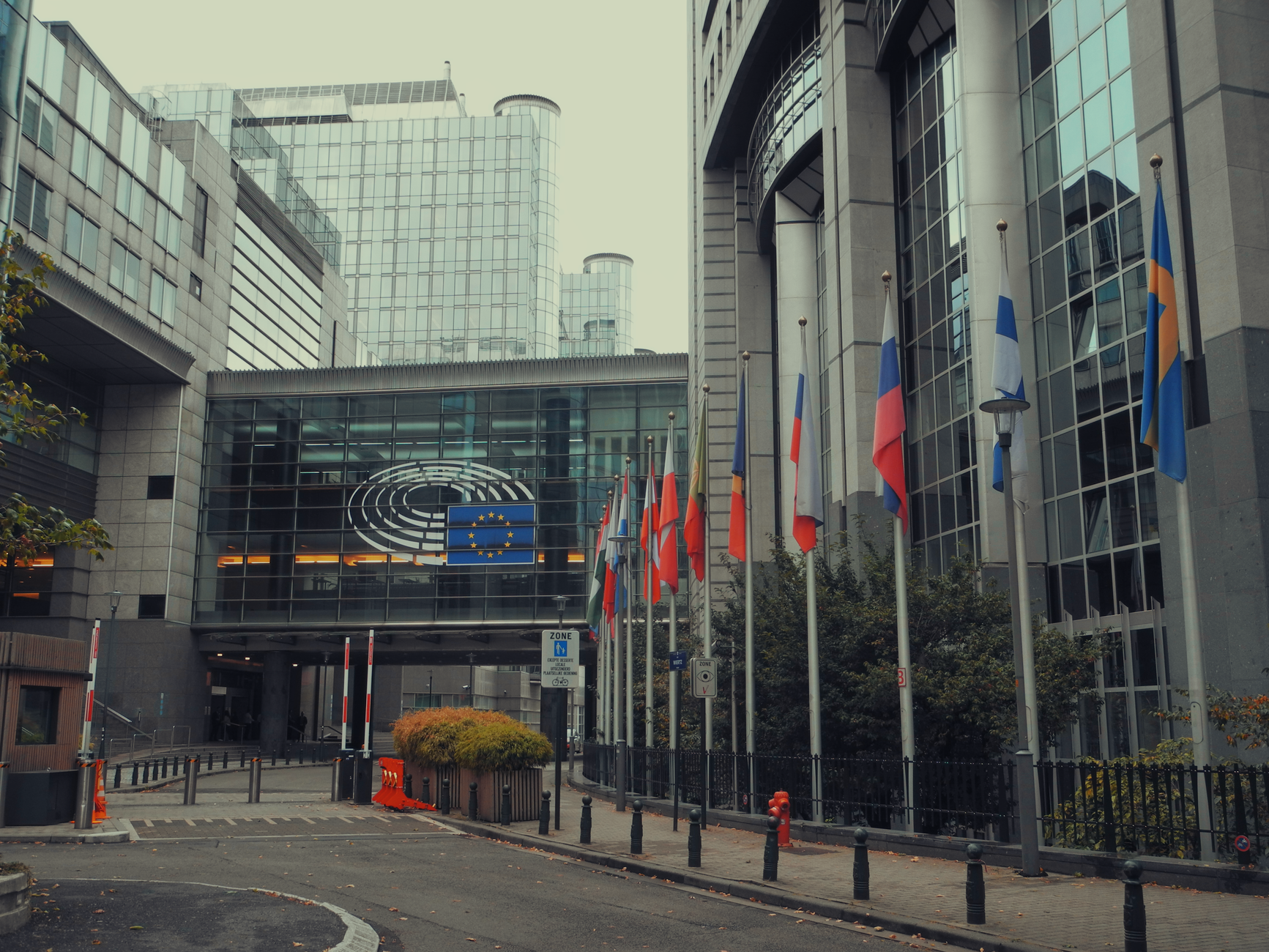
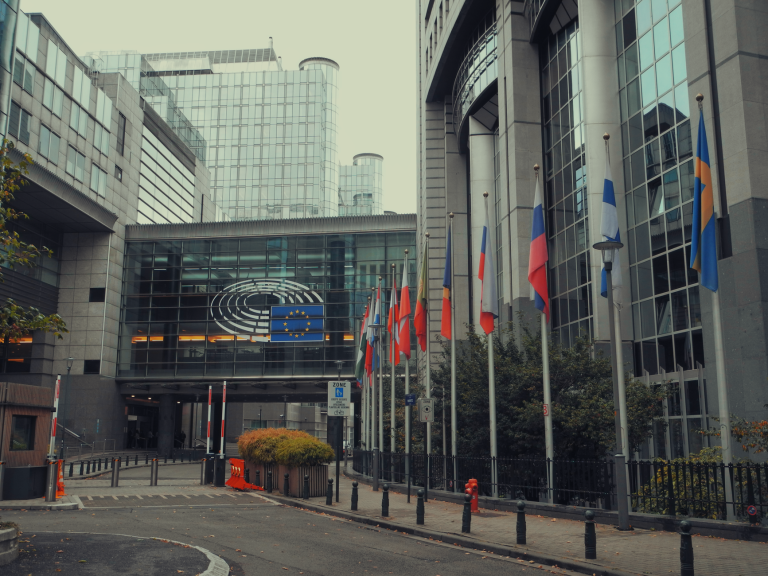
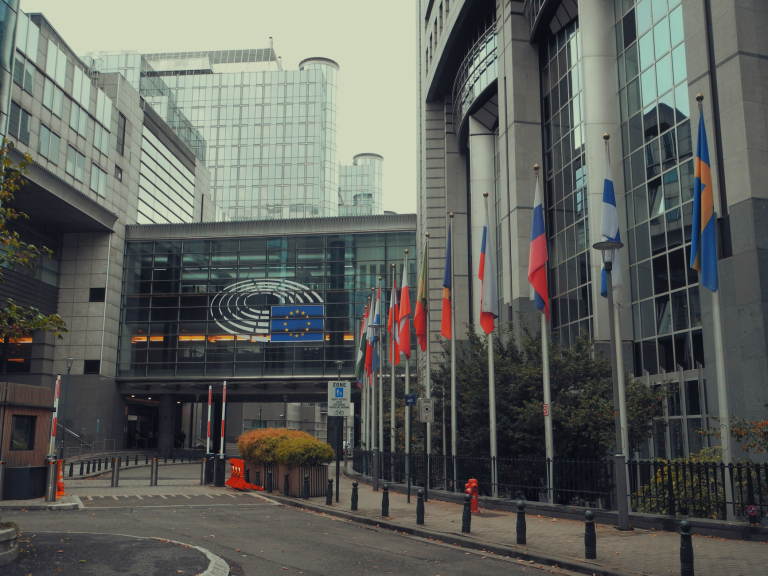
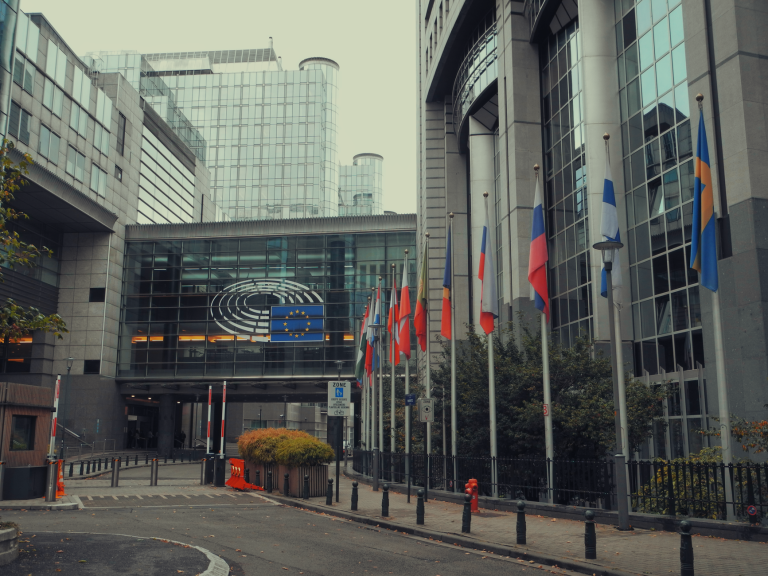
A single line of advance reporting, published by Deutsche Welle on the evening of 20 October 2026, landed with the particular weight that only carefully timed political announcements can produce. Alice Weidel of the AfD, according to DW.com, is preparing to unveil a plan to cut EU powers. The plan had not yet been formally published at the time of writing. The source behind DW’s reporting was not named. And yet the headline alone was enough to place a marker in the sand — announcing, in effect, that something was coming, without yet saying what.
That gap between announcement and substance is itself worth examining. So is the context in which this particular story surfaced.
—
What the Reporting Actually Confirms
Before any analysis can proceed responsibly, it is necessary to be precise about what this story actually establishes. The DW.com report, timestamped 20 October 2026 at 22:30 UTC, confirms the following:
- Alice Weidel, a figure associated with the AfD (Alternative für Deutschland), is reported to be preparing to unveil a plan targeting EU powers.
- The story is based on advance reporting — the headline itself uses the formulation “— report”, which is Deutsche Welle’s standard signal that the outlet is relaying information from another source rather than publishing a primary announcement.
- The plan had not been formally published or announced at the time DW.com went to press.
That is the totality of what the evidence confirms. The specific EU institutions or policy areas targeted, the timeline for the unveiling, any reactions from German or European political figures, and the substance of the proposals themselves — none of these details are available from the sourced material. Readers and commentators filling in those blanks are working from inference, not from this report.
A Structural Note on Advance Reporting
The use of “— report” at the end of a headline is an editorial convention that carries real meaning. It signals a relay rather than a revelation. DW.com was not publishing Weidel’s plan; it was publishing the fact that a plan was coming. That distinction matters for how the story should be read.
| Element | Status |
|---|---|
| Weidel planning to unveil an EU-powers plan | Confirmed by DW.com, 20 Oct 2026 |
| Plan formally published or announced | Not confirmed |
| Specific EU targets or policy scope | Not confirmed |
| Source behind the advance report | Not disclosed |
| Political reactions from other parties or EU officials | Not confirmed |
The table above is not a list of failures in the reporting. It is a realistic picture of where a breaking advance story stands at the moment of its initial publication. These gaps would ordinarily be closed by follow-up coverage once Weidel makes the announcement publicly.
—
The AfD, Euroscepticism, and the Significance of Moving From Rhetoric to Plans
The AfD has, across its political history, positioned itself as a Eurosceptic force — critical of the scope and authority of EU institutions and broadly resistant to what it characterises as the overreach of Brussels into German and member-state sovereignty. That is not a contested point in German political discourse. It is the settled character of the party’s positioning.
What distinguishes a formal plan to cut EU powers from standard Eurosceptic rhetoric is the shift in register it implies. Rhetoric positions a party. A plan — a structured, documented proposal — asks to be engaged with on its own terms. It invites scrutiny of specific mechanisms, targeted competencies, and proposed legal or treaty changes. It creates a paper trail, a talking point for opponents, and a benchmark against which the party can later be measured.
If the DW.com report is accurate, and Weidel is indeed preparing to move from rhetorical Euroscepticism into formal policy terrain, that would represent a meaningful escalation in the AfD’s approach to European institutional questions. The word “meaningful” here is deliberate: it is not necessarily consequential in terms of immediate policy outcomes — the AfD would need both political leverage and coalition partners to turn any such plan into legislation or treaty revision. But as a political act, publishing a detailed EU reform or reduction plan signals ambition and a desire to be taken seriously on this terrain.
The fracturing of Europe’s political centre has created the conditions in which parties like the AfD find it increasingly possible to frame maximalist positions as legitimate policy rather than protest sentiment. That broader dynamic forms the backdrop against which Weidel’s anticipated announcement should be read.
Why Formal Policy Proposals Matter Differently Than Speeches
- A formal plan creates a document that other parties must respond to, rather than merely dismiss.
- It signals to the party’s own base that the leadership is moving beyond opposition into governance-oriented thinking.
- It invites media and academic scrutiny of specific claims, which can expose weaknesses but also amplify the underlying arguments.
- It becomes a reference point in any future coalition or electoral negotiation, binding the party to a position.
- It places the AfD in a European conversation already taking place about the proper scope of EU competence — a conversation that is not exclusively the territory of the far right.
—
The Hacker Story Running in Parallel
On the same date — 20 October 2026 — a second story from DW.com reported that hackers had released AfD party emails. This story was published approximately 25 minutes before the Weidel EU-powers item, at 22:05 UTC.
The research confirms these two stories ran concurrently on the same evening. It does not confirm any direct factual connection between them. Whether the hacked emails contained anything related to the EU-powers plan, whether the timing of the leak was intended to disrupt the announcement, or whether the two stories are entirely unrelated — none of that can be established from the available material.
What can be said, analytically, is that the simultaneous arrival of a hacker story and a major policy announcement creates a complicated media environment for anyone trying to manage a political rollout. Any party preparing a significant policy unveiling would find that environment difficult to navigate.
| Story | DW.com Timestamp | Confirmed Connection to Other Story |
|---|---|---|
| Hackers release AfD party emails | 20 Oct 2026, 22:05 UTC | Not confirmed |
| Weidel to unveil EU-powers plan | 20 Oct 2026, 22:30 UTC | Not confirmed |
The 25-minute gap between the two publications is a data point, not an explanation. It could be coincidence. It could reflect a deliberate attempt by whoever carried out the hack to time a release for maximum disruption. It could reflect nothing more than the natural rhythm of an active news evening. Journalism that treats proximity in time as proof of connection does a disservice to its readers.
—
The Broader European Moment
It would be artificial to read the Weidel story in complete isolation from the European political moment in which it sits. A glance at the headlines running alongside it on 20 October 2026 tells its own story:
- The EU was exploring ways to increase support for the Yemeni government.
- Zelenskyy was publicly characterising Trump’s pressure as being directed at Ukraine rather than Russia.
- A piece in the Daily Sabah was examining how a global power had lost its way — with Europe as its subject.
- The EU had just unveiled a new Arctic strategy.
- The EU formally rejected a Turkish-Libyan maritime agreement as invalid.
This is the texture of a European Union simultaneously projecting ambition — an Arctic strategy, engagement with the Yemen conflict — and absorbing profound stress from multiple directions. Into that context, a formal proposal from a major German party to curtail the EU’s powers would land differently than it might have landed five years ago, when the EU’s institutional self-confidence was more intact.
The pattern of political centre fragmentation across European capitals means that even proposals which lack the votes to become policy can reshape the terms of political argument. A plan that names specific EU competencies for reduction, if that is what Weidel is preparing, would enter a European debate already in motion — one where the question of what the EU should and should not do is genuinely contested, well beyond the fringes.
Key Political Actors and Stakeholders Who Would Be Affected
The following parties and institutions would be expected to respond once a formal plan is published, though no responses have been reported at this stage:
- German coalition parties and opposition — any such plan would immediately become a domestic political football.
- European Commission — a formal proposal by a significant German party to cut EU competencies would demand at minimum a public response.
- Other EU member-state governments — particularly those with their own Eurosceptic wings or coalition pressures.
- The European Parliament — where the AfD and allied parties sit, and where such a plan could be introduced as a basis for institutional debate.
- Pro-European civil society and think-tanks — which would be expected to publish counter-analyses once specific proposals become available.
—
Critical Analysis: The Limits of What a Plan Can Achieve
Ambition and achievability are not the same thing, and any serious reading of this story has to hold both in mind. Even if Weidel’s plan proves to be detailed, legally coherent, and politically bold, the path from proposal to implementation in the EU system is extraordinarily long and contested.
Cutting EU powers in any substantive way would require, at minimum, treaty change — a process that demands unanimity among member states and has historically proven resistant to fundamental revision. Achieving that from within the German domestic political system, without majority government and without significant allied governments across the EU, would require a degree of political convergence that does not currently exist.
What a formal plan can do, however, is considerably more than nothing:
- It can frame the terms of political argument in Germany and beyond.
- It can give Eurosceptic parties across Europe a common reference document to rally around.
- It can force pro-European parties to articulate a more detailed defence of specific EU competencies — a task they have often been reluctant to take on with precision.
- It can become campaign material in any forthcoming German or European electoral cycle.
- It can signal to voters who feel alienated from EU institutions that someone is taking their concerns seriously enough to put them in writing.
These are political effects, not legislative ones. But in the current European climate, political effects are where many of the real battles are being fought. The EU political news landscape of late 2026 is defined as much by the contest over narratives as by the mechanics of legislation.
—
Four Scenarios for How This Story Develops
Given that the plan has not yet been formally unveiled, it is worth mapping how the story could plausibly unfold. These are scenarios, not predictions.
Scenario One: The Plan Is Substantive and Detailed
Weidel publishes a document that names specific EU competencies, proposes concrete mechanisms for repatriation to member states, and engages with treaty architecture. This version of the plan would generate sustained media coverage, force responses from European institutions, and give the AfD a platform for months of policy debate.
Scenario Two: The Plan Is Broad and Rhetorical
The document proves to be a political manifesto rather than a technical proposal — strong on direction, thin on mechanism. In this scenario, the plan generates a short news cycle, allows opponents to dismiss it as unserious, and fades before it can reshape the terms of debate.
Scenario Three: The Hacker Story Dominates and the Plan Gets Buried
If the emails released by hackers contain damaging material — the research does not specify what was in them — the media focus could shift decisively away from Weidel’s EU proposal and onto the content of the leaked correspondence. The policy announcement could then arrive in a compromised political space, losing much of its intended impact.
Scenario Four: The Plan Becomes a European Flashpoint
In this scenario, Weidel’s proposal lands at a moment when EU institutional questions are already live — around treaty revision, budget negotiations, or enlargement debates — and provides a focal point for a broader European argument about what the EU is for. This would extend the story well beyond Germany and into the architecture of European institutional politics.
—
There is a version of this story in which a DW headline from October 2026 marks the starting point of something considerably larger — a structured, serious challenge from within Germany’s national politics to the scope of European institutional authority. There is also a version in which the headline remains what it currently is: a marker of intent, quickly consumed and quickly overtaken by events. The difference between those versions will become clear when Alice Weidel actually steps up and shows her hand.
About The Author