Sophie Gesture
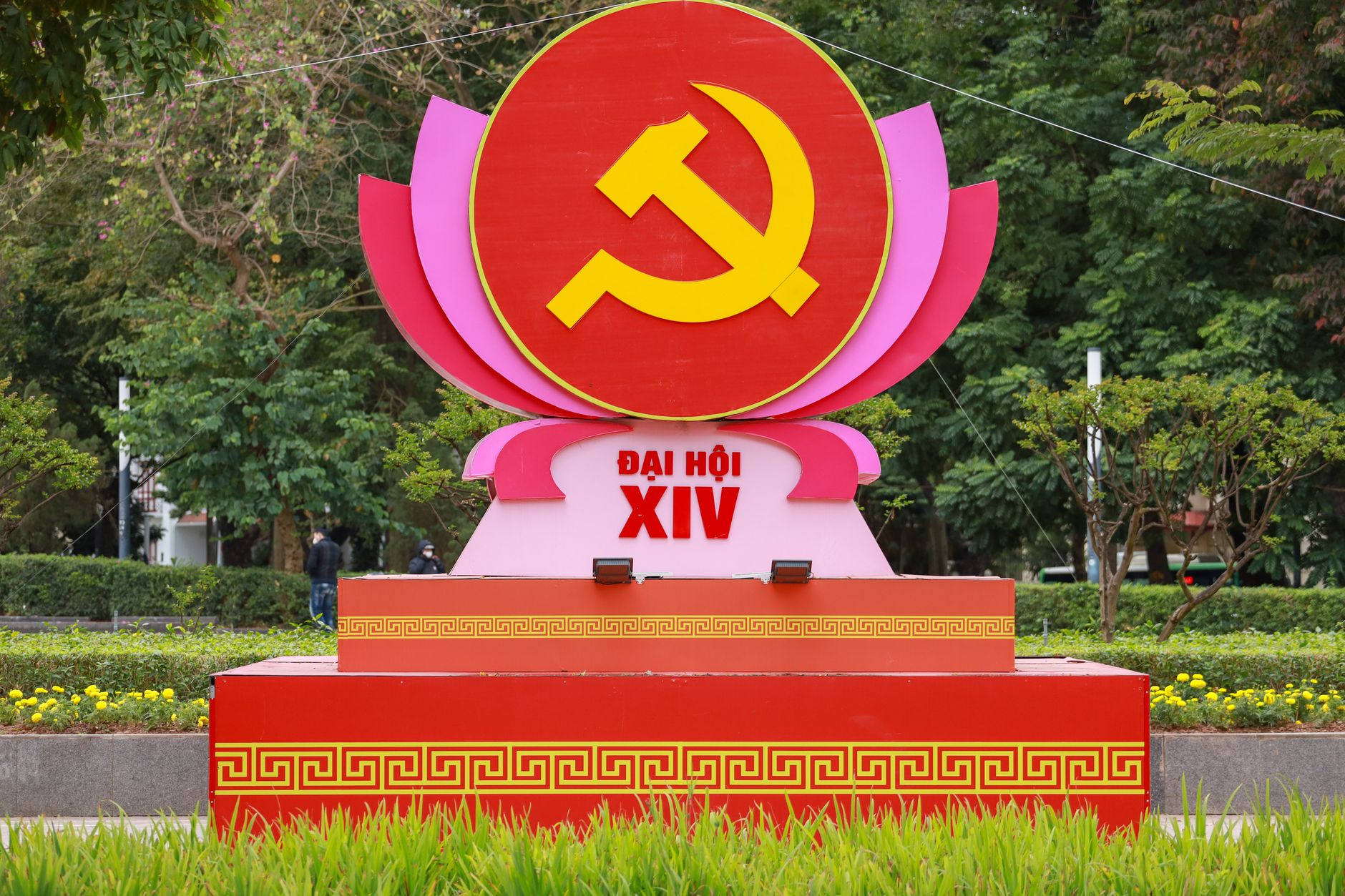
Communism is a political and economic ideology that calls for the collective ownership of the means of production, the abolition of private property, and the ultimate creation of a classless, stateless society. Rooted primarily in the work of Karl Marx and Friedrich Engels, it has produced some of the most consequential political movements and governing regimes of the modern era. Its theoretical frameworks, governance models, and historical record remain subjects of sustained scholarly debate and political controversy.
Overview
At its theoretical core, communism holds that human history is driven by class struggle — the conflict between those who own productive resources and those who must sell their labor to survive. In the Marxist analysis, capitalism, while historically significant in displacing feudalism, generates inherent contradictions: the systematic exploitation of the working class (the proletariat) by the owning class (the bourgeoisie) eventually produces the conditions for revolutionary transformation.
The envisioned endpoint of this transformation is a society organized according to the principle “from each according to his ability, to each according to his needs.” Reaching that endpoint, in the most developed Marxist formulations, requires a transitional phase — sometimes described as the “dictatorship of the proletariat” — during which a socialist state reorganizes economic and social relations before the state itself gradually withers away.
This vision distinguishes communism from related ideologies. Socialism accepts collective ownership but does not necessarily call for the abolition of the state or all private property. Anarchism similarly seeks a stateless society but rejects the transitional period of centralized political power that most communist traditions have endorsed. Earlier utopian visions of ideal communities, which predated Marx and Engels, were dismissed by them as lacking the historical and materialist grounding of what they termed “scientific socialism.”
Why Communism Matters in Politics
Communism has shaped global politics more profoundly than almost any other ideology of the modern era. At its peak, roughly one-third of the world’s population lived under governments claiming Marxist-Leninist or communist governance. The Cold War — the defining geopolitical contest of the second half of the twentieth century — was structured as an ideological and strategic conflict between liberal-capitalist states, led by the United States, and communist states, led by the Soviet Union.
Beyond formal state power, communist and Marxist movements have shaped labor rights, anti-colonial independence struggles, and intellectual life across the globe. Marxist analytical frameworks — class analysis, historical materialism, critique of ideology — retain wide influence in academic social science and the humanities, well beyond the circles of those who endorse communist politics as a program.
Even following the collapse of the Soviet Union in 1991, communism retains political relevance as a governing ideology in several states and as a framework of critique applied to questions of economic inequality, exploitation, and the limits of liberal democracy.
Core Principles
Historical Materialism
The theoretical foundation of Marxist communism is historical materialism: the claim that the material conditions of economic life — the forces and relations of production — are the primary drivers of historical change, including changes in law, culture, and political institutions. On this account, ideas and institutions are ultimately shaped by the economic base of society rather than the reverse.
Class Struggle
Central to communist theory is the concept of class struggle. In capitalist societies, the bourgeoisie (property-owning class) and the proletariat (working class) occupy structurally antagonistic positions. The extraction of surplus value from workers’ labor — profit that accrues to owners rather than producers — is identified as the mechanism of exploitation underpinning capitalism.
Collective Ownership and the Abolition of Private Property
Communism calls for the replacement of private ownership of the means of production (factories, land, capital) with collective or common ownership, eliminating the class distinction between owners and workers. This is distinguished from the abolition of personal property such as individual possessions.
The Withering Away of the State
In classical Marxist theory, the state is understood as an instrument of class domination. Once class distinctions are eliminated, the need for a coercive state apparatus is expected to disappear. This “withering away” of the state represents the final stage of communist development — a formulation that has generated considerable theoretical debate given the historically observed tendency of communist regimes toward expanded rather than diminished state power.
Historical Development and Major Variants
Marxism-Leninism
Communism as a governing practice emerged most decisively from the Russian Revolution of 1917, when the Bolshevik Party, led by Vladimir Lenin, seized power and established the world’s first self-declared communist state. Lenin’s adaptation of Marxism emphasized the necessity of a disciplined, vanguard revolutionary party to lead the proletariat, on the grounds that workers would not spontaneously develop the revolutionary consciousness required for transformation. This model — Marxism-Leninism — became the dominant framework for communist governance worldwide, defining the organizational structures of the Central Committee, the Politburo, and the single-party state.
Stalinism
Under Joseph Stalin, who consolidated power in the Soviet Union following Lenin’s death, the Marxist-Leninist model evolved into what scholars typically term Stalinism: a system characterized by extreme centralization of authority, forced collectivization of agriculture, rapid industrialization campaigns, and extensive political repression including mass purges. Many scholars consider Stalinism a significant departure from — or distortion of — communist ideals, while Soviet-era defenders argued that harsh measures reflected genuine external threats and conditions of underdevelopment.
Maoism
In China, Mao Zedong developed a distinct adaptation of Marxism-Leninism suited to a predominantly peasant-based agrarian society. Maoism placed greater emphasis on the revolutionary potential of the peasantry, on continuous mass mobilization, and on the idea that class struggle continues even after the seizure of state power. The Cultural Revolution of the 1960s and 1970s, in which Mao sought to purge perceived counterrevolutionary influences, remains one of the most analyzed and contested episodes in communist history.
Eurocommunism
In Western Europe during the 1970s, communist parties in countries including Italy, Spain, and France developed what became known as Eurocommunism — a tendency that sought to distance itself from Soviet authoritarianism and to pursue socialist goals through democratic electoral participation and constitutional means, rather than revolutionary seizure of power.
Communism and the State: Governance Structures
In practice, communist-governed states have organized political power through single-party systems in which the communist party exercises a leading or exclusive role in political life. Key structural features common to many such systems include:
- A party congress serving as the formal representative body of the party membership, typically convening periodically.
- A Central Committee, elected by the congress, serving as the primary deliberative body between congresses.
- A Politburo (or equivalent executive committee), concentrating day-to-day executive authority.
- A general secretary or equivalent position holding supreme leadership authority within the party and, effectively, the state.
Critics across the political spectrum have argued that this concentration of power systematically generates authoritarianism and, at its extreme, totalitarianism, regardless of the ideological intentions of founding leaders. Defenders have contended that external pressures — including capitalist encirclement, economic sanctions, and military threat — made centralization a practical defensive necessity rather than an ideological preference.
Arguments in Support
Proponents of communism have advanced several recurring arguments:
- Exploitation and inequality: Capitalism systematically transfers wealth generated by workers to property-owning classes, producing structural inequality that cannot be resolved through incremental reform.
- Alienation: Workers in capitalist systems are estranged from the products of their labor, from the process of production, and from their own human potential — conditions that collective ownership would address.
- Crisis tendencies: Capitalism is prone to periodic crises of overproduction, unemployment, and financial instability that collective economic planning could mitigate.
- Anti-colonialism: In many non-Western contexts, communist ideology provided an analytical framework for resistance to European imperial domination and a model for rapid state-led economic development.
Criticisms and Limitations
Communist ideology and communist governance have attracted criticism from multiple directions:
- Historical record: Critics point to the repression, famine, and mass death associated with communist regimes in the Soviet Union, China, Cambodia, and elsewhere as evidence of deep structural flaws in the ideology or its application.
- Concentration of power: The absence of independent institutions, free elections, and civil liberties in most communist-governed states has been widely criticized as a fundamental violation of human rights and political freedom.
- Economic performance: Centrally planned economies have generally been assessed as less efficient than market economies at allocating resources and generating sustained prosperity, though this assessment is contested by some economists.
- Theoretical tensions: The promised withering away of the state has not been observed in any communist-governed society; critics argue this reflects an inherent contradiction in the theory rather than merely contingent historical circumstances.
- Application of the label: In political discourse, particularly in the United States, the term “communism” has frequently been applied inaccurately to policies well within the mainstream of social democracy or liberalism, a rhetorical tradition rooted in Cold War anticommunism.
Contemporary Landscape
Communism as a governing ideology currently operates primarily through the Chinese Communist Party (CCP), which governs the People’s Republic of China and represents by membership the largest communist party in the world. The CCP has incorporated substantial market mechanisms into China’s economy while retaining single-party political rule — a combination that has prompted debate about whether contemporary China represents a form of communism, state capitalism, or a distinct hybrid model.
Other states that retain communist or Marxist-Leninist governance frameworks include Cuba, Vietnam, North Korea, and Laos, each with distinct economic and political configurations.
Outside of single-party states, communist and Marxist parties continue to operate within democratic electoral systems in many countries, generally as minority parties or coalition partners. In Eastern Europe, the legacy of communist-era governance remains politically contested, with ongoing disputes in countries such as Hungary over how the communist past is officially remembered and interpreted — a dimension scholars describe as “memory politics.”
Key Facts
| Dimension | Detail |
|---|---|
| Foundational theorists | Karl Marx, Friedrich Engels |
| Foundational text | The Communist Manifesto (1848); Das Kapital (1867) |
| First communist state | Soviet Union (established 1917, dissolved 1991) |
| Major variants | Marxism-Leninism, Stalinism, Maoism, Eurocommunism |
| Largest current governing party | Chinese Communist Party (People’s Republic of China) |
| Other currently governing states | Cuba, Vietnam, North Korea, Laos |
| Key organizational structures | Vanguard party, Central Committee, Politburo |
| Central theoretical mechanism | Class struggle; historical materialism |
| Relationship to socialism | Communism is generally considered a more radical endpoint within the broader socialist tradition |
Frequently Asked Questions
What is the difference between communism and socialism? Socialism is a broad ideology advocating collective or public ownership of the means of production, but it does not necessarily require the abolition of the state or all private property, and it is compatible with democratic governance. Communism, in its classical Marxist formulation, represents a more radical endpoint: a fully classless and stateless society. In practice, the boundary between the two terms is frequently contested. Socialism is often treated as a transitional stage on the path to communism.
Has any country achieved “full” communism as theorized by Marx? No country has claimed to have reached the final stage of full communism as theorized — a classless, stateless society. Communist-governed states have described themselves as being in a transitional socialist phase on the path toward communism. The persistence of the party-state in all such cases has led many theorists to question whether the transition as envisioned is achievable in practice.
What is the relationship between communism and totalitarianism? Many scholars classify several communist-governed states — particularly Stalinist Soviet Union, Maoist China during certain periods, and North Korea — as totalitarian systems, given their comprehensive attempts to control political, economic, social, and cultural life. However, the concepts are analytically distinct: totalitarianism describes a mode of governance, while communism describes an ideological program. Some communist traditions, such as Eurocommunism, explicitly rejected authoritarian governance.
Why did the Soviet Union collapse? The dissolution of the Soviet Union in 1991 resulted from a combination of factors including economic stagnation, the unsustainable costs of military competition with the United States, political reform processes initiated under Mikhail Gorbachev, and the cascading independence movements of constituent Soviet republics and Eastern European satellite states. The Solidarity movement in Poland, among other resistance movements, illustrated the weakening legitimacy of communist governance in Eastern Europe.
Is Marxist theory the same as communist politics? Not necessarily. Marxist analytical frameworks — including class analysis, historical materialism, and critique of ideology — are used widely in academic social science, literary theory, and sociology by scholars who do not advocate communist political programs. The theoretical toolkit of Marxism has been applied across a broad range of intellectual and political projects, many of which diverge significantly from communist governance as practiced in the twentieth century.
How is “communism” used as a political epithet? In the United States and certain other contexts, the term “communism” has historically been applied, often inaccurately, to a wide range of policies and political figures by critics seeking to delegitimize them. This rhetorical pattern became especially pronounced during the Cold War era and is associated with anticommunist campaigns that critics have argued conflated liberal or social-democratic positions with Marxist-Leninist ideology. This usage reflects the political potency of the term as a symbol of threat rather than a precise ideological descriptor.
This entry is part of the Political Encyclopedia.
About The Author