Farage Launches Preemptive Attack on Commons Standards Committee, Claiming It Won’t Judge Him Fairly
 Sophie Gesture
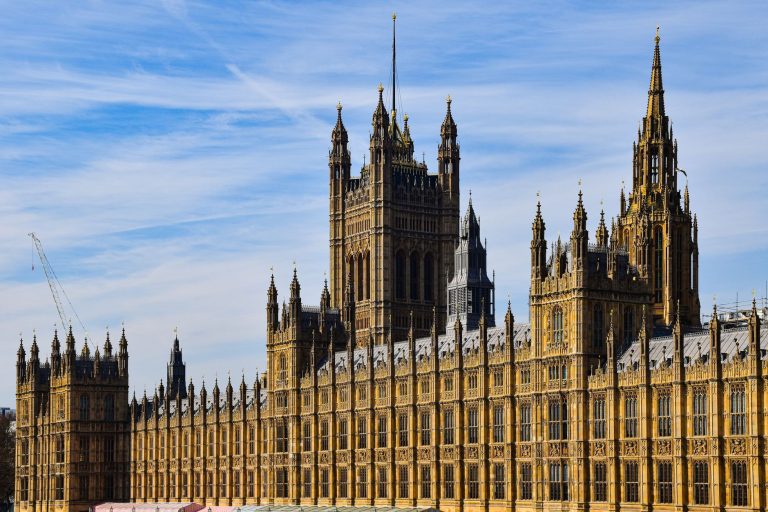
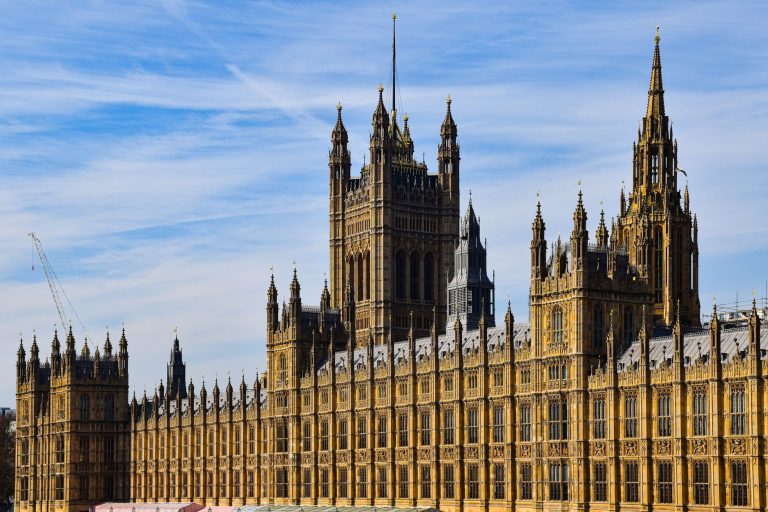
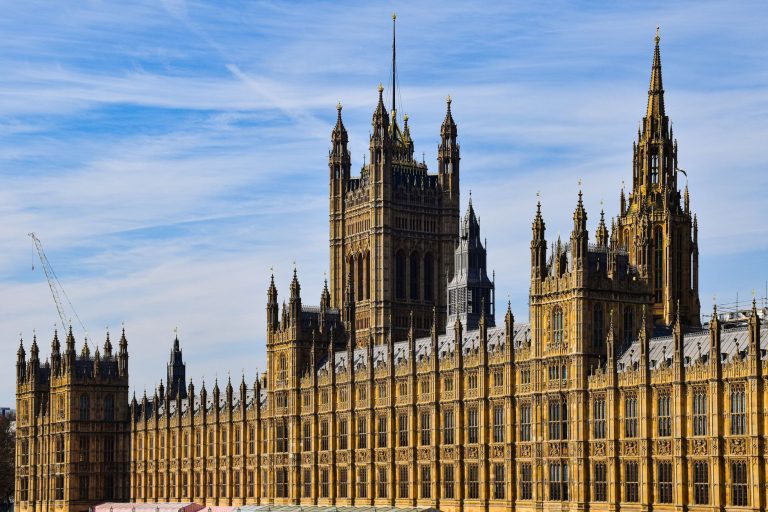
Nigel Farage went to war with a parliamentary watchdog before it even ruled against him. On 9 July 2026, the MP for Clacton and leader of Reform UK launched a public broadside against the House of Commons Committee on Standards, claiming the cross-party body is politically rigged against him and incapable of delivering a fair judgment. The verdict hasn’t even landed yet. That’s the point.
What’s at stake here is not just Farage’s parliamentary seat or the conduct complaint against him. It’s whether Britain’s system of parliamentary self-regulation can hold against a politician who has made the destruction of institutional credibility his primary political product. If Farage poisons the well before the verdict arrives, any guilty finding becomes, in his supporters’ eyes, just more evidence of establishment persecution. It’s a trap. And the Standards Committee walked straight into the frame he built for it.
How Parliament’s Standards Regime Has Been Weaponised — and Why Farage Is Not the First to Try
The House of Commons Committee on Standards is not a new invention. It operates under a framework refined over decades, combining elected MPs from multiple parties with independent lay members who hold no party affiliation — a design specifically intended to prevent partisan capture. The Parliamentary Commissioner for Standards, an independent officer of the House, investigates complaints and refers serious cases to the committee. The process is deliberate, slow, and intentionally insulated from political pressure.
That insulation is exactly what Farage is attacking. The complaint against him centres on allegations that he blurred the line between his role as an MP — with the office resources, staff, and public funding that entails — and his position as Reform UK’s party leader. Using parliamentary resources for party-political work is a clear breach of the MPs’ Code of Conduct. It’s not a grey area. What is a grey area, and what Farage is exploiting, is the perception of who sits in judgment.
| Standards Process Stage | Who Is Involved | Key Function | Independence Mechanism |
|---|---|---|---|
| Initial Complaint | Any member of the public or MP | Triggers investigation | Open to all |
| Investigation | Parliamentary Commissioner for Standards | Gathers evidence, interviews parties | Independent officer, not an MP |
| Referral to Committee | Commissioner’s decision | Escalates serious cases | Commissioner acts alone |
| Committee Deliberation | Elected MPs + lay members | Reviews findings, determines sanction | Lay members have equal voting weight |
| Sanction (if upheld) | Full House of Commons vote | Approves suspension | Majority vote required |
| Recall Trigger | Speaker’s certificate | Activates if suspension ≥10 sitting days | Governed by Recall of MPs Act 2015 |
This is not a kangaroo court. The system has cleared MPs before. It has also sanctioned them — including members from Labour, the Conservatives, and the Liberal Democrats. As Reform UK has moved from fringe insurgency to central political force, the scrutiny of its leadership was always going to intensify. Farage knows that. Which is precisely why he’s moving first.
9 July 2026: Farage Fires Before the Verdict, Clacton Braces for 6 August, and a Donations Scandal Deepens
The day unfolded on multiple fronts simultaneously, each one compounding the others in ways that look less like coincidence and more like a political storm that has been building for months.
Here is what broke on 9 July 2026:
- Farage’s preemptive strike: In public statements and media appearances, Farage accused the Standards Committee of political bias, framing any adverse ruling as a predetermined stitch-up by the Westminster establishment. Labour and Liberal Democrat MPs responded by accusing him of attempting to intimidate an independent parliamentary body. Constitutional experts warned the move represents a dangerous assault on parliamentary self-regulation.
- Clacton by-election date: The Clacton constituency is expected to face a by-election on 6 August 2026 — triggered if the Standards Committee finds Farage guilty and recommends a suspension of 10 or more sitting days. Under the Recall of MPs Act 2015, such a suspension activates a recall petition. If 10% of the Clacton electorate signs within six weeks, his seat is vacated. Three major parties have already signalled they may refuse to contest it — an astonishing development without modern precedent.
- The £500,000 donations probe: Police launched a formal investigation into £500,000 in donations made to Reform UK, traced to the mother of a convicted fraudster who had publicly backed Farage. Under the Political Parties, Elections and Referendums Act 2000 (PPERA), donations must come from a permissible donor. If the money originated with the son — potentially ineligible due to criminal status — and was routed through his mother, it constitutes illegal channelling of funds. The Electoral Commission has also been notified. Reform denies wrongdoing.
- Andy Burnham’s Labour surge: The Mayor of Greater Manchester secured overwhelming MP backing for a future leadership bid, a public signal that the succession question inside Labour is alive and active even while Keir Starmer governs.
- Restore Britain’s Dunblane outrage: The leader of Restore Britain, a hard-right nationalist movement orbiting Reform UK’s political ecosystem, described the Dunblane school massacre of 13 March 1996 — in which 16 children aged five and six, plus their teacher, were murdered — as “one murder.” Police Scotland confirmed they were assessing the remarks under communications law.
Farage, the Standards Committee, and the Electoral Commission: Three Forces on a Collision Course
Nigel Farage
Farage has deployed this playbook before — not just in UK politics but across his decades of anti-establishment campaigning. Pre-empting an adverse ruling by attacking the legitimacy of the body making it is not improvisation. It is strategy. By going public before the verdict, he does three things simultaneously: he rallies his base around a persecution narrative, he pressures individual committee members by making their names and affiliations part of a public controversy, and he gives Reform UK’s media operation a ready-made story regardless of what the committee actually decides. A guilty finding becomes proof of bias. An acquittal becomes vindication. He cannot lose the narrative war — only the legal one.
The House of Commons Committee on Standards
The committee’s position is genuinely difficult, and not because it lacks independence. It does have independence — structural, procedural, and in terms of personnel. The problem is that Farage has already decided to question that independence publicly, and any response the committee gives now looks like a reaction to his attack rather than a dispassionate proceeding. Silence looks weak. Rebuttal looks defensive. The committee’s chair and its lay members — who have no party affiliation and no political incentive to target Farage — are now navigating a media environment that Farage shaped before they could speak. That’s the damage a preemptive attack does. It doesn’t need to be true to be effective.
The Electoral Commission and Police
The £500,000 donations investigation is a separate but compounding threat to Reform UK’s position. Police and the Electoral Commission are now scrutinising whether the party accepted money from a source that, under PPERA, was not a permissible donor. Reform’s standard due diligence defence — that it checked the donor’s identity and registration — does not necessarily cover the question of whether funds were channelled through a permissible front. This is not a minor compliance issue. Depending on findings, it could result in criminal charges, fines, or orders to return donations. The timing, landing simultaneously with the Standards Committee proceedings, means Reform is fighting accountability battles on two institutional fronts at once.
Why Farage’s “Biased Committee” Argument Is Politically Brilliant and Constitutionally Reckless at the Same Time
Let’s be honest about what Farage is doing, because the media coverage often isn’t. He is not making a legal argument. He is not filing a formal challenge to the committee’s composition or procedure. He is not citing specific instances of documented bias by named committee members. He is making a political assertion — that the committee is inherently untrustworthy because it is part of the parliamentary establishment he has built his career opposing. The argument is circular by design. Any body that could find him guilty is, by definition, part of the problem.
This framing works brilliantly with Reform’s base, which polling consistently shows holds deep distrust of Westminster institutions. It works less brilliantly as a constitutional principle, because if we accept that any politician can pre-emptively delegitimise any oversight body that might rule against them, parliamentary self-regulation collapses entirely. What replaces it? Either no accountability at all, or accountability determined purely by whoever shouts loudest.
The criticism of Farage’s approach from the establishment parties is not without its own hypocrisy, though. Labour and Conservative MPs who now defend the Standards Committee’s integrity have, at various points when findings went against their own members, questioned the process, the commissioner, or the timeline. The outrage is selective. And Farage knows it — which is why he plays the victim card with such confidence. He’s watched the other parties do it when it suited them.
The Restore Britain “Dunblane” remark adds another dimension that deserves direct statement: the hard-right fringe that has grown in Reform’s political shadow is now generating content so extreme that it forces Reform to either condemn it explicitly or be associated with it by silence. Farage has not, as of 9 July, made a clear and unambiguous denunciation. That silence is a political choice with political consequences. For more on the broader landscape of UK political news as it develops, the pattern of Reform’s relationship with its far-right adjacent movements warrants sustained scrutiny.
Four Scenarios That Will Determine Farage’s Future — and Reform UK’s — Before Autumn 2026
The next eight weeks are not a slow news period. They are potentially the most consequential stretch in Reform UK’s short parliamentary history. Here is how the scenarios stack up:
- Scenario 1 — Guilty finding, suspension of 10+ days, recall triggered: The most consequential path. Farage fights the recall petition in Clacton, arguing his constituents should decide his fate rather than a committee of MPs. If 10% sign, a by-election follows on or around 6 August. Reform runs a candidate — almost certainly not Farage himself given the recall mechanism — against a fractured opposition that may, extraordinarily, boycott the contest entirely.
- Scenario 2 — Guilty finding, suspension below 10 days: Farage takes the hit, claims vindication on the severity, and uses the mild sanction to argue the original complaint was a political witch hunt disproportionate to the alleged offence. Reform polls hold. He remains an MP. The story dies faster than his opponents want.
- Scenario 3 — Not guilty: Farage declares total vindication, attacks everyone who covered the story as part of the establishment media conspiracy, and enters the autumn with a grievance narrative turbocharged by a formal institutional finding in his favour. This is arguably the worst political outcome for Labour and the Conservatives.
- Scenario 4 — Donations probe results in charges or formal referral before the Standards verdict: The two institutional pressures collide. Reform faces simultaneous legal and parliamentary jeopardy. Farage is forced to address whether the party’s funding model is structurally compromised — a conversation he has no interest in having publicly.
| Scenario | Probability (Est.) | Impact on Reform Polling | Impact on Farage Personally | By-election Triggered? |
|---|---|---|---|---|
| Guilty, 10+ day suspension | Moderate | Short-term dip, rapid recovery | High — seat at risk | Yes |
| Guilty, under 10 days | Moderate | Minimal | Low — remains MP | No |
| Not guilty | Possible | Positive spike | Strongly positive | No |
| Donations charges compound | Lower but rising | Significant damage | Very high — dual jeopardy | Depends on S1 |
Andy Burnham’s quiet accumulation of Labour MP support in parallel to all of this is not unrelated. If Reform survives these institutional challenges — as it probably will in some form — Labour’s response to a still-potent populist insurgency matters enormously. A Burnham leadership, whenever it comes, would represent a fundamentally different strategic approach to the Reform threat than Starmer’s. The fact that Labour MPs are already making their preferences known mid-term suggests a level of internal anxiety about that threat that public statements from the party don’t quite capture.
Nigel Farage has been written off before. Seventeen times he failed to win a parliamentary seat. He won one in 2024 and immediately became the most disruptive figure in the House of Commons. Attacking the Standards Committee before it rules is not a sign of weakness — it’s a sign that he has already decided the institutional route cannot hurt him as much as the political one can help him. Whether the committee, the police, and the Electoral Commission between them prove him wrong is a question that will have an answer before the summer is out. Don’t assume they will.
About The Author