Food Tank’s Weekly News Roundup: Global Politics Reshape Food Security, Fiji Pushes Organic Ag, WFP Scales School Meals
 Sophie Gesture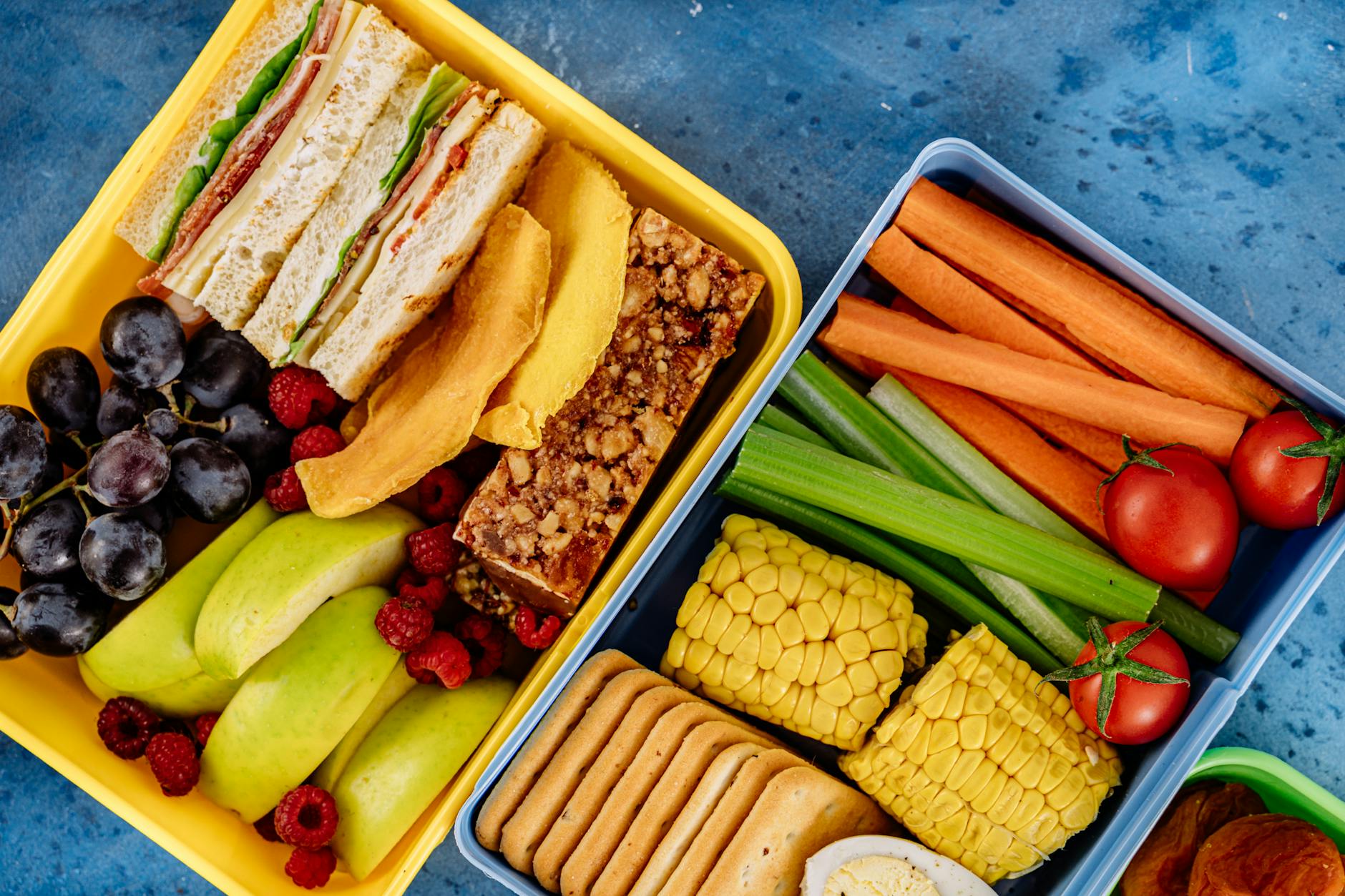
The World Food Programme feeds 418 million children every school day. The United States just cut nearly a billion dollars from the budget that makes it possible. That is not a footnote in this week’s Food Tank roundup — it is the entire story.
What Food Tank, the food policy think tank founded by Danielle Nierenberg in 2013, has assembled in its latest weekly news digest is not just a collection of headlines. It is a snapshot of a global food system being pulled in four different directions simultaneously: geopolitical fragmentation, institutional funding collapse, small-nation innovation, and the creeping rot of information disorder. Each story connects. Together, they describe a world in which the machinery built over decades to reduce hunger is being deliberately dismantled — while a small Pacific island nation quietly tries to show everyone a better way. For more coverage of how these intersecting crises are playing out across continents, see our Worldwide Political News section.
How Three Decades of Multilateral Food Architecture Are Cracking Under Great-Power Politics
The post-Cold War consensus on food security rested on a simple premise: wealthy democracies would fund multilateral institutions, those institutions would feed the hungry, and everyone would call it enlightened self-interest. For roughly 30 years, it mostly worked. The World Food Programme grew into the largest humanitarian organization on Earth. The Food and Agriculture Organization built global early-warning systems. Donor nations — led by the United States, which historically supplied around 35% of WFP’s annual budget — kept the lights on.
That architecture is fracturing. The proximate cause in 2025 was the DOGE-era evisceration of USAID, which stripped approximately $900 million in U.S. contributions to WFP in a single budget action. But the structural cause is older: the rise of nationalist politics across donor countries, the subordination of foreign aid to domestic political theatre, and the intellectual rehabilitation of what the late international relations theorist Kenneth N. Waltz would have recognized as crude structural realism — states acting in self-interest within an anarchic system, food aid be damned.
The consequences are not abstract. They are measurable in the bodies of children in sub-Saharan Africa and South Asia who are losing their only guaranteed daily meal.
| Metric | 2015 | 2020 | 2023 | 2026 Projection |
|---|---|---|---|---|
| People facing acute hunger (millions) | 690 | 768 | 733 | 750+ |
| WFP annual budget (USD billions) | 5.4 | 8.4 | 9.6 | ~7.1 (est. post-cuts) |
| U.S. share of WFP funding | ~38% | ~36% | ~35% | ~18% (post-DOGE) |
| Children in WFP school meal programs (millions) | 368 | 390 | 418 | 390 (projected loss) |
| Black Sea grain exports (million metric tons/year) | 32 | 33 | 12 (post-blockade) | 14 (est.) |
The numbers tell a story of methodical retreat. And the timing could not be worse — Russia’s continued disruption of Ukrainian grain exports following the collapse of the Black Sea Grain Initiative in July 2023 has kept global wheat prices elevated, hammering import-dependent nations across North Africa and the Middle East at exactly the moment when the safety net of multilateral food aid is being shredded. This geopolitical dimension of food insecurity has direct parallels to how Trump’s tariff war is reshaping the global economic order — trade disruption as a weapon, food as collateral damage.
The information ecosystem compounds all of it. A 2024 Oxford Internet Institute study found that disinformation about food aid, GMO policy, and agricultural chemicals is materially affecting public policy in at least 14 democracies. When voters don’t trust the data on hunger, politicians don’t fund the solutions. It is a feedback loop that Waltz’s structural realism doesn’t fully account for — and that makes it even more dangerous.
WFP’s School Meal Crisis and Fiji’s Organic Gamble Define the Week’s Sharpest Storylines
This Food Tank roundup surfaces two stories that deserve far more coverage than they typically receive in mainstream political media. One involves institutional collapse at scale. The other involves institutional construction from scratch.
WFP Executive Director Cindy McCain — who took the role in 2023 and has spent much of her tenure sounding alarms about funding adequacy — is now managing what amounts to a structural budget emergency. The U.S. funding cuts are not a temporary dip. They reflect a political realignment in Washington that is unlikely to reverse quickly, regardless of election outcomes. WFP has responded by aggressively diversifying its donor base:
- The European Union pledged €800 million for humanitarian food programs in 2025, partially offsetting U.S. reductions
- Saudi Arabia and the UAE have stepped up bilateral food aid contributions, motivated partly by Gulf food security concerns downstream
- WFP’s “Home-Grown School Feeding” model — which links school meals directly to local smallholder farmers — is being piloted in Kenya, Nigeria, and Brazil, creating dual benefits: fed children and income for small farmers
- The UN Food Systems Summit +4 stocktaking process (2025–2026) is attempting to pressure governments to recommit to SDG Goal 2 (Zero Hunger), which is currently off-track for 2030 by nearly every measurable indicator
- WFP is preparing emergency funding appeals for Q3 2026 if partial U.S. contributions are not restored
Meanwhile, in the South Pacific, Prime Minister Sitiveni Rabuka’s Fijian government is making a bet that looks quixotic until you look at the numbers. In 2025, Fiji passed agricultural incentive legislation cutting import tariffs on organic inputs by 30% and establishing a national organic certification body. The goal: become the Pacific’s leading organic exporter by 2030, targeting premium markets in Japan, Australia, and the EU. The EU organic market alone was valued at over €47 billion in 2022 and growing. Fiji’s move is not idealism. It is export strategy dressed in green language.
The first international audit of Fiji’s organic certification framework is expected in late 2026 — a genuine test of whether Pacific ambition can meet European regulatory standards.
McCain, Rabuka, and the DOGE Architects: The People Actually Deciding Who Eats
Cindy McCain — WFP Executive Director
Cindy McCain took over WFP in April 2023 with bipartisan credibility and a reputation for pragmatic diplomacy. Neither has fully insulated her from the budget crisis she now manages. McCain has been unusually direct in public statements about the consequences of U.S. funding cuts — describing them as a threat not just to WFP’s mission but to regional stability in the Horn of Africa and the Sahel. She is currently the most important person in global food security who is not a head of state, and she is operating with roughly half the institutional support her predecessors had.
Her strategic pivot toward Gulf donors and EU partnerships is shrewd. Whether it is sufficient is an open question.
Sitiveni Rabuka — Prime Minister of Fiji
Rabuka returned to power in December 2022 after a political career spanning four decades, including a 1987 military coup he led himself. He is not an obvious champion of green agriculture. Which is exactly why his government’s organic push is credible — it is driven by economic pragmatism, not ideology. Fiji’s soil degradation from decades of chemical-intensive sugarcane farming is real. Its dependency on imported fertilizers, priced in U.S. dollars and subject to global supply shocks, is a sovereign vulnerability. Organic transition is, for Fiji, a form of national security policy.
Russell Vought and the DOGE Leadership — The Architects of Absence
The most consequential food policy actors in Washington right now are people who have never attended a food security conference. Russell Vought and the architects of DOGE’s USAID restructuring made decisions that will result in measurably more hungry children. They made those decisions primarily to satisfy domestic political constituencies who view foreign aid as waste. The economic illiteracy embedded in that position is striking: every $1 invested in WFP school meals generates approximately $9 in long-term economic productivity, according to WFP’s own impact assessments. Cutting them is not fiscal discipline. It is burning down a library to save on electricity.
Danielle Nierenberg — Food Tank’s Curator of the Crisis
Danielle Nierenberg founded Food Tank in 2013 with the explicit mission of bridging food research and public discourse. Her weekly roundups have become a reliable barometer for the intersection of food, climate, and political power. The fact that this week’s edition surfaces WFP funding cuts, Fiji’s organic push, geopolitical grain disruptions, and information disorder as a single coherent story is itself a curatorial argument: these are not separate issues. They are one system failing in multiple places at once.
Why the Loudest Voices on Global Hunger — Left, Right, and Multilateral — Are All Missing the Point
The progressive multilateralist position on WFP school meals is emotionally satisfying and analytically incomplete. Yes, the ROI on school feeding is extraordinary. Yes, cutting $900 million in U.S. contributions is cruel and short-sighted. But the multilateral food aid model has also failed to build genuine domestic food sovereignty in the countries it serves. After decades of WFP programming in sub-Saharan Africa, food insecurity in the region remains structurally unchanged. Dependency on external feeding programs is not a solution — it is a symptom management strategy. If the funding crisis forces a reckoning with that dependency, something useful might actually emerge from the wreckage.
The nationalist-fiscal conservative argument — that the U.S. has carried a disproportionate burden and burden-sharing reform is legitimate — is also not entirely wrong. But it is being deployed dishonestly. The DOGE cuts were not accompanied by serious diplomatic efforts to increase EU, Gulf, or Chinese contributions to WFP. They were unilateral reductions executed for domestic political effect. Calling that burden-sharing reform is like setting your neighbor’s house on fire and calling it fire safety awareness.
And the multilateral institutions themselves are not innocent. WFP’s Home-Grown School Feeding model is genuinely innovative — connecting meal programs to local smallholder farmers creates supply chains that build local food systems rather than undermining them. But WFP deployed this model in exactly three pilot countries in 2025. Three. With a program that reaches 100+ nations. The institutional inertia embedded in that gap is its own form of failure.
Consider the core tensions driving this impasse:
- Multilateralists advocate for more funding without adequately addressing structural dependency
- Fiscal nationalists invoke burden-sharing while taking unilateral action that blows up the table
- Pacific sovereignty advocates like Fiji’s government offer the most coherent long-term model but receive the least international attention
- Information disorder actors — state and non-state — actively degrade the public understanding needed for democratic food policy
- Multilateral institutions innovate at the margins while protecting institutional structures that were designed for a geopolitical world that no longer exists
None of these actors has the complete answer. And the 733 million people facing hunger are not waiting for any of them to figure it out.
Four Scenarios for Global Food Security, WFP’s Survival, and Fiji’s Organic Experiment by 2028
The trajectory of these intersecting crises is not fixed. Depending on political decisions made in the next 18–24 months, the outcomes could diverge dramatically. Here are the four most plausible scenarios:
- Scenario 1 — Managed Decline: The U.S. does not restore WFP contributions. EU and Gulf donors partially compensate. WFP school meal coverage drops from 418 million to approximately 370–380 million children by 2027. Hunger metrics worsen moderately but do not spike catastrophically. This is the most likely outcome under current political conditions.
- Scenario 2 — Donor Realignment: A coalition of EU nations, Saudi Arabia, the UAE, Japan, and Australia formalizes a new multilateral food funding compact by mid-2026, explicitly designed to reduce dependency on U.S. contributions. WFP stabilizes. The geopolitical consequences — a visible reduction in U.S. soft power in the Global South — are significant and largely irreversible.
- Scenario 3 — Cascading Crisis: A major climate shock in 2026 — extended drought in the Sahel, simultaneous harvest failures in South Asia — hits WFP in its already weakened state. Emergency appeals are overwhelmed. School meal programs in at least 20 countries collapse temporarily. Child malnutrition metrics spike. This triggers a political backlash in donor countries but not before measurable harm is done.
- Scenario 4 — Fiji as Model: Fiji’s organic certification passes its 2026 international audit. Premium export revenues increase by 15–20% within 18 months. Several Pacific Island nations begin similar programs. The Global South takes note. Not a solution to the WFP crisis — but a proof of concept for food sovereignty that begins to shift the policy conversation from dependency management to genuine self-determination.
| Scenario | WFP Coverage by 2028 | U.S. Role | Fiji Outcome | Hunger Trend |
|---|---|---|---|---|
| Managed Decline | ~375M children | Reduced, non-restored | Modest growth | Worsening slowly |
| Donor Realignment | ~410M children | Marginalized | Positive, model cited | Stabilizing |
| Cascading Crisis | ~340M children | Pressured to re-engage | Delayed, disrupted | Sharp spike |
| Fiji as Model | ~390M children | Unchanged | Transformative | Mixed, regional gains |
The window for scenario 2 — the one that actually prevents the worst outcomes — is roughly 12–18 months. After that, institutional atrophy and political entrenchment make it exponentially harder to rebuild what has been lost.
What Food Tank’s roundup captures, without quite saying it directly, is that the global food system is not failing because we lack solutions. Fiji has one. WFP’s Home-Grown School Feeding model is one. The ROI data on school meals is unambiguous. The system is failing because the political will to act on known solutions is being systematically eroded — by nationalist budget politics, by information disorder, and by the comfortable institutional inertia of the organizations that are supposed to fix it. The 418 million children eating a WFP-funded meal today are not a statistic. They are a policy choice. And right now, that choice is being unmade — one budget line at a time.
About The Author