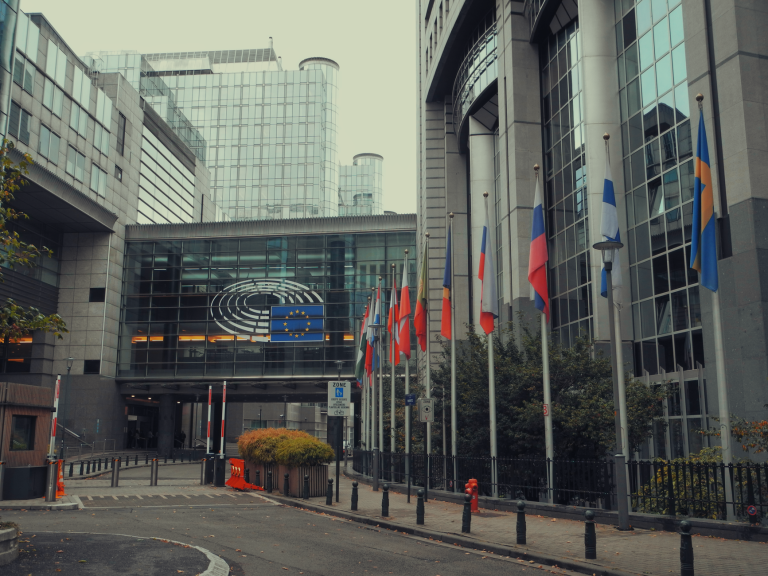
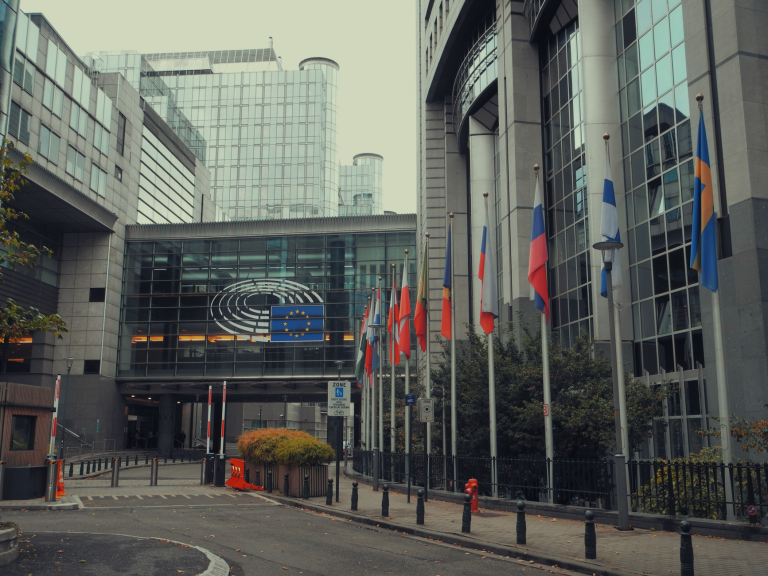
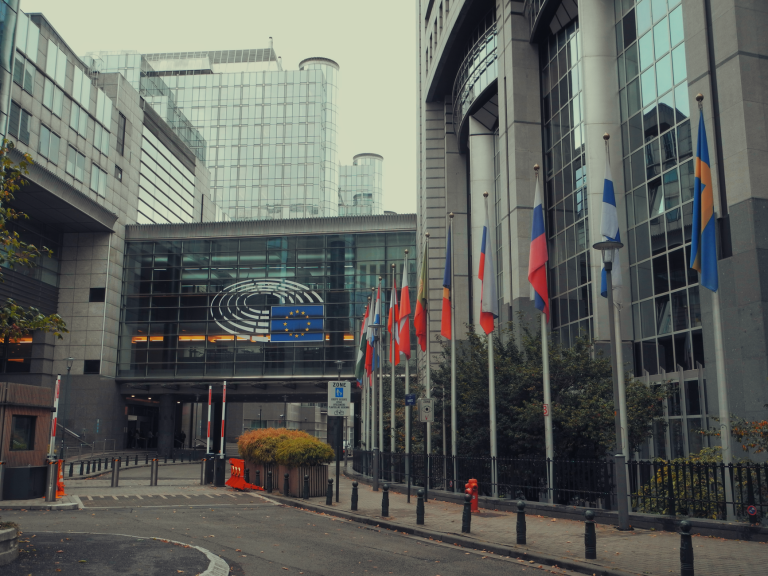
Future EU Aid Conditional on Support for Russia or Iran, Says Kallas — Brussels Just Changed the Rules
 Sophie Gesture
Kaja Kallas has done something that EU foreign policy chiefs rarely do: she said the quiet part loud. Countries that cozy up to Russia or Iran can expect to lose access to EU money. Not as a vague threat buried in a diplomatic communiqué, but as an explicit, stated policy position from the bloc’s top foreign affairs official. The era of Brussels handing out aid while politely ignoring geopolitical betrayal is over — at least if Kallas gets her way.
What is actually at stake here is the EU’s identity as a global power. For decades, Brussels positioned itself as the world’s largest development donor precisely because it claimed to operate on principles, not power. Conditionality existed for governance and rule of law — not for picking geopolitical sides. Kallas is proposing something categorically different: that EU aid is now a lever of foreign policy coercion. That shift, if institutionalised, rewrites the relationship between Europe and the Global South entirely. It also puts the EU on a collision course with dozens of nations that have explicitly refused to take sides in the Russia-Ukraine war — and with some of its own member states that depend on those relationships.
How the EU’s Aid Architecture Became a Geopolitical Weapon — and Why 2025 Is the Breaking Point
The EU has long been the world’s most generous development actor. The bloc and its member states collectively disburse more than €70 billion annually in external assistance, spanning everything from budget support for sub-Saharan African governments to infrastructure financing in Central Asia. For most of that history, conditionality meant democratic backsliding, corruption, or human rights violations could trigger review. It was messy, inconsistently applied, and routinely criticised — but it was never explicitly geopolitical.
Russia’s full-scale invasion of Ukraine on February 24, 2022, changed the calculus. The EU watched, with mounting frustration, as the March 2022 UN General Assembly vote condemning the invasion produced 141 in favour — but also 35 abstentions and 5 against, drawn largely from Africa, Asia, and Latin America. By the March 2023 vote demanding Russian withdrawal, abstentions had barely moved. South Africa, India, Ethiopia, Mali — countries receiving hundreds of millions in EU development funds — were either abstaining or, in some cases, actively deepening ties with Moscow.
Iran added a second dimension. Tehran’s supply of Shahed-136 loitering munitions to Russia — drones used to devastate Ukrainian civilian infrastructure through winter 2022-23 and beyond — turned what was once a bilateral human rights concern into a direct contribution to the war Europe is funding against. The EU extended Iran sanctions specifically over drone transfers in 2024. Kallas’s conditionality proposal is the logical next step: if you are enabling the adversary we are spending €88 billion to resist, you do not get to keep collecting our money.
| Policy Era | Conditionality Type | Primary Trigger | Geographic Focus |
|---|---|---|---|
| Pre-2022 | Governance / Rule of Law | Democratic backsliding, corruption | Eastern Neighbourhood, Africa |
| 2022–2024 | Governance + Conflict proximity | Human rights violations, UN vote positions | Global, case-by-case |
| 2025 (Kallas doctrine) | Geopolitical alignment | Support for Russia or Iran, drone supply chains | Global South, Central Asia, MENA |
This is not incremental evolution. It is a doctrine shift. And Kallas — Estonia’s former Prime Minister, a woman whose country spent decades under Soviet occupation and whose family was deported to Siberia — is not the person who will be talked out of it by diplomatic niceties.
Kallas Drops the Mask: What the Conditionality Warning Actually Means Right Now
The statement, reported in May 2025, did not emerge from a vacuum. It came at a moment when the EU’s Global Gateway initiative — Brussels’ answer to China’s Belt and Road, with a headline target of €300 billion in infrastructure investment by 2027 — is struggling to gain traction in the very regions where Russia and China are most active. If Global Gateway cannot compete on pure economic terms, the thinking in Brussels appears to be: compete on leverage.
Here is what the Kallas conditionality framework would mean in practice:
- UN voting record scrutiny: Countries that repeatedly abstain from or vote against resolutions condemning Russian aggression in Ukraine would face formal review of their EU aid eligibility — not automatic suspension, but a trigger mechanism.
- Iran military cooperation: Any third country with documented arms transfers to Iran, or facilitation of Iranian weapons reaching Russia, faces sanctions exposure and aid withdrawal. This primarily targets certain Gulf and Central Asian transit routes.
- Dual-use goods to Russia: Countries serving as trans-shipment hubs for sanctioned technology — a category that currently includes Armenia, UAE, Kazakhstan, and Turkey to varying degrees — would be explicitly named and pressured.
- Positive conditionality: The flip side — countries that align with EU positions on Ukraine and Iran sanctions could qualify for accelerated or expanded aid packages. Kallas has framed this as incentive as much as punishment.
- Review timelines: The mechanism would reportedly be tied to the EU’s next Multi-Annual Financial Framework review cycle, giving it institutional teeth rather than leaving it as ad hoc political rhetoric.
The immediate target audience is not just aid recipients. It is also the 47-nation European Political Community (EPC), whose latest meeting produced a press statement from European Council President António Costa emphasising strategic solidarity. The EPC — convened by Emmanuel Macron in 2022 — includes non-EU members like the UK, Ukraine, Turkey, and the Western Balkans. Kallas’s conditionality doctrine is partly designed to show those partners that the EU means business, that the bloc’s foreign policy has edges, not just values statements.
Kallas, Costa, Von der Leyen, and Orbán: The Four People Who Will Decide Whether This Policy Lives or Dies
Kaja Kallas — The Architect
Kallas has moved faster and more aggressively in her role as EU High Representative than many of her predecessors dared. Appointed in December 2024, replacing Josep Borrell, she arrived with a reputation as one of Europe’s sharpest Russia hawks — and no patience for the diplomatic hedging that characterised much of the EU’s pre-war external relations. Her personal biography matters here: the Soviet deportation of her family is not rhetorical background, it is the lived context for her view that accommodation of authoritarian aggression has real human costs. She will not soften this position under pressure from member states with commercial interests in Africa or Asia.
António Costa — The Institutional Weight
Costa, as European Council President, controls the political architecture through which any real conditionality policy must pass. His May 2025 EPC statement was careful — emphasising cohesion and solidarity without explicitly endorsing the Kallas framework. That ambiguity is itself meaningful. Costa, a former Portuguese Prime Minister with deep ties to the developing world through Lusophone connections, is unlikely to be as hawkish as Kallas on cutting ties with African nations. He is, however, politically astute enough to understand that Brussels needs to demonstrate geopolitical seriousness. His role will be to manage the internal coalition, not to block the direction of travel.
Ursula Von der Leyen — The Commission’s Lever
Von der Leyen, re-confirmed as European Commission President in July 2024, holds the institutional key. The EU’s external aid budgets flow through the Commission. If von der Leyen formally integrates Kallas’s conditionality into Commission guidelines — particularly under the Neighbourhood, Development and International Cooperation Instrument (NDICI-Global Europe), which controls the bulk of EU external spending — it becomes binding policy rather than rhetorical positioning. She has incentive to do so: it shows the Commission as strategically coherent at a moment when the Trump–Xi summit dynamics are threatening to sideline European interests entirely.
Viktor Orbán — The Wrench in the Machine
And then there is Orbán. Hungary’s Prime Minister has spent three years positioning himself as Moscow’s man inside the EU — blocking military aid packages, vetoing sanctions extensions, meeting Putin directly. He will oppose Kallas’s conditionality doctrine with every procedural tool available. Foreign policy decisions in the EU Council require unanimity on major issues. Orbán knows this. So does Robert Fico of Slovakia, who has also resisted the EU consensus on Ukraine. The conditionality framework will either need to be structured in a way that bypasses unanimity requirements — through qualified majority on specific budget instruments — or it will be watered down into something Orbán can tolerate, which means something largely symbolic.
Why Kallas Is Right and Wrong at the Same Time — The Uncomfortable Truth About EU Aid Conditionality
The strategic logic is compelling. If you are spending €88 billion defending Ukraine from Russian aggression, and a recipient of your development aid is simultaneously allowing Iranian drones to transit through its territory to Russian frontlines, the moral incoherence is staggering. Kallas is not wrong to name it.
But the execution is where this gets complicated. Consider what the EU is actually asking the Global South to do: take a side in a European war, at economic and political cost to themselves, in exchange for continued access to European money. From Nairobi to New Delhi, the response to that framing has been consistent — and hostile. African Union officials have repeatedly argued that European conditionality on Ukraine is a form of neo-colonial pressure: you must fight our wars to get our money. That perception, whether fair or not, is politically real. It is driving countries toward China and Russia precisely because Beijing and Moscow offer financing without democratic or geopolitical strings.
There are also questions Brussels refuses to answer honestly:
- How does the EU reconcile aid conditionality on Russia alignment with its continued purchase of liquefied natural gas from countries that re-export Russian energy? The EU’s own energy dependency has not fully ended.
- What happens to humanitarian aid? Will populations in countries whose governments back Russia lose access to food security and health funding? The legal and ethical exposure here is enormous.
- Is this actually enforceable, or does the EU lack the institutional machinery to monitor and act on geopolitical conditionality consistently across 150+ recipient countries?
- Does it work? There is almost no empirical evidence that aid conditionality changes foreign policy behaviour in middle-income countries with alternative financing options. China will simply step in.
The deeper problem is that the EU is deploying aid conditionality as a substitute for the strategic influence it does not actually have. Europe cannot project hard power at scale. It cannot match China’s infrastructure financing volume. It cannot match America’s security guarantees. What it has is money — and Kallas is betting that threatening to withdraw it will produce alignment. That is a logical move. It is also possibly a catastrophic miscalculation that accelerates the very multipolar fragmentation Brussels fears. For readers tracking this across the broader spectrum of EU foreign policy decisions, the EU Political News coverage is worth following closely.
Five Scenarios for How the Kallas Conditionality Doctrine Plays Out by 2027
The policy is live. The question is where it lands. Here are four concrete scenarios — none of them comfortable.
- Scenario 1 — Full institutionalisation: Von der Leyen integrates the conditionality into NDICI-Global Europe guidelines by late 2025. Several African and Central Asian nations face formal reviews. One or two aid suspensions actually happen. The EU gains credibility as a hard-edged foreign policy actor — but triggers a diplomatic rupture with the African Union that sets back Global Gateway by years.
- Scenario 2 — Orbán kills it in the Council: Hungary and Slovakia block the unanimity required for formal Council endorsement. The conditionality remains Commission-level rhetoric — applied inconsistently, challenged legally, and ultimately unenforceable as a coherent doctrine. Kallas remains vocal; the policy remains aspirational.
- Scenario 3 — Selective application: The EU applies conditionality only to countries too small or aid-dependent to push back effectively — cutting funds to Mali or Burkina Faso, while leaving India, South Africa, and Turkey untouched for fear of the economic and diplomatic blowback. This is the most likely outcome. It is also the most corrosive to EU credibility, because it exposes the selectivity.
- Scenario 4 — Positive conditionality dominates: Rather than cuts, the EU leans into the incentive side — enhanced trade deals, accelerated aid for countries that align on Ukraine votes. This is politically easier to sell and legally less exposed. It dilutes Kallas’s hard line but may actually produce more behavioural change than threats.
| Scenario | Probability (2025–2027) | EU Credibility Impact | Global South Response | Russia/Iran Impact |
|---|---|---|---|---|
| Full institutionalisation | Low (15%) | High gain | Severe backlash | Moderate pressure |
| Orbán blocks in Council | Medium (30%) | Serious damage | Dismissive | None |
| Selective application | High (40%) | Mixed / hypocritical optics | Cynical compliance by weak states | Minimal |
| Positive conditionality pivot | Medium (15%) | Moderate, pragmatic | Cautiously receptive | Indirect, longer term |
Kallas has started a conversation that Brussels has avoided for two decades. Whether the EU has the institutional coherence, the political will, and the honest self-awareness to see it through is a different question entirely. The gap between what European leaders say and what European institutions can actually enforce has rarely been wider — and Russia, Iran, and every government watching this from Accra to Almaty knows it. If the conditionality doctrine collapses into selective symbolism, it will not just fail. It will actively tell the world that European foreign policy is noise dressed up as power. That is a lesson Brussels cannot afford to teach right now.
About The Author