Light and Dark in Kraków: Democracy’s Fault Lines Run Through Central Europe
 Sophie Gesture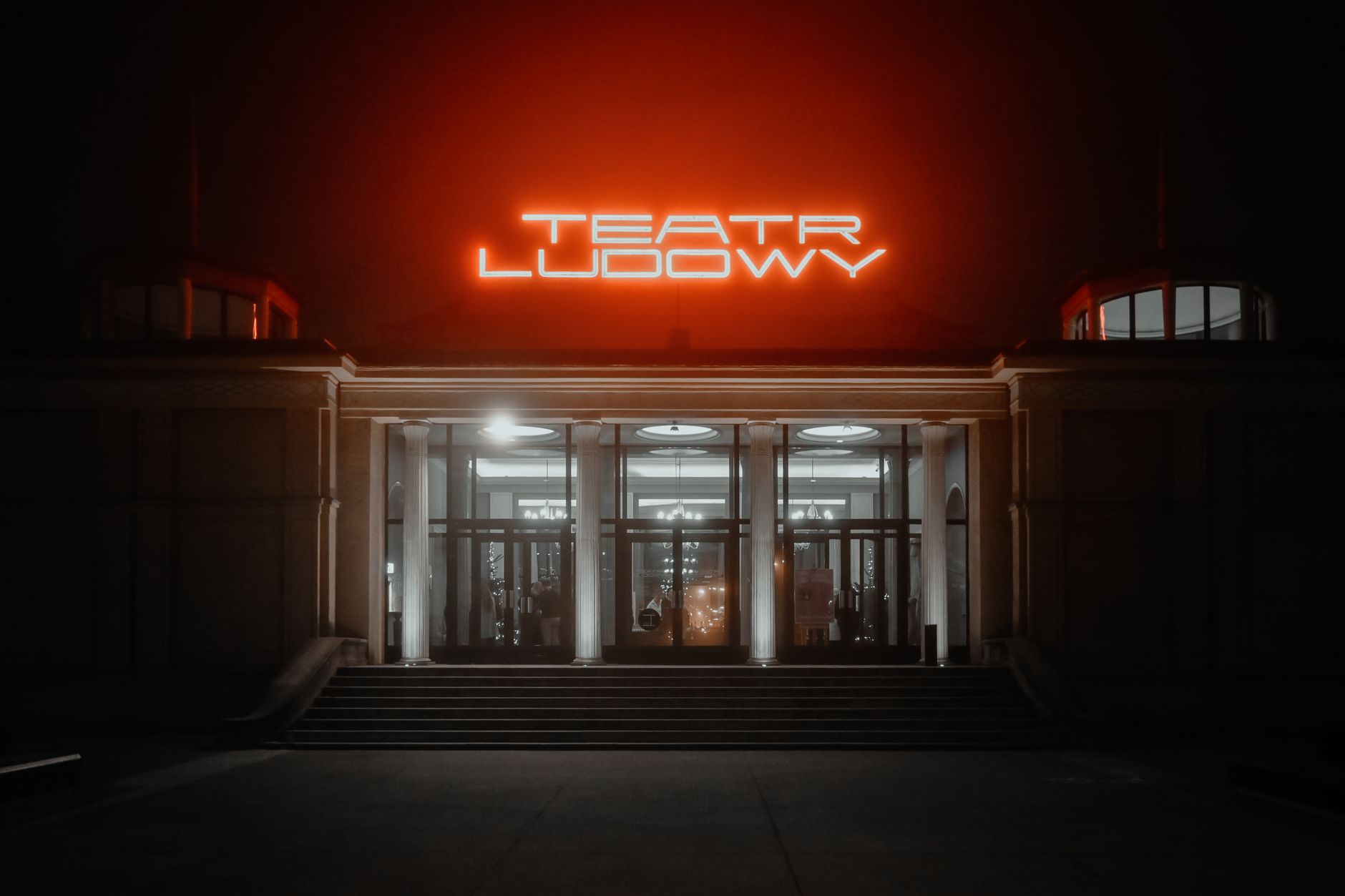
Kraków has survived the Nazis, the Soviets, and four decades of communist bureaucratic rot — and it is now surviving something subtler and arguably more dangerous: the slow, grinding erosion of democratic norms dressed up as legal reform. That this Polish city has become a geopolitical lens through which analysts at the Institute of World Politics in Washington choose to frame the tensions of July 2026 is not arbitrary. Cities accumulate meaning. Kraków has accumulated more than most.
What is actually at stake here is not a Poland story. It is a Western liberal democracy story — one in which the pressures from within, the centrifugal forces of regionalism, devolution, and institutional collapse, are colliding with pressures from without: Gulf petrostates rewriting the rules of soft power, authoritarian movements finding judicial reprieves across the continent, and a post-industrial working class in cities from Manchester to Łódź demanding something their governments have spectacularly failed to deliver. The light and the dark are not metaphors. They are the operating conditions of democratic governance in 2026.
How Poland’s Royal Capital Became a Battleground Between Tusk’s Renewal and Europe’s Authoritarian Creep
Kraków did not choose this role. Poland’s second city — population roughly 800,000, UNESCO-listed old town, home to Wawel Castle and Jagiellonian University founded in 1364 — became a flashpoint almost by accident. When Law and Justice (PiS) governed Poland between 2015 and 2023, Kraków’s Lesser Poland region became one of the most visible theaters of the culture wars that defined that era: LGBTQ-free zones declared by surrounding municipalities, battles over media independence, and a judiciary systematically packed with government loyalists.
Prime Minister Donald Tusk returned to power in December 2023 promising to reverse all of it. Two and a half years later, the record is mixed at best. The Constitutional Tribunal, stuffed with PiS appointees, continues to obstruct reform. State media has been partially reclaimed, but the legal battles are grinding and expensive. Kraków itself, governed by a centrist mayor, remains a symbol of that unfinished fight — a city projecting European cosmopolitanism while the hinterlands around it remain deeply conservative and, in places, openly hostile to the liberal project.
| Dimension | Poland Under PiS (2015–2023) | Poland Under Tusk (2023–2026) |
|---|---|---|
| Judicial Independence | Systematically dismantled; 30+ partisan appointments | Partial restoration; Constitutional Tribunal still obstructive |
| State Media | Converted to government mouthpiece | Restructured; legal challenges ongoing |
| LGBTQ+ Rights | LGBT-free zones in 100+ municipalities | Zones revoked; civil partnerships bill stalled in Senate |
| EU Relations | €35 billion in cohesion funds frozen by Brussels | Funds largely restored; rule-of-law benchmarks met partially |
| Air Quality (Kraków) | Ranked worst in EU for smog 2019–2022 | Coal ban enforced; PM2.5 levels down 34% by 2025 |
The comparison above tells you everything about the democratic whiplash that Central European cities have lived through in a single decade. Kraków went from being ringed by LGBT-free zones to hosting Pride marches of 50,000 people — all within eight years. That is not stability. That is a society lurching between competing visions of itself, and the lurching has not stopped. France’s Le Pen moment — a judicial reprieve that instantly reshuffled European far-right calculations — is being watched closely in Warsaw and Kraków alike. Tusk knows that electoral cycles are merciless.
Andy Burnham Declares Labour Leadership from the North — and Kraków Is Watching
The connection between a newly declared Labour Party leader in Britain and a medieval Polish city might seem like a stretch. It isn’t. When Andy Burnham, 56, was declared leader of the UK Labour Party in July 2026 following Keir Starmer’s resignation, the specific argument he made — that hyper-centralized states produce exactly the kind of democratic disillusionment that feeds authoritarian populism — resonates powerfully with what Tusk is battling in Poland.
Burnham’s pitch is disarmingly simple and structurally radical. He argues that Westminster has strip-mined the regions for decades, creating a £49 billion productivity gap between London and the rest of England, and that this concentrated failure of governance is what hands votes to parties that offer easy scapegoats instead of structural solutions. He would know. As Mayor of Greater Manchester from 2017 to 2026, he watched the Brexit vote tear through his city’s post-industrial neighborhoods and drew his own conclusions.
Here is what Burnham actually did in Manchester — the record that underpins his national pitch:
- Bee Network integration: Brought bus, tram, and cycling infrastructure under unified public control, the first integrated transport network in England since Thatcher’s 1985 deregulation — operational by 2024 across Greater Manchester’s 10 boroughs
- Rough sleeping reduction: Cut the number of people sleeping rough by over 60% through the A Bed Every Night program, combining emergency beds with housing-first principles
- Community wealth building: Piloted anchor institution procurement strategies modeled on the Preston Model, redirecting an estimated £1 billion in public spend toward local suppliers by 2025
- NHS-GMCA integration: Secured a devolved health and social care settlement that combined £6 billion in NHS funding with local government oversight — a model no other English region has replicated
- Climate governance: Committed Greater Manchester to net zero by 2038, backed by a Green City Region framework with measurable sector-specific targets
The question now is whether any of this scales. Running a metropolitan region of 2.8 million people is categorically different from governing a nation of 67 million. Burnham’s critics — and there are plenty inside the Parliamentary Labour Party — note that his devolution agenda assumes a level of institutional trust in regional government that simply does not exist in most of England outside the major cities. For more on how these political shifts are reshaping democratic institutions globally, see our worldwide political news coverage.
Burnham, Tusk, and Sheikh Tamim: Three Leaders Redefining What Power Looks Like in 2026
Andy Burnham
Burnham is the most interesting political figure in British politics precisely because he is the most legible. There is no great mystery about what he believes or where he comes from — the son of a telecoms engineer from Leigh, Greater Manchester, who became Health Secretary under Gordon Brown and spent a decade rebuilding his credibility from the ground up in local government. His leadership of Labour represents a genuine ideological shift: away from the London-centric, professional-class progressivism of the Starmer years and toward a regionalist, communitarian politics that borrows as much from Tory One Nation traditions as from the socialist left. Whether the Parliamentary Labour Party will allow him to actually govern that way is a different question entirely.
Donald Tusk
Donald Tusk, 69, is fighting a different kind of battle. The former European Council President returned to Polish domestic politics in 2023 with a coalition of four parties — a governing arithmetic that requires him to constantly triangulate between liberal urbanites, rural conservatives, and a left flank that wants faster reform than the coalition can safely deliver. His challenge in Kraków and across Poland is fundamentally institutional: you cannot rebuild judicial independence quickly when the courts themselves are controlled by your opponents. Tusk is a sophisticated operator, but sophistication has limits when the rules of the game have been systematically bent.
Sheikh Tamim bin Hamad Al Thani
Sheikh Tamim bin Hamad Al Thani, Emir of Qatar since June 2013, represents the third force in this geopolitical frame: the rise of small states with outsized strategic footprints. Qatar, with a citizen population of roughly 320,000 and a GDP of approximately $235 billion, has inserted itself into virtually every major conflict mediation of the past decade — Gaza ceasefire negotiations in 2023–2025, Taliban talks, Hamas political bureau hosting, and LNG supply deals that became critical to European energy security after Russia’s invasion of Ukraine in 2022. The Qatar Investment Authority, with assets exceeding $450 billion, owns stakes in Volkswagen, Barclays, and Paris Saint-Germain. The 2022 FIFA World Cup cost Qatar an estimated $200 billion — and the geopolitical returns on that investment continue to compound. Qatar’s model — authoritarian governance at home, indispensable mediation abroad — is not the light in Kraków’s binary. But it is undeniably effective.
Why the Devolutionists, the Centralists, and the Gulf Monarchies Are All Selling You the Same Lie
Let’s be precise about the mythology each of these actors is peddling, because all three deserve scrutiny.
Burnham’s devolution argument has a seductive internal logic that collapses under examination at the edges. The premise — that power distributed to regions produces better outcomes for citizens — is empirically supported in some contexts and dramatically unsupported in others. Greater Manchester benefited from devolution partly because it already had civic infrastructure, university networks, and a business community capable of absorbing new powers. Devolving equivalent authority to post-industrial areas of the East Midlands or coastal towns in East Anglia, where those institutions are weaker, could just as easily entrench local elites and worsen existing inequalities. Burnham has no good answer to this. His model works in Manchester because Manchester is Manchester.
The centralists — represented most vividly by the Whitehall establishment that Burnham is challenging — have their own dishonesty to account for. The argument that central government best serves all citizens equally ignores decades of evidence that the Treasury systematically underfunds regions outside the South East, that infrastructure investment per capita in London dwarfs equivalent spending in the North, and that the democratic accountability mechanisms of Westminster have become so attenuated that millions of voters feel entirely unrepresented. The centralist model has not failed by accident. It has failed by design.
And Qatar? The Gulf state presents itself as an indispensable honest broker — a pragmatic mediator above the ideological fray. What it actually is, is a state that uses its financial and diplomatic leverage to ensure its own survival, which occasionally coincides with international peace processes and occasionally funds groups whose activities undermine them. The 2017–2021 blockade by Saudi Arabia, the UAE, Bahrain, and Egypt exposed the contradictions starkly: Qatar was simultaneously hosting a U.S. air base with 10,000 troops, maintaining ties with Iran, and running Al Jazeera in ways that infuriated its neighbors. None of those tensions have been resolved. They have simply been managed. The distinction matters.
Consider how this dynamic plays out regionally:
- Central European democracies like Poland have learned that institutional guardrails matter enormously — and that dismantling them is far easier than rebuilding them, even with popular mandates to do so
- British devolution has produced measurable gains in Wales, Scotland, and Greater Manchester, but has also produced the SNP’s near-permanent grip on Scottish politics, which is not an advertisement for devolution’s democratic tidiness
- Gulf soft power operates without the accountability constraints that democratic governments face — which is precisely why it is so effective in the short term and so corrosive to international norms in the long term
- The European far right is watching all of this and drawing lessons about how to weaponize institutional dysfunction for electoral gain, as Marine Le Pen’s judicial reprieve in France demonstrated with crystalline clarity
Four Scenarios for Kraków, Burnham, and the Democratic West by 2028
Scenario analysis is only useful when it is honest about uncertainty. Here is what the next eighteen months could plausibly produce, based on the trajectories visible in July 2026.
- Scenario 1 — The Devolution Dividend: Burnham wins a general election by 2028, passes a radical English Devolution Act within his first year, and the model spreads beyond city-regions to counties and coastal communities. Poland under Tusk completes judicial reform before the next election cycle. Central Europe stabilizes. This is the optimistic scenario, and it requires everything to go right simultaneously — a political rarity.
- Scenario 2 — The Institutional Gridlock: Burnham leads Labour to a narrow election win but finds his devolution agenda blocked by a combination of Treasury resistance, Parliamentary Labour Party skepticism, and a House of Lords unreformed since 1999. In Poland, Tusk’s coalition collapses before completing judicial reform, and PiS returns with a retooled nationalist message. The democratic renewal narrative stalls on both fronts.
- Scenario 3 — The Populist Surge: Burnham’s first 100 days as Labour leader are consumed by internal party warfare over economic policy and immigration. The governing Conservative rump finds new purchase with a post-Tory right-populist formation. In Poland, a Le Pen-style judicial reprieve emboldens PiS’s successor movement. Qatar, meanwhile, deepens its European investments and faces precisely zero consequences.
- Scenario 4 — The Kraków Model: Poland becomes the unexpected success story — Tusk completes judicial reform, air quality in Kraków drops below EU legal limits for the first time in living memory, and the city becomes a template for democratic resilience that other Central European capitals attempt to replicate. Burnham watches from Westminster and borrows the framing.
| Scenario | Probability (Assessed) | Key Variable | Winner | Loser |
|---|---|---|---|---|
| Devolution Dividend | Low-Medium (20%) | Burnham election win + PLP unity | Burnham, Tusk | Whitehall establishment |
| Institutional Gridlock | Medium (35%) | Treasury resistance + coalition fragility | Status quo actors | Reform advocates everywhere |
| Populist Surge | Medium (30%) | Labour internal fracture + PiS revival | Far-right formations, Qatar | Liberal democratic institutions |
| Kraków Model | Low (15%) | Tusk reform completion + EU support | Poland, Central Europe | Authoritarian populist template |
The numbers are not encouraging for optimists. The two scenarios that involve democratic backsliding or stagnation account for 65% of the assessed probability. The two that involve meaningful democratic renewal account for 35%. That gap should concentrate minds considerably more than it currently appears to be doing in the political capitals that matter.
Kraków has been both occupied and liberated, both darkened and illuminated, more times than any city should have to endure. The question it poses to the democratic West in July 2026 is the same one it has always posed to whoever holds power on the Vistula’s banks: which will you choose to be — the light that builds institutions capable of outlasting any single leader, or the darkness that dismantles them for short-term advantage? Burnham, Tusk, and Sheikh Tamim each have an answer. None of them is telling you the whole truth about the cost.
About The Author