Trump Announces New Round of Tariffs: The Trade War That Is Rewriting the Global Economic Order
 Sophie Gesture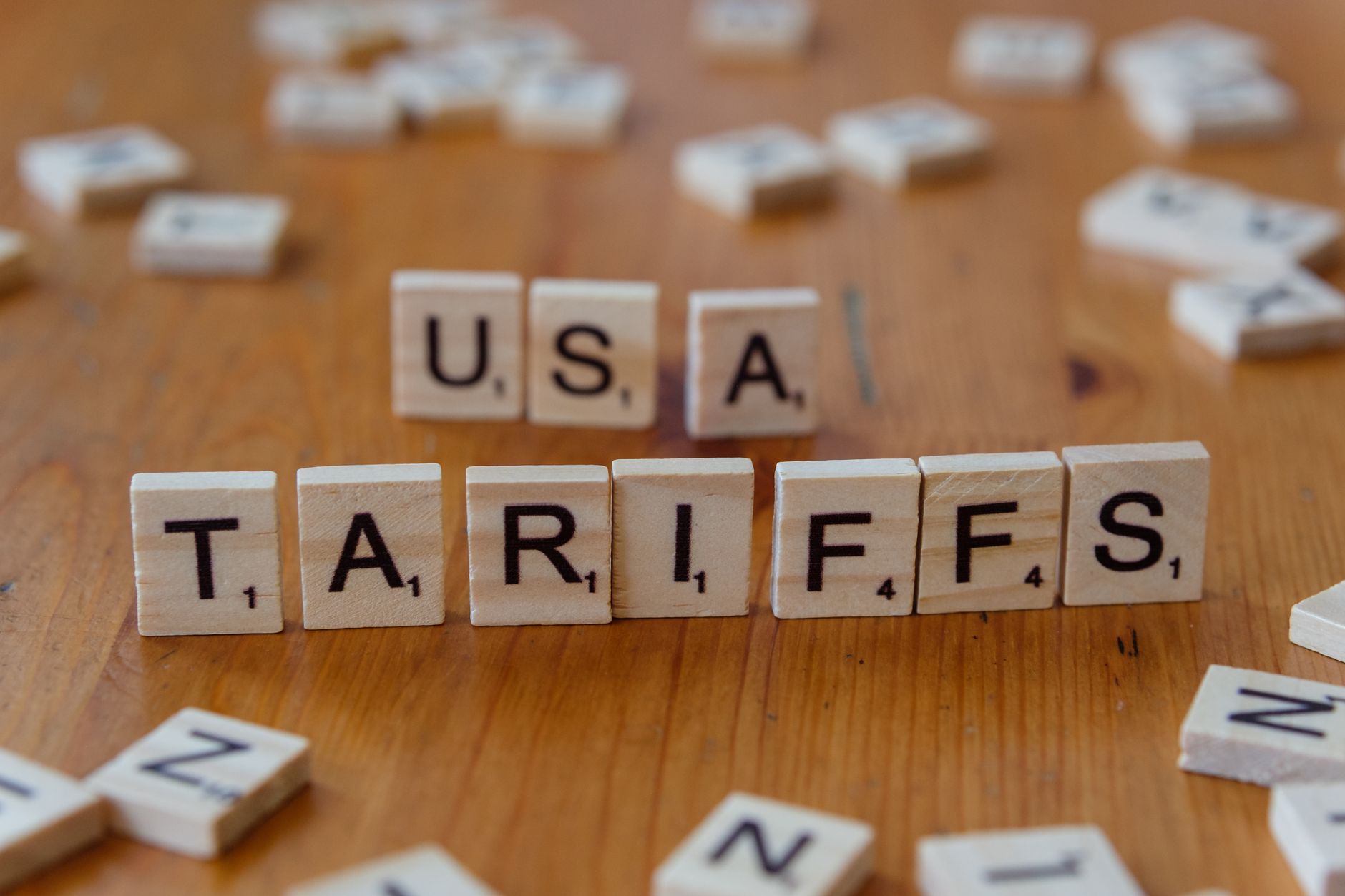
The S&P 500 shed more than 10% in two trading days. Goldman Sachs put the probability of a U.S. recession at 45%. And the man who caused it called the whole thing a great success.
Donald Trump‘s announcement of a sweeping new round of tariffs on April 2, 2025 — branded with characteristic flair as “Liberation Day” — wasn’t just an economic policy shift. It was a declaration that the post-1945 trade order the United States built, maintained, and for decades profited from is now, in the view of the current White House, the enemy. The question isn’t whether this is disruptive. It plainly is. The question is whether it’s a negotiating masterstroke, a ideological wrecking ball, or both simultaneously.
How Eight Decades of American Trade Leadership Collapsed Into a Single Executive Order
The numbers Trump signed into law on April 2 were not incremental. A baseline 10% tariff on every import from every country on earth. On top of that, “reciprocal” tariffs targeting roughly 60 nations with large trade surpluses against the U.S. — a list that reads like a who’s who of global manufacturing. The Peterson Institute for International Economics called it the highest average U.S. tariff rate since the Smoot-Hawley Act of 1930, the infamous legislation widely blamed for deepening the Great Depression by triggering retaliatory spirals that choked global trade.
Trump’s legal justification rested on two pillars: Section 232 of the Trade Expansion Act of 1962, which allows tariffs on national security grounds, and the International Emergency Economic Powers Act (IEEPA), a Cold War-era statute rarely deployed for trade purposes. The administration’s argument: the U.S. goods trade deficit — which hit a record $1.2 trillion in 2024 — constitutes a national emergency. Critics called this legally creative. Supporters called it long overdue.
| Country | Tariff Rate Imposed | U.S. Trade Deficit (approx.) |
|---|---|---|
| China | 145% (cumulative, post-escalation) | $295 billion |
| Vietnam | 46% | $104 billion |
| Cambodia | 49% | $12 billion |
| European Union | 20% | $235 billion |
| Japan | 24% | $69 billion |
| India | 26% | $45 billion |
| South Korea | 25% | $66 billion |
| Canada | 25% (separate action) | $63 billion |
The architecture here matters. These weren’t targeted measures designed to address specific unfair practices in specific sectors. This was a blanket tax on the concept of importing, dressed up in the language of reciprocity. And the markets — which tend to be brutally honest about these things — responded accordingly. Some analysts have begun asking whether America’s willingness to weaponize its own economic relationships signals a deeper crisis of imperial overreach, the kind that historically precedes a long, slow diminishment of global influence.
Liberation Day’s Immediate Fallout: Market Panic, a 90-Day Pause, and the Deals That Followed
What happened in the seven days after April 2 tells you everything about the gap between tariff theory and tariff reality. The markets didn’t wait for nuance. The S&P 500 fell over 10% in two sessions. Treasury yields moved erratically. The dollar weakened against the euro and yen simultaneously — an unusual signal of investor unease about U.S. economic stewardship itself, not just individual companies.
On April 9, 2025, Trump blinked. Partially. The administration announced a 90-day pause on the higher reciprocal tariffs for most countries, excluding China. The baseline 10% rate stayed globally. China, if anything, got it worse — escalating retaliations between Washington and Beijing pushed the cumulative tariff rate on Chinese goods to 145%.
Here’s what has happened since in the key bilateral relationships:
- U.S.-UK trade deal (May 8, 2025): The first formal bilateral agreement. Britain secured reduced tariffs on steel, aluminum, and automobiles. In exchange: expanded U.S. agricultural market access. A genuine win for both sides, and a proof of concept that deals can get done.
- U.S.-China Geneva truce (May 12, 2025): Treasury Secretary Scott Bessent brokered a 90-day de-escalation. U.S. tariffs on Chinese goods dropped temporarily from 145% to 30%. Structured talks opened. The fuse was not cut — merely lengthened.
- EU retaliation list prepared: Brussels assembled a €21 billion target list of U.S. exports, then paused it pending negotiations. Ursula von der Leyen is playing a careful hand, but patience in European capitals is finite.
- WTO challenges filed: The EU, Canada, and China have all initiated formal dispute proceedings against the U.S. tariff regime. These will take years to resolve and will be largely ignored by the current administration.
- Canada’s Gordie Howe Bridge: Prime Minister Mark Carney opened the $4.4 billion bridge connecting Windsor, Ontario to Detroit — a deliberate, almost theatrical symbol of deep economic integration — even as the U.S. maintains 25% tariffs on Canadian goods. The contradiction is the point.
For more context on the shifting dynamics of American foreign economic policy, see our worldwide political news coverage.
Trump, Bessent, Navarro, and Lutnick: Four Men Pulling the Trade War in Four Directions
Donald Trump
Trump is the architect, the authority, and the variable. He conceived the tariff campaign during his 2016 campaign, implemented a limited version in his first term, promised something far more radical in 2024, and delivered exactly that. He genuinely believes trade deficits are evidence of foreign cheating rather than — as most economists would argue — a reflection of domestic consumption patterns, capital flows, and the dollar’s reserve currency status. Whether this belief is sincere or instrumental is almost irrelevant. It drives every decision.
Scott Bessent
Bessent, the Treasury Secretary, is the pragmatist in the room. A former hedge fund manager, he understands market mechanics in a way that several of his colleagues demonstrably do not. He brokered the 90-day pause after the April market panic, and he led the U.S. side in the Geneva talks with China. He is not opposed to tariffs — he helped design many of them — but he is acutely aware of the feedback loops between tariff escalation and financial instability. Think of him as someone who believes in the destination but worries constantly about the vehicle.
Peter Navarro
Navarro is the true believer. The senior trade adviser has spent decades arguing that deindustrialization hollowed out American power and that tariffs are the only credible restoration mechanism. He wants the reciprocal rates to become permanent. He views every pause, every negotiated reduction, every 90-day truce as a potential betrayal of the mission. The friction between Navarro and Bessent — both influential, both with the president’s ear — is the central tension in U.S. trade policy right now.
Howard Lutnick
Lutnick, the Commerce Secretary, sits between them in temperament — a dealmaker by instinct who has been leading bilateral negotiations with dozens of trading partners simultaneously. His task is nearly impossible: negotiate credible agreements with 60-plus nations inside 90-day windows while the underlying tariff architecture keeps shifting. The UK deal is his most tangible achievement. Whether it becomes a template or a one-off will define his legacy in this role.
Why Neither Side of This Debate Is Being Honest With You About Trump’s New Tariffs
The pro-tariff argument, as deployed by the Trump White House and its surrogates, rests on several claims that are either exaggerated or simply false when examined closely.
The revenue projection — roughly $600 billion per year at full implementation — treats tariff rates as static inputs into a fixed trade volume. They are not. As tariffs rise, import volumes fall, and the revenue base shrinks. The behavioral response is the whole point. You cannot simultaneously claim tariffs will dramatically reduce imports and generate massive revenue from those same imports. It is one or the other.
The manufacturing jobs argument is similarly complicated. Some domestic producers — steel mills, aluminum smelters — benefit from protection. But those industries employ far fewer Americans than the retailers, auto assemblers, electronics manufacturers, and logistics companies that depend on affordable imported components. Apple‘s supply chain alone runs so deeply through Chinese manufacturing that a sustained 145% tariff would either radically increase iPhone prices for American consumers or force a multi-year, multi-billion dollar restructuring of production — probably both.
On the other side, Democratic critics invoking the specter of a consumer tax are not wrong on the economics, but they are politically dishonest about the alternative. The pre-Trump trade consensus produced $1.2 trillion annual goods deficits, the hollowing out of manufacturing communities in Ohio, Michigan, and Pennsylvania, and a China that used WTO membership as cover for state subsidies, forced technology transfer, and currency management that the WTO system was never equipped to challenge effectively. The EU’s own failure to build competitive leverage in strategic industries offers a cautionary lesson about what happens when trading blocs prioritize rules-based order over industrial strategy.
The honest version of this argument is: the old system had real costs that fell heavily on specific communities, and the new system has real costs that will fall heavily on consumers broadly. Both things are true. Neither side wants to say so.
Here are the three groups most affected and what they actually face:
- American consumers: IMF projections suggest tariff-driven price increases could cost the average U.S. household between $1,300 and $3,800 per year, depending on the final tariff architecture and how much of the cost retailers absorb versus pass through.
- U.S. manufacturing sectors: Deeply split. Domestic steel and aluminum producers are genuinely benefiting. Auto manufacturers, semiconductor assemblers, and consumer electronics companies are facing serious cost pressure on imported components.
- Global trading partners: Countries like Vietnam and Cambodia, which built export-oriented manufacturing economies specifically to serve U.S. retailers, face existential disruption at 46-49% tariff rates. They have limited leverage and are scrambling to negotiate.
Four Scenarios for How Trump’s Tariff Gamble Ends — and What Each One Costs
The 90-day deadlines on both the China truce and the broader reciprocal tariff pause expire somewhere between mid-July and mid-August 2025. What happens next defines not just trade policy but the broader trajectory of the global economic order.
- Scenario 1 — The Grand Bargain: Bessent’s Geneva framework expands into a comprehensive U.S.-China trade restructuring. Reciprocal tariffs for most other nations are locked in at the baseline 10% through formal bilateral agreements. Markets stabilize. This is the best-case outcome, and it requires China to make concessions on state subsidies and technology policy that it has never previously been willing to make.
- Scenario 2 — Managed Escalation: The 90-day pauses expire without permanent deals. Tariffs snap back to full reciprocal rates. China retaliates. The EU activates its €21 billion retaliation list. Goldman’s 45% recession probability proves prescient. The Federal Reserve, caught between tariff-driven inflation and growth slowdown, is paralyzed.
- Scenario 3 — Selective Deals, Persistent Chaos: The U.S. signs framework agreements with the UK, Japan, South Korea, and India while the China standoff continues indefinitely. Global supply chains bifurcate permanently into U.S.-aligned and China-aligned blocs. This is arguably already underway.
- Scenario 4 — Domestic Political Reversal: Consumer price increases become viscerally visible to American voters by late 2025. Republican congressional members facing 2026 midterm elections push back legislatively. Senate Democrats — who already attempted to invoke the Congressional Review Act to block the tariffs — find enough Republican allies to constrain the executive’s tariff authority.
| Scenario | Probability (mid-2025 estimate) | Key Trigger | U.S. GDP Impact |
|---|---|---|---|
| Grand Bargain | 15% | China concessions on subsidies | +0.3% |
| Managed Escalation | 30% | 90-day deadline failure | -1.5% to -2% |
| Selective Deals / Bifurcation | 40% | Patchwork agreements | -0.5% to -0.8% |
| Domestic Political Reversal | 15% | 2026 midterm pressure | Tariff partial rollback |
The IMF has already cut its global growth forecast by 0.5 percentage points specifically because of tariff uncertainty. That number will get revised again. Probably downward.
What Trump has built is not simply a tariff regime — it is a permanent state of economic negotiation, where every trading relationship is perpetually provisional, every rate subject to revision by executive order, and every allied government forced to calculate whether the United States is a reliable partner or an unpredictable landlord demanding rent. The world is already responding by accelerating alternative arrangements: EU-Mercosur, CPTPP expansion, bilateral deals that deliberately exclude the United States. The irony is exquisite. A policy designed to restore American economic leverage may, if sustained long enough without credible deals, do the precise opposite — teaching the world that it needs to reduce its dependence on the American market before Washington decides to make that dependence hurt again.
About The Author