Trump Escalates Smithsonian Attack With Order for Signs Outside History Museum
 Sophie Gesture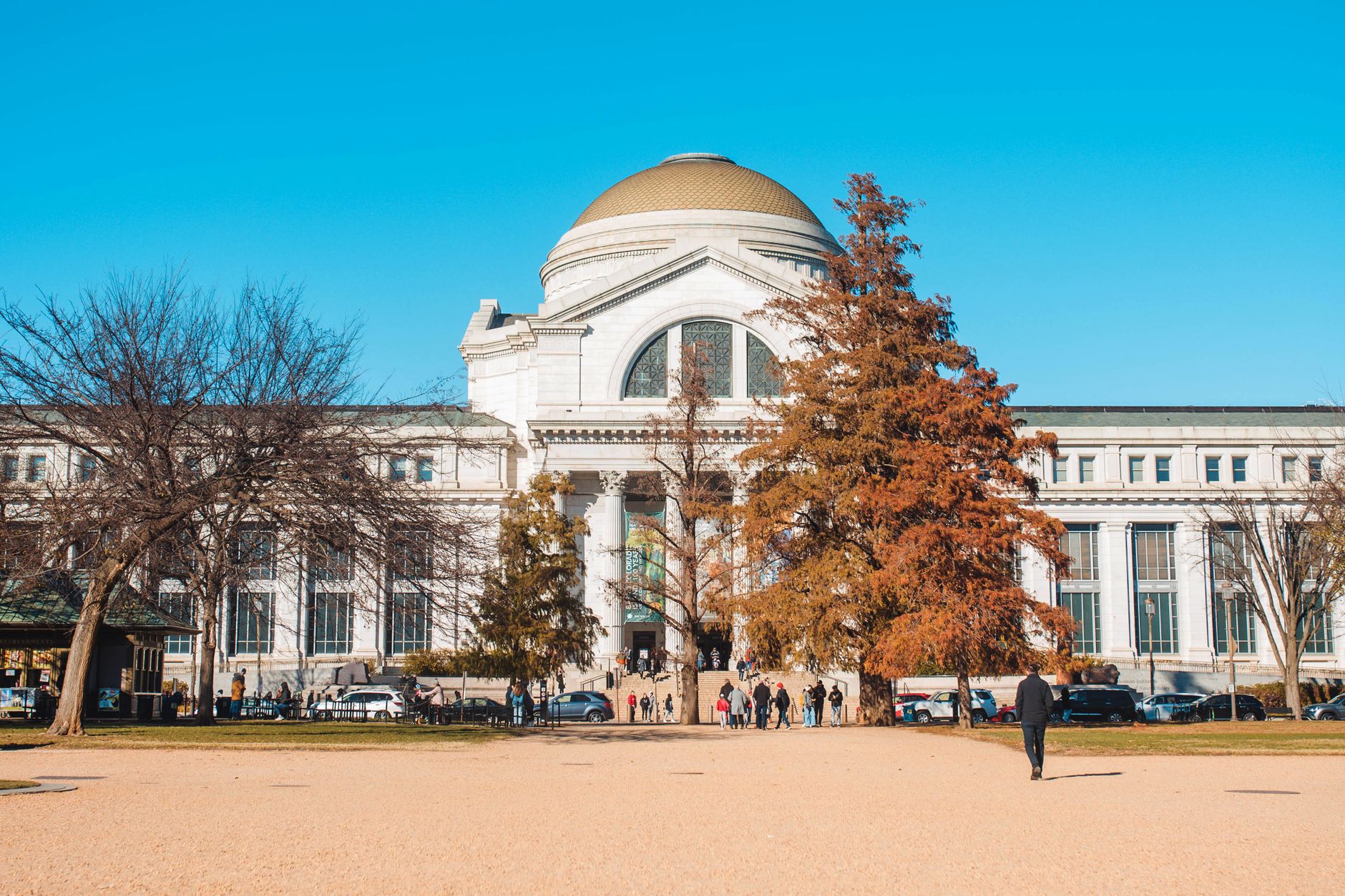
The White House has ordered signage placed outside the Smithsonian National Museum of African American History and Culture — a building that took over a century of advocacy to create, houses more than 40,000 artifacts, and draws roughly 2 million visitors a year. Not inside. Outside. Signs, on the National Mall, carrying the administration’s counter-narrative on American history. Let that land for a moment.
This isn’t a policy dispute about museum funding formulas. What’s happening here is a direct attempt by the executive branch to control how a federally chartered institution tells the story of Black Americans to the world. The Smithsonian Institution Act of 1846 gave the Smithsonian its congressionally mandated independence for a reason. That independence is now being tested in a way no administration has ever attempted — with signage as the weapon.
From 100 Years of Advocacy to a White House Sign Order: The Smithsonian’s Long War With Trump
The NMAAHC didn’t just appear. It was authorized by Congress in 2003 after decades of organizing, opened in September 2016 under President Obama on 5 acres of National Mall land, and was funded in part by $250 million in federal appropriations alongside private donations. The Smithsonian as a whole receives approximately $1.1 billion annually from federal sources — which is precisely why it’s so vulnerable to this administration’s pressure campaigns.
Trump’s assault on the institution didn’t begin in July 2026. It began within days of his return to office. In January 2025, he signed an Executive Order targeting “divisive concepts” in federally funded institutions. By early 2026, administration officials were moving to fire Smithsonian leadership, restructure programming, and demand exhibit revisions on systemic racism and slavery. The sign order announced around July 24, 2026 is not a new front — it’s an escalation. And escalation is a pattern. This is the same playbook being used across federal agencies, from the US Political News cycle to the courtrooms where legal challenges to DEI rollbacks are piling up.
| Timeline Event | Date | Significance |
|---|---|---|
| Smithsonian Institution Act passed | 1846 | Established congressional independence of institution |
| NMAAHC authorized by Congress | 2003 | Decades of advocacy finally codified into law |
| NMAAHC opens on National Mall | September 2016 | First federally funded museum of its kind |
| Trump EO on “divisive concepts” | January 2025 | Targeted all federally funded institutions |
| Smithsonian leadership firings and exhibit demands | Early 2026 | Direct interference in curatorial mission begins |
| Sign order for NMAAHC exterior | July 24, 2026 | Most visible and confrontational escalation to date |
The comparison that historians keep reaching for isn’t flattering. Governments that rewrite museum narratives from the outside — literally planting their messaging at the institution’s door — are not functioning as liberal democracies. They’re functioning as something else.
Signs on the Mall, Feud With LeBron, and a Culture War in Full Sprint Ahead of the 2026 Midterms
The sign order didn’t arrive in a vacuum. The week of July 24, 2026 saw President Donald Trump also call NBA star LeBron James “maybe a racist” via Truth Social after James publicly criticized the NMAAHC intervention, calling it “an erasure of Black history.” Trump’s attack on James was swift, personal, and calculated — designed to nationalize the cultural flashpoint and keep his base engaged.
Here’s what the administration is doing simultaneously, according to reporting and sourced context as of this week:
- Ordering exterior signage at NMAAHC pushing a counter-narrative to the museum’s curatorial mission on the history of slavery and racial justice
- Attacking LeBron James on Truth Social, calling him “maybe a racist” for defending the museum
- Firing or restructuring Smithsonian leadership appointed under prior administrations
- Demanding exhibit revisions on systemic racism that museum curators and historians have resisted
- Pressuring Senate Republicans through Press Secretary Karoline Leavitt, who warned publicly that Trump’s “patience is running out” with Senate Majority Leader John Thune (R-SD) over the stalled legislative agenda — revealing fractures inside the GOP even as the culture war push accelerates
This is a coordinated squeeze operation. Cultural aggression on the outside, legislative pressure on the inside. The museum becomes a midterm prop. LeBron James becomes a foil. And the American public gets to pick a side — which is exactly the point.
Trump, Lonnie Bunch, and Karoline Leavitt: The Three Axes of This Fight
Donald Trump
President Trump is the unmistakable engine here. His political instincts have always been to find the cultural institution his base resents most and go at it publicly, loudly, and without apology. The NMAAHC is perfect for his purposes: federally funded, associated with Obama, focused on Black American history, and staffed by curators who will resist him on the record. Every piece of their resistance becomes content. Every legal challenge becomes proof — in his framing — that the “radical left” is trying to silence patriotic Americans. The LeBron attack fits the same template. Pick a famous Black critic. Call him a racist. Watch the coverage explode. Win the news cycle.
Lonnie Bunch III
Lonnie Bunch III, Secretary of the Smithsonian Institution, is the administration’s most credentialed obstacle. A former museum director and historian of long standing, Bunch has been vocal about the Smithsonian’s mission and has resisted White House curatorial interference with a measured but firm public posture. He understands — as any serious historian does — that what’s being proposed isn’t “balance.” It’s imposed propaganda. The sign order puts him in an impossible position: comply and legitimize the intervention, or refuse and invite funding threats.
Karoline Leavitt
Press Secretary Karoline Leavitt is the administration’s public face for all of this, and her role this week expanded beyond the museum story. Her warning that Trump’s “patience is running out” with Senate Majority Leader John Thune over the budget reconciliation package signals that the culture war push and the legislative agenda are now entangled. The White House needs Thune to move. Thune is moving slowly. Leavitt’s public pressure tactic is Trump’s version of a deadline — and it tells you how thin the internal GOP consensus actually is on the broader agenda, even as the MAGA culture war machinery runs at full speed.
The Propaganda Accusation Is Too Easy — and Both Sides Are Using This Museum Cynically
Here’s the thing nobody wants to say out loud: the Trump administration’s sign order is an authoritarian act dressed up as patriotism, and that’s a serious charge that deserves to be made directly. Placing government messaging at the door of an independent cultural institution to contradict its scholarship is not “restoring balance.” It’s compelled speech. First Amendment scholars and administrative law experts will tell you the Smithsonian Institution Act of 1846 exists precisely to prevent this kind of political colonization.
But Democrats aren’t exactly clean on this either. The NMAAHC has become a fundraising prop for the left as fast as it’s become a culture war target for the right. How many Democratic lawmakers rushed to the museum’s defense in 2025 when exhibit revision demands first emerged, versus how many waited until it was a midterm-ready headline? The NAACP and Rep. Joyce Beatty (D-OH) calling this “the weaponization of federal power against Black memory” is correct — but where was the sustained legislative pushback when funding leverage was first being applied over a year ago?
Consider what’s actually being debated:
- The MAGA framing: Taxpayer-funded museums should not promote a “grievance narrative” that divides Americans; the sign order corrects anti-American propaganda
- The civil rights and historical framing: The NMAAHC presents documented, peer-reviewed history; the sign order is government intimidation and historical erasure
- The legal framing: Forcing curatorial messaging on a congressionally independent institution may constitute compelled speech and violate the museum’s founding statute
- The cynical political framing: Both parties are using a 40,000-artifact repository of human history as a talking point, and neither is doing the institution any favors
The museum deserves better than to be a battlefield. It will remain one.
Four Scenarios for What the NMAAHC Sign Order Triggers Next
The sign order is not the end of this story. It’s the opening move in a legal, political, and cultural confrontation that will play out across the next 18 months. Here’s where it goes:
- Scenario 1 — Federal court injunction: Civil liberties organizations, likely including the ACLU and possibly the Smithsonian’s own legal counsel, challenge the sign order as compelled speech and a violation of the institution’s congressionally mandated independence. A federal judge issues a preliminary injunction blocking implementation within weeks. The case becomes a major First Amendment battleground heading into 2026 elections.
- Scenario 2 — Smithsonian compliance under duress: Faced with credible threats to its $1.1 billion federal funding stream, Smithsonian leadership agrees to a modified version of the sign placement — something anodyne enough to survive public scrutiny but real enough to constitute a precedent. This would be a devastating institutional capitulation and would open every other federally funded cultural institution to similar pressure.
- Scenario 3 — Congressional Democrats weaponize the story: House and Senate Democrats make the NMAAHC sign order the centerpiece of their 2026 midterm cultural rights messaging, tying it to broader themes of historical erasure and executive overreach. Fundraising emails go out within 72 hours. The story sustains for months. Whether it moves suburban voters in places like suburban Atlanta, Phoenix, and Milwaukee — the actual battleground — is the real question.
- Scenario 4 — LeBron escalation draws in the NBA: Trump’s “maybe a racist” attack on LeBron James triggers a broader athlete-activist response from the NBA and potentially other sports leagues. A coordinated public statement, or LeBron-led fundraising campaign for the museum’s private endowment, turns the story into a months-long cultural confrontation that keeps the NMAAHC in the national conversation through the 2026 election cycle.
| Scenario | Probability | Political Winner | Legal Outcome |
|---|---|---|---|
| Federal court injunction | High | Democrats short-term | Restraining order likely granted |
| Smithsonian compliance | Low-Medium | Trump base energized | Devastating institutional precedent |
| Democratic midterm campaign centerpiece | Certain | TBD by voter response | No direct legal impact |
| NBA/LeBron-led cultural confrontation | Medium | Cultural left, fundraising boost | No direct legal impact |
The administration understands one thing with great clarity: this fight costs them nothing with their base and might cost Democrats something with voters who are tired of culture war debates dominating every news cycle. The real gamble is whether sign orders on the National Mall animate the voters who decide competitive House seats — or whether those voters, exhausted and economically anxious, tune all of it out.
A museum that took more than 100 years to build, that houses the artifacts of slavery and freedom and resilience, now has a White House sign order at its door — and the question isn’t whether the courts will weigh in. They will. The question is whether the institution survives this administration’s second term with its independence intact, or whether it becomes the precedent that every future authoritarian needs.
About The Author