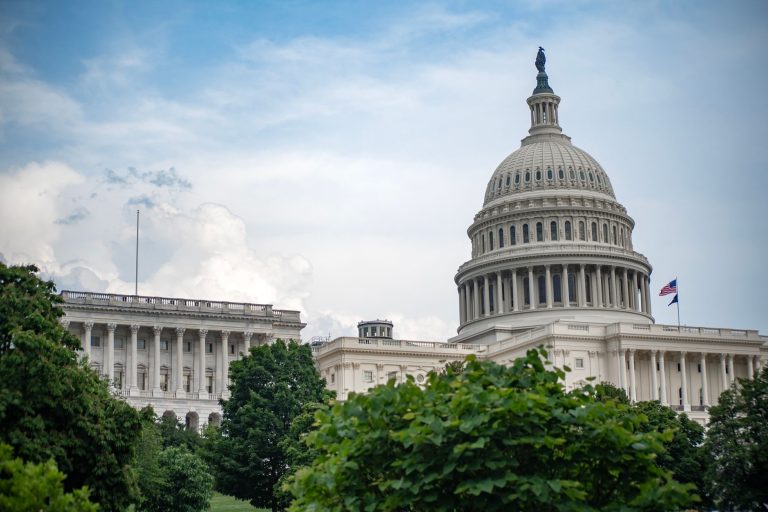
Trump Remakes Washington, D.C., Into a Maze of Fences and Guard Members
 Sophie Gesture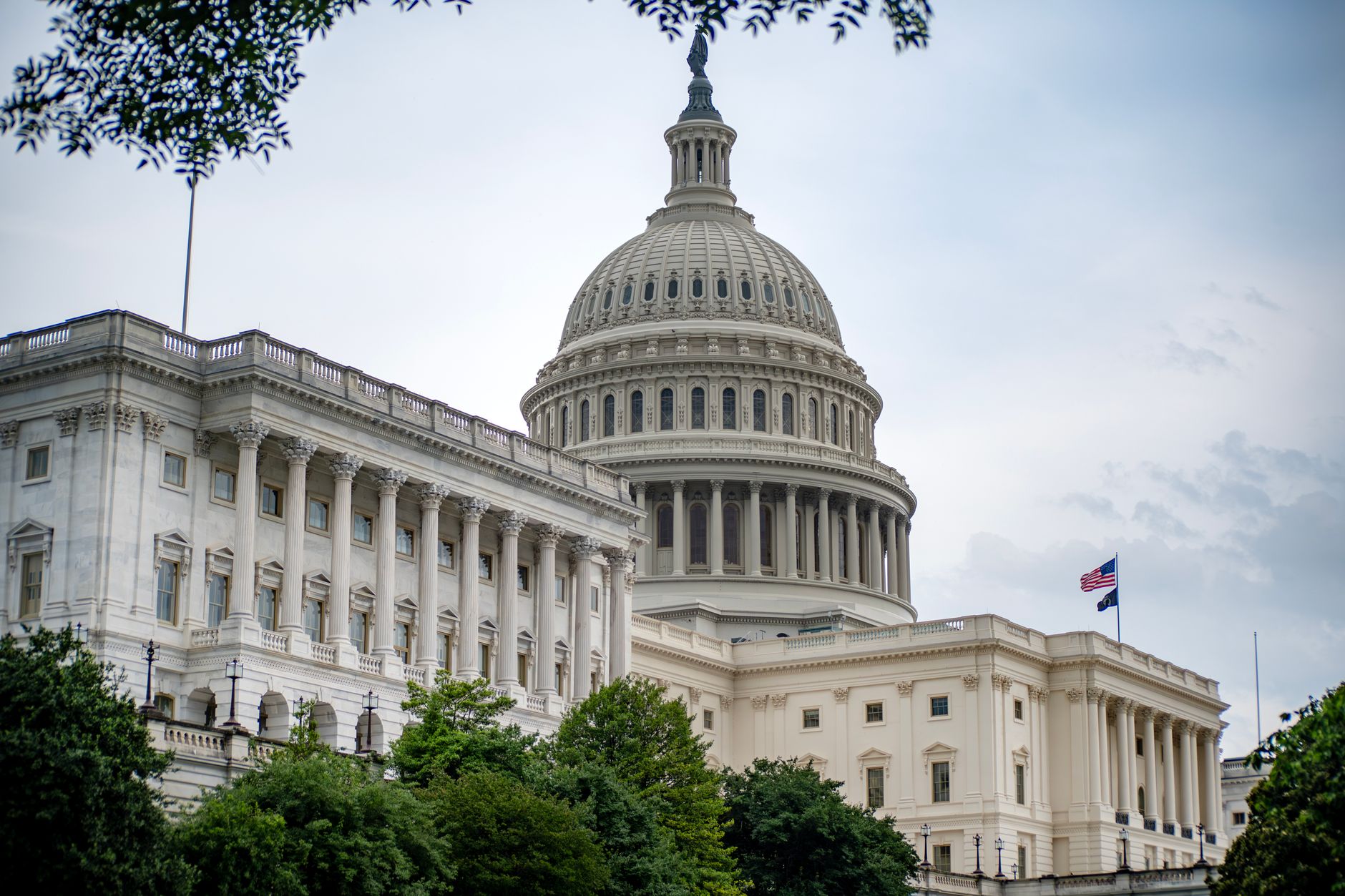
Three days before America turns 250, its capital looks like a city preparing for siege — not celebration. Miles of steel fencing now ring the Lincoln Memorial, the Washington Monument corridor, and the Capitol precinct. Concrete Jersey barriers block streets that tourists used to walk freely. And more than 5,000 National Guard members, drawn from multiple states under federal direction, are posted across Washington, D.C., turning the National Mall into something that resembles a militarized event venue more than a public square.
This is the physical reality of what the Trump administration has branded “The American Semiquincentennial” — the nation’s 250th birthday celebration on July 4, 2026. The stakes here are not logistical. They are constitutional, symbolic, and deeply political. Who gets to own the meaning of America’s founding — the president who controls the fences and the flyovers, or the citizens who can no longer freely access the monuments their taxes built? That question doesn’t resolve itself on July 5th. It echoes for years.
From Salute to America in 2019 to a Fortress Capital in 2026: How Trump’s July 4th Spectacles Escalated
Trump has been building toward this moment for seven years. His “Salute to America” on July 4, 2019 — military tanks on the Mall, fighter jet flyovers, a prime-time presidential address — was widely mocked at the time as authoritarian pageantry. Critics called it a banana republic aesthetic. His base called it overdue. He called it a massive success. And he learned from it.
The 2020 Mount Rushmore address doubled down, using the carved faces of Washington, Jefferson, Lincoln, and Roosevelt as a literal backdrop for a culture-war speech. The 2026 version — anchored in Washington, D.C., but extending to a second Mount Rushmore address — is substantially larger in every dimension. The security apparatus alone dwarfs anything deployed for a purely celebratory event in the modern history of the Republic. This is not crowd safety planning. This is stagecraft at national scale. As only 38 percent of Americans believe their country is living up to its founding ideals right now, the White House is betting spectacle can substitute for sentiment.
| Year | Event | Military Assets | Public Access | Controversy |
|---|---|---|---|---|
| 2019 | Salute to America, D.C. | Tanks, fighter jets | Open Mall | Politicization of July 4 |
| 2020 | Mount Rushmore address | Air National Guard flyover | Limited (COVID) | Culture war rhetoric, fireworks ban override |
| 2021 | Biden restoration ceremony | Standard honor guard | Ticketed (COVID transition) | Minimal |
| 2022–2025 | Standard federal celebrations | Ceremonial only | Fully open | Minimal |
| 2026 | Semiquincentennial, D.C. + Rushmore | 5,000+ Guard, air show, flyovers | Ticketed zones, fenced perimeter | Militarization, emoluments, public exclusion |
The pattern is clear. Each Trump July 4th deployment has been larger, more militarized, and more overtly partisan than the last. What began as an unusual presidential parade has become something closer to a controlled state ceremony — open to the public in theory, managed for the cameras in practice.
5,000 Guards, Miles of Fencing, and a Ticketed Mall: What Is Actually Happening on the Ground in D.C. Right Now
As of July 1, 2026, Washington, D.C., is not functioning like an open democratic capital. Here is what the transformation looks like in concrete terms:
- Steel perimeter fencing now encircles the Washington Monument grounds, the Lincoln Memorial approach, and the full stretch of the National Mall between 3rd and 17th Streets NW — areas that are ordinarily open to any person at any hour.
- Jersey barriers and vehicle exclusion zones have been installed along Constitution Avenue and Independence Avenue, rerouting civilian traffic in ways not seen since the post-January 6 Capitol lockdown of early 2021.
- Ticketed access zones control who gets the prime viewing angles for the fireworks and the presidential flyover — effectively creating a two-tier public celebration on publicly owned federal land.
- 5,000-plus National Guard members from multiple states are deployed under federal authority, coordinated through Defense Secretary Pete Hegseth’s office, with a visible presence at every major checkpoint and monument approach.
- D.C. Mayor Muriel Bowser has raised formal objections to the scope of federal security overriding local jurisdiction — a friction point that exposes the District’s unique constitutional vulnerability as a city without full statehood protections.
- The Qatar-gifted Boeing 747-8, estimated value $400 million, completed an inaugural flight on July 1 with Trump aboard, providing an additional visual spectacle that the White House is folding into the broader Semiquincentennial narrative.
None of this is unprecedented in isolation. Security operations for large public events routinely include fencing and personnel. What is unprecedented is the combination: the scale, the ticketing of prime public space, the explicit partisan framing, and the simultaneous deployment of a foreign-gifted presidential aircraft as a prop. The whole package is something new. And a president who has already screamed at members of his own party on Capitol Hill over authority disputes is not inclined to hear complaints about where he puts the fences.
Trump, Hegseth, Bowser, and Mamdani: Four People Who Define This Moment’s Fault Lines
Donald Trump
Donald Trump is the architect and the audience simultaneously. He personally championed the scale of the Semiquincentennial security and ceremonial footprint, framing it publicly as a display of national strength. The Mount Rushmore address on July 4 is the rhetorical centerpiece — a setting he has used before and clearly intends to use again as a backdrop for claims about national identity, immigration, and what he calls the “reclaiming” of American greatness. The fences and Guard members are not incidental to that message. They are the message. Controlled access, military presence, the president at the center: this is the aesthetic of authority Trump has been refining since 2017.
Pete Hegseth
Pete Hegseth, as Defense Secretary, authorized and coordinated the National Guard deployment that makes this spectacle operationally possible. His role here matters beyond logistics. Hegseth has been the most aggressive advocate within the administration for expanding the domestic visibility of military assets — a philosophy that meshes precisely with what is happening on the Mall this week. The question constitutional scholars are starting to ask out loud is whether deploying Guard units for what is functionally a presidential campaign rally event — the 2028 cycle effectively begins the moment this speech ends — represents an appropriate use of defense resources.
Muriel Bowser
D.C. Mayor Muriel Bowser is in the position she has occupied throughout both Trump terms: the local executive who technically governs the city where all of this is happening but who possesses limited legal tools to push back against federal authority. Her public objections to the security scope are noted. They are also largely symbolic. The District’s lack of statehood means federal agencies can override local governance in ways that would be legally impossible in any of the 50 states. That structural vulnerability is on full display this week in every fence post and Guard checkpoint.
Zohran Mamdani
Zohran Mamdani, the Democratic Socialist New York State Assemblyman who mounted a serious 2025 New York City mayoral campaign, is not in Washington this week by accident. His planned “major address” on July 4 — timed explicitly as counter-programming to Trump’s Mount Rushmore speech — is a calculated opening move in what everyone in Democratic politics knows is the real game: the 2028 presidential primary. Mamdani represents the same insurgent left energy that has been reshuffling Democratic primaries across the country. For broader context on what that movement looks like electorally, consider that a 29-year-old housing justice organizer just ended a 30-year congressional career in Colorado with a primary victory — the democratic socialist wave is not hypothetical.
Why Both the White House and Its Critics Are Selling You an Incomplete Picture of This Fortress Capital
The administration’s case for the security apparatus rests on two pillars: historic occasion and crowd scale. America turns 250 once. Millions of people are expected in D.C. Fencing and Guard presence are standard event management tools. All of that is technically true. And all of it is also a frame designed to make what is actually happening look normal.
What is actually happening: a sitting president is converting the public monuments of a democratic republic into the set of a presidential production, using federal security authority to determine who stands where and who sees what, while simultaneously accepting a $400 million aircraft from a foreign government and presenting it as a symbol of American greatness. The Emoluments Clause of the Constitution exists specifically to prevent foreign governments from cultivating influence over U.S. officials through gifts. A $400 million aircraft is not a diplomatic trinket. Senator Chris Murphy (D-CT) has already signaled oversight hearings. The legal exposure is real.
But the critics have their own blind spot. The outrage about militarization of the Mall, while legitimate, tends to flatten the genuine complexity of what large-scale public security requires. The January 6, 2021 attack on the Capitol demonstrated, catastrophically, what happens when security is inadequate. The argument that any fencing or Guard presence is inherently authoritarian collapses the important distinction between security theater and actual security planning. The opposition would be more credible if it engaged with that distinction rather than treating every fence post as a symbol of fascism.
The honest analysis sits between those poles: the scale of this deployment, the ticketing of public land, and the explicit partisan framing of the celebration exceed anything that crowd safety requires. That excess is intentional. It serves a political purpose. And pretending otherwise — in either direction — is not serious.
| Claim | Source | Accurate? | What’s Missing |
|---|---|---|---|
| “Security is purely for crowd safety” | White House | Partially | Scale exceeds any prior civilian celebration; ticketing restricts public access |
| “Qatar aircraft is a diplomatic win” | Trump allies | Contested | Potential Emoluments Clause violation; $400M valuation unprecedented |
| “Fencing equals authoritarianism” | Progressive critics | Overstated | Post-Jan. 6 security lessons are real; some perimeter controls are legitimate |
| “This is the same as post-Jan. 6 lockdown” | Democratic messaging | Misleading | Post-riot lockdown was defensive; this is a proactive presidential production choice |
Four Ways the D.C. Fortress and the Semiquincentennial Spectacle Reshape American Politics Through 2028
What happens after July 4, 2026 is not a return to normal. These are the scenarios that matter:
- The Qatar aircraft becomes a sustained legal and legislative fight. If the Senate Foreign Relations Committee opens hearings — and Murphy’s signals suggest it will — the $400 million Boeing 747-8 becomes the emoluments case that congressional Democrats have been waiting for since 2017. The legal threshold for an Emoluments Clause violation is genuinely unsettled. A protracted committee fight keeps the story alive through 2027.
- The D.C. fortress model gets replicated. The more dangerous long-term consequence of this week is normalization. If a militarized, ticketed, fenced National Mall becomes the template for future large federal events — or future political demonstrations — the physical geography of democratic participation in the capital changes permanently. Security theater has a way of becoming security policy.
- Mamdani’s counter-programming launches the 2028 Democratic primary in earnest. A successful July 4 address — one that gets covered, gets clipped, gets shared — establishes Mamdani as a national figure rather than a New York story. The democratic socialist left, which has demonstrated real primary muscle from New York City to Colorado, has been waiting for a presidential-level standard-bearer. This could be the moment that crystallizes.
- Bowser’s jurisdictional fight becomes a statehood argument. The D.C. statehood debate has never found a cleaner illustrative moment than a president overriding the local government of the nation’s capital to build a military perimeter around public monuments for a partisan celebration. Expect that argument to appear in every Democratic statehood bill introduced through 2028.
| Scenario | Probability | Timeline | Key Trigger |
|---|---|---|---|
| Senate Emoluments hearings on Qatar aircraft | High | Fall 2026 | Murphy formally requests Committee hearing |
| D.C. fortress model replicated for future events | Medium-High | Ongoing | No legal challenge successfully contests ticketed Mall access |
| Mamdani emerges as 2028 presidential contender | Medium | Q3 2026 | July 4 address generates national coverage and donor response |
| D.C. statehood gains new legislative momentum | Medium-Low | 2027 | Senate flips Democratic in 2026 midterms |
For ongoing coverage of the political fallout from Washington’s transformation this week, see our US Political News section.
Here is what the fences around the Lincoln Memorial actually mean. They mean that on the 250th anniversary of a republic founded on the radical idea that public space belongs to the public, the president of that republic decided the most important thing was controlling who stands where and what they see. That is not a security decision. It is a political one. And the question Americans should be sitting with on July 5th — after the fireworks have cleared and the Guard members have gone home — is whether a country that builds walls around its own monuments to manage a presidential spectacle is still the country those monuments were built to honor.
About The Author