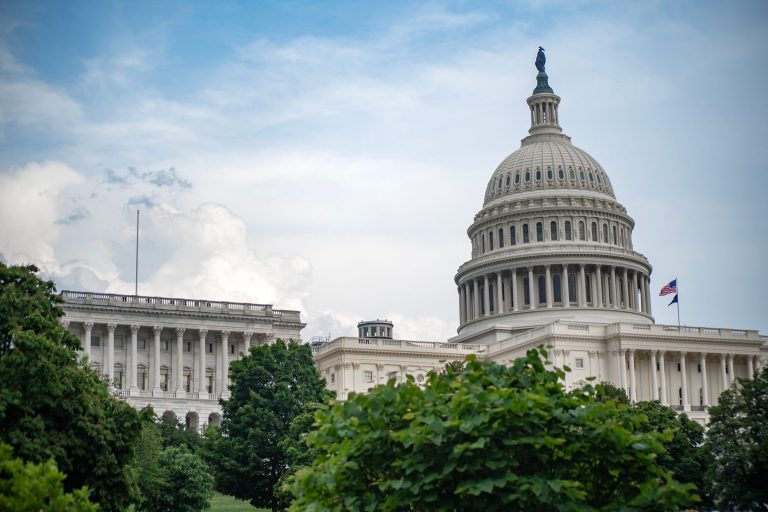
Donald Trump Hijacked America’s 250th Birthday and Turned It Into a Theatre of the Absurd
 Sophie Gesture
Only 38 percent of Americans believe their country is living up to its founding ideals right now. On the 250th anniversary of independence. Let that number sit with you for a moment.
What was supposed to be a once-in-a-generation national reckoning — a genuine pause to measure how far the republic had traveled since 1776 — became something else entirely. Donald Trump, in his second term and more politically dominant than at any point in his career, did what he always does: he made it about himself. The America250 semiquincentennial, years in the planning, backed by a congressionally chartered nonprofit, designed to be decentralized and community-driven, got swallowed whole by the MAGA machine. The fireworks were real. The patriotism was performative. And the gap between what this anniversary was meant to be and what it became tells you almost everything you need to know about where American democracy stands at 250.
How a Congressionally Chartered Celebration Got Rebranded as a Trump Rally Over Three Decades of Planning
The America250 Foundation was not a last-minute idea. Congress established it years in advance specifically to prevent any one administration from monopolizing a national milestone of this magnitude. The blueprint called for decentralized, community-led events across all 50 states — think Smithsonian traveling exhibitions in rural Kansas, naturalization ceremonies in immigrant-heavy cities, school programs tying 1776 to 2026. Bipartisan. Broad. Deliberately unglamorous in the best possible way.
That vision survived exactly as long as it took Trump’s White House to recognize a branding opportunity.
The administration centralized major ceremonial events around Washington, D.C. and Mar-a-Lago, folding them into the broader “Make America Great Again” narrative with a seamlessness that would be impressive if it weren’t so nakedly cynical. Trump’s speeches framed the semiquincentennial not as a collective reflection but as a validation of his own political project. The subtext was never subtle: America was great in 1776, lost its way somewhere, and is only now being restored — by him.
Historians pushed back loudly. Constitutional scholars noted the comparison to authoritarian-style national celebrations in Hungary under Viktor Orbán and Russia under Vladimir Putin, where patriotic milestones function as consolidation rituals rather than genuine civic moments. The pattern is recognizable. It just had never been applied to an American Independence Day at this scale before.
| Celebration Element | Original America250 Vision | Trump Administration Reality |
|---|---|---|
| Geographic focus | All 50 states, decentralized | Centralized on D.C. and Mar-a-Lago |
| Tone | Bipartisan, reflective | MAGA-branded, campaign-adjacent |
| Historical framing | Pluralistic founding narrative | Restoration mythology |
| Key venues | Community centers, schools, public squares | Federal Mall, private Trump properties |
| Presidential role | Ceremonial, unifying | Central, political, personal |
| Comparisons drawn | Philadelphia 1976 bicentennial | Orbán-style national consolidation events |
The 1976 bicentennial, held during the Ford administration, was famously restrained — even mocked at the time for its earnestness. But that restraint was a feature, not a bug. No president owned America’s 200th birthday. Trump owns America’s 250th. Or at least, he’s made sure it feels that way.
Trump’s July 4th Spectacle: What Actually Happened at America’s 250th Anniversary Events
The specifics matter here. This wasn’t vague nationalistic atmospherics — it was a structured, deliberate political operation dressed in bunting.
Trump delivered keynote addresses at the D.C. celebrations that leaned hard into his signature rhetorical framework: American decline under his predecessors, American resurrection under his stewardship. The “theatre of the absurd” characterization — The Guardian’s phrase, and an accurate one — captures the cognitive dissonance of watching a president celebrate democratic ideals while his administration faced active legal challenges over executive overreach, congressional authority, and civil liberties.
Here’s what made the week surrounding July 4, 2026 genuinely surreal:
- The Supreme Court declined, without comment or noted dissent, Trump’s emergency bid to overturn the E. Jean Carroll verdict — a combined $88.3 million judgment against him for sexual abuse and defamation — even as he stood at the podium celebrating American justice and the rule of law
- A CBS News/YouGov poll released that same week found only 38% of Americans believe the country is living up to its founding ideals, with 61% saying democracy is under threat
- The Kennedy Center, which Trump had effectively taken over in his second term, featured large tarps covering sections of the building — a literal coverup that became an unintentional metaphor for the entire week
- Historians and former America250 Foundation advisers gave on-record interviews describing the hijacking of their planning process
- International media, particularly European outlets, covered the celebrations with barely concealed alarm
The crowd sizes were real. The enthusiasm among Trump’s base was genuine. None of that makes the spectacle less absurd — it makes it more so, because the enthusiasm is precisely what allows the rebranding to work.
Trump, the America250 Foundation, and Roberta Kaplan: Three Forces Colliding Over What America Means at 250
Donald Trump
Trump’s instinct to brand everything — hotels, steaks, universities, now a national anniversary — is not a character flaw that coexists with his politics. It is his politics. The man genuinely believes that the story of America and the story of Donald Trump are the same story. What looks like narcissism to critics is, from his perspective, a coherent worldview: America was great, America lost its greatness, Trump is restoring it. The 250th anniversary is therefore his anniversary too. Framing the semiquincentennial as a MAGA event isn’t exploitation to him. It’s accuracy.
This is what makes him so effective and so dangerous simultaneously. He doesn’t perform sincerity — he has it. And that sincerity lands on an audience that has been told for years that the country is slipping away from them. The celebrations, in that context, feel like a homecoming. That’s the political combustibility that defines this moment.
The America250 Foundation
The America250 Foundation is the forgotten protagonist of this story. A congressionally chartered nonprofit with genuine bipartisan roots, it spent years building a vision of commemorations that would belong to every American — not just those who voted for the current president. Its advisory board included historians, educators, civic leaders from red states and blue states. The infrastructure was real. The programming was developed.
What the Foundation lacked was the power to stop a president who had no interest in sharing the moment. Congressional chartering doesn’t mean White House buy-in. And when the administration decided it wanted the semiquincentennial’s imagery — the flags, the crowds, the fireworks, the emotional weight of 250 years — the Foundation had no legal or institutional mechanism to resist. Their planning got absorbed. Their vision got overwritten. Several advisers resigned quietly in the months before July 4th. None of it made the news in a week crowded with Carroll verdicts and Supreme Court orders.
Roberta Kaplan
Roberta Kaplan, the attorney who won the E. Jean Carroll defamation and sexual abuse case against Trump — a combined verdict of $88.3 million across two trials in May 2023 and January 2024 — provided an accidental counternarrative to the week’s celebrations. The Supreme Court’s refusal to intervene, issued with no noted dissents, meant that while Trump was positioning himself as the avatar of American greatness, the courts were simultaneously confirming his personal liability for tens of millions of dollars in civil damages. Kaplan called it final vindication. The timing was not lost on anyone paying attention.
The Carroll case matters beyond its dollar figure. It is the most significant civil liability judgment ever to stand against a sitting American president. The courts held. The rule of law produced an outcome. And the man found liable for sexual abuse and defamation was simultaneously presiding over the nation’s 250th birthday party.
Why Both the Left’s Outrage and the Right’s Triumphalism Miss the Real Danger Here
Let’s be honest about both sides of this argument, because neither is giving you the complete picture.
The left’s critique — that Trump has desecrated a sacred civic moment — relies on a nostalgia for a bipartisan national unity that has not actually existed for decades. The 1976 bicentennial was held during Watergate’s aftermath, with a president who hadn’t been elected to the office. The 1976 celebrations were not a model of civic harmony — they were an anxious performance of normalcy over deep national fractures. Pretending that America250 would have been a genuine national kumbaya moment without Trump misreads both history and the current partisan temperature. The country was already divided before a single tarp went up at the Kennedy Center.
The right’s counter — that Trump is simply celebrating America more enthusiastically than previous presidents would have — ignores the structural damage done when a national institution gets subordinated to a personal political brand. This isn’t about enthusiasm. It’s about the difference between a president participating in a national event and a president consuming it. The America250 Foundation’s decentralized vision wasn’t anti-Trump. It was pro-institution. Gutting it in favor of MAGA-branded centralization weakens the civic infrastructure that even Trump’s supporters will eventually need when someone they don’t like holds power.
The CBS News/YouGov polling data makes the real stakes concrete:
| Metric | Percentage | Partisan Gap |
|---|---|---|
| Proud of founding ideals | 72% | Moderate (R higher) |
| Country living up to ideals today | 38% | Massive (R 58%, D 21%) |
| Democracy under threat | 61% | Inverse (D 81%, R 38%) |
| Economy as top concern | 54% | Moderate |
| Satisfied with direction of country | 41% | Large (R 67%, D 18%) |
Those gaps are not a communications problem. They are not a messaging problem. They are the empirical signature of a country that no longer shares a common factual reality about its own condition. That is the actual crisis the 250th anniversary should have forced a national conversation about. Instead, it got a rally.
Four Scenarios for What America’s Political Landscape Looks Like After the Semiquincentennial Spectacle
The July 4th week of 2026 is not a discrete event — it is a pressure point whose consequences will unfold through the 2026 midterms and beyond. Here is what the realistic trajectory looks like:
- Scenario 1: The MAGA branding works, and the midterms reflect it. Trump’s consolidation of the semiquincentennial imagery proves effective with persuadable voters who respond to emotional nationalism. Republicans hold the Senate, including Alaska’s contested seat where two candidates named Dan Sullivan will appear on the ballot — a ranked-choice voting test case that could flip depending on name recognition alone. The America250 moment becomes a template for how the administration handles civic institutions going forward.
- Scenario 2: The Carroll liability and democratic-threat polling create a backlash coalition. The 61% who say democracy is under threat, combined with independents repelled by the spectacle, coalesce around Democratic candidates. The midterms become a referendum not on the economy but on institutional integrity. Historical precedent — 2006, 2018 — shows that presidential overreach can generate midterm waves when the opposition successfully channels voter unease.
- Scenario 3: The Carroll enforcement proceedings become a running news story that undercuts the celebration narrative. With $88.3 million in personal liability confirmed by the Supreme Court’s refusal to intervene, enforcement proceedings against Trump personally will continue. Every legal filing, every asset question, every attempt to collect competes with the image of the president presiding over 250 years of American greatness. The cognitive dissonance may prove politically unsustainable.
- Scenario 4: The international dimension accelerates. European allies and adversaries alike watched the semiquincentennial coverage. The Orbán comparison, made by American historians, will be made far more aggressively by foreign governments and media. As AI-driven political messaging amplifies every frame of the celebration globally, America’s soft power — already strained — faces further erosion precisely when the administration needs allied cooperation on Iran, trade, and NATO.
| Scenario | Probability Driver | Key Indicator to Watch |
|---|---|---|
| MAGA branding sustains midterm advantage | Economic satisfaction stays above 40% | Consumer confidence Q3 2026 |
| Democratic backlash coalition forms | Democracy-threat polling hardens | Independent voter registration trends |
| Carroll enforcement undermines celebration narrative | Media coverage of asset proceedings | Federal court filings, August-October 2026 |
| International soft power damage compounds | Allied government statements | NATO summit communiqué language, fall 2026 |
For ongoing coverage of how this story intersects with the broader shift in American political institutions, see our US Political News section.
A nation turning 250 deserved a mirror. What it got was a marquee. The question that will define the next 18 months isn’t whether Trump successfully branded the semiquincentennial — he did. The question is whether 62 percent of Americans who believe the country isn’t living up to its ideals can translate that belief into something that changes the political calculus before the next anniversary rolls around. History doesn’t wait for consensus.
About The Author