Sophie Gesture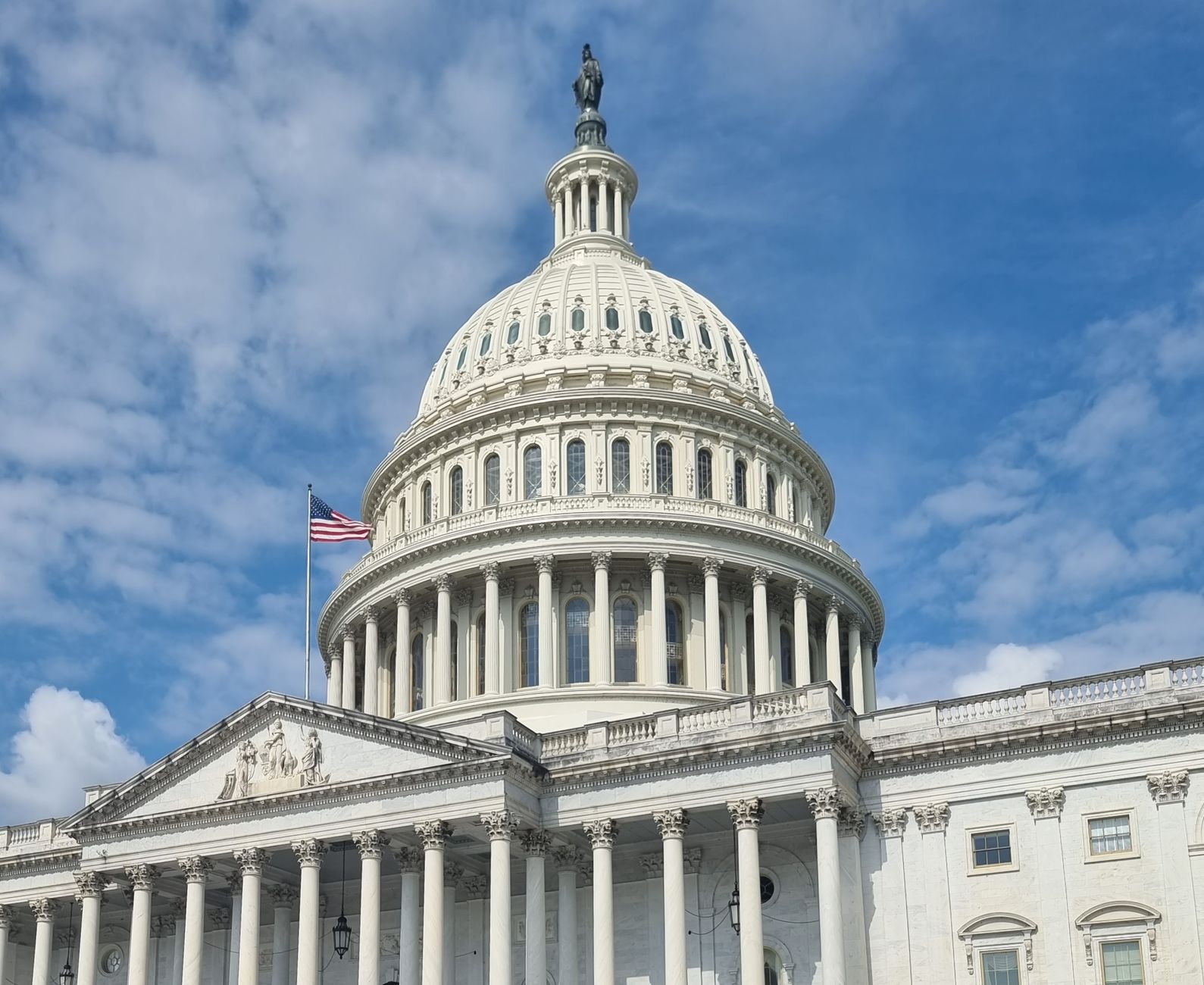
The United States Congress is the bicameral national legislature of the United States federal government, established by Article I of the Constitution of 1787 and first convened in 1789. It comprises two chambers — the Senate and the House of Representatives — and constitutes the legislative branch of the federal government, one of three co-equal branches alongside the presidency and the federal judiciary. Congress holds exclusive federal authority to enact legislation, levy taxes, appropriate funds, declare war, and regulate interstate commerce, making it the institutional foundation of American representative government and a central expression of democracy in the United States.
Overview
The constitutional architects designed Congress as the first and preeminent branch of the federal government, placing it in Article I and enumerating its powers in considerable detail. The bicameral structure — two chambers with distinct compositions, electoral bases, and terms of office — was itself a compromise, balancing the interests of large and small states. The Senate, with equal representation for every state, protects the federal principle; the House, apportioned by population, reflects the democratic principle.
Congress operates within a system of separation of powers that distributes authority among the legislative, executive, and judicial branches, with each branch possessing defined checks on the others. Congress checks the executive through legislation, appropriations, and oversight; it checks the judiciary through the confirmation process and, ultimately, through its authority to define the structure of federal courts below the Supreme Court level.
Sessions are organized into two-year Congresses, numbered sequentially from the First Congress of 1789. Each Congress begins following a general election in November of an even-numbered year and corresponds to a two-year electoral cycle.
Why Congress Matters in Politics
Congress occupies a structural position that makes it indispensable to virtually every dimension of American political life. No federal law can take effect without congressional enactment; no federal expenditure can occur without a congressional appropriation; no senior executive official or federal judge can be confirmed without Senate approval. This concentration of formal authority means that the composition of Congress — which party controls each chamber, what coalitions exist within each party, and how individual members respond to constituent and interest-group pressures — shapes the practical reach and direction of the entire federal government.
The institutional significance of Congress extends beyond lawmaking. Its investigative and oversight powers make it a principal accountability mechanism over the executive branch. Its treaty ratification and war powers authorities place it at the center of foreign policy debates. And its role as the direct electoral representative of the American public — with the entire House contested every two years — renders it the most continuously responsive institution in the federal system.
Structure and Composition
The Senate
The Senate consists of 100 members, two representing each of the fifty states, elected statewide to staggered six-year terms. Because terms are staggered into three classes, only approximately one-third of Senate seats appear on any given general-election ballot, making the Senate a continuous body that is never entirely reconstituted at once.
The Vice President of the United States serves as President of the Senate by constitutional designation, though the role is largely ceremonial. The Vice President may cast a tie-breaking vote, a power that has occasionally proved decisive when the Senate is evenly divided. In the Vice President’s absence, the Senate is presided over by the President pro tempore, a position traditionally held by the most senior senator of the majority party.
Day-to-day legislative management is the responsibility of the Senate Majority Leader, who sets the chamber’s agenda, schedules legislation for floor consideration, and coordinates the majority party caucus. The Senate Minority Leader performs corresponding functions for the opposition party.
The House of Representatives
The House of Representatives consists of 435 voting members apportioned among the states according to population as measured by the decennial census. Representatives serve two-year terms, and the entire chamber is contested at every general election — a feature that makes the House the most electorally volatile and immediately responsive of the two chambers.
The House is led by the Speaker of the House, elected by the full membership at the outset of each Congress and conventionally drawn from the majority party. The Speaker wields significant institutional authority, controlling the floor schedule, influencing committee assignments, and shaping the legislative agenda. The Speaker is also second in the presidential line of succession, after the Vice President.
Territorial and Non-Voting Representation
The District of Columbia and five United States territories — Puerto Rico, Guam, the United States Virgin Islands, the Northern Mariana Islands, and American Samoa — send non-voting delegates or resident commissioners to the House. These representatives may participate in debate and serve on committees but cannot cast votes on final passage of legislation.
Powers and Functions
Legislative Authority
The core function of Congress is legislation. A bill may be introduced in either chamber, with the constitutionally mandated exception that revenue-raising bills must originate in the House. After committee consideration and floor debate in the chamber of origin, a bill that passes must then pass the other chamber in identical form. Differences between House and Senate versions are reconciled through a conference process or through successive amendments. The resulting legislation is presented to the President, who may sign it into law or veto it. Congress may override a presidential veto by a two-thirds majority vote in both chambers simultaneously — a threshold deliberately set high to make override difficult.
The Filibuster and Cloture
Senate procedure permits unlimited debate unless a supermajority votes to end it. Under current Senate rules, ending debate — a procedural motion called cloture — requires the affirmative votes of sixty of the one hundred senators. In practice, this means that the minority party can prevent final passage of most legislation by threatening or sustaining a filibuster, an extended delay of business. This supermajority requirement for cloture is one of the most consequential procedural features distinguishing the Senate from the House and from most other legislative chambers. Certain categories of legislation — including budget reconciliation measures and executive and judicial nominations — are exempt from the sixty-vote cloture threshold under specific procedural rules.
Appropriations and the Power of the Purse
The constitutional power to appropriate federal funds — colloquially “the power of the purse” — is among the most consequential legislative authorities. No executive agency may spend money that Congress has not appropriated, giving the legislature a powerful lever over executive branch operations and policy priorities.
Advice and Consent
The Senate exercises the power of advice and consent over presidential nominations to senior positions in the executive branch, including Cabinet secretaries and agency heads, as well as nominations to all federal judgeships, including justices of the Supreme Court. Treaties negotiated by the executive branch also require ratification by a two-thirds Senate majority.
Oversight and Investigation
Both chambers exercise oversight of the executive branch through a committee system. Congressional committees may hold hearings, issue subpoenas for testimony and documents, and hold witnesses in contempt of Congress for non-compliance. This investigative authority extends across the full range of executive activity, from domestic regulatory enforcement to foreign policy and intelligence operations.
War Powers
Article I of the Constitution grants Congress the sole authority to declare war. In practice, presidents have frequently committed armed forces to conflict without formal congressional declarations. The War Powers Resolution of 1973 sought to reassert congressional prerogative by requiring the President to notify Congress within 48 hours of deploying forces and limiting unauthorized deployments to 60 days, but its practical enforceability has been contested throughout its history, producing a durable and unresolved tension between the branches.
Impeachment
The House holds the sole power of impeachment — the formal charging of a federal official with high crimes and misdemeanors. The Senate holds the sole power to try impeachments, with a two-thirds majority required for conviction and removal from office.
The Committee System
Committees are the organizational backbone of congressional activity. Each chamber maintains standing committees with defined jurisdictions — such as appropriations, armed services, foreign relations, finance, and judiciary — as well as select and special committees convened for specific purposes. Subcommittees subdivide jurisdictions further.
Committees are the primary venue in which legislation is drafted and revised (a process called “markup”), expert testimony is gathered, and executive agencies are scrutinized. Committee chairs, drawn from the majority party, hold significant agenda-setting power within their jurisdictions. Control of committee chairmanships is one of the most immediate practical consequences of winning majority status in either chamber.
Electoral Dynamics
Congressional elections occur every two years, with all 435 House seats and approximately one-third of Senate seats contested at each general election. Elections held in the middle of a presidential term are known as midterm elections. A well-documented historical pattern holds that the president’s party tends to lose seats in midterm elections, often serving as a referendum on the administration’s performance. This pattern has produced alternating periods of unified and divided government throughout American history.
The decennial census triggers congressional reapportionment — the reallocation of House seats among states based on population change — followed by redistricting within states to redraw the boundaries of individual congressional districts. Redistricting is a politically consequential process, as the party controlling state government at the time of redistricting can shape district boundaries to advantage its candidates, a practice known as gerrymandering.
Institutional Tensions and Scholarly Debate
A recurring theme in academic and civic commentary on Congress concerns the relative decline of legislative authority relative to the executive branch over the twentieth and twenty-first centuries. Critics argue that Congress has ceded substantial power to the presidency through broad delegations of regulatory authority, acquiescence on war powers, and the expansion of executive emergency authorities. Defenders of contemporary practice point to the structural difficulties of legislating in a large, diverse democracy with a system designed to require broad consensus.
This debate reflects deeper questions about whether the constitutional design of Congress — its bicameralism, its supermajority requirements, its internal procedural rules — facilitates or impedes effective democratic governance. These questions have no settled resolution and remain active subjects of constitutional scholarship and political reform advocacy.
Key Facts
| Feature | Senate | House of Representatives |
|---|---|---|
| Membership | 100 (2 per state) | 435 (apportioned by population) |
| Term length | 6 years (staggered) | 2 years |
| Presiding officer | Vice President / President pro tempore | Speaker of the House |
| Majority threshold (ordinary legislation) | 60 votes (cloture) / 51 votes (passage) | Simple majority |
| Unique powers | Advice and consent; treaty ratification; trial of impeachments | Must originate revenue bills; sole power of impeachment |
| Minimum age for membership | 30 years | 25 years |
| Constitutional basis | Article I, Section 3 | Article I, Section 2 |
| Seat of operations | United States Capitol, Washington, D.C. | United States Capitol, Washington, D.C. |
Frequently Asked Questions
What is the difference between the Senate and the House of Representatives? The Senate consists of 100 members — two from each state regardless of population — serving six-year staggered terms, making it a more deliberate body designed to insulate senators from short-term public opinion. The House consists of 435 members apportioned by state population, all serving two-year terms, making it more directly and frequently accountable to voters.
How does a bill become law in the United States? A bill must be introduced in one chamber, pass committee review, pass a floor vote in that chamber, then pass the other chamber in identical form. If the two chambers pass differing versions, differences are reconciled before a final vote. The enrolled bill is then presented to the President, who signs it into law or vetoes it. A vetoed bill can still become law if both chambers override the veto by a two-thirds majority.
What is the filibuster and why does it matter? A filibuster is a procedural tactic in the Senate by which a senator or group of senators prolongs debate to delay or block a vote on legislation. Because ending debate requires a cloture vote of sixty senators, legislation opposed by more than forty senators can effectively be blocked. This gives the minority party substantial leverage over the Senate agenda and explains why most significant legislation requires bipartisan support in that chamber.
What does congressional oversight mean? Congressional oversight refers to the authority of Congress to monitor, investigate, and scrutinize the activities of the executive branch. It is exercised primarily through committee hearings and investigations, subpoenas for testimony and documents, and the power to hold uncooperative witnesses in contempt. Oversight is a principal mechanism by which the legislative branch holds the executive accountable.
What is the War Powers Resolution? The War Powers Resolution, enacted in 1973, is a federal law that requires the President to notify Congress within 48 hours of introducing armed forces into hostilities and limits unauthorized military engagements to 60 days. Its enforceability has been a subject of sustained constitutional debate, and no president has formally acknowledged its constitutionality.
How is Congress distinct from parliamentary legislatures? Unlike legislatures in parliamentary systems, where the executive derives its authority from and remains accountable to the legislature, Congress operates under a strict separation of powers. Members of Congress may not simultaneously hold executive office, the executive is not drawn from the legislative majority, and the President cannot dissolve Congress and call new elections. This structural independence means Congress and the presidency can be controlled by different parties simultaneously, producing divided government with no direct equivalent in most parliamentary democracies.
About The Author