US Airman Detained Again After Capitol Arrest Over Trump Impeachment Call
 Sophie Gesture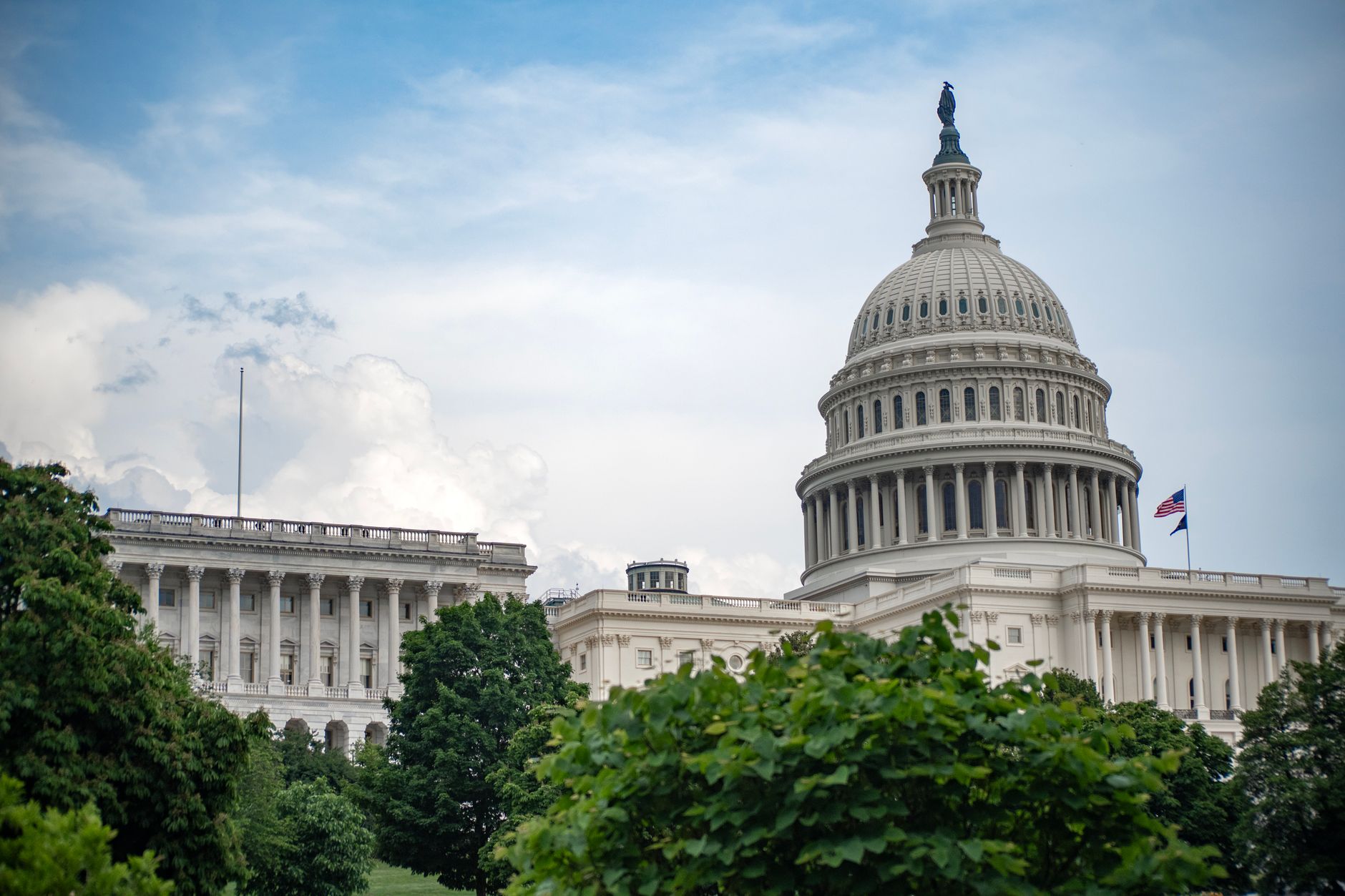
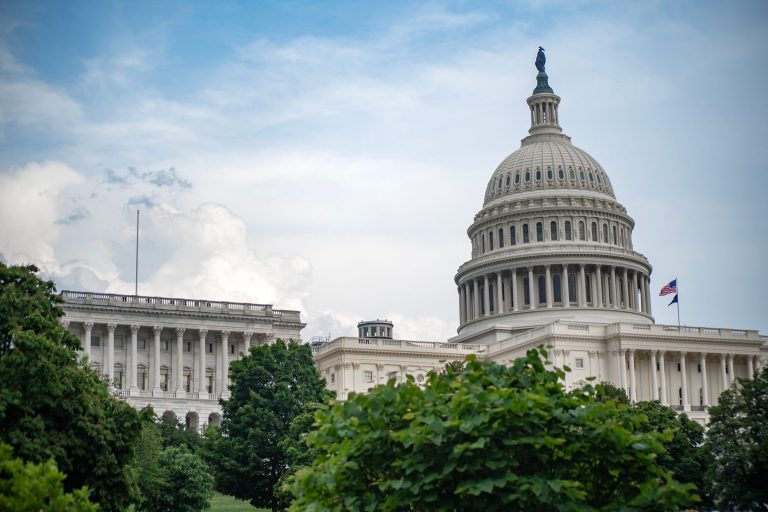
A serving member of the United States Air Force has been detained for a second time, according to a report published August 20, 2026, by KRDO — the latest development in a case that began when the airman was arrested at the US Capitol after calling for President Trump’s impeachment. Whatever the underlying legal details ultimately reveal, the bare facts alone are enough to ignite a fierce national argument: a uniformed service member, political speech, the nation’s most symbolically loaded building, and now a second detention. That combination does not stay quiet for long.
What We Know — And What We Don’t
Responsible journalism requires being precise about the boundaries of confirmed fact, and in this case those boundaries are narrow. The reported facts, as established by the KRDO headline published on August 20, 2026, are these:
- A member of the United States Air Force was previously arrested at the US Capitol.
- That initial arrest was connected to the airman calling for President Trump’s impeachment.
- As of August 20, 2026, the individual has been detained a second time — a distinct event from the first.
- The story was reported by KRDO and distributed nationally via news aggregation.
The phrasing in the headline — “is detained again” — signals that the second detention was current or very recent at the time of publication. Beyond that, the sourcing does not support claims about the airman’s name, rank, unit, age, the precise dates of either detention, the specific charges filed, the location of the second detention, or whether the second event arose from the same legal matter as the first or an entirely separate incident. No official statements from the Air Force, the Capitol Police, the Justice Department, or the White House are available in the sourced material.
The table below maps what is confirmed against what remains unverified from available reporting:
| Factual Element | Status |
|---|---|
| Individual is a US airman | Confirmed |
| Initial arrest occurred at the US Capitol | Confirmed |
| Initial arrest connected to calling for Trump’s impeachment | Confirmed |
| Second detention occurred as of August 20, 2026 | Confirmed |
| Reported by KRDO | Confirmed |
| Airman’s name, rank, and unit | Not confirmed from available sourcing |
| Charges filed in either detention | Not confirmed from available sourcing |
| Circumstances triggering second detention | Not confirmed from available sourcing |
| Official statements from any agency | Not confirmed from available sourcing |
| Court proceedings or bail conditions | Not confirmed from available sourcing |
That is the evidentiary foundation. Every analytical layer built on top of it must be understood as interpretation, not established fact.
Military Service, Political Speech, and Where the Law Draws Lines
Even stripped to its essential confirmed facts, this story lands at one of the most contested legal and ethical intersections in American public life: the rights of military personnel to engage in political expression. It is worth understanding why that intersection is so charged.
Members of the armed forces do not surrender their identity as citizens when they put on a uniform, but they do accept legal constraints on political conduct that do not apply to civilians. The military’s codes of conduct impose real restrictions on how, when, and where service members may express political opinions — particularly in ways that could be construed as bringing the institution into political controversy or undermining the chain of command. An airman openly calling for the impeachment of a sitting commander-in-chief, at the seat of the legislative branch, is precisely the kind of conduct those rules were designed to address.
At the same time, the First Amendment does not evaporate at the base gate, and American legal tradition has long grappled with where military deference to authority ends and protected conscience begins. Civil liberties advocates, military law scholars, and veterans’ organizations have for decades argued about exactly where that line sits — and there is no clean consensus.
The fact that this airman has now been detained a second time adds a dimension that a single arrest would not carry. A second detention implies one of two things: either the individual remained in ongoing legal jeopardy from the first arrest — perhaps through bail conditions, administrative proceedings, or continuing charges — or new conduct occurred that prompted a fresh detention. Either scenario suggests an active, unresolved legal situation, not a case that was quietly disposed of after the initial arrest.
The Political Environment in August 2026
This story does not exist in a vacuum. It emerges on August 20, 2026, against a backdrop of significant political turbulence. Other headlines from the same news cycle tell a story of their own:
- Al Jazeera is reporting that the Pentagon has sent what it describes as a “political loyalty” survey to US allies — a development with profound implications for how the current administration views institutional allegiance.
- The Army is cutting training programs amid a shortfall of billions of dollars, according to ABC News — suggesting the military is simultaneously under financial strain and political pressure.The DNC Chair is publicly insisting he is “not going anywhere,” a sign that internal Democratic politics remain volatile heading into the next cycle.
- President Trump has threatened economic pain for countries that assist Iran, and separately canceled the signing of a bipartisan housing bill — indicating an administration operating in an assertive, uncompromising political posture.
Read together, these headlines paint a picture of a political moment defined by loyalty tests, institutional pressure, and contested authority — precisely the context in which the repeated detention of a service member who publicly opposed the president carries its sharpest charge.
The Two Arguments That Will Define This Story
Predictably, and perhaps inevitably, the confirmed facts of this case will be read through two very different political lenses. Neither can be evaluated without the underlying legal details, but both will shape how the story lands in the public conversation.
The Civil Liberties Case
Those critical of the administration’s political direction will read this story as evidence of a pattern: authorities using legal mechanisms to silence or burden individuals who publicly oppose the president. The argument runs as follows — if a service member can be arrested at the Capitol for calling for impeachment, and then detained again, the message sent to other members of the military and the broader public is a chilling one. Political speech, even when it operates in legally gray territory, has historically been treated with significant caution by American courts and institutions precisely because of the dangers of selective enforcement.
The Pentagon’s reported “political loyalty” survey to allies, as described in separate reporting from Al Jazeera, would almost certainly be cited by those making this argument as context for understanding the institutional climate in which this airman’s case unfolded. Whether that juxtaposition is fair or unfair depends entirely on facts not yet available in current sourcing.
The Law-and-Order Case
Those supportive of the administration or law enforcement would argue the opposite frame entirely. The Capitol is not a public square in the ordinary sense — it is a protected federal complex with its own rules of conduct, and arrests at the Capitol are not inherently political acts. Under this reading, the airman’s detention, and the subsequent re-detention, reflects standard enforcement of applicable laws or military codes, and the political content of the speech is legally irrelevant to whether conduct rules were violated.
Supporters of this position might also note that military discipline exists for structural reasons — an armed forces in which individual members publicly agitate against the commander-in-chief at the seat of government presents real institutional challenges, whatever one’s view of the politics involved.
The critical point is this: from the available sourcing, neither argument can be confirmed or refuted. The legal charges, the specific conduct, the military’s internal response — none of it is established by the available reporting. What is established is that a second detention happened, and that the first was tied to political speech at the Capitol.
Key Dimensions at Stake
Even without the full factual record, the confirmed elements of this case implicate a set of overlapping concerns that are independently significant:
| Dimension | Why It Matters |
|---|---|
| Military free speech | Service members occupy a unique legal space where political expression is constrained but not eliminated |
| Second detention | Signals an unresolved or escalating legal situation, not a closed case |
| Capitol as location | Carries symbolic and legal weight distinct from other public spaces |
| Impeachment as political content | Ties the case directly to the most consequential political opposition available under the Constitution |
| August 2026 political context | Occurs during a period of reported loyalty pressure within federal institutions |
These dimensions do not resolve the legal or factual questions. They explain why, regardless of how those questions are ultimately answered, this story commands serious journalistic attention.
What Comes Next — Four Scenarios
Based solely on the confirmed facts — a second detention as of August 20, 2026 — the following scenarios represent plausible trajectories for this story. They are projections, not predictions, and none can be confirmed from the available sourcing.
- Formal federal charges and prosecution. The second detention could precede or accompany formal criminal charges under federal statutes governing Capitol conduct or military law. If so, a court record would become public, providing the factual foundation that current reporting lacks. Legal proceedings could stretch months or years, making this an ongoing story well into 2027.
- Air Force administrative action running parallel to criminal proceedings. The military services have their own disciplinary mechanisms that operate independently of civilian courts. The Air Force could initiate administrative proceedings — up to and including discharge — regardless of how any criminal case resolves. Those proceedings typically occur outside public view, which may mean significant developments happen with limited press visibility.
- Civil liberties intervention and public legal fight. Organizations focused on First Amendment rights or military law could take up the airman’s case, transforming what might otherwise be a local legal matter into a nationally litigated confrontation over the boundaries of military speech. That kind of intervention would substantially elevate the story’s profile and duration.
- Rapid resolution and relative quiet. It is also possible that the second detention reflects a technical legal development — a bail violation, a paperwork issue, a compliance matter — that resolves quickly and without major legal consequence. Under this scenario, the story would fade from national attention as quickly as it appeared. Given the political climate, this may be the least likely trajectory, but it cannot be ruled out.
A Story That Forces the Question
For readers tracking the broader currents of American political life in 2026, this case connects to something larger than one airman’s legal jeopardy. The same news cycle that produced this story also produced reports of a Pentagon loyalty survey sent to US allies, an Army cutting training for lack of funds, and an administration using economic threats and legislative leverage in ways that test institutional norms. You can follow all of it in our ongoing coverage of US Political News.
The military has always been the institution Americans trust most — and the institution most insulated from political controversy by design. Cases that sit at the boundary of military duty and political conscience have a way of forcing questions that neither side of the political debate can easily answer. What does a democracy owe a service member who speaks out? What does a service member owe an institution — and a chain of command — that demands restraint? Those questions have no easy answers in the best of times. In August 2026, they have even fewer.
It is also worth placing this alongside related pressure points in the current federal landscape. The administration’s Iran calculus has already placed American military personnel in the center of consequential political decisions — decisions that some within the institution may view very differently than the commanders giving the orders. A culture in which expressing that difference publicly leads to repeated detention is a culture in which dissent carries a price. Whether that price is legally justified is precisely what the courts and the public have yet to determine.
A US airman, a Capitol arrest, a second detention, and a political climate defined by loyalty and dissent — the facts on record are few, but the questions they raise are not small ones, and the country has a habit of finding its biggest arguments inside its smallest-seeming cases.
About The Author