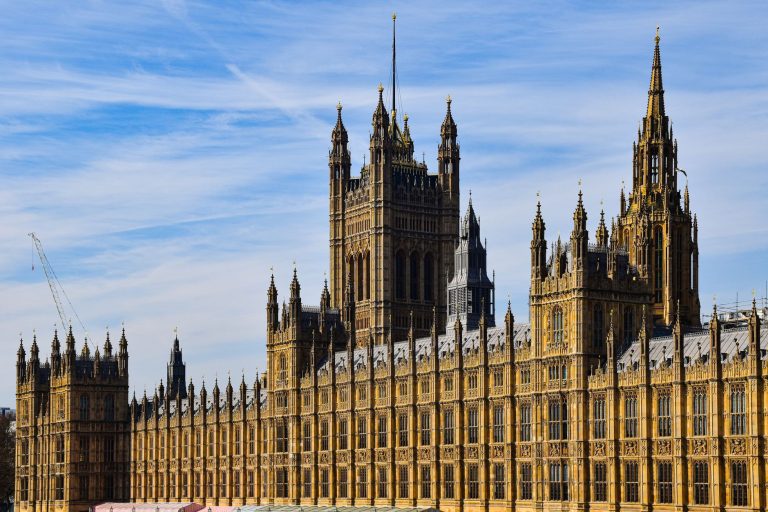
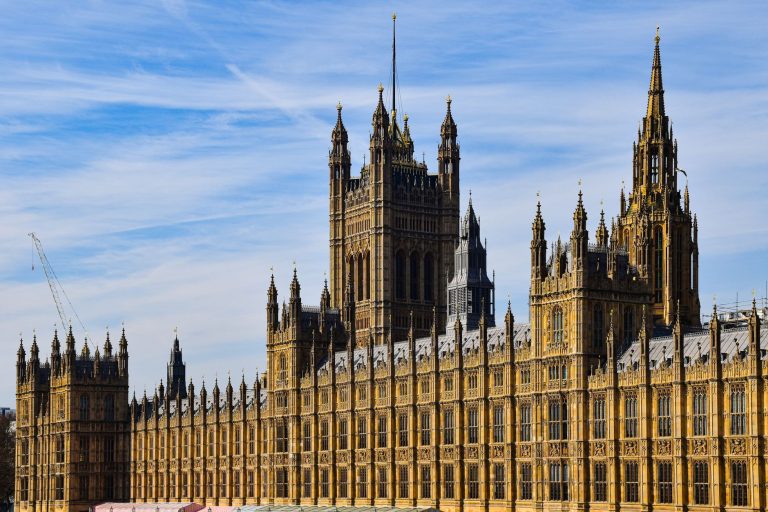
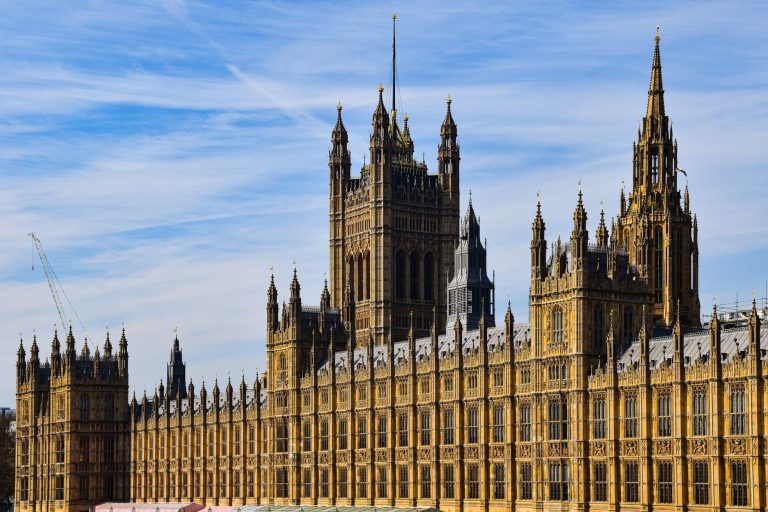
Burnham Promises ‘Circuit Breaker’ Moment for UK as He Becomes PM
 Sophie Gesture
No serving metropolitan mayor in modern British history has walked directly into 10 Downing Street. Until now. On July 20, 2026, Andy Burnham — twice a Labour leadership loser, nine-year Greater Manchester mayor, and the man Westminster insiders spent a decade underestimating — received his appointment from King Charles III and became the United Kingdom’s Prime Minister. He called it a “circuit breaker” moment. Whether it actually breaks anything, or simply trips the same fuse again, is the question that will define the next four years of British politics.
What is genuinely at stake here goes well beyond one man’s improbable career arc. Burnham’s ascent from Manchester mayor to Number 10 represents a fundamental test of whether Labour can hold together a governing coalition while simultaneously fighting off Nigel Farage’s Reform UK on the populist right, managing a restless left demanding bolder climate action, and convincing a sceptical Treasury that devolutionary ambition and fiscal responsibility can coexist. The circuit breaker metaphor is apt. The question is whether he’s the electrician who fixes the problem — or the one who blows the whole grid.
How Labour Lost the Plot Under Starmer and Why Burnham Is Being Asked to Rewrite It
Keir Starmer won the 2024 general election with a landslide that was, in retrospect, more anti-Conservative than pro-Labour. By mid-2026, that distinction had become impossible to ignore. Labour’s poll numbers had softened, Reform UK was consolidating its position as the effective opposition, and Starmer’s managerial, process-driven style had generated exactly the kind of political vacuum that insurgent parties feast on. Burnham’s elevation — whether through resignation, internal pressure, or a leadership contest — is the party’s admission that technocratic centrism wasn’t enough.
The contrast between the two men’s political identities is stark and worth mapping precisely.
| Dimension | Keir Starmer (2024–2026) | Andy Burnham (From July 2026) |
|---|---|---|
| Political style | Managerial, lawyerly, process-driven | Populist, emotionally direct, Northern identity-focused |
| Base | Metropolitan professional voters | Working-class North and Midlands |
| Policy signal | Fiscal caution, institutional reform | Devolution, public ownership of transport |
| Reform UK threat response | Largely ignored it | Directly contests its terrain |
| Westminster vs devolved | Westminster-centric | Nine years running Greater Manchester |
| Previous Labour leadership runs | Won on first attempt (2020) | Lost twice (2010 to Miliband, 2015 to Corbyn) |
Burnham arrives carrying the credibility of genuine delivery outside Westminster. The £2 bus fare cap he pioneered in Greater Manchester is a tangible, popular, working-class policy. His devolved police and fire powers, secured in 2017, made him the first directly elected mayor in England with that kind of reach. These aren’t think-tank abstractions. They’re things people actually experienced. For more on this political landscape, see our UK Political News coverage.
Burnham’s First 48 Hours as PM: The £2 Bus Cap, the Dropped Tax Cut, and the Harper Controversy
Three policy moments defined Burnham’s opening hours in office — two deliberate, one politically explosive.
First: the national £2 bus fare cap. Burnham announced the extension of England’s capped bus fares policy, limiting most bus journeys to £2 across the country. This is direct, visible, working-class economics. It costs the Treasury, but it lands in constituencies where Reform UK has been making its most aggressive gains. The political logic is transparent: own the terrain of everyday affordability before Farage can claim it.
Second: the abandoned income tax cut. Before taking office, speculation had swirled that Burnham might announce a headline income tax reduction as a bold opening signal. He didn’t. Treasury pressure, fiscal rules, and the arithmetic of a government that spent its first two years managing difficult spending decisions all pointed toward caution. The left will be disappointed. The markets won’t be.
Third — and most immediately damaging: the PC Andrew Harper early release confirmation. The government confirmed that Henry Long, Jessie Cole, and Albert Bowers — the three men convicted of killing Thames Valley Police officer PC Andrew Harper in August 2019, dragging him to his death beneath their vehicle — may be eligible for early release under existing sentencing rules. This wasn’t a new policy decision; it’s a consequence of the sentencing framework already in place. But timing matters in politics. Confirming it on day one of a new prime ministership is a gift to every Reform and Conservative MP looking for a law-and-order attack line.
Key developments already requiring Burnham’s attention:
- King’s Speech must be tabled within weeks outlining the full legislative programme
- PC Andrew Harper early release decision faces immediate parliamentary challenge from Reform and Conservative MPs
- Miatta Fahnbulleh’s net zero brief will face its first stress test through North Sea licensing decisions expected by autumn 2026
- Reform UK’s internal financial transparency row — sparked by Lee Anderson’s angry radio clash over Nigel Farage’s personal finances — creates an opening to destabilise the opposition
- Devolution framework for English regions beyond Greater Manchester needs to be legislated, not just promised
Burnham, Fahnbulleh, Farage, and Anderson: The Four People Who Will Define This Parliament
Andy Burnham
Andy Burnham, 56, is the first Prime Minister to arrive in Downing Street having spent his most formative political years outside Westminster entirely. His nine years as Greater Manchester Mayor gave him something almost no serving PM has had in decades: a genuine track record of delivery on a specific territory, with real accountability to real voters who could see results — or not — in their daily lives. His emotional intelligence is unusually high for a frontline politician. He cried publicly over the Hillsborough families’ campaign. He stood on the steps of Manchester Town Hall in 2017 and refused a homelessness settlement he considered inadequate from then-Communities Secretary Sajid Javid — and won. These are not accidents. They are a political style, refined over two decades, that connects authenticity to outcomes. The risk is that the skills required to run a city-region — consensus-building, operational focus, tight messaging — are different from those required to govern a nation of 67 million through an era of geopolitical instability and fiscal constraint. His first speech as Labour leader signalled the new politics he intends to embody, but speeches and governing are different disciplines.
Miatta Fahnbulleh
Miatta Fahnbulleh is the most interesting appointment in Burnham’s cabinet and the one that reveals most about his governing intentions. A former director of the New Economics Foundation, she is an economist of the progressive left who thinks in systems — energy transition, inequality, industrial strategy — not in electoral cycles. Reports suggest she is prepared to push net zero policy further and faster than her predecessor Ed Miliband, who was himself considered ambitious by the standards of his own party. What does “further and faster” mean in practice? Accelerated planning consents for renewable infrastructure. Possible restrictions on new North Sea licensing. A more aggressive stance on home insulation mandates. Each of these creates political friction with different constituencies — business groups, coastal communities, homeowners facing retrofit costs. Fahnbulleh is brilliant. Whether she can translate that brilliance into durable policy without generating a backlash that hands Reform more ammunition is an open and genuinely important question.
Nigel Farage
Nigel Farage remains the gravitational force around which the entire opposition orbits. Reform UK’s rise to become the effective opposition — with the Conservatives still in post-2024 disarray — is the single most significant structural change in British politics since the SNP surge of 2015. But Farage is facing something new: scrutiny of his personal finances, with the Commons Standards Committee examining his affairs, and — crucially — his own MPs beginning to ask questions publicly. Farage has already launched a preemptive attack on the Standards Committee, claiming it won’t judge him fairly — which is the behaviour of a man who knows the scrutiny is coming and is attempting to delegitimise it in advance. That’s a vulnerability. Burnham will be watching closely.
Lee Anderson
Lee Anderson, Reform MP for Ashfield and one of Farage’s most reliably incendiary allies, went on radio and publicly clashed over Farage’s personal financial arrangements. This is not minor. Anderson has been the attack dog, the working-class authenticator, the man Reform deploys when they want to signal their anti-establishment credentials. When he starts asking uncomfortable questions about his own leader’s money on national radio, it suggests the financial scrutiny is causing real internal tension inside Reform. A fractured Reform UK is arguably better for Burnham than a united one.
The Populist Trap: Why Burnham’s Opening Week Raises Questions His Supporters Don’t Want to Answer
Here is the honest version of what just happened. Labour replaced a cautious centrist with a populist who, in his first 48 hours, announced a popular transport subsidy, dropped a promised tax cut under Treasury pressure, and confirmed an early release decision for the killers of a murdered police officer.
That is not a circuit breaker. That is a different set of contradictions.
Burnham’s supporters will argue the bus fare cap is genuine redistribution — affordable, visible, targeted at people Reform has been courting. They’re right that it is. But £2 bus fares don’t build houses, reduce NHS waiting lists, or address the underlying wage stagnation that drives voters toward Farage in the first place. They are a retail politics move dressed up as structural change.
The dropped income tax cut matters more than it seems. Burnham spent his leadership campaign trailing a boldness that would distinguish him from Starmer’s caution. The moment he got to the Treasury’s door, that boldness evaporated. Which raises the question his critics on the Labour left are already asking: is this a genuine ideological departure, or is it Starmerism with a Northern accent and better emotional range?
On climate, the appointment of Fahnbulleh signals ambition. But ambition without legislative muscle is just intent. Ed Miliband had genuine ambition too. He left office with a mixed record because the planning system, the grid infrastructure, and the political economy of energy costs conspired against the pace he wanted. Fahnbulleh will face the same constraints, only now with a public that has grown more sensitive to energy bills, not less.
And the PC Harper early release controversy is a genuine problem, not a media confection. The families of murdered police officers are not a niche interest group. They are exactly the people Burnham claims to be fighting for — working-class communities that expect the state to keep its promises about justice. Confirming those killers may walk early, regardless of the legal reasons, is a political own goal that Reform and the Conservatives will use without mercy.
Four Scenarios That Will Determine Whether Burnham’s ‘Circuit Breaker’ Holds or Breaks
The next six to twelve months will go one of four ways. Each scenario carries distinct implications for Burnham’s survival, Labour’s electoral coalition, and the balance of power between the government and Reform UK.
- Scenario 1 — The Northern Realignment Works: Burnham’s working-class populism — bus fares, devolution, regional investment — begins to bite into Reform’s support in key Midlands and Northern seats. Farage’s financial scandal deepens, Anderson’s public dissent grows, and Reform fragments ahead of the next local elections. Burnham consolidates Labour’s coalition and governs with a credible mandate.
- Scenario 2 — The Fiscal Squeeze Bites Back: Treasury constraints force Burnham to abandon or water down successive policy promises the way the income tax cut was abandoned. The left grows restless. Fahnbulleh’s net zero ambitions get bogged down in planning delays and energy cost politics. Burnham starts to look like Starmer with better rhetoric.
- Scenario 3 — The Justice Backlash Dominates: The PC Harper early release decision becomes a sustained political crisis. Burnham is unable to separate the government’s legal obligations from its moral credibility. Reform weaponises it relentlessly. Burnham’s authenticity brand — the thing that differentiates him most clearly from his predecessor — gets corroded.
- Scenario 4 — Fahnbulleh Becomes the Story: A rapid net zero push triggers business resistance and rising energy costs. The narrative shifts from Burnham’s populist promise to an argument about who is paying for decarbonisation. This is the territory where Reform is most comfortable and where Labour is most vulnerable outside its urban core.
| Scenario | Probability (6-month horizon) | Key trigger event | Reform UK response |
|---|---|---|---|
| Northern Realignment Works | Moderate | Reform financial scandal escalates | Fragmentation, Anderson splits |
| Fiscal Squeeze Bites Back | High | Treasury blocks second major policy promise | “Same Labour, different face” narrative |
| Justice Backlash Dominates | Moderate-High | Harper family goes public, media campaign | Law and order becomes election dividing line |
| Fahnbulleh Becomes the Story | Moderate | North Sea licensing decision triggers backlash | Energy costs become proxy war |
Burnham’s first major policy announcement also included a VAT cut on electricity bills — a signal that he understands energy costs are as politically live as transport costs. Whether that instinct translates into a coherent governing philosophy, or whether it remains a collection of popular retail measures without structural depth, is the question that July 20, 2026 opened but did not answer.
A man who lost the Labour leadership twice and spent nine years building something real in Manchester is now the most powerful politician in the United Kingdom. That story is extraordinary. But power has a way of revealing what ambition conceals — and the circuit Burnham promises to break has been sparking dangerously for years. What happens when the breaker itself becomes part of the system it was meant to reset?
About The Author