Democrats Clash With Trump as Political Tensions Rise on America’s 250th Birthday
 Sophie Gesture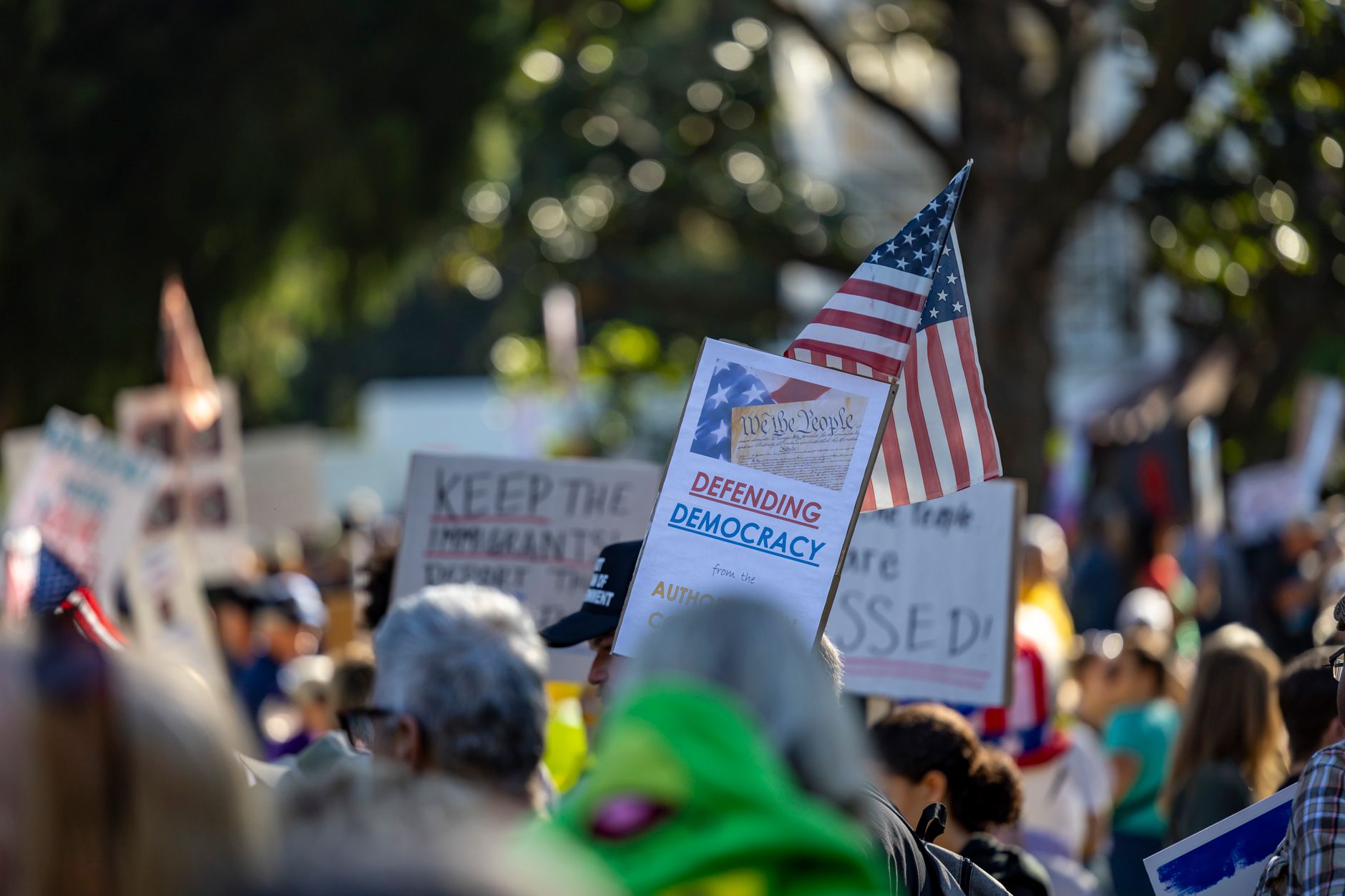
Only 38 percent of Americans believe their country is living up to its founding ideals right now. That single number — measured as the United States turned 250 years old on July 4, 2026 — tells you everything about the moment the nation is living through, and nothing about the fireworks.
What was supposed to be a generational celebration — the Semiquincentennial, 250 years since fifty-six men signed a document declaring that all men are created equal — became instead a proxy war. President Donald Trump used the occasion to tout his administration’s “golden age” and attack communism from the steps of American power. Democrats organized counter-events in swing states and called the whole spectacle a hijacking. Protests erupted in Washington D.C., New York, Los Angeles, and Chicago. The president’s speech ran late. And the world watched a nation that could not agree on what it was celebrating, or whether there was anything to celebrate at all. The political tensions rising on America’s 250th birthday did not arrive suddenly — they have been building for decades, and July 4, 2026 was merely where they detonated most visibly.
From 70% Pride to 38%: How America’s National Identity Collapsed Between 2003 and 2026
The 1976 Bicentennial was not a serene moment either. America was two years out of Watergate, one year out of Vietnam, and deeply suspicious of its institutions. Yet over 33 million people attended national events that summer. National pride, however battered, held. The country gathered. Compare that to 2026: Gallup found that in 2003, 70 percent of Americans described themselves as “extremely proud” to be American. By 2023, that number had cratered to 39 percent. By 2026, the fracture had widened further. The ideological and identity-based sorting that political scientist Frances Lee of Princeton has documented — where polarization is no longer merely about policy but about who you fundamentally are — had done its work.
The comparison between 1976 and 2026 is instructive, but historian Heather Cox Richardson of Boston College argues the more honest parallel is 1856, not 1976. The country is not experiencing a post-crisis hangover. It is in the middle of something constitutional and existential. That framing is not hyperbole — it is a reading of the structural data.
| Milestone Year | National Pride (“Extremely Proud”) | Political Climate | Prevailing Tension |
|---|---|---|---|
| 1976 (Bicentennial) | ~65% (est.) | Post-Watergate, post-Vietnam | Institutional distrust, but shared civic ritual |
| 2003 | 70% | Post-9/11 unity wave | Brief national cohesion, pre-Iraq fracture |
| 2023 | 39% | Post-January 6th, pandemic fallout | Identity-based polarization, deepening |
| 2026 (Semiquincentennial) | ~38% | Trump second term, Democratic resistance | Constitutional crisis framing, party counter-programming |
Sociologist Robert Putnam, whose landmark work Bowling Alone tracked the collapse of civic associations from the 1960s onward, has long warned that the social infrastructure buffering political conflict — the Rotary clubs, the bowling leagues, the neighborhood associations — has largely disintegrated. What remains is raw partisanship with nothing to soften the edges. On July 4, 2026, the edges were very sharp.
Trump’s Delayed Speech, Democratic Counter-Events, and the Battle Over July 4th’s Meaning in Real Time
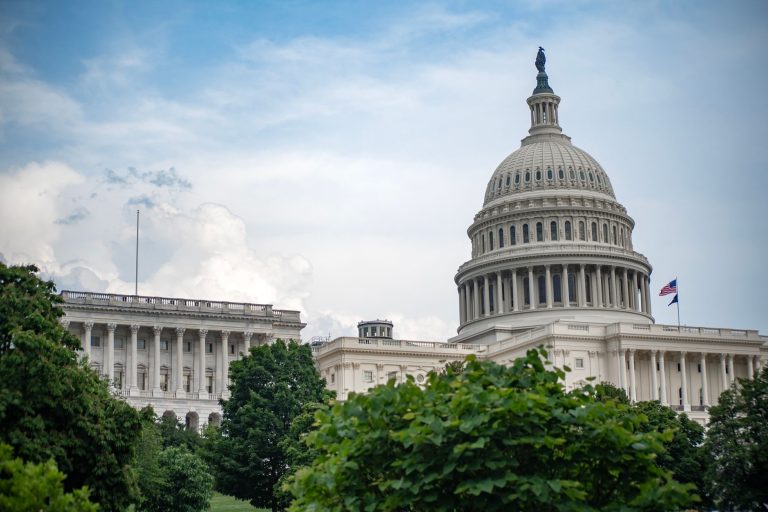
The day unfolded in competing narratives, almost scripted in their opposition. Trump’s July 4th address — delivered from the National Mall with the full military pageantry that has been a signature of his political aesthetic since the 2019 “Salute to America” — ran late. The delay caused logistical frustration among attendees and trended nationally on social media within hours, adding a chaotic undertone to what the White House had billed as a triumphant national moment. Washington D.C. had been remade into a maze of fences and guard members in the days preceding the celebration — less a city preparing for a birthday party and more one bracing for confrontation.
When the speech finally came, its core arguments were recognizable to anyone who has followed Trump’s rhetorical playbook since 2015:
- The “golden age” framing — America is not in decline but in renaissance, and the evidence is Trump’s own presidency.
- Anti-communism attacks — a rhetorical device that simultaneously targets foreign adversaries like China and Cuba while coding domestic progressives as ideological enemies of American liberty.
- Economic nationalism — manufacturing revival, tariff victories, and sovereign renewal as the defining achievements of the moment.
- Military celebration — tanks, flyovers, and uniformed personnel as the visual grammar of patriotism, a frame Democrats explicitly rejected as exclusionary theater.
Meanwhile, Democrats organized counter-programming across key swing states. House Minority Leader Hakeem Jeffries anchored messaging around “reclaiming” democratic values. Events in Pennsylvania, Michigan, Wisconsin, and Arizona framed the 250th not as a triumph but as a moral reckoning — with voting rights under pressure, immigration enforcement accelerating, and executive power expanding in ways the opposition characterized as authoritarian drift. Multiple protest demonstrations in Washington D.C., New York, Los Angeles, and Chicago drew comparisons in media coverage to the 1970 “Hard Hat Riots,” an earlier era when July 4th-adjacent politics curdled into street-level confrontation.
Trump, Jeffries, Schumer, Vance, and Ocasio-Cortez: Five Voices Pulling America’s Birthday in Five Directions
The 250th anniversary did not have one story. It had five simultaneous, mutually exclusive stories, each told by someone with standing, a microphone, and no interest in the other’s version.
Donald Trump
Trump, inaugurated for his second term on January 20, 2025, treated July 4, 2026 as a personal validation event. The “golden age” phrase is not incidental — it is the load-bearing beam of his second-term political identity. Every speech, every policy announcement, every confrontation with the opposition has been framed inside this narrative of national renewal through his leadership. The July 4th address was the apotheosis of that framing, delivered on the most symbolically resonant day available. The delayed start was inconvenient. The substance was entirely on brand.
Hakeem Jeffries
Jeffries, the House Minority Leader from New York, has been methodical in building a counter-narrative that is less about rage and more about democratic legitimacy. His 250th messaging positioned Democrats as the inheritors of the founding ideals Trump was, in Jeffries’s framing, rhetorically strip-mining. It is a careful argument — one designed for persuadable voters in suburban districts — but it risks being too calibrated for a moment that may demand more urgency.
Chuck Schumer
Schumer, Senate Minority Leader, was blunter. He called Trump’s framing of the anniversary “a hijacking of history” — a phrase that traveled further on social media than most of his recent floor speeches. Schumer has been searching for language that can cut through the ambient noise of the Trump era, and “hijacking of history” is sharper than his usual register.
JD Vance
Vice President JD Vance appeared at ancillary events amplifying the “golden age” message, his role essentially to extend Trump’s geographic reach on a day when the president could only be in one place. Vance has become the ideological fluency arm of the administration — capable of making nationalist arguments in the register of intellectual seriousness in ways Trump does not attempt.
Alexandria Ocasio-Cortez
Ocasio-Cortez was among the most vocal Democratic critics, and her argument was the most structurally radical: that the celebration rang hollow amid active fights over immigration enforcement, voting rights erosion, and executive overreach. Her framing — that the 250th is a reminder of promises deliberately broken, not accidentally deferred — speaks to a Democratic base that is increasingly impatient with incremental messaging. The defeat of 15-term incumbent Diana DeGette by democratic socialist Melat Kiros in Colorado signals that Ocasio-Cortez’s ideological lane inside the Democratic Party is widening, not narrowing.
Why Both Parties Are Exploiting America’s Birthday Instead of Reckoning With It
Here is the uncomfortable truth neither side wants to sit with: both parties are treating the 250th anniversary of American independence as a fundraising and mobilization opportunity, dressed up in the language of principle.
Trump’s “golden age” narrative is not a historical argument. It is a brand. It papers over real economic anxieties, institutional decay, and geopolitical uncertainty with a confident assertion that everything is working because he is in charge. The anti-communism framing is particularly cynical — it is designed less to illuminate a genuine ideological threat than to activate a cultural grievance reflex in the Republican base while delegitimizing domestic opposition wholesale. Calling your political opponents communists on the 250th anniversary of a liberal democratic revolution is not an argument. It is a weapon.
But Democrats are not innocent here. The counter-programming strategy — staging competing events, issuing press releases about “reclaiming” democratic values — is itself a form of political exploitation. The question worth asking is whether any senior Democratic figure used July 4, 2026 to genuinely address the hard structural questions about why national pride has collapsed from 70 percent to 38 percent in just over two decades. The answer, largely, is no. The Democratic message on the 250th was about Trump. Not about the failures of governance — across administrations of both parties — that produced the civic despair the numbers reflect.
The centrist and independent critique — that both parties are weaponizing the anniversary for base activation — is correct. But it is also insufficient, because it implies a symmetry that does not fully exist. One party controls the executive branch and is using the machinery of the state to stage a partisan celebration. That is a categorically different act than opposition counter-messaging. Historians warn, and they are right to warn, that politicizing national commemorations risks permanently degrading the few remaining moments of shared civic ritual. July 4th used to be something you could attend regardless of how you voted. That era is ending, if it has not already ended. For broader context on how election integrity concerns compound this partisan rupture, consider how attacks on electoral trust have deepened the suspicion each party holds of the other’s legitimacy.
Four Scenarios for Where the Political Battle Over America’s 250th Leads by November 2026
The July 4th clash is not a discrete event. It is a prelude. The 2026 midterm elections are scheduled for November 3, 2026 — four months after the Semiquincentennial — and the battle over the anniversary’s meaning will directly shape the electoral terrain. Here is what the realistic range of outcomes looks like.
- Scenario 1 — Democratic Mobilization Succeeds: Democrats successfully channel 250th-anniversary discontent into voter registration and turnout operations in suburban and college-educated districts. The “hijacking of history” framing resonates with persuadable voters who are not ideological but are uncomfortable with the partisan capture of national symbols. Democrats net 15-25 House seats and reclaim the chamber.
- Scenario 2 — Republicans Nationalize on the Economy: The “golden age” narrative holds among working-class voters in the Rust Belt and Sun Belt who have seen manufacturing investment return under Trump’s tariff regime. Democrats’ counter-programming reads as coastal-elite grievance. Republicans hold the House and expand their Senate majority.
- Scenario 3 — Third-Party Fracture Accelerates: The spectacle of a deeply divided 250th anniversary accelerates disaffection among independents. Third-party and independent candidates, energized by the same disgust driving developments like Tucker Carlson’s declared interest in building a third party, draw enough votes in key districts to scramble traditional predictions. Neither major party achieves its mobilization targets cleanly.
- Scenario 4 — International Pressure Reshapes Domestic Politics: NATO allies and Asian partners, watching American dysfunction at its 250th birthday, begin hedging on security commitments. A foreign policy crisis — with China, in the Middle East, or in Eastern Europe — forces both parties off their domestic messaging tracks and reshapes the midterm environment around national security rather than cultural symbolism.
| Scenario | Key Driver | Likely Midterm Outcome | 2028 Implication |
|---|---|---|---|
| Democratic Mobilization Wins | Suburban disgust with partisan nationalism | Dems +15-25 House seats | Strong Democratic primary field, unified message |
| GOP Golden Age Holds | Working-class economic satisfaction | GOP holds House, gains Senate | Trump legacy candidates dominate 2028 GOP field |
| Third-Party Fracture | Independent voter disgust with both parties | Scrambled results, split districts | Viable third-party presidential run in 2028 |
| Foreign Policy Crisis | International instability exploits American division | Nationalized security debate | Unpredictable — advantages incumbent or demands new leadership |
For ongoing coverage of how these dynamics continue to develop, the US Political News section tracks the full arc of these stories as they evolve toward November.
Two hundred and fifty years. Thirty-eight percent. Those two numbers sit side by side like an indictment. The question America could not answer on its birthday — whose country is this, and what is it actually for — will not get easier to answer in the four months before voters go to the polls. It will get harder. And everyone betting that the other side will simply exhaust itself before then is making a wager the founders, for all their contradictions, would have recognized as exactly the kind of complacency that ends republics.
About The Author