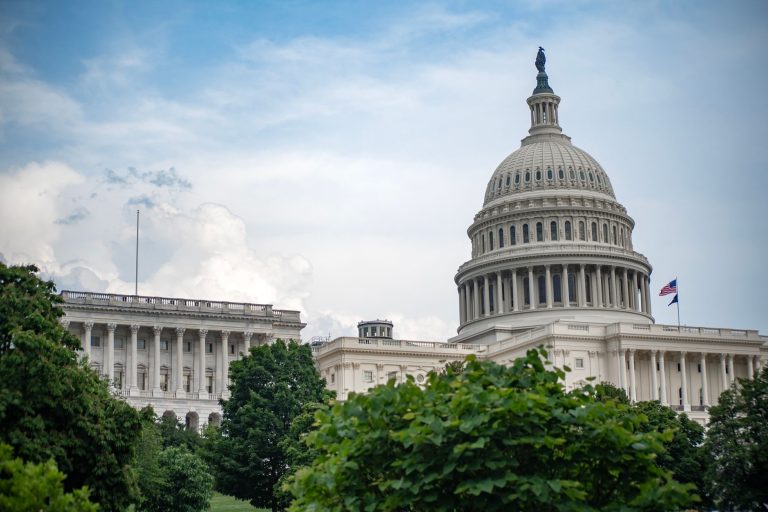
Democrats Clash With Trump as Political Tensions Rise on America’s 250th Birthday
 Sophie Gesture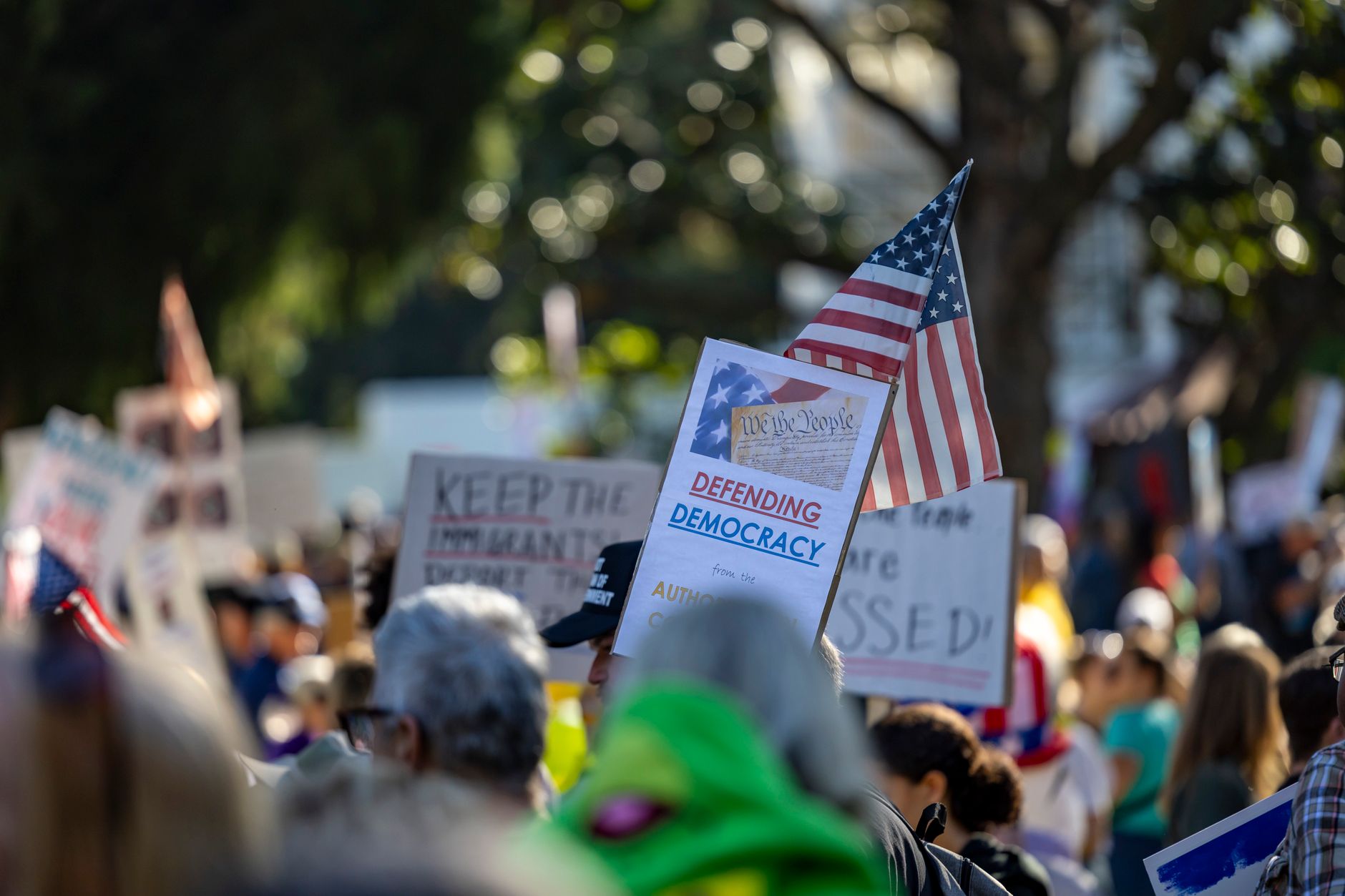
Only 38 percent of Americans believe their country is living up to its founding ideals right now. On the day the nation turned 250, that number wasn’t a pollster’s footnote — it was the entire story.
What was supposed to be a moment of rare national unity became something else entirely. The Semiquincentennial — America’s 250th birthday on July 4, 2026 — arrived not as a celebration but as a referendum. Two irreconcilable versions of the American story collided in real time, with President Donald Trump on one side claiming a golden age and Democrats on the other insisting the republic itself is under strain. The stakes aren’t rhetorical. With the 2026 midterm elections roughly four months out, every speech, every counter-event, every soundbite from this Independence Day was aimed squarely at November.
From Watergate’s Shadow to MAGA’s Triumph: How America’s Milestone Birthdays Became Battlegrounds
The last time America marked a major milestone birthday, the country was in crisis. The 1976 Bicentennial unfolded just two years after Richard Nixon resigned in disgrace — President Gerald Ford had literally told the nation it was emerging from a “long national nightmare.” Celebrations happened, fireworks flew over Philadelphia, tall ships sailed into New York Harbor, but the underlying mood was one of a country trying to convince itself it was okay. Sound familiar?
The comparison being drawn in 2026 is not accidental. Democratic strategists and progressive commentators have spent months explicitly invoking 1976, asking a pointed question: has America learned anything from its cycles of democratic crisis, or is it simply repeating them at higher volume? The question is uncomfortable because the parallels are uncomfortably close — an executive branch stretching its authority, institutions under pressure, a public deeply skeptical that the system works for them.
What’s different in 2026 is the ideological temperature. In 1976, the opposition was disorganized and demoralized. In 2026, it is radicalized and energized — in two directions simultaneously. Democratic socialist Melat Kiros defeated 15-term incumbent Diana DeGette in Colorado’s House primary, a seismic result that signals the left’s insurgency inside the Democratic Party is not a fluke but a pattern.
| Milestone Birthday | President | National Mood | Primary Political Conflict | “Wrong Track” Polling |
|---|---|---|---|---|
| 100th (1876) | Ulysses S. Grant | Reconstruction fatigue, corruption scandals | North vs. South, Reconstruction collapse | N/A |
| 200th (1976) | Gerald Ford | Post-Watergate, post-Vietnam exhaustion | Democratic reform vs. Republican restoration | ~62% |
| 250th (2026) | Donald Trump | Deep polarization, democratic anxiety | MAGA nationalism vs. progressive democratic socialism | ~56% |
Trump’s Delayed Speech, Democratic Counter-Events, and the Battle Over What “Stronger Than Ever” Actually Means
The speech was late. That matters more than it sounds. On a day choreographed down to the minute — a day that presidents have used for decades to project strength and national cohesion — Trump’s July 4th address was delayed, an unusual stumble that handed Democrats an immediate and easy talking point about competence and symbolism. When the speech finally came, Trump declared the United States “stronger than ever” and touted America’s entry into what he called a “golden age.”
He attacked communism. Repeatedly. It was Cold War framing applied to a 2026 political landscape, deliberately blurring the line between foreign adversaries — Cuba, Venezuela, China — and domestic Democratic opponents. The rhetorical strategy was transparent: if you oppose Trump, you’re adjacent to communism. It’s a frame that has worked for MAGA before. Whether it still works against a Democratic Party that has visibly shifted leftward is the central question heading into November.
Democrats didn’t sit quietly. Key actions on July 4th included:
- Senate Minority Leader Chuck Schumer (D-NY) issued a statement framing Trump’s “golden age” rhetoric as a betrayal — not a fulfillment — of what the Founders actually built, emphasizing democratic accountability and separation of powers.
- House Minority Leader Hakeem Jeffries (D-NY) organized counter-messaging events in swing districts, specifically targeting voters in Pennsylvania, Wisconsin, and Michigan who will decide the Senate map in November.
- Rep. Alexandria Ocasio-Cortez (D-NY) used the anniversary to call for a “second founding” — deeper democratic reform including abolishing the Electoral College and expanding voting rights — framing the 250th as a moment for structural reckoning rather than celebration.
- Sen. Bernie Sanders (I-VT, caucusing with Democrats) held rallies in three states, drawing explicit connections between economic inequality in 1776 and economic inequality in 2026, arguing the revolution remains unfinished.
The visual contrast was stark. Trump’s event projected triumphalism. Democratic events projected urgency. As one analysis noted, Trump effectively hijacked America’s 250th birthday and turned it into a theatre of the absurd — a MAGA rally wrapped in founding-era iconography. For more on the broader dynamics driving these tensions, see our US Political News coverage.
Trump, Schumer, Jeffries, Ocasio-Cortez, and Bannon: Five People Who Defined July 4, 2026
Donald Trump
Trump arrived at the 250th birthday having returned to the White House on January 20, 2025, with a mandate from his base and a Republican Congress — narrow majorities in both chambers — willing to follow his lead. His July 4th speech was a campaign document dressed as a presidential address. The “golden age” framing positions Trumpism as the natural heir of the American founding: strong borders, economic nationalism, anti-globalism, anti-communism. Approval ratings hovering between 43 and 47 percent depending on the pollster tell you this argument is landing with his coalition and nearly no one else. The delayed speech was an unforced error on a day when optics were everything.
Chuck Schumer and Hakeem Jeffries
Schumer and Jeffries represent the institutional Democratic response — measured, legally grounded, midterm-focused. Their messaging on July 4th was disciplined: Trump is dismantling democratic norms, the Founders would be appalled, vote in November. It’s a message calibrated for persuadable suburban voters in Pennsylvania and Wisconsin, not for the progressive base that wants something louder and more structural. The tension between what Schumer and Jeffries are selling and what Ocasio-Cortez and Sanders are selling is the Democratic Party’s defining internal crisis heading into November.
Alexandria Ocasio-Cortez
AOC’s July 4th framing — “second founding,” structural reform, the revolution unfinished — is exactly the kind of rhetoric that energizes 29-year-old housing justice organizers in Colorado primaries and terrifies Democratic strategists trying to win Senate seats in Arizona. She is simultaneously the party’s greatest mobilization asset and its most significant electoral liability in purple states. The question is which effect dominates in November.
Steve Bannon
Steve Bannon — once imprisoned on contempt charges, pardoned by Trump in 2024, now back as an influential nationalist voice — used the 250th to make a striking observation: “the old politics are gone,” he said, pointing specifically to a rising democratic socialist wave inside the Democratic Party. This is not Bannon sounding alarm. This is Bannon identifying an asset. MAGA strategists believe a hard-left Democratic Party will alienate centrist voters and consolidate the MAGA coalition through 2026 and beyond. His acknowledgment of the socialist wave signals that Republicans are not just watching it — they’re quietly rooting for it.
Why Both Parties Are Weaponizing the Founders While Ignoring What the Founders Actually Said
Here is something neither side will admit: both the MAGA right and the progressive left are doing violence to American history in service of present-day politics, and the 250th birthday brought this hypocrisy into sharp relief.
Trump’s “golden age” framing treats the founding as a fixed point of perfection to be restored — conveniently erasing the fact that the Founders themselves were consumed by disagreement about executive power, the dangers of faction, and the fragility of self-governance. Alexander Hamilton and Thomas Jefferson were at each other’s throats. James Madison warned in Federalist No. 51 about the very concentration of executive authority that critics say Trump embodies. Invoking the Founders to justify unchecked presidential action is, to put it plainly, historically illiterate.
But the progressive response has its own problems. The “second founding” rhetoric from AOC and Sanders implies the original founding was so compromised — by slavery, by the exclusion of women, by property requirements for voting — that it needs to be replaced rather than reformed. That’s a legitimate historical critique. It is a terrible electoral message in a country where roughly 55 to 58 percent of people tell pollsters they’re on the wrong track but still wave the flag on July 4th. You don’t win Pennsylvania by telling its voters their founding documents are fundamentally broken.
The specific failures each side needs to own:
- Republicans are using anti-communist rhetoric to delegitimize domestic political opposition — a tactic with a dark American history that ends badly for democratic norms every time it’s deployed.
- Establishment Democrats offer procedural objections to Trump’s executive overreach without a compelling affirmative vision of what they’d actually do with power — a message vacuum the socialist wing is filling, for better or worse.
- Progressive Democrats are winning primaries in safe blue districts while potentially making the party unelectable in the four swing states — Pennsylvania, Wisconsin, Michigan, Arizona — that will determine Senate control in November.
- Both parties are performing patriotism on July 4th while the actual architecture of American democracy — campaign finance, gerrymandering, the filibuster, electoral integrity — goes unreformed. Trump’s ongoing efforts to target not just Georgia’s vote but trust in elections broadly represent precisely the kind of systemic erosion that milestone birthday speeches never address.
Four Ways the 2026 Midterms Could Be Reshaped by the Battle Over America’s 250th Birthday
The July 4th clash between Democrats and Trump was not just symbolic. It was the opening salvo of a four-month sprint to November. Here is how the dynamics established on America’s 250th could determine who controls the Senate — and what America looks like at 251.
- Scenario 1 — The Socialist Surge Backfires: Progressive primary victories like Kiros in Colorado inspire more insurgent candidates in purple-district primaries. Republicans hammer “socialist” attacks relentlessly through the summer. Centrist Democratic voters in Pennsylvania and Wisconsin stay home or split their tickets. Republicans hold the Senate and expand their House majority. Bannon’s bet pays off.
- Scenario 2 — Democratic Anger Overrides Ideological Concerns: The 250th birthday clash, combined with ongoing executive overreach and economic anxiety, generates record Democratic turnout across ideological lines. The “wrong track” number — sitting at 56 percent — translates into anti-incumbent energy that sweeps out Republican senators in close races. Democrats retake the Senate narrowly.
- Scenario 3 — A Third-Force Disruption: Dissatisfaction with both MAGA triumphalism and progressive radicalism creates space for independent and third-party candidates in key races, siphoning votes from both parties in unpredictable ways and producing a chaotic Senate map where no majority is clean.
- Scenario 4 — Institutional Fatigue Produces Low Turnout: Voters exhausted by two years of relentless political combat simply disengage. Turnout drops below 2022 midterm levels. Republicans, with a more disciplined ground game in key states, benefit from the enthusiasm gap. The “golden age” coalition holds.
| Scenario | Key Variable | Senate Outcome | Likelihood (Mid-2026 Assessment) |
|---|---|---|---|
| Socialist Surge Backfires | Progressive primary wins in purple districts | Republicans hold or expand majority | Moderate |
| Democratic Anger Wins | High anti-incumbent turnout | Democrats retake Senate, 51-49 | Moderate |
| Third-Force Disruption | Independent candidates in AZ, PA, WI | Split/chaotic, no clean majority | Low-Moderate |
| Institutional Fatigue | Depressed Democratic turnout | Republicans consolidate power | Low-Moderate |
The Senate seats that matter most are not abstractions. Pennsylvania, Wisconsin, Michigan, and Arizona are the actual terrain where the July 4th rhetorical battle will be settled in votes. Every “golden age” speech and every “second founding” rally is being calibrated — consciously or not — for those four states and their very specific electorates.
America at 250 did not get the birthday it might have deserved. It got the birthday it has earned — fractious, loud, and unresolved, with both sides claiming the Founders’ blessing and neither earning it. The next 250 years will be built on what happens in November. That is either a warning or a rallying cry, depending on which America you’re living in.
About The Author