‘A Literal Coverup’: What Is the Kennedy Center Hiding Behind Those Tarps?
 Sophie Gesture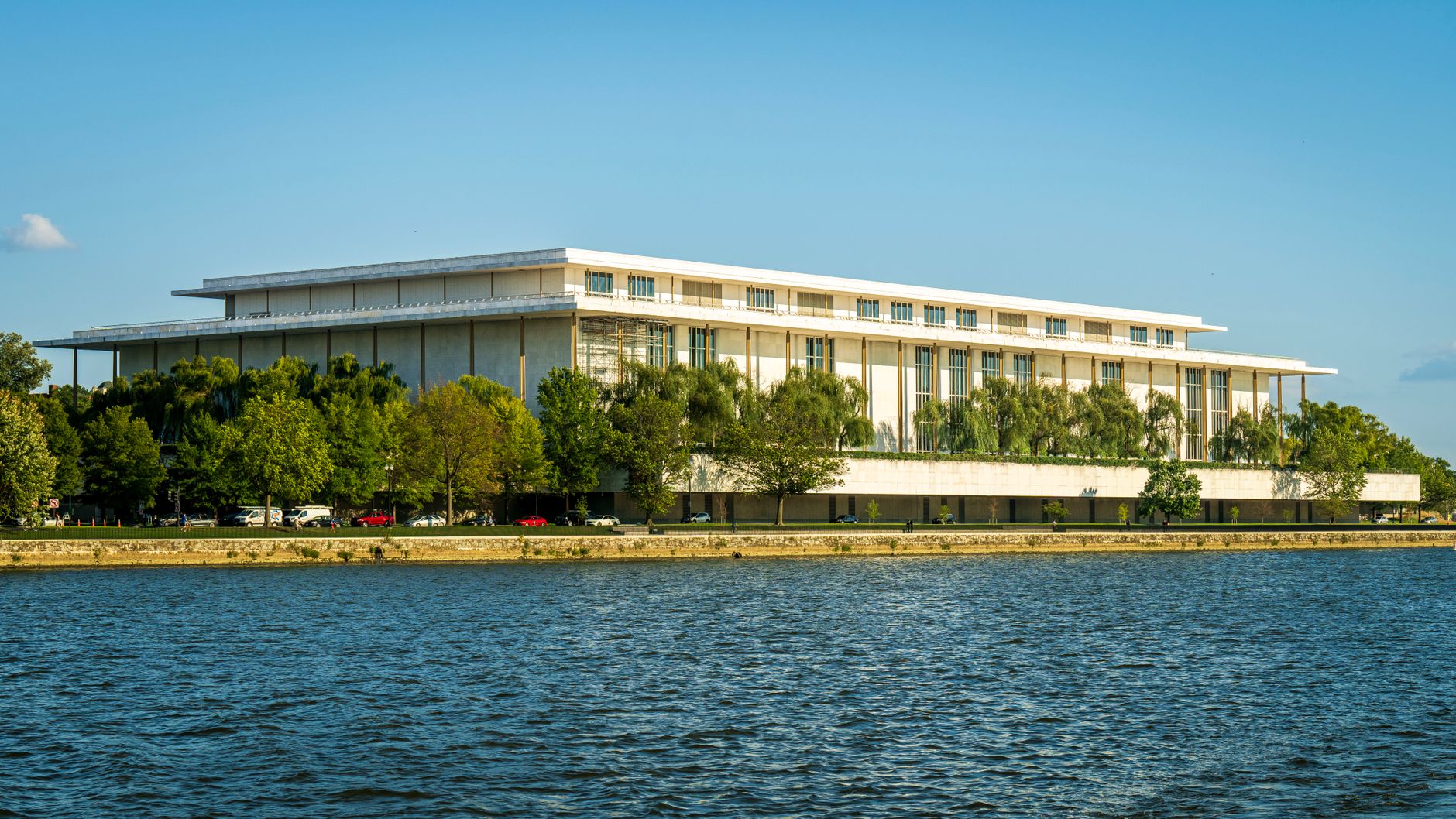
Large blue tarps have appeared draped over sections of the John F. Kennedy Center for the Performing Arts — one of the most photographed, most symbolically loaded cultural landmarks in Washington, D.C. — and the people responsible for the building cannot seem to agree on why.
This isn’t a minor maintenance story. It sits at the exact intersection of public accountability, Trump administration control over federal cultural institutions, and a broader pattern of keeping Americans from seeing things their tax dollars have paid for. The tarps are physical. The questions they raise are not.
How a $14 Million Reflecting Pool Makeover Became a Scandal Without a Paper Trail
The Kennedy Center’s troubles didn’t begin with the tarps. They began with the reflecting pool adjacent to the Lincoln Memorial — 2,029 feet of still water that underwent a $14 million federally funded renovation, only to emerge with what Trump himself acknowledged were “real problems.” His explanation? Vandals. His evidence? Thin to nonexistent. His administration then claimed five people had been arrested in connection with the damage — a claim made without any supporting documentation, arrest records, or named suspects released to the press.
That pattern — announce a dramatic claim, provide zero receipts, move on — is precisely the context in which the Kennedy Center tarps must be understood. This is not an isolated case of construction opacity. It is a sequel.
| Timeline Event | Date | Official Explanation | Evidence Provided |
|---|---|---|---|
| $14M reflecting pool renovation completed | Early 2026 | Successful modernization | Minimal public documentation |
| Trump acknowledges “real problems” with pool | Spring 2026 | Vandalism by outside actors | None publicly released |
| Five arrests claimed by Trump | June 2026 | Criminal accountability | No names, charges, or records released |
| Tarps appear at Kennedy Center | June 2026 | Unspecified construction/repairs | No official statement issued |
| Press inquiry into tarp purpose | June 19, 2026 | No comment / ongoing work | No timeline or contractor named |
The table above should alarm anyone who believes in basic government transparency. Four consecutive instances of public money, public buildings, and zero public explanation. That’s not a coincidence. That’s a communications strategy.
Blue Tarps, No Answers: What Is Actually Happening at the Kennedy Center Right Now
As of June 19, 2026, large construction tarps have been erected over visible sections of the Kennedy Center facade and surrounding areas. Journalists who attempted to get a clear answer about what specifically is being covered — and why — received no substantive response from Kennedy Center management or from Trump administration officials who now exercise significant influence over the institution.
Here is what is known, what is claimed, and what remains deliberately obscured:
What is confirmed:
- Tarps are physically present and visible to the public on Kennedy Center grounds
- No official press release or public statement has been issued explaining the scope or purpose of the work
- No contractor names, project timelines, or cost figures have been made public
- The Kennedy Center is currently operating under a board structure significantly reshaped by Trump appointees since early 2025
- The phrase “a literal coverup” has been used by critics — including Democratic lawmakers — to describe both the physical tarps and the absence of explanation
What is claimed but unverified:
- That the tarps are related to routine maintenance or renovation work
- That the project is planned and above-board
- That there is nothing unusual about the timing or the secrecy
What nobody is answering:
- How much is this project costing taxpayers?
- Who authorized it?
- Why was there no public notice?
- What is underneath those tarps right now?
For ongoing coverage of related transparency failures across federal cultural institutions, see our US Political News section.
Trump, His Kennedy Center Board, and the Silence Machine: Three Power Centers Pulling the Strings
Understanding who controls information about the Kennedy Center requires understanding who controls the Kennedy Center itself. That answer has changed dramatically since January 2025.
Donald Trump
Donald Trump has treated the Kennedy Center as a personal cultural project since returning to office. He forced out the previous leadership structure, installed allies on the board, and has attended Kennedy Center events in ways that blur the line between presidential patronage and direct operational control. When asked about the reflecting pool damage, Trump went straight to the vandalism narrative — loudly, confidently, and without documentation. That same instinct almost certainly shapes how the Kennedy Center’s communications shop is handling the tarp story: say nothing, or say something vague, and wait for the news cycle to move.
The Kennedy Center Board
The reconstituted Kennedy Center board — now stacked with Trump loyalists — has effectively transformed the institution’s public communications posture. Where the pre-2025 Kennedy Center was known for relatively transparent operations and a robust public-facing press operation, the current board has adopted a bunker mentality on anything that could be construed as embarrassing. The tarps are embarrassing. They look bad. They invite exactly the kind of scrutiny this board does not want.
Congressional Democrats
Congressional Democrats, particularly members of the House Oversight Committee, have begun asking pointed questions. The “literal coverup” framing didn’t emerge from nowhere — it came from lawmakers who want answers about what federal money is being spent on at a building that belongs to the American public. So far, those questions have generated precisely the response Democrats expected: stonewalling. Which, of course, only makes the story bigger.
Why Both the “It’s Just Construction” Defense and the Outrage Industrial Complex Are Missing the Point
Let’s be honest about both sides of this debate, because neither is fully serving the public interest.
The Trump administration’s defenders want you to believe this is a nothingburger — tarps go up at construction sites, renovations happen, this is what building maintenance looks like. Fine. Except that argument requires you to ignore the totality of the pattern. You would have to believe that the $14 million reflecting pool mess was just bad luck. That the five arrests with no supporting documentation was just a communications oversight. That the Kennedy Center tarps with no explanation is just bureaucratic slowness. At what point does a pattern become a policy?
On the other side, some critics are so eager to frame everything through a Watergate lens that they risk crying wolf on a story that may, in fact, have a mundane explanation. If the tarps turn out to cover routine HVAC work or facade repointing, the overclaiming will make it harder to hold this administration accountable on the issues that genuinely matter.
Here is what actually matters, stripped of both the spin and the outrage:
- The Kennedy Center is a federally funded public institution. Its operations are not a private matter.
- Public money spent on construction requires public disclosure. Full stop.
- The absence of explanation is itself a choice. Silence at a government institution is never accidental.
- The timing matters. These tarps appeared during a period of intense scrutiny of Trump administration spending on cultural monuments, including the reflecting pool fiasco.
- Precedent matters. If the administration can cover a national landmark in tarps without explanation, what else can it conceal?
The real story here isn’t whether the tarps are hiding something dramatic. The real story is that we’ve reached a point where a major American cultural institution, funded by taxpayers, can physically obscure parts of itself and offer no explanation — and that this has become normalized enough that it takes a news cycle to generate even basic questions.
Four Scenarios for How the Kennedy Center Tarp Story Ends — and What Each One Means
The resolution of this story could take several shapes. Each one carries different implications for accountability, for the Kennedy Center’s future, and for how the Trump administration manages public institutions going forward.
- Scenario 1 — The Mundane Reveal: The tarps come down, the administration points to completed facade repairs or waterproofing work, and claims vindication. This is the best-case scenario for the White House — but it doesn’t erase the accountability failure. The public still had no advance notice, no cost disclosure, and no contractor transparency. Winning the specific fight doesn’t mean winning the transparency argument.
- Scenario 2 — Congressional Subpoenas Force Disclosure: House Oversight Democrats escalate their inquiries into formal document requests or subpoenas. The Kennedy Center board is forced to produce contracts, work orders, and authorization documents. What emerges may be mundane — or it may reveal that the work was authorized through channels that bypassed standard federal procurement procedures. Either way, the political damage to the administration accumulates.
- Scenario 3 — A Whistleblower Surfaces: Someone inside the Kennedy Center or one of its contractors speaks to reporters. Given the current administration’s treatment of whistleblowers across federal agencies — aggressive, punitive, and deliberate — this scenario carries serious personal risk for whoever steps forward. But Washington has a way of producing exactly these people when the pressure gets high enough.
- Scenario 4 — The Story Gets Absorbed Into a Larger Pattern: The tarps become one entry in a longer investigative piece connecting Kennedy Center spending, the reflecting pool renovation, and broader questions about how the Trump administration manages federally funded cultural institutions. This is, arguably, the most consequential outcome — not because the tarps alone matter that much, but because they are a thread that, pulled hard enough, could unravel something much larger.
| Scenario | Likelihood | Damage to Administration | Public Accountability Achieved |
|---|---|---|---|
| Mundane construction reveal | Medium | Low — but pattern remains | Minimal |
| Congressional subpoenas | Medium-High | Moderate to High | Significant if documents produced |
| Whistleblower disclosure | Low-Medium | High | High |
| Absorbed into larger investigation | High | Cumulative and sustained | Substantial over time |
The administration’s best move at this point would be to simply release the project documentation and be done with it. They won’t. Because in this White House, transparency is never the default — it’s always the last resort, extracted only under maximum pressure. That tells you something important about what might be under those tarps, and even more important about who is running the institution that won’t tell you.
Tarps come down eventually. The question is whether anyone with actual authority is willing to demand answers before that happens on the administration’s own convenient timeline — or whether the American public will simply be told, after the fact, that there was nothing to see here. Given this administration’s track record on public monuments and public money, that assurance would be worth exactly nothing.
About The Author