Europe’s Beauty Is Its Own Worst Enemy: What a Single Headline Tells Us About the Continent’s Central Dilemma
 Sophie Gesture
A headline arrived on the morning of 23 August 2026, timestamped just after six o’clock GMT, published by the Australian Financial Review and indexed by Google News. Seven words. No author visible in the RSS feed. No subheading. No standfirst. Just the claim, hanging in the air: “Europe’s beauty is its own worst enemy.”
That is, in the strictest sense, all that can be confirmed about this story. The AFR is a paywalled publication, and the Google News redirect yields no article body, no named sources, no statistics, no legislative references. The research brief accompanying this piece is admirably honest on that point: headline confirmed, outlet confirmed, date confirmed — and nothing else. For a journalist trained to cite and verify, that is a significant constraint.
But a headline is not nothing. In political commentary, a headline is frequently the editorial argument in miniature. And this one — whether it was written by a columnist, an economics correspondent, or a foreign editor filing from Brussels — poses a question that is genuinely worth pursuing, because it maps onto one of the most recurring and unresolved tensions in contemporary European affairs. What follows is an attempt to take that headline seriously, examine what it could plausibly mean across several live European debates, and be transparent at every step about the limits of what can be confirmed.
The Honest Account: What the Research Actually Shows
Before any analysis, clarity is owed. The research brief supplied to this desk contains the following confirmed facts:
| Element | Confirmed? |
|---|---|
| Headline text | ✅ Yes — “Europe’s beauty is its own worst enemy” |
| Publication outlet | ✅ Yes — Australian Financial Review (AFR) |
| Publication date | ✅ Yes — 23 August 2026 |
| Article body or text | ❌ Not available in packet |
| Author name | ❌ Not available in packet |
| Named individuals or officials | ❌ Not available in packet |
| Statistics or data | ❌ Not available in packet |
| Policy or legislative references | ❌ Not available in packet |
This table is not a disclaimer buried in small print. It is the foundation of everything that follows. Any article that claimed to summarise the AFR piece’s arguments — to quote its sources, invoke its data, or describe its conclusions — would be fabricating journalism. This piece will not do that.
What this piece will do is treat the headline as a rhetorical object worthy of examination: ask what it most plausibly means in context, survey the European political landscape on the day of publication, and acknowledge explicitly when it is reasoning from context rather than confirmed content.
What “Beauty” Means in Political Rhetoric
The word “beauty” applied to a continent or a political project is unusual enough to be deliberate. It is not the vocabulary of economic reporting. It carries aesthetic, even philosophical weight. In political commentary, that kind of language tends to signal one of two things: either the writer is about to praise something sincerely, or — far more commonly in opinion journalism — they are about to argue that the very qualities that make something admirable are also the source of its vulnerabilities.
The rhetorical structure “X is its own worst enemy” is a classic of commentary writing. It implies internal contradiction: the thing being praised and the thing being critiqued are not separate forces but the same force operating at different scales or speeds. Applied to Europe, the construction most naturally invites readers to consider what Europeans and outside observers tend to celebrate about the continent — and then to ask whether those celebrated qualities generate specific, structural problems.
This is, in truth, not a new argument. It is one that recurs across several distinct policy domains simultaneously, and on the day the AFR published its headline, multiple live news stories illustrated precisely this kind of tension.
The Headline’s Possible Registers: Five Interpretive Frames
Since the article text is unavailable, it would be dishonest to assert that the AFR piece was “about” any one of the following themes. What can be said is that each of these frames represents a live and active debate in European politics on or around 23 August 2026 — and that each of them fits the rhetorical logic of the headline.
Europe as a Destination: The Overtourism Problem
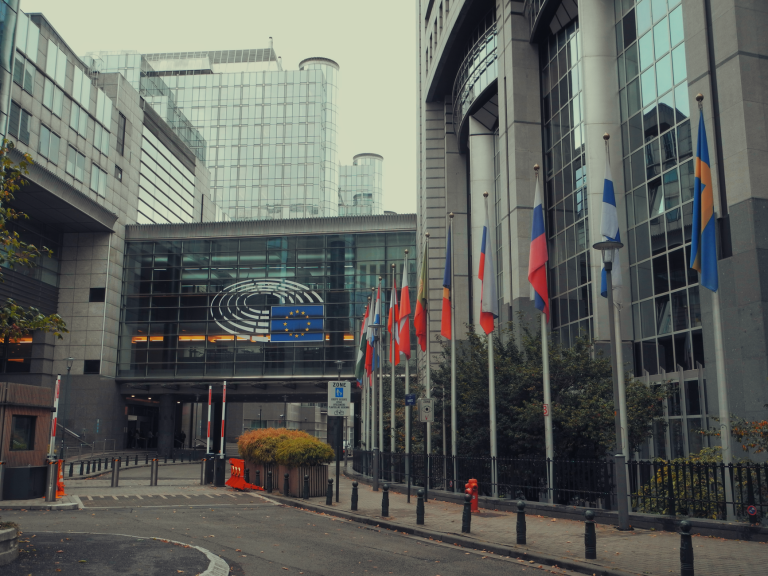
One reading of “Europe’s beauty” is the most literal available: physical, architectural, cultural beauty. European cities — their medieval centres, their coastlines, their cultural institutions — have become so attractive to global tourism that their resident populations are experiencing genuine quality-of-life crises. This is a policy debate that has gathered considerable momentum across Southern and Western Europe in recent years, as cities struggle to balance economic revenue from tourism against housing affordability, infrastructure pressure, and the erosion of local community fabric.
The argument that Europe’s literal beauty is its own worst enemy — that the charm of a Venetian canal or a Lisbon neighbourhood is precisely what prices out the people who give it life — would be a coherent and timely editorial position.
Europe as a Political Model: The Idealism Trap
A second and perhaps more politically pointed reading treats “beauty” as a metaphor for the idealist architecture of European institutions themselves. The European Union’s foundational commitments — to multilateralism, to the rule of law, to consensus-building, to the peaceful resolution of disputes — are, in the eyes of many admirers, genuinely admirable. They represent a serious attempt to learn from catastrophic 20th-century failures.
The counter-argument, which has grown louder as geopolitical pressures have intensified, is that this same institutional idealism makes Europe slow, internally divided, and structurally ill-equipped to respond to adversaries who operate by entirely different rules. The debate over European strategic autonomy, over defence spending, over how to handle neighbours like Russia and Belarus, all contain versions of this argument. The German Greens’ contentious embrace of weapons spending represents exactly this kind of internal reckoning — a party whose identity was built on pacifist principle now confronting the question of whether that principle is a luxury that geopolitics no longer permits.
Europe as a Market: The Openness Vulnerability
A third reading — and one that would be natural for an Australian financial publication — treats “beauty” as a synonym for Europe’s market attractiveness. The EU single market is one of the largest and most integrated economic spaces in the world. Its regulatory standards, its consumer protections, and its institutional stability make it a destination for capital, goods, and services. But that very openness and attractiveness creates vulnerabilities: to strategic dependencies on external suppliers, to the leverage of major trading partners, and to competitive pressures from economies operating with far fewer regulatory constraints.
The ongoing tensions between the EU and China over market practices and regulatory enforcement illustrate the specific version of this problem: Europe’s insistence on applying its own rules to actors operating within its market is both a statement of values and a source of escalating friction with partners who do not share those values.
Europe as a Democratic Model: The Soft-Power Paradox
A fourth reading concerns soft power specifically. Europe’s democratic institutions, its human rights framework, its model of social welfare — these have long been understood as a form of influence, particularly in neighbouring regions aspiring to closer alignment with European norms. But the argument that this is also a vulnerability runs as follows: by making its political model attractive, Europe encourages alignment-seekers who then require defence, political cover, and financial support. The commitments generated by Europe’s attractiveness can outrun its capacity or political will to honour them.
Current events across Eastern Europe and the Western Balkans contain versions of this tension, as does the broader question of what obligations European institutions carry toward countries and populations that have oriented themselves toward European norms under the assumption that the relationship is reciprocal.
Europe’s Democratic Consensus as a Structural Brake
A fifth reading is more internal: that Europe’s commitment to consensus — the requirement, in many domains, of unanimity or near-unanimity among member states — is itself a beautiful idea that generates ugly operational results. The very quality that makes European governance legitimate in the eyes of its members is the quality that most frequently produces paralysis when speed and decisiveness are required.
The Broader News Context on 23 August 2026
The current headlines sitting alongside the AFR piece on that day are instructive. They do not confirm what the AFR article was about, but they do establish the political atmosphere in which it was published.
- Estonia was mourning former Prime Minister Siim Kallas, described in reporting as a key figure in the country’s return to Europe — a reminder that European integration has living history, living architects, and living stakes.
- Iceland was voting on its EU course — a small nation debating whether to draw closer to or move further from European institutions, illustrating that “Europe” is still a contested destination rather than a settled fact.
- Moldova’s president was condemning a Russian attack on a shopping centre in Ukraine, a reminder that the geopolitical pressures on Europe’s eastern neighbourhood remain acute and lethal.
- Analysis was being published on how Europeans might loosen Russia’s grip on Belarus, a question that sits precisely at the intersection of Europe’s values-based foreign policy and its limited coercive instruments.
- The UK’s relationship with the EU single market was again under scrutiny, with reporting examining what rejoining it would mean economically — a debate that will not resolve cleanly and may not resolve soon.
These are not peripheral stories. They collectively describe a continent navigating competing pressures: the pull of its own model on neighbours and aspirants, the geopolitical threats that model does not insulate it against, and the internal debates about whether existing institutions are adequate to the moment.
What the AFR’s Perspective Adds
That this particular headline appeared in an Australian publication is itself worth a sentence. The AFR writes for an audience that has significant economic and strategic interests in global stability but no particular stake in European integration as a political project. Its editorial vantage point is external — interested, but not invested. That distance can be a source of clarity. Australian financial journalism has, historically, been willing to say unflattering things about European economic governance that European outlets, embedded in the political debates they cover, sometimes find harder to state baldly.
The fact that an Australian financial paper chose to frame Europe’s situation in terms of “beauty” rather than, say, “structure” or “governance” or “competitiveness” may be telling. It suggests the argument — whatever it is in full — is at least partly aesthetic, partly philosophical, and not purely technocratic.
Four Scenarios That Flow From the Headline’s Logic
Whatever the AFR piece actually argues, the tension its headline names is real. Here are four scenarios for how it might develop across European politics — presented as possibilities, not predictions.
- The reform scenario: European institutions absorb the critique embedded in their own attractiveness and restructure accordingly — streamlining decision-making, building coercive capacity, and accepting that acting fast sometimes requires acting without universal consensus. This is the optimists’ scenario.
- The fragmentation scenario: The internal contradictions accumulate faster than the capacity to resolve them. Member states begin pursuing bilateral arrangements that bypass EU mechanisms, and the single institutional framework frays at the edges without formally breaking. This is the muddling-through pessimists’ scenario.
- The external shock scenario: A crisis significant enough — military, economic, or both — forces rapid adaptation in ways that incremental politics never could. History suggests Europe has sometimes reformed fastest under extreme pressure. This scenario is neither good nor bad in itself; it depends entirely on what the shock is and how severe.
- The narrative shift scenario: European leaders stop trying to reconcile the beauty-versus-vulnerability tension and instead reframe it — arguing that European values are not a weakness to be compensated for but the actual source of long-term strategic advantage. This is the scenario that requires the most political courage and the most patient electorate.
What Can and Cannot Be Said
To be absolutely clear about the limits of this analysis:
- Nothing above should be read as a summary of the AFR article.
- No claim has been made about what the AFR article argues, who wrote it, or what evidence it marshals.
- Every interpretive frame offered here is this desk’s own contextual analysis, clearly labelled as such.
- The confirmed facts remain: headline, outlet, date.
What this piece has attempted to do is take a headline seriously as a journalistic and political object — to ask why those seven words, on that day, from that outlet, might matter. That is a different exercise from reporting, and it has been conducted accordingly. For readers who want to know what the AFR actually said, a subscription to that publication remains the only honest path.
Europe’s beauty, whatever the AFR ultimately meant by it, is a real phenomenon — and the argument that it generates its own specific vulnerabilities is one that European politics will be working through for years. The headline was, at minimum, right to name the tension. Whether the article beneath it did justice to that tension is a question this desk cannot yet answer.
For the latest coverage of these and related debates, visit our EU political news section.
Seven words on a Monday morning. Sometimes that is enough to start asking the right questions — even when the answers require considerably more.
About The Author