House Democrat Calls for Congressional Hearings on Trump Administration’s Nuclear Deal With Saudi Arabia
 Sophie Gesture
Saudi Crown Prince Mohammed bin Salman said it out loud in 2018: if Iran gets a nuclear weapon, Saudi Arabia will get one too. The Trump administration just handed him a civilian nuclear cooperation agreement that critics say makes that threat considerably easier to keep.
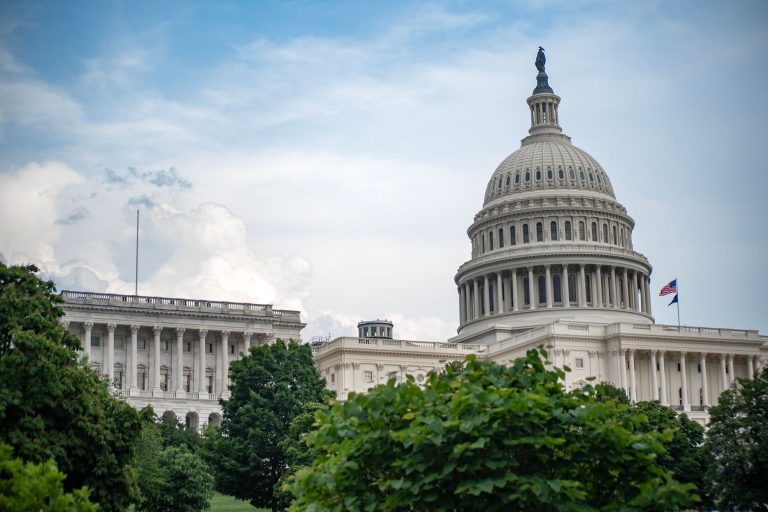
On July 22, 2026, a senior House Democrat formally called for congressional hearings on the Trump administration’s 123 Agreement — the statutory framework under Section 123 of the U.S. Atomic Energy Act that governs civilian nuclear cooperation with foreign nations. The demand cuts to the center of a debate that Washington’s foreign policy establishment has been dreading for years: whether the United States is about to help a petrostate with ambiguous nuclear ambitions get one step closer to weapons-grade capability, all in the name of a geopolitical deal that prioritizes Saudi investment flows over Middle East stability.
How the UAE’s 2009 ‘Gold Standard’ Became the Benchmark Saudi Arabia Was Never Asked to Meet
The architecture of U.S. civilian nuclear diplomacy was not designed to be optional. When the Obama administration negotiated a 123 Agreement with the United Arab Emirates in 2009, it extracted what became known in nonproliferation circles as the “Gold Standard” — a binding commitment that the UAE would neither enrich uranium domestically nor reprocess spent fuel into plutonium. Those two pathways are the only practical routes to weapons-grade fissile material. Closing them both off was the point.
The Trump administration’s Saudi deal, as currently understood by congressional critics and arms control experts, does not contain those commitments. That’s not a technical footnote. It is the entire ballgame. Uranium enrichment and plutonium reprocessing are how you get from a civilian nuclear program to a bomb. Every proliferation case study — North Korea, Pakistan, Iran itself — runs through one or both of those processes.
| Agreement | Country | Year | Enrichment Ban | Reprocessing Ban | “Gold Standard” |
|---|---|---|---|---|---|
| UAE 123 Agreement | United Arab Emirates | 2009 | Yes | Yes | Yes |
| Jordan 123 Agreement | Jordan | 2008 | Yes | Yes | Yes |
| Saudi Arabia (Trump framework) | Saudi Arabia | 2026 | No confirmed ban | No confirmed ban | No |
| India 123 Agreement | India | 2008 | No | No | No (pre-standard) |
The Arms Control Association and former Obama-era State Department officials have been ringing this alarm since the deal’s contours began leaking earlier in 2026. Their argument is straightforward: a Saudi nuclear program without explicit nonproliferation guardrails doesn’t just threaten regional stability — it potentially triggers a cascade. Egypt, Turkey, and others have made clear they will not accept a nuclear Saudi Arabia without pursuing their own capabilities. The Middle East’s nuclear-free status, already fragile, collapses entirely. This is not speculation. It is the stated position of those governments.
Democrats on the House Foreign Affairs Committee Demand Answers After Deal’s Terms Go Public
The congressional demand for hearings, lodged formally on July 22, 2026, targets the deal’s procedural legitimacy as much as its substantive dangers. Under the Atomic Energy Act, a 123 Agreement must be submitted to Congress for a review period before it takes effect — but the Trump administration has a history of pushing executive authority to its legal limits, and critics argue key negotiations were conducted with minimal congressional consultation.
Here is what Democrats are specifically demanding to know:
- Whether the final agreement text contains any language prohibiting Saudi Arabia from enriching uranium or reprocessing plutonium
- What diplomatic assurances, if any, Secretary of State Marco Rubio and Special Envoy Steve Witkoff secured from Riyadh regarding weapons ambitions
- Whether the National Security Council conducted a formal nonproliferation risk assessment before the deal advanced
- How the agreement interacts with the parallel $95 billion House-passed defense budget targeting Iran — and whether arming Riyadh for a potential Iran conflict while giving it civilian nuclear access creates a compounding risk
- What role Saudi Energy Minister Prince Abdulaziz bin Salman played in negotiating the technical terms, and whether those terms were reviewed by independent nonproliferation experts
The hearings request lands in a week when the House has already adopted a $95 billion Republican defense budget framed around potential military confrontation with Iran. The juxtaposition is not subtle: the same Congress funding naval assets and weapons stockpiles for a potential Iran war is simultaneously being asked to wave through civilian nuclear technology transfers to Saudi Arabia — Iran’s primary regional rival and a country whose crown prince has explicitly conditioned its nuclear restraint on Iran’s behavior. That is either a coherent strategic framework or a recipe for catastrophic miscalculation, and the distinction matters enormously.
Rubio, Witkoff, and Prince Abdulaziz: The Three Architects of a Deal Congress Never Approved
Marco Rubio
Secretary of State Marco Rubio has been the public face of the broader Trump Middle East diplomatic push, operating under the theory that deep economic and security integration with Gulf states creates durable stability while isolating Iran. Rubio’s Senate record on nonproliferation was relatively hawkish — he supported stringent Iran sanctions and was skeptical of the 2015 JCPOA. That makes his role shepherding a Saudi nuclear agreement without Gold Standard protections either a genuine strategic evolution or a case study in the gap between opposition rhetoric and governing reality. Which one it is matters enormously for evaluating whether the administration has actually thought through the proliferation consequences or simply traded long-term risk for short-term relationship points with Riyadh.
Steve Witkoff
Special Envoy Steve Witkoff has become the Trump White House’s go-to negotiator for deals where conventional diplomatic channels have stalled or been bypassed. His background is real estate, not arms control. That’s not automatically disqualifying — diplomacy sometimes benefits from fresh frameworks — but it does raise the question of whether the technical nonproliferation architecture of a 123 Agreement got the rigorous expert scrutiny it demands. Career State Department officials with deep regional expertise were systematically sidelined during Trump’s first term; there is no strong evidence the second term is different. When the person negotiating the deal doesn’t know what a centrifuge cascade does, you need to have people around him who do.
Prince Abdulaziz bin Salman
Saudi Energy Minister Prince Abdulaziz bin Salman — brother to Crown Prince Mohammed bin Salman — has been the kingdom’s chief technical interlocutor on the nuclear file. He is sophisticated, experienced, and representing a government that has made no secret of its ambitions. Saudi Arabia has been building domestic nuclear infrastructure, signing preliminary agreements with multiple international vendors, and training nuclear engineers. The kingdom wants civilian nuclear power for genuine economic reasons — it would rather export oil than burn it domestically. But “civilian” and “weapons-ready” are not mutually exclusive categories, and Abdulaziz knows that as well as anyone in Washington does. The question is whether Washington negotiated accordingly.
Why Both the Administration’s Defenders and Its Critics Are Telling You Less Than the Full Truth
The Republican case for this deal runs roughly as follows: Saudi Arabia is going to develop nuclear capability one way or another; better to be in the tent shaping the program than outside it with no influence; and besides, the alternative is that Riyadh turns to China or Russia for its nuclear partnership, which would be categorically worse for U.S. strategic interests. There is genuine logic here. Engagement beats isolation in most historical cases. Partnerships create leverage.
But that argument elides the specific question being asked. The issue is not whether the U.S. should engage Saudi Arabia on civilian nuclear power. The UAE agreement demonstrates that engagement can happen with strong nonproliferation conditions attached. The question is why this administration appears to have negotiated an agreement without those conditions — and whether the economic and diplomatic concessions secured from Riyadh were worth that specific price. Republicans aren’t answering that question. They’re changing the subject to China.
The Democratic critique, meanwhile, has its own blind spots. The same party that negotiated the 2015 Iran nuclear deal — which quietly accepted Iran’s right to domestic enrichment, a significant concession from the Gold Standard principle — is now demanding absolute purity from the Trump administration on Saudi enrichment rights. That’s not hypocrisy, exactly, but it is selective emphasis. The deeper problem for critics across the political spectrum is that U.S. nonproliferation policy has been eroding for two decades, through administrations of both parties. The India 123 Agreement in 2008 punched a massive hole in the global nonproliferation architecture. The Saudi deal, if the reports are accurate, is another puncture in a tire that was already going flat. Attributing all of that to Trump alone is analytically convenient but historically dishonest. For more on how political dysfunction shapes these kinds of governance failures, see our US Political News coverage.
What’s actually happening is simpler and more alarming than either side’s framing. The global nonproliferation regime depends on the United States holding a consistent line. When Washington makes exceptions — for India, for Israel’s undeclared arsenal, now potentially for Saudi Arabia — it depletes the moral and legal authority it needs to tell Iran, or North Korea, or whoever comes next, that the rules apply to them. Every exception is a precedent. Every precedent is an invitation.
Four Scenarios That Will Determine Whether This Deal Reshapes the Middle East’s Nuclear Future
What happens next is genuinely uncertain. The range of plausible outcomes spans from congressional course-correction to a slow-motion regional proliferation cascade. None of these scenarios are hypothetical — each has concrete preconditions that are already in motion.
- Scenario 1: Congress Forces Renegotiation. The House Foreign Affairs Committee and Senate Foreign Relations Committee invoke their full oversight authority, holding public hearings that expose the deal’s nonproliferation gaps. The political pressure, combined with a handful of Republican senators with genuine arms control concerns, forces the administration back to the table to negotiate stronger safeguards. Precedent: the congressional review of the Iran deal in 2015 created exactly this kind of leverage, even without a formal veto.
- Scenario 2: The Deal Goes Through As-Is, and Regional Actors Accelerate. The agreement is finalized without Gold Standard protections. Egypt and Turkey, both of which have active civilian nuclear programs and both of which have signaled readiness to match Gulf state nuclear capability, announce accelerated timelines. The Middle East’s de facto nuclear threshold lowers by several years. This is not worst-case speculation — it is the stated policy trajectory of those governments.
- Scenario 3: Iran Uses the Deal as Justification for Its Own Program. Tehran has long argued that its nuclear program is no different from those of U.S. allies. A Saudi civilian nuclear deal without enrichment restrictions hands Iranian negotiators a specific, concrete example to cite in any future talks. The diplomatic cost is real and immediate.
- Scenario 4: MBS Accepts Additional Safeguards in Exchange for Security Guarantees. The most optimistic scenario — but it requires the administration to offer something MBS actually values more than enrichment rights, likely an explicit U.S. security guarantee or formal defense treaty. That is a significant commitment, one that would require Senate ratification and its own difficult political fight.
| Scenario | Probability (Near-Term) | Nonproliferation Impact | Congressional Action Required |
|---|---|---|---|
| Congress Forces Renegotiation | Moderate | Positive — deal strengthened | Yes — hearings + political pressure |
| Deal Passes As-Is, Regional Cascade | Moderate-High | Severe — regional threshold lowered | No effective action taken |
| Iran Uses Deal as Justification | High (already occurring rhetorically) | Significant — diplomatic damage | Indirect |
| MBS Accepts Safeguards for Defense Treaty | Low-Moderate | Positive if conditions are real | Yes — treaty ratification |
A study released around the same week as the Democratic hearing demand found that Americans are now more likely to cite political dysfunction than terrorism or foreign adversaries as the greatest threat to their personal safety. That data point is worth sitting with for a moment. The very dysfunction that makes serious congressional oversight of a Saudi nuclear deal so difficult to execute — partisan trench warfare, shortened attention spans, a media environment that treats every crisis as equally urgent — is itself the permissive condition that allows deals like this one to advance without the scrutiny they demand. The country that invented nuclear arms control is struggling to remember why it mattered.
Mohammed bin Salman said he’d build a bomb if Iran did. The Trump administration may have just handed him the first piece of equipment. Whether Congress can stop it — or even fully examine it — is the question that will define Middle East security for the next generation, and right now the answer is not reassuring.
About The Author