Sophie Gesture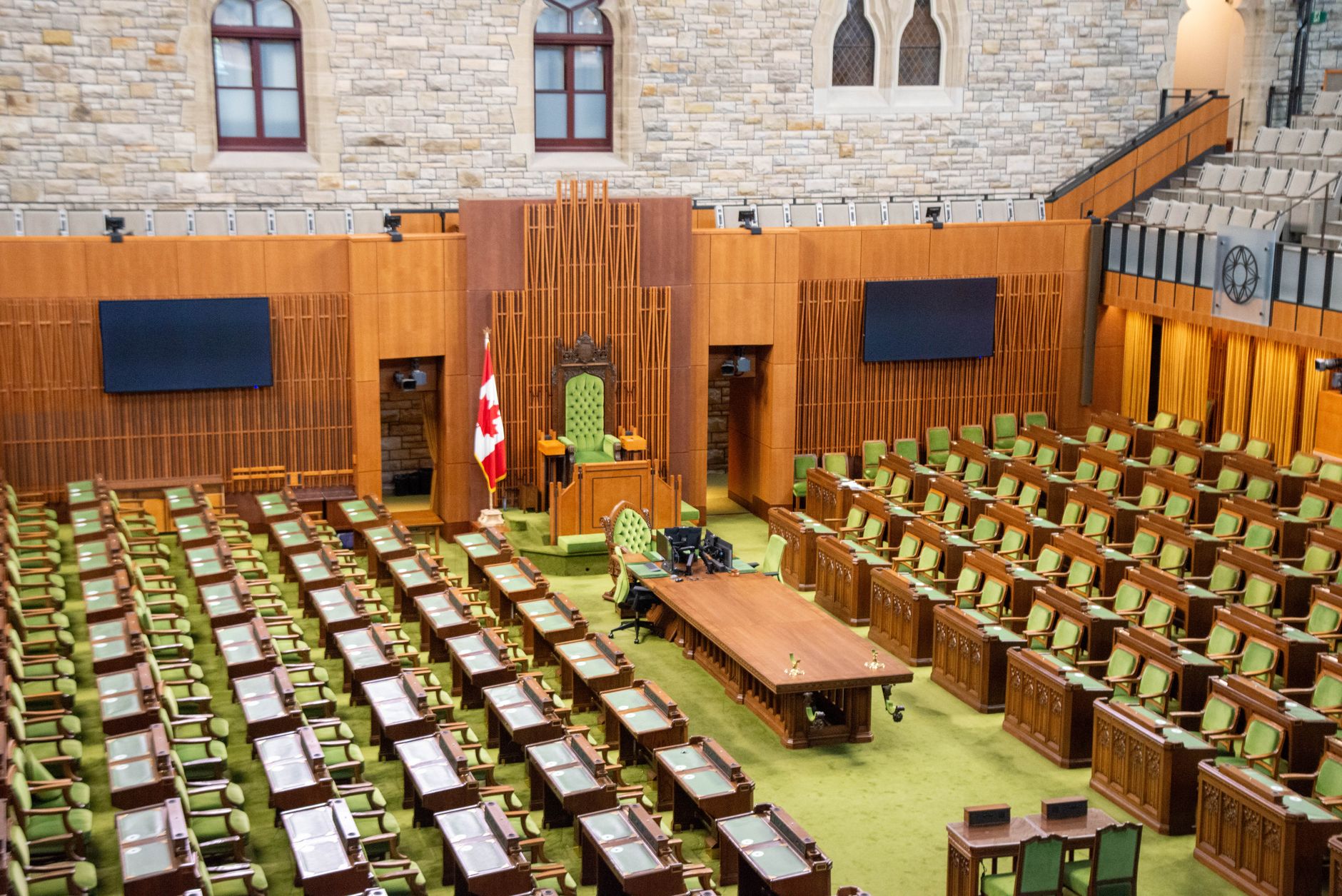
The House of Commons is the directly elected chamber of the Parliament of the United Kingdom and the primary seat of legislative and democratic authority in the British constitutional system. Sitting at the Palace of Westminster in London, it derives its legitimacy from general elections conducted in single-member constituencies. Any government that cannot command a majority in the Commons cannot long remain in office, making it the central arena of British democratic accountability.
Overview
Parliament of the United Kingdom formally comprises three elements: the House of Commons, the House of Lords, and the Monarch. In practice, the Commons is the dominant element. Its political supremacy has been consolidated over centuries and was most decisively codified by the Parliament Acts of 1911 and 1949, which removed the House of Lords’ power to permanently block legislation passed by the Commons and restricted the upper chamber to a delaying role only.
Members of Parliament (MPs) are elected through a first-past-the-post electoral system, in which each constituency returns a single MP and the candidate with the most votes wins, regardless of whether they secure an absolute majority. The number of constituencies — and therefore of MPs — is subject to periodic review by independent boundary commissions, which adjust seat boundaries to reflect population changes. The chamber is physically arranged on an adversarial model: the governing party sits on one side and the opposition parties on the other, a layout that reinforces the confrontational character of British parliamentary debate and reflects the underlying logic of competitive party government.
The government of the day must maintain the confidence of the Commons. By constitutional convention, the Prime Minister is a member of the Commons, and must be able to command a majority on confidence votes and on the supply of public money. Should a government lose a confidence vote, it must either resign or seek a dissolution of Parliament, triggering a general election. This relationship between executive authority and parliamentary confidence is the cornerstone of the parliamentary system as practised in the United Kingdom.
Why the House of Commons Matters in Politics
The House of Commons sits at the intersection of legislation, finance, representation, and executive accountability in the UK. Without its support, no government can raise taxes, pass laws, or sustain itself in office. Its composition determines who governs the country, and its procedures determine how laws are made and ministers are challenged. For citizens, MPs serve as the primary point of contact with national government, channelling constituency concerns into the legislative process. For the broader study of democracy, the Commons is one of the oldest continuously functioning elected assemblies in the world and a reference point for parliamentary design in many other countries.
Purpose and Powers
Legislative Function
The Commons is the primary legislative chamber of the United Kingdom. Bills may formally be introduced in either the Commons or the Lords, but the most significant government legislation almost always originates in the Commons. Every bill passes through a standard sequence of formal stages:
- First Reading — formal introduction; no debate.
- Second Reading — debate on the bill’s general principles.
- Committee Stage — detailed, clause-by-clause examination, usually in a public bill committee.
- Report Stage — the full chamber considers amendments made in committee.
- Third Reading — final debate and vote before the bill passes to the other chamber.
Once passed by both chambers and agreed in identical form, a bill receives Royal Assent and becomes an Act of Parliament.
Financial Authority
The Commons holds exclusive authority over the raising and spending of public money. The annual Budget and the Finance Bill — which gives legal effect to the government’s tax and spending proposals — must originate in the Commons. By convention rooted in centuries of constitutional precedent, the unelected House of Lords cannot reject money bills, a restriction formalised in the Parliament Act 1911. This financial supremacy is one of the most durable expressions of the Commons’ dominant position in the constitution.
Executive Scrutiny
Holding the government to account is among the Commons’ most politically visible functions, exercised through several mechanisms:
- Prime Minister’s Questions (PMQs): Held weekly when Parliament is sitting, PMQs requires the Prime Minister to answer questions from MPs. It is the most prominent regular accountability ritual in British political life and has been tracked systematically by the House of Commons Library since 1979.
- Urgent Questions: These allow MPs to compel ministers to appear before the chamber and make statements on matters of current concern. The House of Commons Library documents their use since 1997, reflecting their established status as an accountability tool.
- Select Committees: Each major government department is shadowed by a select committee composed of MPs drawn from across the parties. Committees take evidence from ministers, civil servants, and outside experts, and publish reports that may influence government policy. The capacity of committees to hold the executive to account is a persistent subject of political commentary; critics, including former senior parliamentary officials, have argued that party discipline can limit MPs’ willingness to challenge the government of which their party forms a part.
- Ministerial Questions and Debates: Beyond PMQs, departmental ministers face regular oral questions, and the Commons holds debates on a wide range of subjects through which MPs can challenge executive decisions.
Representation
MPs function as the primary channel through which constituents engage with national government. This representational role encompasses individual casework — helping constituents navigate public services and bureaucracy — as well as raising constituency concerns in debates and questions, and voting on legislation that affects constituents’ lives.
Structure and Composition
Party Organisation
The Commons is organised along party lines. The party or coalition of parties commanding a majority forms the government. The second-largest party constitutes the Official Opposition, whose leader holds a formally recognised constitutional role funded through a mechanism known as “Short money” — public funding provided to opposition parties to help them perform their parliamentary duties.
Smaller parties occupy the remaining benches and may form groupings of varying significance depending on the parliamentary arithmetic of a given Parliament.
The Whipping System
Each party maintains a whipping operation that manages parliamentary business, ensures members attend votes, and communicates voting instructions — known collectively as “the whip.” The severity of the instruction is indicated by how many times it is underlined: a three-line whip represents the most binding instruction, and defying one carries serious consequences for an MP’s standing within their party. The Chief Whip and whipping office are essential to a government’s ability to pass legislation and survive confidence votes. The Institute for Government, among others, recognises the whips as a structurally important and enduring feature of Commons operation.
The Speaker and Procedural Officers
The Speaker is elected by MPs to chair debates and enforce order. Once elected, the Speaker is expected to be fully politically impartial, resigning from their party affiliation and not being contested in their constituency by the major parties. The Speaker interprets the procedural rules of the chamber and has considerable authority to manage debate, call MPs to speak, and discipline disorderly conduct. The Clerk of the House is the principal independent adviser on procedure and parliamentary law.
MPs’ Outside Interests
MPs are permitted to hold paid employment outside Parliament, subject to registration requirements overseen by the Parliamentary Commissioner for Standards and the Register of Members’ Financial Interests. The question of second jobs and potential conflicts of interest is a recurring governance concern, with the House of Commons Library maintaining ongoing research into the practice. Debate about appropriate limits on MPs’ outside employment reflects enduring tensions between parliamentary independence and public expectations of full-time representation.
Relationship with the House of Lords
The House of Lords is the upper, unelected chamber. Peers — comprising life peers appointed on various grounds, alongside a remaining cohort of hereditary peers — may revise and delay legislation but cannot permanently block bills that have passed the Commons. The Parliament Acts of 1911 and 1949 established the legal framework for this asymmetry.
The Lords performs a valuable revising function, often amending legislation in detail and sending it back to the Commons for reconsideration, but final authority rests with the elected chamber. The constitutional relationship between the two chambers, and the question of Lords reform — whether to elect it, reduce its size, or reconstitute it on different terms — is a recurring subject of political debate that has not, at the time of writing, been definitively resolved.
Working Culture and Institutional Criticism
The Commons is periodically subject to criticism regarding its internal culture and the effectiveness of its scrutiny functions. Concerns have been raised about conduct standards, the working environment for MPs and parliamentary staff, and the influence of alcohol in Westminster’s social culture. Separately, structural critics argue that strong party discipline limits the capacity of MPs to scrutinise government independently, pointing to a durable tension between the demands of party loyalty and the constitutional expectations of parliamentary accountability. These debates reflect ongoing pressures for institutional modernisation within a chamber whose procedures retain features of considerable antiquity.
Key Facts
| Feature | Detail |
|---|---|
| Location | Palace of Westminster, London |
| Type | Elected lower chamber |
| Electoral system | First-past-the-post, single-member constituencies |
| Presiding officer | Speaker of the House of Commons |
| Legislative supremacy | Established by Parliament Acts 1911 and 1949 |
| Financial authority | Exclusive; Lords cannot reject money bills |
| Government accountability | Maintained through confidence convention |
| Weekly accountability | Prime Minister’s Questions (PMQs) |
| Departmental scrutiny | Select Committees |
| Opposition funding | Short money |
| Research service | House of Commons Library |
Frequently Asked Questions
What is the difference between the House of Commons and the House of Lords? The House of Commons is the elected chamber whose members are chosen by voters at general elections. The House of Lords is the upper, unelected chamber, composed of appointed life peers and a residual number of hereditary peers. The Commons holds supreme authority: it controls finance, can override the Lords under the Parliament Acts, and the government must maintain its confidence.
How does the House of Commons hold the government to account? Through several mechanisms: Prime Minister’s Questions (weekly), ministerial question times, Urgent Questions compelling ministerial statements, select committee investigations and reports, and debates including those triggered by opposition motions. These tools collectively constitute the scrutiny function of the chamber.
What is the first-past-the-post system used to elect MPs? Each of the UK’s constituencies elects one MP. Voters cast a single vote for one candidate, and the candidate with the most votes wins, even without an absolute majority. Critics argue this produces disproportionate outcomes; supporters argue it tends to produce stable single-party governments. It is the longest-standing method of electing MPs and remains in use for UK general elections.
What happens if the government loses a confidence vote? By constitutional convention, a government that loses a vote of no confidence must either resign — allowing another government to be formed — or seek a dissolution of Parliament, leading to a general election. This mechanism makes the Commons the ultimate arbiter of whether a government may continue to hold office.
What is Short money? Short money is public funding provided to opposition parties in the House of Commons to help them carry out their parliamentary duties, including policy research and staffing. It is named after Edward Short, the Leader of the House who introduced the scheme in 1975. It reflects the constitutional recognition of the Official Opposition as a necessary component of accountable government.
What do parliamentary whips do? Whips are MPs appointed by each party to manage parliamentary business and party discipline. They ensure members attend important votes, communicate the party’s voting instructions, and report back to party leadership on the mood of MPs. The strength of a whip instruction — one, two, or three lines — indicates how binding it is considered. The government’s whipping operation is essential to passing legislation.
This entry is part of the Political Encyclopedia.
About The Author