Andy Burnham Spends First Working Day at New No 10 North in Manchester – UK Politics Live
 Sophie Gesture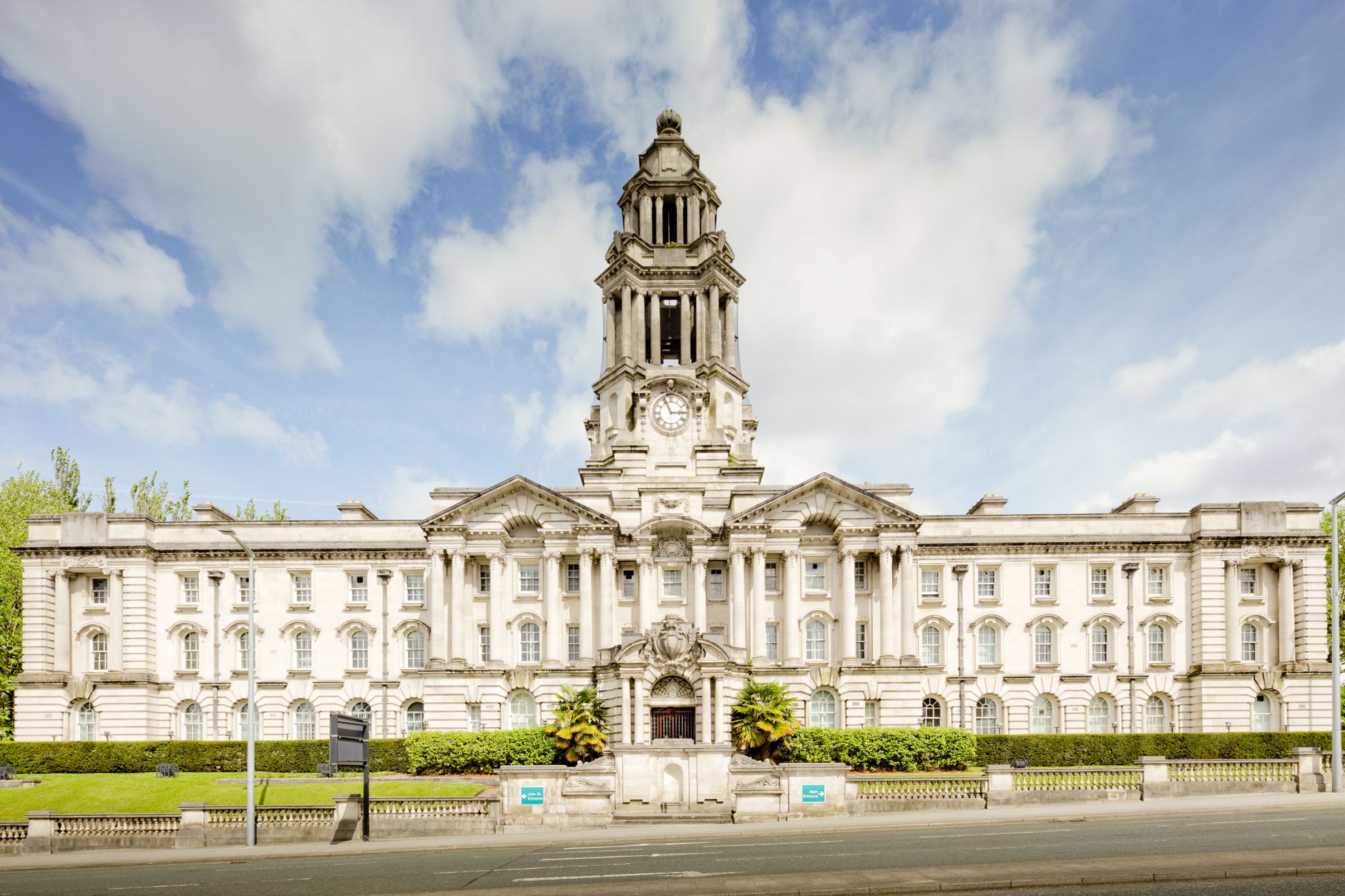
The Prime Minister of the United Kingdom spent Thursday conducting government business not in Westminster, not in Whitehall, but in Manchester. That single fact tells you more about where British politics is heading than any policy document or party manifesto ever could.
What is actually at stake here is whether No 10 North — the new government hub that officially opened for business on July 24, 2026 — represents a genuine structural rebalancing of UK power, or whether it is the most elaborately staged photo opportunity in recent political memory. The difference matters enormously, because millions of people in the North of England have been promised exactly this kind of shift before. They’ve been burned by it before, too.
From “Levelling Up” Failure to No 10 North: How 14 Years of Conservative Promises Were Cashed in One Morning
The Conservative governments that ran Britain from 2010 to 2024 were not shy about talking up the North. George Osborne coined “Northern Powerhouse” in 2014. Boris Johnson ran on “levelling up” as a core 2019 manifesto commitment. Michael Gove produced an entire Levelling Up White Paper in February 2022, 332 pages of ambition that resulted in, by most independent assessments, a marginal redistribution of funds and a lot of regeneration money spent on places that were already doing reasonably well. By the time the Conservatives left office in 2024, the productivity gap between London and the North had widened, not narrowed. The North East’s GDP per head remained roughly 72 percent of London’s — a figure barely changed from a decade earlier.
Greater Manchester became the flagship of a different approach. It got a directly elected metro mayor in 2017, and Andy Burnham proceeded to build one of the most distinctive regional political brands in modern British history — winning re-election with increasing majorities, pursuing integrated transport, pushing for health devolution, and cultivating a national profile that Westminster insiders simultaneously envied and dismissed. The dismissal stopped when he walked into Downing Street on July 21, 2026.
| Era | Northern Policy Flagship | Outcome |
|---|---|---|
| 2014–2019 (Osborne/Cameron) | Northern Powerhouse | HS2 partial approval; limited fiscal devolution |
| 2019–2024 (Johnson/Sunak) | Levelling Up White Paper | London-North productivity gap widened |
| 2017–2026 (Burnham, GM Mayor) | Greater Manchester Devolution | Integrated transport; health devolution deals; direct electoral mandate |
| July 2026 (Burnham as PM) | No 10 North, Manchester | Permanent government hub; Starmer and Reeves present on Day 1 |
The contrast is not subtle. Every previous northern initiative was designed in London, announced in London, and managed from London. No 10 North inverts that model — at least symbolically, and potentially structurally, depending on what happens next.
Burnham Declares Manchester “Open for Business” as Starmer and Reeves Join Him for Day One of No 10 North
The optics on July 24 were deliberate and carefully constructed. Prime Minister Andy Burnham didn’t just inaugurate a satellite office. He was joined by Chancellor Rachel Reeves and senior ministers for a full working day in Manchester — meaning actual government decisions, not ceremonial ones, were being made outside the Westminster postcode. Burnham declared No 10 North “open for business,” a phrase chosen with precision: not a pilot programme, not a visit, not a summit. Business. Ongoing, permanent, institutional business.
Here is what we know happened on Day One:
- Prime Minister Burnham chaired meetings from the Manchester hub, treating it as a functional extension of central government rather than a regional outpost.
- Chancellor Rachel Reeves was physically present — the significance being that economic and fiscal decision-making was attached to the hub from the very first day, not just symbolic political theatre.
- Senior civil servants accompanied the ministerial delegation, signalling that the hub is designed for operational use, not just press briefings.
- Burnham framed the opening as a permanent structural change, directly contrasting it with previous governments’ “flying visits” to northern cities.
- The “aura farming” debate broke into mainstream political commentary — with analysts noting that Burnham’s ability to appear simultaneously anti-establishment and deeply governmental is becoming its own studied political phenomenon.
- Nigel Farage’s popularity simultaneously hit a new recorded low amid a financial controversy, robbing the populist right of its most effective attack line at the precise moment Labour was showcasing delivery.
The timing of Farage’s implosion is not something Labour engineered, but it is something they are benefiting from enormously. When your opponent’s credibility is collapsing, your own government-as-action narrative gets considerably more airtime.
Burnham, Starmer, and Reeves: Three Politicians With Very Different Stakes in Whether No 10 North Actually Works
Andy Burnham
Andy Burnham is the author and the protagonist of this moment. He lost the Labour leadership race twice — in 2010 and 2015 — was written off by the London commentariat, retreated to Manchester in 2017, and spent nine years building something Westminster couldn’t replicate: a genuine track record of delivery in a specific geography, combined with a public persona that is authentic to its region rather than constructed for national media consumption. He was sworn in as Prime Minister on July 21, 2026, and three days later he was governing from Manchester. That sequencing is not accidental. The man knows exactly what he’s doing with every public move he makes.
His risk here is the same one that destroyed Johnson’s levelling up agenda: the gap between symbolic and substantive. Burnham has earned the symbolic credibility. The substantive test — whether No 10 North generates real fiscal decisions, actual civil service relocation, and measurable economic benefit to the North — will take years to assess. If it doesn’t, the backlash will be proportional to the promise.
Keir Starmer
Keir Starmer’s presence in Manchester on Day One is a data point, not a footnote. Prime Ministers don’t spend a full working day somewhere for optics alone — there is a real cost to removing yourself from Whitehall. Starmer’s decision to be physically present signals his personal investment in the project and, more significantly, his recognition that the devolution agenda is not Burnham’s personal hobby but a central pillar of how this government intends to justify its mandate. Whether Starmer continues showing up — or whether Manchester gradually becomes a place he sends junior ministers — will be the real test of his commitment.
Rachel Reeves
The Chancellor’s presence is the most underreported element of this story. Rachel Reeves at No 10 North isn’t a courtesy call. It means that whatever is discussed in Manchester has fiscal weight behind it. If the hub is ever going to produce genuine devolution of spending power — rather than merely devolution of administration — then Reeves has to be part of that process. Her Day One appearance sets a precedent. She will now be held to it. Every time a major Treasury decision gets made exclusively in Whitehall without a Manchester counterpart, someone will point back to July 24, 2026, and ask why.
Why the Celebration of No 10 North Is Premature — and the Criticism of It Is Too Cheap
Let’s be honest about what both sides are getting wrong.
The Labour and Burnham camp is presenting No 10 North as a structural rupture with the past. It is not — yet. A government hub in Manchester, however symbolically powerful, does not by itself change the tax-raising and spending architecture that keeps economic power concentrated in the South East. London and the South East generated approximately 35 percent of UK GDP in 2025 despite housing roughly 23 percent of the population. Ministerial visits, however regular, do not shift that ratio. What shifts it is primary legislation giving regions real tax powers, genuine civil service relocation at scale, and infrastructure investment that materially changes connectivity and productivity. No 10 North is a precondition for those things happening, not a substitute for them.
The Conservative opposition, meanwhile, is crying “stunt” — and in doing so, they are revealing exactly why they lost. Calling a permanent government hub a stunt is the kind of Westminster-bubble thinking that alienated northern voters across a generation. It dismisses the symbolic importance of representation, the message sent to people in Manchester, Leeds, and Sheffield when they see their government conducting real business in their cities rather than flying in for a ribbon-cutting and flying back out. Symbols matter in politics. Dismissing that is not sophistication; it is blindness.
The more serious critique comes from devolution advocates and academic observers: No 10 North doesn’t go far enough. Genuine devolution requires primary legislation on taxation, permanent statutory powers, and a redrawing of constitutional arrangements that no announcement about a government hub can deliver. Burnham has already shown willingness to use his position for substantive policy moves, but the devolution purists are right that a building in Manchester, however symbolically significant, is not the same thing as fiscal federalism.
For more context on how UK devolution politics is developing, see our UK Political News coverage.
The deepest problem for all sides is this: the politics of regional inequality in Britain are genuinely hard. They require sustained political will across multiple parliaments, against the structural gravity of London. Every government since at least 2010 has said the right things and then watched the numbers move in the wrong direction. No 10 North is a bet that this time will be different. The bet may pay off. History does not make it look likely.
Four Scenarios for What No 10 North Looks Like in 24 Months — and Which One Is Actually Plausible
What happens next will determine whether July 24, 2026, gets remembered as the day British governance changed, or the day it almost did.
- Scenario 1 — Substantive Success: No 10 North evolves into a genuine second centre of government, with regular ministerial presence, actual budget decisions made from Manchester, and an acceleration of civil service relocation. Burnham’s national profile solidifies. The North-South productivity gap begins, measurably, to narrow. This requires sustained political will through what will inevitably be fiscal pressures and domestic crises that pull attention back to Whitehall.
- Scenario 2 — Symbolic Drift: Ministerial visits to Manchester become progressively less frequent. No 10 North is maintained but gradually hollowed out — a brand rather than a function. Burnham’s credibility takes a significant hit, and the legacy becomes another entry in the long list of northern promises that underdelivered.
- Scenario 3 — Farage Rebounds and Reframes: Reform UK survives its current financial controversy. Farage or a successor rebuilds the party’s credibility and reframes the devolution agenda as metropolitan elite performance — arguing that putting government in Manchester helps Manchester but ignores Hartlepool, Sunderland, and the smaller post-industrial towns that have never benefited from the regional city model. This is a real electoral vulnerability for Burnham that No 10 North does not automatically neutralise.
- Scenario 4 — Legislative Escalation: No 10 North becomes the platform for a genuine devolution act, with new fiscal powers for metro mayors, constitutional reform, and a real redistribution of Treasury decision-making. This is the most transformative scenario and the least politically easy — it requires Reeves to accept a diminution of Treasury control that no Chancellor willingly embraces.
| Scenario | Probability (Political Analyst Assessment) | Timeline | Key Indicator to Watch |
|---|---|---|---|
| Substantive Success | Moderate | 18–36 months | Frequency of Chancellor visits; civil service relocation numbers |
| Symbolic Drift | Moderate-High | 12–24 months | Decline in ministerial presence; lack of fiscal decisions |
| Farage Rebound / Reframe | Moderate | 6–18 months | Reform UK poll recovery; shift in attack lines |
| Legislative Escalation | Low-Moderate | 24–48 months | New Devolution Bill introduced; Treasury powers transferred |
The most honest assessment: No 10 North will almost certainly succeed symbolically and face a genuine struggle to succeed substantively. The symbolic success is already locked in — July 24, 2026, is a date that will be cited for years. Burnham has already demonstrated in his first days in office that he governs by action rather than announcement, which gives this project more credibility than it would have under most of his predecessors. But the structural forces pulling British economic gravity toward London are not defeated by a government hub opening in Manchester, however politically significant the moment.
The real question isn’t whether Andy Burnham means it. He clearly does. The question is whether meaning it is enough — and whether the machinery of the British state, built over centuries around the assumption that power lives in one city, is capable of being genuinely redistributed by political will alone. If the answer turns out to be no, the failure will be the most expensive, most elaborately photographed, and most politically consequential broken promise the North of England has ever been handed.
About The Author