Trump Is Losing Ground With White Working-Class Voters on the Economy
 Sophie Gesture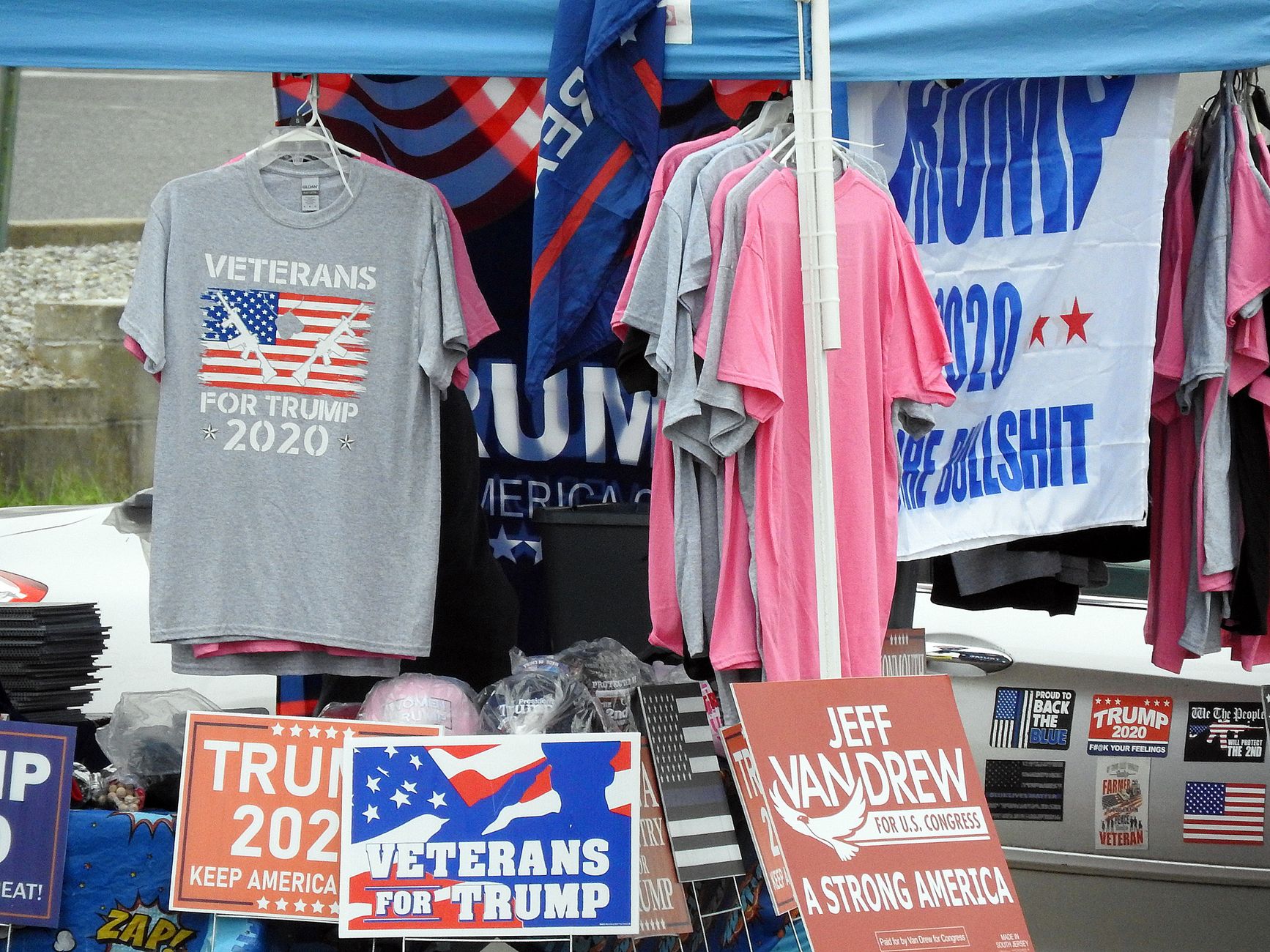
The voters who put Donald Trump back in the White House are starting to feel the bill come due — and they don’t like the number.
White working-class Americans — defined as white voters without a four-year college degree — delivered Trump his presidency twice over. They are the backbone of his political identity, the crowd he plays to at rallies, the demographic that made Pennsylvania, Michigan, and Wisconsin competitive again for Republicans. Lose them, even partially, and the entire architecture of Trump’s political dominance starts to wobble. That wobble is now showing up in the polling data, and it is not subtle.
How a 35-Point Margin Built on Economic Promises Is Starting to Crack
The numbers that got Trump to 1600 Pennsylvania Avenue in November 2024 were staggering. According to AP/NORC exit data, Trump won white non-college voters by approximately 35 to 40 percentage points — a margin so lopsided it functioned as a structural firewall against losses everywhere else. College-educated suburban voters could drift toward Democrats. Hispanic men could split. None of it mattered as long as the white working class held.
That margin was built on three explicit promises: protect American manufacturing through tariffs, crush illegal immigration, and deliver a cost-of-living correction after Biden-era inflation. The immigration piece remains his strongest card. The cost-of-living piece is where the contract is fraying.
A CNN/SSRS poll from spring 2026 found Trump’s economic approval rating among non-college white voters had slipped to roughly 47 to 49 percent — down from highs above 60 percent in the immediate aftermath of his November 2024 victory. Gallup’s economic approval tracker placed his overall rating in the low 40s nationally by early 2026, a second-term low. These are not catastrophic numbers. But the direction of travel is unmistakable, and in politics, trajectory matters as much as position.
| Metric | Late 2024 (Post-Election) | Spring 2026 | Change |
|---|---|---|---|
| Trump economic approval — white non-college voters | ~62% | ~47-49% | -13 to -15 pts |
| Trump overall economic approval (Gallup) | ~52% | ~41-43% | -9 to -11 pts |
| Trump margin — white non-college voters (2024 election) | +37 pts | N/A (non-election period) | Baseline |
| CPI inflation rate | ~2.9% (late 2024) | ~3.4% (early 2026) | +0.5 pts |
| Manufacturing jobs added (2025 full year) | Promise: significant gains | Actual: modest, below projections | Gap widening |
The mechanism is not mysterious. Trump’s “Liberation Day” tariff package, announced April 2, 2025, imposed a 10 percent baseline tariff globally and sector-specific levies as high as 145 percent on Chinese goods. The stated logic — force manufacturing back to American soil — has a long-term plausibility. The short-term reality is that prices on appliances, electronics, auto parts, and consumer goods rose, hitting households that were already stretched. The Bureau of Labor Statistics reported CPI ticking back up to approximately 3.4 percent in early 2026, reversing a downward trend that had been one of the few economic tailwinds Trump inherited.
For a steelworker in Youngstown who voted Trump on the promise that tariffs would revive his industry, paying more for a refrigerator while waiting for a mill to reopen is a very specific kind of broken promise.
Tariffs, Retaliatory Strikes, and the Grocery Bill: What’s Actually Hitting White Working-Class Households Right Now
The economic grievances crystallizing in mid-2026 are not abstract. They are being felt at specific price points in specific ZIP codes — and those ZIP codes happen to overlap almost perfectly with the counties that gave Trump his margin.
Here is what is actually happening on the ground:
- Grocery prices on imported food products — including many canned goods, cooking oils, and seafood — rose 4 to 7 percent in the first year of the tariff regime, according to consumer price index subcategory data.
- Agricultural retaliation from China and the European Union hit soybean, pork, and corn exports hard. Farmers in Iowa, Ohio, and Indiana — Trump country — saw export revenues squeezed, a near-direct replay of the pain from Trump’s first-term trade war that required billions in federal bailout payments to offset.
- Auto sector disruption: The 25 percent tariff on imported auto parts raised assembly costs for domestic manufacturers, with Ford and GM both issuing guidance in 2025 flagging price increases on several popular truck models. Trucks are not a luxury item for working-class families in rural America — they are a functional necessity.
- Manufacturing employment failed to deliver the surge the tariff argument promised. Job gains in the sector remained modest through 2025, well below the projections Trump’s economic team had circulated.
- Mortgage rates stayed stubbornly elevated through the first half of 2026, keeping homeownership out of reach for younger working-class families who were supposed to benefit from a Trump economic boom.
This convergence — higher prices, frustrated industrial promises, and a housing market that remains locked — is precisely the kindling that erodes soft support. The voters who are pulling back are not ideological converts to progressivism. They are people who expected a specific economic deal and are calculating, month by month, whether the deal is being delivered.
The White House’s response has been a combination of message discipline and strategic distraction. When Trump announced the U.S. military strike that killed the top leader of Tren de Aragua, the Venezuelan gang that became a central villain in his immigration narrative, the timing was not accidental. Security wins flood the media environment and remind working-class voters why they chose Trump in the first place — even when the grocery bill is still climbing.
Trump, Bessent, Lutnick, and Thune: The Four Men Who Will Determine Whether This Gets Fixed
Donald Trump
Donald Trump, who turned 80 on June 14, 2026, remains the irreplaceable center of his own coalition. His instinct is always to attack, never to concede, and on the economy he has been relentlessly on message: the tariffs are working, deals are coming, the pain is temporary and the media is lying to you about it. The problem is that his base voters are not getting their economic information from CNN. They are getting it from their bank accounts. Trump can win almost any argument on television. He cannot win the argument with a $340 grocery receipt.
Scott Bessent
Scott Bessent, the Treasury Secretary and the most orthodox economic mind in Trump’s inner circle, has publicly defended the tariff architecture while reportedly urging phased negotiations behind closed doors. Bessent understands that a trade deal — any credible trade deal, even a partial one — announced before the November 2026 midterms would give Republicans an economic narrative to run on. He is the voice most likely to push for an off-ramp that lets Trump claim victory without dismantling the tariff regime entirely.
Howard Lutnick
Howard Lutnick, Commerce Secretary and the architect of the most aggressive tariff frameworks, represents the maximalist position. Lutnick is ideologically committed to the protectionist vision in a way that Bessent is not, and his influence on the actual construction of the tariff schedules has been enormous. If the White House accelerates toward trade deals, it will partly be because Bessent outmaneuvered Lutnick in the internal policy process — something that has happened before but is never clean or fast.
John Thune
Senate Majority Leader John Thune of South Dakota represents the agricultural dimension of this problem most acutely. His constituents are farmers watching Chinese retaliatory tariffs eat into soybean and corn export revenues. Thune has been diplomatically but unmistakably pressing for trade deal progress. He knows that if farm-state Republican senators start feeling pressure at home, the Senate becomes a more complicated environment for Trump’s second-term agenda — and for the simple political math of the 2026 cycle.
Why the White House’s Zone-Flooding Strategy Is Smart Politics and Terrible Governance
Let’s be honest about what is happening here, because both sides are telling their supporters a version of the story that is convenient rather than complete.
The Trump White House is deliberately conflating security wins with economic performance. The Tren de Aragua strike is a genuine operational success — eliminating a violent gang leader is not nothing. But packaging it as evidence that Trump “delivers” while inflation is quietly ticking back up is a sleight of hand. The voters it is designed to reassure are the same voters who are paying more for groceries and waiting for manufacturing jobs that have not materialized at the promised scale. Security theater does not pay the electricity bill.
At the same time, Democrats have not yet earned the right to claim this coalition. The party that spent years dismissing white working-class economic anxiety as coded racism, that offered virtually nothing on trade protection, and that watched its own economic messaging collapse under Biden-era inflation does not get to simply receive disaffected Trump voters as a gift. Democratic pollster Stan Greenberg, who has studied this demographic for thirty years, has flagged the erosion trend — but he has also been clear that erosion is not conversion. These voters are not becoming Democrats. They are becoming disappointed.
Republican pollster Whit Ayres and Democratic pollster Celinda Lake have arrived at essentially the same diagnosis from opposite sides of the aisle: white non-college voters are not abandoning Trump ideologically, they are expressing economic disappointment that manifests as depressed turnout rather than vote-switching. That is, in some ways, a more dangerous condition than outright defection — because it is harder to detect until election night, harder to reverse with late advertising, and harder to compensate for with base mobilization elsewhere.
The right’s answer — trust the plan, tariffs take time, deals are coming — asks voters to absorb present pain for future gains. That is a legitimate economic argument. It is also an argument that has a historical expiration date. Reagan’s 1982 midterms are the cautionary tale: even the most beloved Republican president of the modern era lost 26 House seats when voters decided economic pain had gone on long enough. Trump has a narrower margin for that kind of loss.
For broader context on how leadership instability interacts with economic credibility, the pattern of why Britain and America can’t stop firing their leaders offers a useful comparative frame — economic disappointment and leadership turnover are almost always connected.
Four Scenarios for How This Plays Out Before November 2026 Midterms
The 2026 midterms are the immediate pressure point. Republicans hold a narrow House majority — historically thin, historically vulnerable to the kind of turnout softening that economic disappointment produces. Here is what the realistic range of outcomes looks like:
- Scenario 1 — Trade Deal Rescue: Bessent successfully negotiates a credible, headline-friendly trade agreement with the UK and a partial framework with China before September 2026. Trump declares total victory. White working-class voters in swing-district counties feel vindicated. Turnout holds. Republicans protect the House.
- Scenario 2 — Managed Drift: No major deals materialize, but no new tariff escalations either. Inflation stays in the 3.2 to 3.6 percent range — annoying but not shocking. Working-class turnout softens by 4 to 6 points in Ohio, Pennsylvania, and Michigan. Republicans lose 8 to 12 House seats. Painful but survivable.
- Scenario 3 — Escalation Spiral: A new trade confrontation — with the EU, or a breakdown in China negotiations — triggers another round of retaliatory tariffs, pushing CPI above 4 percent heading into fall. Working-class economic approval craters. Democrats pick up 18 to 25 House seats and potentially reclaim the chamber.
- Scenario 4 — Security Dominance: A major security or foreign policy event — a border crisis, a significant military action, a dramatic immigration enforcement moment — completely reshapes the 2026 electoral environment. Economic concerns become secondary. Trump’s coalition consolidates around the security frame. The economic erosion pauses or reverses.
| Scenario | Probability (Current Assessment) | House Seat Impact | White Working-Class Turnout |
|---|---|---|---|
| Trade Deal Rescue | 25% | Republicans hold or gain 1-3 | Stabilizes near 2024 levels |
| Managed Drift | 40% | Republicans lose 8-12 seats | Softens 4-6 points |
| Escalation Spiral | 20% | Republicans lose 18-25 seats | Drops sharply in Rust Belt |
| Security Dominance | 15% | Republicans hold | Consolidates around security |
The working assumption inside Republican campaign committees, according to multiple strategists who have spoken publicly about 2026 positioning, is that Scenario 2 is the base case — a painful but survivable midterm loss that keeps the Senate and preserves Trump’s ability to govern through the end of his term. What they are watching for, nervously, is any economic shock that tips Scenario 2 into Scenario 3. For more context on the broader political environment shaping these calculations, our US Political News coverage has been tracking the macro conditions in detail.
The critical variable nobody fully controls is the one that is already in motion: the cumulative psychological weight of months of elevated prices, stalled factory promises, and the creeping sense among the voters who believed most fervently in the Trump economic revival that the revival is taking longer than advertised — and costing them more in the meantime than anyone admitted it would.
There is a version of this story where it all comes together — trade deals close, manufacturing investment announcements pile up, inflation eases, and the white working class delivers Trump another midterm miracle. There is also a version where a president who built the most powerful populist economic coalition in a generation discovers, as so many before him have, that the voters who give you their trust most completely are also the ones who feel most personally betrayed when the promises fall short. The polling data in mid-2026 does not yet tell us which story we are living through. But it tells us, with uncomfortable clarity, that the question is now genuinely open — and the answer will arrive in November whether Trump is ready for it or not.
About The Author