Trump Unveils New Air Force One, a Converted Qatari 747 Worth $400 Million
 Sophie Gesture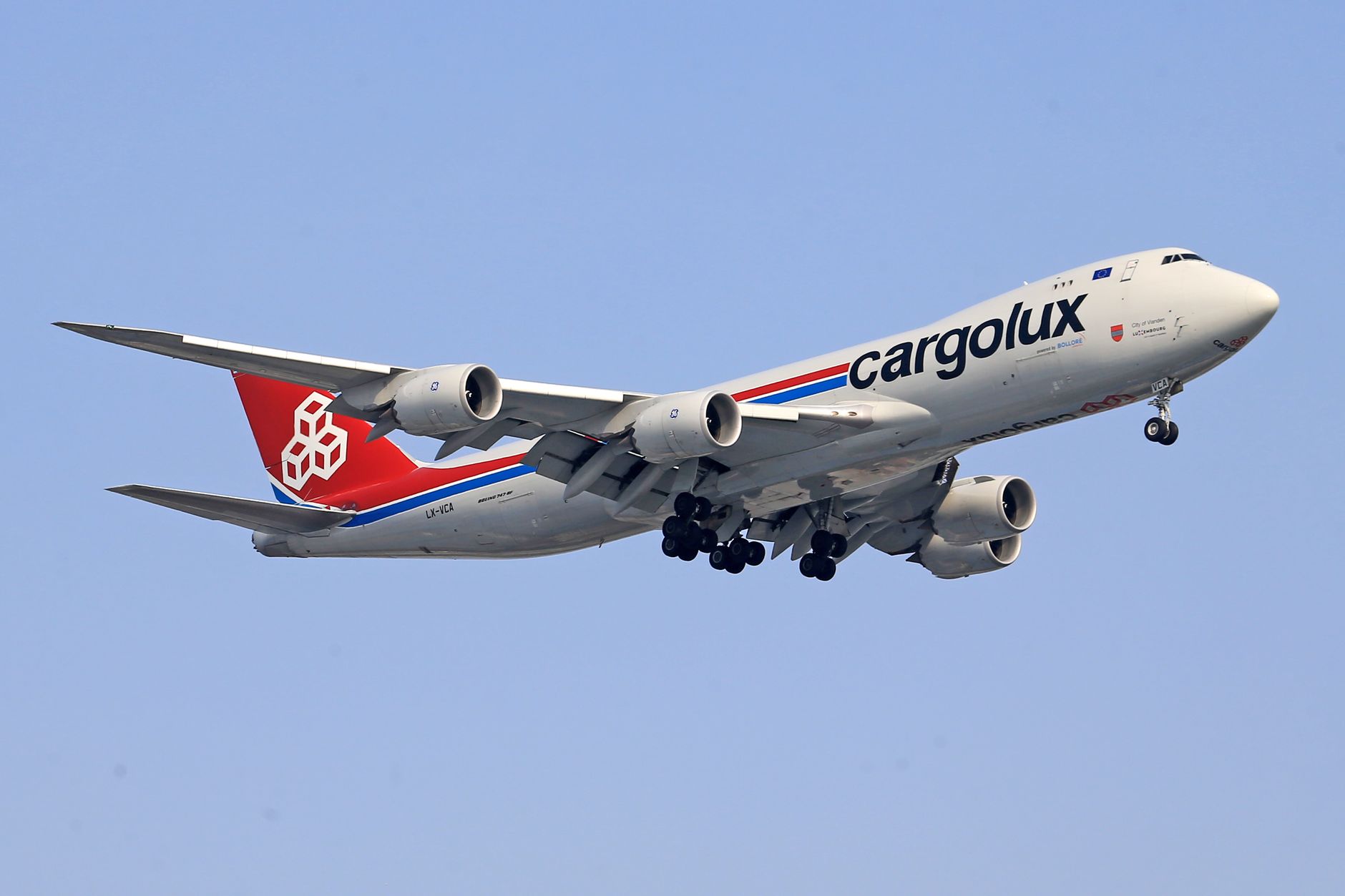
A foreign government just gave the President of the United States a $400 million airplane. Let that sit for a moment. Not a diplomatic token. Not a ceremonial sword in a velvet box. A Boeing 747-8 with gold-accented interiors, luxury appointments fit for a royal family, and enough political baggage to fill every overhead compartment twice over.
What is actually at stake here goes well beyond optics. This is a constitutional question, a foreign policy signal, and a test of institutional resilience — all wrapped in a very expensive fuselage. The country that accepts a $400 million jet from a Gulf monarchy that simultaneously hosts Hamas’s political bureau is a country that has fundamentally changed how it conducts itself in the world.
How Boeing’s $3.9 Billion Failure Created the Opening for Qatar’s $400 Million Gift
The existing Air Force One fleet — two VC-25A aircraft, tail numbers 28000 and 29000 — has been flying since 1990. Thirty-six years. The airframes are sound, but they are aging, and the avionics, communications systems, and security infrastructure require constant, expensive updating. Everyone in Washington has known for years that a replacement was necessary.
The answer was supposed to be the VC-25B program. In 2018, Boeing signed a fixed-price contract worth $3.9 billion to deliver two next-generation Air Force Ones based on the 747-8 platform. It became one of the most catastrophic procurement disasters in modern defense history. Boeing absorbed over $2 billion in losses on the program. Supply chain failures, pandemic disruptions, a fire at a supplier facility — every conceivable obstacle materialized. Delivery was pushed from 2024 to 2026, then to 2028, and now realistically to 2029 at the earliest.
Donald Trump, who never misses an opportunity to weaponize corporate failure for political effect, spent much of his second term publicly savaging Boeing’s leadership. Then, conveniently, a solution appeared — gift-wrapped, literally, from Doha.
| Metric | VC-25A (Current) | VC-25B (Boeing Contract) | Qatari 747-8 (Gift) |
|---|---|---|---|
| Year Entered Service | 1990 | TBD (est. 2029) | 2026 (pending mods) |
| Contract/Acquisition Value | ~$650M (1980s) | $3.9 billion | $0 (gifted) |
| Boeing Losses | N/A | $2B+ | N/A |
| Interior Configuration | Presidential/Military | Presidential/Military | Royal VIP/Luxury |
| Status | Active | Delayed | Undergoing security modifications |
| Legal Scrutiny | None | None | Emoluments Clause review underway |
The timing is not coincidental. Qatar formalized the arrangement during Trump’s Gulf tour in May 2025 — the same visit during which Doha announced a staggering $1.2 trillion investment commitment in the U.S. economy. The airplane was the cherry on top. Or, depending on your vantage point, the price tag on the relationship.
Trump Unveils the Converted Qatari 747 on June 19, 2026 — What Actually Happened
On June 19, 2026, President Trump formally unveiled the converted Boeing 747-8, previously operated by the Qatar Amiri Air Force as a VIP royal transport for Emir Tamim bin Hamad Al Thani’s government fleet. Trump called it “beautiful” and described it as “a great gift to America.” The presentation was characteristically theatrical — cameras, crowds, the full Mar-a-Lago treatment transplanted to a military airfield.
Here is what the event actually confirmed:
- The aircraft is valued at approximately $400 million, making it the single largest foreign gift in American presidential history by an enormous margin
- It is being positioned as a temporary Air Force One while the VC-25B program limps toward completion
- The jet’s gold-accented interior and luxury VIP configuration will require significant modification by the Secret Service and U.S. Air Force before it can carry the president — a process expected to take 60 to 90 days
- The transfer was technically made to the U.S. Department of Defense, not to Trump personally — a distinction the administration is leaning on heavily to deflect legal criticism
- The DOJ Office of Legal Counsel issued a memo clearing the transfer as lawful
- The Government Accountability Office (GAO) announced an independent review almost immediately
- Senate Democrats, led by Sen. Chris Murphy (D-CT) and Sen. Jack Reed (D-RI), called for congressional hearings and demanded a floor vote on an Emoluments resolution
- Former White House Counsel Norman Eisen called the arrangement “the most brazen foreign gift in modern presidential history”
- The GAO review is expected to conclude by late summer 2026
The White House’s legal argument — that the gift went to the government, not the man — is technically defensible. It is also, in the view of most independent constitutional scholars, extraordinarily thin. The president is the government, in the most functionally direct sense, when it comes to Air Force One. This is the plane he flies on. This is the plane that becomes the symbol of American executive power projected across the globe.
Trump, Emir Tamim, Rubio, and Vance: The Four Principals Steering This Deal
Donald Trump
Trump is the obvious protagonist and the obvious beneficiary. His administration has spent two years publicly humiliating Boeing while privately cultivating Qatar as perhaps the most strategically pampered Gulf partner since the original petrodollar alignments of the 1970s. He gets a brand-new luxury aircraft — one that, before its security modifications, features the interior aesthetic he would have specified himself if he’d been asked. His business organization, the Trump Organization, has existing golf and real estate interests throughout the Gulf region, including arrangements in Qatar, which creates a web of financial entanglement that ethics lawyers have been documenting furiously. The DOJ memo gives him legal cover. Whether it gives him political cover is another question entirely.
Emir Tamim bin Hamad Al Thani
Emir Tamim is the most sophisticated operator in this story. Qatar hosts Al Udeid Air Base, home to approximately 10,000 U.S. troops — the largest American military installation in the Middle East. It brokered the original Taliban-U.S. negotiations. It hosts Hamas’s political bureau. It simultaneously maintains relationships with Iran, Saudi Arabia, Turkey, and Washington. The $400 million airplane is not charity. It is the most cost-effective diplomatic investment Qatar has ever made. For context on how Qatar fits into the broader U.S. Middle East realignment, the Trump-Iran peace deal signed earlier in 2026 provides critical backdrop — Qatar’s role as mediator in that process was central, and the airplane gift cannot be understood in isolation from it.
Marco Rubio
Secretary of State Marco Rubio has been tasked with managing the diplomatic framing of a deal that, on its face, looks like a foreign government purchasing influence with a sitting American president. Rubio has described Qatar as a key strategic partner and the gift as consistent with allied burden-sharing. His credibility on this is questionable — Rubio spent years as one of the Senate’s most vociferous critics of Gulf state influence operations in American politics. The pivot is jarring.
JD Vance
Vice President JD Vance is the wild card. While Trump was unveiling gold-trimmed luxury aviation courtesy of Doha, Vance was publicly threatening to withdraw U.S. military support from Israel over Gaza operations — the sharpest rupture in U.S.-Israel relations in decades. The juxtaposition is not subtle. The administration is simultaneously deepening its Gulf Arab entanglements and distancing itself from Israel. Whether that is strategy or chaos is, genuinely, unclear.
Why Both Trump’s Defenders and His Critics Are Missing the Real Problem
Trump’s Republican defenders are making a straightforward argument: Boeing failed, the taxpayer would have paid billions anyway, Qatar is an ally, and a free airplane is a free airplane. It’s not a crazy argument. It just ignores about four centuries of Anglo-American constitutional thinking about why heads of government should not accept gifts from foreign powers.
But the Democratic opposition is also, with some notable exceptions, missing the deeper point. The framing of this as primarily an Emoluments Clause violation — important as that is — allows the conversation to collapse into a legal technicality debate. The DOJ memo exists. The transfer went to the DoD. The legal fight will be long, inconclusive, and probably moot by the time the VC-25Bs are delivered.
The real problem is strategic. Consider:
- Qatar hosts Hamas’s political bureau. The Gaza war is ongoing as of June 2026. The United States is now flying its president around in a jet donated by a government that simultaneously shelters the organization responsible for the October 7 attacks. That is not a constitutional violation. It is a geopolitical absurdity.
- The $1.2 trillion investment pledge is not charity. Qatar’s economy runs on sovereign wealth, energy exports, and influence-buying. Every dollar of that pledge comes with an implied expectation of access and accommodation. The airplane is a physical manifestation of that expectation.
- The precedent is catastrophic. If a $400 million aircraft from Qatar is acceptable, what isn’t? What does the next administration do when Saudi Arabia offers a destroyer? When the UAE offers a satellite? The Emoluments Clause exists precisely because the Founders had watched European monarchies corrupt each other’s diplomats with exactly this kind of generosity.
Trump’s critics want this to be a Watergate-style smoking gun. It isn’t. It’s something more mundane and more dangerous — the slow normalization of foreign entanglement at the highest level of American government. For more context on how this administration is reshaping U.S. relationships across the Middle East, see our US Political News coverage of the broader second-term foreign policy picture.
Four Scenarios for How the Qatari Air Force One Controversy Ends
The next twelve months will determine whether this moment is remembered as a scandal, a footnote, or a turning point in American diplomatic norms. Here is how each plausible path plays out:
- Scenario 1 — Legal Clearance, Political Irrelevance: The GAO review concludes the transfer was lawful. Senate Democrats fail to get the Emoluments resolution to a floor vote. The aircraft enters presidential service in late 2026. The story fades. Qatar gets what it paid for: a president who owes them something and knows it.
- Scenario 2 — Congressional Confrontation: Senate Democrats, joined by a handful of Republican institutionalists, force a vote on a resolution demanding congressional consent for the gift under Article I. It fails, but the debate forces a public accounting of Qatar’s influence operations in Washington that damages the administration heading into 2027 midterm positioning.
- Scenario 3 — Boeing Accelerates, Aircraft Becomes Moot: Under enormous political pressure — and with the implicit threat that continued delays make the Qatari jet permanent — Boeing fast-tracks VC-25B delivery. The Qatari aircraft is quietly sidelined, used for secondary trips, and the story dissolves into a procurement footnote. Qatar still got what it wanted: months of maximum influence at a critical juncture.
- Scenario 4 — Diplomatic Blowback Reshapes Gulf Policy: The combination of the aircraft gift, Vance’s Israel threats, and the broader U.S.-Qatar alignment triggers a crisis with Israel, Saudi Arabia, or both. The airplane becomes the symbol of an administration that subordinated American strategic interests to personal and transactional relationships — and the political cost becomes impossible to contain.
| Scenario | Likelihood | Qatar’s Net Gain | Domestic Political Damage |
|---|---|---|---|
| Legal Clearance, Story Fades | High | Maximum | Minimal |
| Congressional Confrontation | Medium | High | Moderate |
| Boeing Accelerates, Aircraft Sidelined | Medium-Low | High (timing) | Low |
| Diplomatic Blowback, Policy Crisis | Low-Medium | Uncertain | Severe |
The smart money is on Scenario 1. That is precisely what should worry everyone who isn’t currently celebrating the airplane’s gold trim.
The United States has now established, in practice if not in law, that a foreign government can donate a $400 million aircraft to the American president and face no meaningful consequence. Qatar knows this. Every other Gulf sovereign wealth fund knows this. Every foreign ministry that has ever wanted something from Washington is watching this and taking notes. The question isn’t whether the Constitution was technically violated. The question is what America is willing to be bought for — and whether anyone in a position of power actually cares about the answer.
About The Author