Sophie Gesture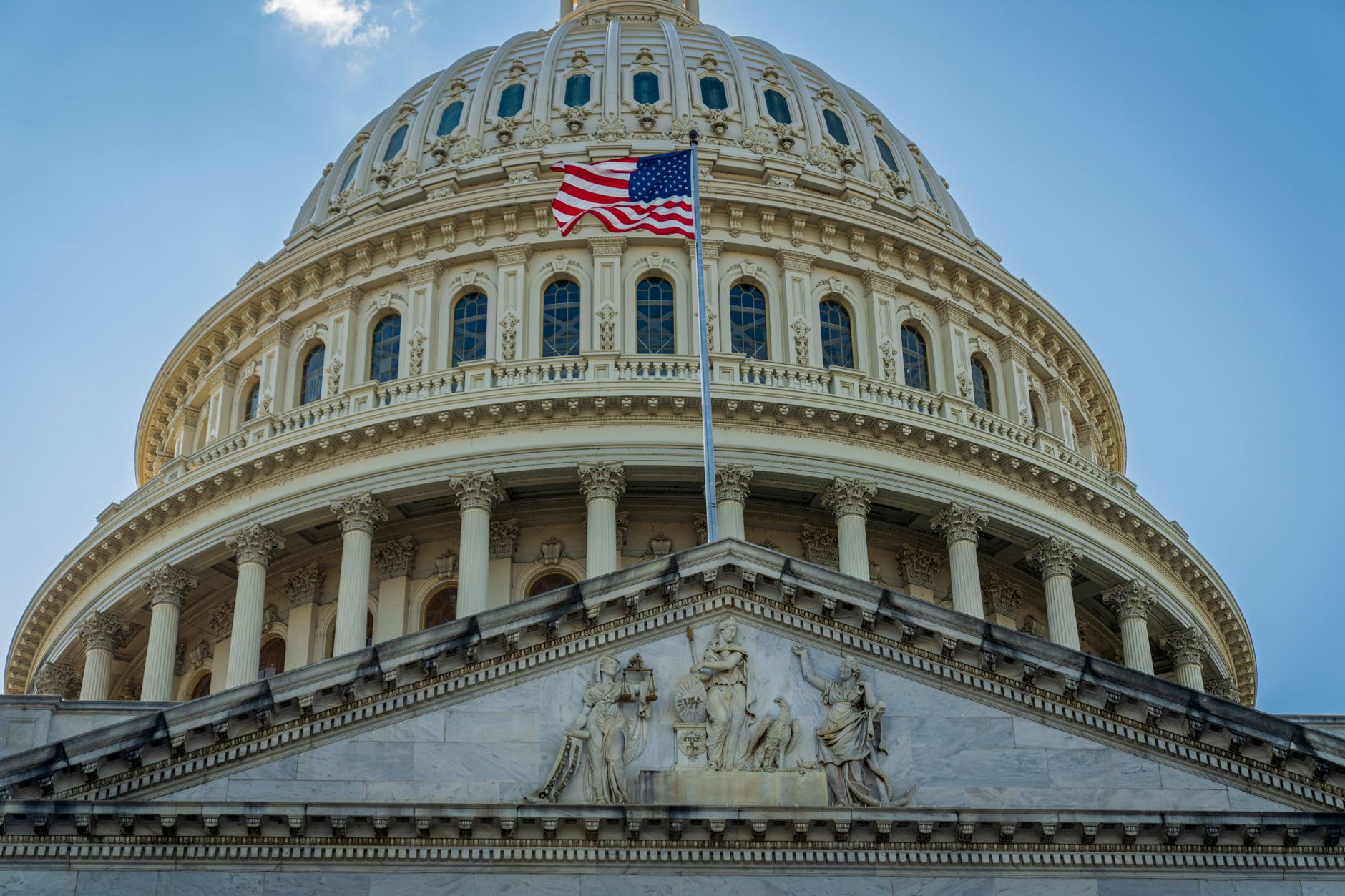
The United States Senate is one of the two chambers of United States Congress, the national bicameral legislature established under Article I of the Constitution. Commonly referred to as the “upper chamber,” it comprises one hundred members — two elected from each of the fifty states — who serve six-year terms. The Senate exercises several constitutional powers not shared with the House of Representatives, giving it a distinctive and influential role in American governance.
Overview
The Senate was designed at the Constitutional Convention of 1787 as part of the “Great Compromise,” which resolved a fundamental disagreement between more-populous and less-populous states over the structure of the new legislature. Delegates from smaller states insisted on equal state representation; the result was a bicameral body in which the House of Representatives apportions seats by population while the Senate grants equal representation — two seats — to every state regardless of its size or population.
This structural choice has shaped every aspect of the Senate’s character: its membership, its procedural culture, its electoral geography, and its relationship to the other branches of the federal government. The founders intended the Senate to be a more deliberative, slower-moving body than the House — a “cooling saucer,” as the metaphor attributed to George Washington has it — insulated from rapid shifts in popular opinion by longer terms and staggered elections.
Originally, senators were chosen by their respective state legislatures, a method that reflected the founders’ mixed views on direct democracy. The Seventeenth Amendment, ratified in 1913, replaced legislative selection with direct popular election, aligning senatorial selection more closely with democratic norms while preserving the equal-state-representation structure.
Why the Senate Matters in Politics
The Senate occupies a pivotal position within the American system of separation of powers. Its influence extends beyond ordinary legislation into areas that directly shape the composition and conduct of the other two branches:
- Judicial appointments: Every federal judge — including every Supreme Court Justice — must be confirmed by the Senate. Control of the Senate therefore has long-term consequences for the ideological direction of the federal judiciary.
- Executive appointments: Cabinet secretaries, ambassadors, and the heads of major federal agencies are all subject to Senate confirmation, giving the chamber ongoing leverage over the executive branch.
- Treaty ratification: No international treaty can enter into force without approval by a two-thirds supermajority of the Senate, making it a co-participant in foreign policy.
- Impeachment trials: When the House votes to impeach a president, federal judge, or other civil officer, the Senate serves as the court of trial, with conviction requiring a two-thirds vote.
- Legislative gatekeeping: Because all federal legislation must pass both chambers, the Senate can block, reshape, or delay any bill passed by the House, and vice versa.
The cumulative effect of these powers is that the Senate is rarely a passive institution. Its consent — or its refusal to give it — shapes the personnel, policies, and legal framework of the entire federal government. This makes control of the Senate a central objective in American electoral politics, and Senate elections often function as national referendums on the parties’ competing visions of governance within a liberal democratic system.
Structure and Composition
Membership and Terms
The Senate’s one hundred members each represent an entire state. Senators serve six-year terms, and terms are staggered into three “classes” so that approximately one-third of seats are contested every two years. This arrangement means that even a sweeping election result can change only a portion of the Senate’s membership at once, providing institutional continuity and moderating the pace of political change.
Presiding Officers
The Vice President of the United States serves constitutionally as President of the Senate. In this capacity, the Vice President may cast a tie-breaking vote — the only vote the Vice President is ordinarily permitted to cast. This role can carry practical significance when the chamber is evenly divided, occasionally giving the executive branch a direct stake in Senate outcomes. In the Vice President’s absence, the President pro tempore — by convention the longest-serving senator of the majority party — presides. Routine floor proceedings are typically managed by junior senators designated to fill the chair on a rotating basis.
Party Leadership
Floor leadership is exercised by the Majority Leader and the Minority Leader, each elected by their respective party caucuses. The Majority Leader controls the Senate’s legislative calendar and is the central figure in scheduling votes, negotiating procedural agreements, and managing coalition strategy. Party Whips assist leaders in tracking members’ positions and securing votes.
Committees
The Senate conducts the bulk of its substantive legislative and oversight work through a system of standing committees, each organized around a broad policy domain — foreign relations, judiciary, appropriations, finance, armed services, and others. Committees hold hearings on legislation and nominations, conduct investigations, and mark up bills before they reach the full Senate floor. Committee chairmanships are held by members of the majority party, and seniority has historically influenced committee assignments, though party leadership retains considerable discretion.
Distinctive Constitutional Powers
Advice and Consent on Nominations
Article II, Section 2 of the Constitution grants the Senate the power to advise and consent on presidential nominations to a wide range of offices. The confirmation process typically begins with a committee hearing, during which nominees testify and answer senators’ questions, followed by a committee vote and then a floor vote. The threshold for confirmation is ordinarily a simple majority. This power extends to Supreme Court justices, lower federal court judges, cabinet officers, ambassadors, and numerous other executive branch positions. The confirmation of Bradford P. Wilson as the 12th Archivist of the United States is a recent example of this function in practice.
Treaty Ratification
Treaties negotiated by the executive branch require the approval of two-thirds of senators present and voting to take effect as binding law. This supermajority requirement gives the Senate substantial influence over American foreign policy and has historically led presidents to pursue executive agreements — which do not require Senate ratification — as an alternative mechanism for international commitments.
Impeachment Trials
Following a vote of impeachment by the House of Representatives, the Senate convenes as a court of trial. The Chief Justice of the United States presides when the president is the subject of trial. Conviction and removal from office requires a two-thirds supermajority vote. The Senate may additionally vote to bar a convicted individual from holding future federal office.
Electoral Mechanics
Direct Election and the Seventeenth Amendment
Since the ratification of the Seventeenth Amendment in 1913, senators have been elected by direct popular vote within their states. Each state holds its own election, and both of a state’s Senate seats are never on the ballot in the same general election cycle except when a vacancy requires a special election.
Vacancy Appointments
When a Senate seat becomes vacant — through death, resignation, or removal — most states authorize the governor to appoint a temporary replacement who serves until a special or regularly scheduled election. Appointed senators may seek election in their own right, and they can benefit from the visibility and resources of incumbency, though their appointed status may also become a point of contestation with voters.
Primary Elections
Each party’s Senate nominee is determined through a primary election, the rules of which vary by state. Some states require a runoff primary if no candidate clears a specified vote threshold. A small number of states have adopted alternative systems; Alaska, for example, uses a ranked-choice voting format in its general elections, a mechanism that changes how candidates build coalitions and has drawn national attention and outside spending to contests that might otherwise be lower-profile.
Electoral Geography and Partisan Competition
Because Senate seats are allocated equally among states rather than proportionally to population, the chamber’s partisan composition does not strictly mirror the national popular vote. Senators from Wyoming and California each hold one seat and cast one vote, despite representing vastly different constituent populations. This structural feature has historically advantaged whichever major party draws more support from less-populous, more-rural states.
Control of the Senate has shifted between the Republican Party and the Democratic Party multiple times in recent decades, making competitive Senate election cycles consequential for confirming judicial nominees, advancing legislative agendas, and exercising executive oversight. Because only a fraction of seats are contested in any given cycle, the particular states whose seats are up for election shape the terrain of competition — an advantage for whichever party holds more safe seats in that cycle’s class, and a vulnerability for the party defending seats in unfavorable states.
Some states have exhibited long-standing single-party dominance in Senate elections. Kansas, for instance, did not elect a Democratic senator for a period spanning many decades into the modern era, illustrating how deeply partisan alignment can be embedded in individual state electorates — and how unusual it is when those patterns shift.
The Senate’s Role in Checks and Balances
The Senate’s design embeds it deeply within the constitutional architecture of separation of powers and checks and balances. Its confirmation power ties the legislative branch to the composition of the executive and judicial branches. Its supermajority requirements for treaties, conviction on impeachment, and overriding presidential vetoes ensure that consequential actions require broad consensus rather than narrow majorities.
The Senate’s internal rules have also historically allowed minority factions to delay or obstruct legislation through extended debate — a feature without a direct equivalent in most comparable legislative chambers and one that has been periodically contested and modified. The interplay between majority efficiency and minority protection remains a recurring source of institutional tension, reflecting a fundamental question in democratic governance about how to balance decisive action with deliberative caution.
Comparative observers frequently note the contrast between the Senate’s role and that of upper chambers in parliamentary systems. Unlike the House of Commons-dominated structure of the United Kingdom — where executive authority derives from legislative confidence — the Senate operates within a presidential system in which the executive is independently elected and the Senate’s confirmatory and ratifying powers function as genuine constraints rather than formalities.
Key Facts
| Feature | Detail |
|---|---|
| Established | Article I, United States Constitution (1789) |
| Total membership | 100 senators |
| Seats per state | 2 |
| Term length | 6 years |
| Election cycle | Approximately one-third of seats every 2 years |
| Presiding officer | Vice President of the United States |
| President pro tempore | Typically longest-serving majority-party senator |
| Treaty ratification threshold | Two-thirds supermajority |
| Impeachment conviction threshold | Two-thirds supermajority |
| Direct election established | Seventeenth Amendment, ratified 1913 |
| Nominations confirmed | Simple majority (ordinarily) |
Frequently Asked Questions
Why does each state have exactly two senators regardless of population? This arrangement was the product of the “Great Compromise” at the 1787 Constitutional Convention, which balanced the interests of smaller states — which feared being dominated by more-populous states in a purely population-proportional legislature — with those of larger states. Equal state representation in the Senate was the price of smaller states’ agreement to the new constitutional framework.
How does the Senate differ from the House of Representatives? The House apportions its 435 seats by state population and its members serve two-year terms, meaning the entire chamber faces election every cycle. The Senate has 100 members — two per state — serving staggered six-year terms. The Senate also holds exclusive constitutional powers the House does not share: confirming nominations, ratifying treaties, and trying impeachments.
What is the role of the Vice President in the Senate? The Vice President serves as President of the Senate under the Constitution but does not ordinarily vote or participate in debate. The Vice President may cast a tie-breaking vote when the chamber is evenly divided — a power that can be consequential when the parties hold fifty seats each.
What happens when a Senate seat becomes vacant? In most states, the governor is empowered to appoint a replacement senator to serve until the next applicable election. The specifics vary by state law: some require the appointment to be from the same party as the departing senator; others impose no such requirement. Appointed senators may subsequently run for the seat in their own right.
What is the significance of supermajority requirements in the Senate? The Constitution requires a two-thirds supermajority for treaty ratification and conviction in impeachment trials — and a two-thirds vote of both chambers to override a presidential veto. These thresholds reflect the founders’ intention that certain consequential decisions require cross-partisan consensus rather than simple majority preference, protecting against narrow factional control over matters of fundamental importance.
How does the Senate’s equal-state representation affect national politics? Because the Senate is not apportioned by population, the chamber’s partisan balance does not necessarily reflect the distribution of the national popular vote. Senators from less-populous states carry the same legislative weight as those from the most-populous states, meaning geographic and demographic patterns of partisan strength can translate into durable Senate majorities or minorities that diverge from simple vote-count plurality.
About The Author