European Foreign Ministers Gather to Discuss New Steps Against Moscow
 Sophie Gesture
A single word in a diplomatic headline can carry enormous weight. That word, on the morning of 2 September 2026, was “new.”
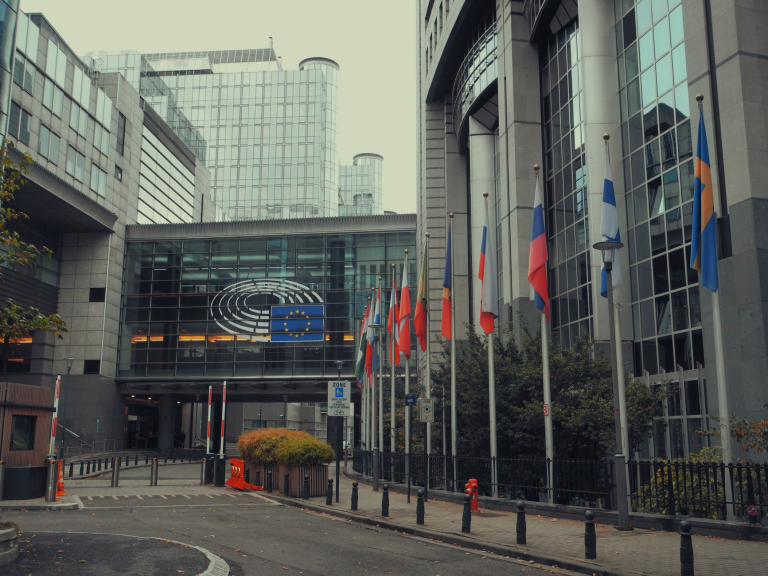
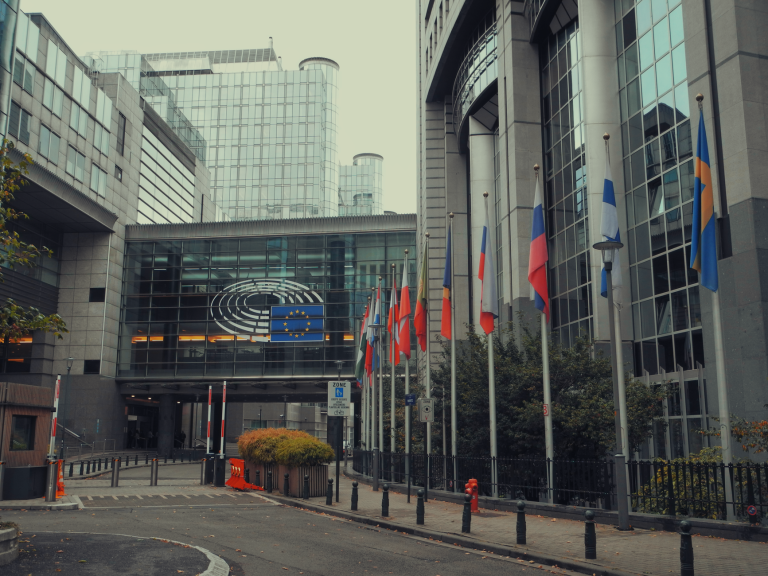
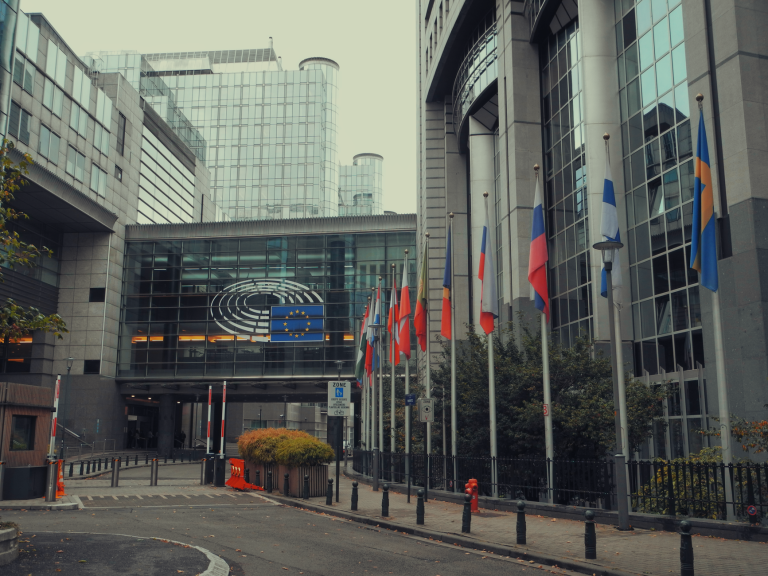
European foreign ministers gathered — in a format, at a venue, and with an agenda that have not yet been publicly detailed — to discuss new steps against Moscow. Reported by Belga Share, the Belgian press agency distribution service whose coverage tends to track European Union-level diplomatic activity closely, the story arrived early in the morning UTC, consistent with either the opening of a meeting or an advance dispatch filed ahead of scheduled talks. What it tells us, stripped of any further detail, is this: the conversation among European governments about how to respond to Moscow has moved again. The question of what it has moved toward is one that will take more time, and more reporting, to answer.
What One Word Tells Us — And What It Doesn’t
The architecture of the Belga Share headline rewards careful reading. “New steps” is not “new sanctions.” It is not “new military support,” “new expulsions,” or “new diplomatic démarches.” The deliberate vagueness of “steps” is itself a signal — either of the early stage of internal deliberations, of intentional ambiguity maintained ahead of any formal announcement, or simply of the limits of what a wire service knew at the time of publication.
What can be said with reasonable analytical confidence, purely from the language of the headline:
- The use of “new” implies that existing measures directed at Moscow are already in place and that the discussion concerns expanding, supplementing, or reconfiguring them in some way.
- The involvement of “European Foreign ministers” — plural, and collective — suggests a multilateral format rather than a bilateral exchange, though whether this refers to an EU Foreign Affairs Council session, an emergency convening, or a smaller coalition of states cannot be confirmed from the available evidence.
- Belga Share’s coverage of the story indicates it was considered newsworthy in a Belgian and broader European context — which is itself a data point, since the Belgian agency would be expected to prioritise stories with clear relevance to EU-level foreign policy.
Beyond these inferences, the factual record from the source material is thin. No individual ministers have been confirmed as attendees. No specific measures are named. No country positions have been reported. Any account that fills those gaps from sources other than the confirmed material would be speculation, and this account will not provide it.
The Broader Signal: Europe in Motion Against Moscow
The timing and framing of this meeting do not exist in a vacuum — even if the research brief constrains what can be confirmed. Separate headlines circulating on the same day and in the days immediately preceding it paint a sharper picture of the environment in which European foreign ministers were convening.
The EU summoned the Russian envoy over a failed drone attack in Leipzig. EU foreign policy chief Kaja Kallas described what she called an alleged Russian drone plot as “state-sponsored terrorism.” Multiple outlets — from DW to The Boston Globe to the Bozeman Daily Chronicle — were tracking European deliberations over a response to that specific incident. The Globe and Mail characterised the broader continental mood with the phrase “Joy in the Darkness,” a formulation that captures something real about the psychological register of European politics in this period: a continent aware of threat, uncertain of its instruments, searching for coherence.
| Concurrent Headline | Publication | Relevance |
|---|---|---|
| EU summons Russian envoy over failed Leipzig drone attack | DW.com | Direct escalation trigger for European response |
| Kallas calls alleged Russian drone plot ‘state-sponsored terrorism’ | The Boston Globe / Bozeman Daily Chronicle | Senior EU official frames event as state action |
| European Foreign ministers discuss new steps against Moscow | Belga Share | The meeting under analysis |
| European Politics: Joy in the Darkness | The Globe and Mail | Characterises broader continental mood |
Into that environment, a meeting of European foreign ministers to discuss new steps against Moscow is not a routine diplomatic calendar entry. It is a response — to something, and to a cumulative pressure that has clearly been building.
The Belgian government’s own position on Russian assets, reported just days before this meeting, had already signalled that Brussels was operating in a climate of heightened caution and deliberation over how European institutions engage with the Russia file. A foreign ministers’ meeting in that same week fits a pattern of intensifying diplomatic activity, not an isolated event.
The Format Question: Why It Matters Who Was in the Room
One of the analytically significant unknowns in this story is the format of the meeting itself. European foreign ministers can convene in several distinct institutional configurations, each carrying different weight and different procedural consequences.
EU Foreign Affairs Council
The most institutionally significant format would be the EU Foreign Affairs Council, which brings together the foreign ministers of all 27 member states and is chaired by the EU’s High Representative for Foreign Affairs and Security Policy. Decisions taken at this level — particularly on sanctions or other restrictive measures — carry legal force across the Union and require specific procedural steps to implement.
Emergency or Extraordinary Session
An extraordinary convening outside the regular FAC schedule would signal that the situation was considered urgent enough to break normal diplomatic rhythms. Emergency sessions have historically been called in response to acute developments — military escalations, large-scale incidents, significant political crises.
Smaller Coalition Format
A third possibility is that the meeting involved a subset of European governments rather than all 27 member states — a “coalition of the willing” format that has become more common in European security discussions in recent years. Such meetings carry political weight but lack the formal institutional authority of full Council decisions.
The distinction matters enormously for assessing what “new steps” might actually mean. A full FAC discussion could precede binding decisions. A smaller coalition meeting might produce a joint statement, a coordinated posture, or the groundwork for a proposal to be brought to the full Council later.
What Different Formats Could Mean for Outcomes
| Format | Institutional Weight | Typical Output | Time to Implementation |
|---|---|---|---|
| Full EU Foreign Affairs Council | Highest | Council decisions, legal measures | Weeks to months |
| Emergency extraordinary session | High | Statements, mandate to act | Days to weeks |
| Smaller coalition meeting | Political, not legal | Joint communiqués, coordinated positions | Variable |
| Informal ministerial gathering | Low-medium | Signals, not decisions | Indeterminate |
None of these formats can be confirmed from the available source material. But understanding the range of possibilities is essential to reading what the Belga Share headline does and does not tell us.
Key Players and Institutional Actors
The research brief confirms no individual names. What follows is therefore framed around the institutional roles that would typically be involved in a meeting of this nature, as implied by the headline.
The collective reference to “European Foreign ministers” points to national-level actors — the foreign ministers of European states — rather than purely supranational EU officials. In a full FAC setting, the High Representative of the Union for Foreign Affairs and Security Policy would also participate and chair the meeting. Kaja Kallas, who has been separately quoted in concurrent coverage describing an alleged Russian drone plot as “state-sponsored terrorism,” holds that role at the time of this reporting — and her framing of recent events provides the clearest publicly available signal of where the EU’s senior foreign policy leadership stands.
Alongside her, the positions of individual member states’ foreign ministers would shape the contours of any collective outcome. European foreign policy on Russia has historically involved:
- Significant divergence between states with direct historical experience of Russian pressure (particularly in the Baltic and Nordic region) and those geographically and historically more distant from it
- Ongoing debates over economic costs and the appetite for further restrictive measures
- Questions about unanimity requirements for certain categories of foreign policy decision under EU treaty structures
None of these specific dynamics can be attributed to this particular meeting from the available evidence. They are structural features of European foreign policy decision-making that any informed reader of the Belga Share headline would recognise as likely in play.
What “New Steps” Has Typically Meant in This Context
Because the research brief does not specify what steps were under discussion, analysis must stay at the level of the general and the structural. Across the recent history of European collective responses to Moscow, “new steps” has covered a wide range of possible instruments:
Economic and financial instruments:
- Sectoral sanctions targeting specific industries or financial flows
- Asset freezes and travel bans on named individuals or entities
- Restrictions on trade in specific categories of goods
- Mechanisms related to frozen or seized Russian state assets
Diplomatic instruments:
- Expulsion of diplomatic personnel
- Suspension or termination of bilateral agreements
- Formal démarches, including the summoning of ambassadors
- Coordinated public statements designed to name and shame
Security and defence-related instruments:
- Decisions on military support and capability transfer
- Intelligence-sharing arrangements
- Coordination of defensive postures among European states
Legal and accountability instruments:
- Support for international legal processes
- Measures related to evidence-gathering for accountability mechanisms
The Belga Share headline does not place the 2 September 2026 discussion in any of these specific categories. The word “steps” encompasses all of them. What can be inferred is that at least some European governments believed, by this point, that the existing toolkit was insufficient — and that a conversation about what to add to it had become urgent enough to warrant a formal ministerial meeting.
Scenarios: What Could Come Next
Drawing on the logic of European diplomatic process, several plausible trajectories emerge from a meeting of this nature. These are analytical scenarios, not predictions.
Scenario One: Formal Sanctions Package in Preparation
The most structurally significant outcome would be a decision to mandate the European Commission and the Council’s legal services to prepare a new package of restrictive measures for formal adoption. This process typically takes weeks and involves legal review, member state consultation, and eventually a Council vote. If the 2 September meeting was the political trigger for such a process, a formal announcement of new sanctions could follow within weeks to months.
Scenario Two: Joint Public Statement and Coordinated Diplomatic Pressure
A less formal but still significant outcome would be a joint statement, issued collectively by participating foreign ministers, condemning specific Russian actions and signalling intent to act further. Such statements serve an immediate signalling function — directed at Moscow, at domestic audiences, and at allies — without necessarily committing to specific legal measures.
Scenario Three: Internal Disagreement Delays Concrete Action
European foreign policy coordination on Russia has historically been subject to friction between member states with different threat perceptions, economic interests, and domestic political pressures. One scenario is that the 2 September meeting surfaces disagreements significant enough to delay any concrete outcome, with the discussion effectively referring the question back to further consultations. This would not make the meeting meaningless — even a documented failure to agree is information — but it would mean that “new steps” remain discussed rather than decided.
Scenario Four: Bilateral or Coalition Action Outside Full EU Framework
If consensus among all 27 member states proves elusive, a smaller coalition of European governments could announce coordinated action outside the formal EU framework — national-level measures, bilateral agreements, or joint statements by a subset of states. This has happened before in European foreign policy and carries political weight even without full institutional authority.
A Continent Searching for Coherence
For those tracking EU political news across this period, the Belga Share headline on 2 September 2026 sits within a visible pattern. European governments have been under sustained pressure to demonstrate that their collective response to Moscow is not merely reactive, not merely symbolic, and not stuck in processes that move too slowly to match the tempo of events on the ground and in the air — as the alleged Leipzig drone plot made viscerally clear.
The challenge for European foreign ministers gathering to discuss “new steps” is not merely one of political will. It is one of institutional architecture: the EU’s foreign policy decision-making structures were built for a world in which threats arrived more slowly and in forms more susceptible to deliberate, treaty-bounded responses. The word “new” in that Belga Share headline could mean a new sanction, a new diplomatic initiative, or a new understanding — still forming, still contested — of what European collective power actually means when a state actor is willing to send drones over German cities.
The meeting happened. The discussion was happening. What it produced will be the story that matters — and until that story is told in full, the gap between the headline and the outcome is exactly where European foreign policy lives: tense, unresolved, and consequential.
About The Author