Sophie Gesture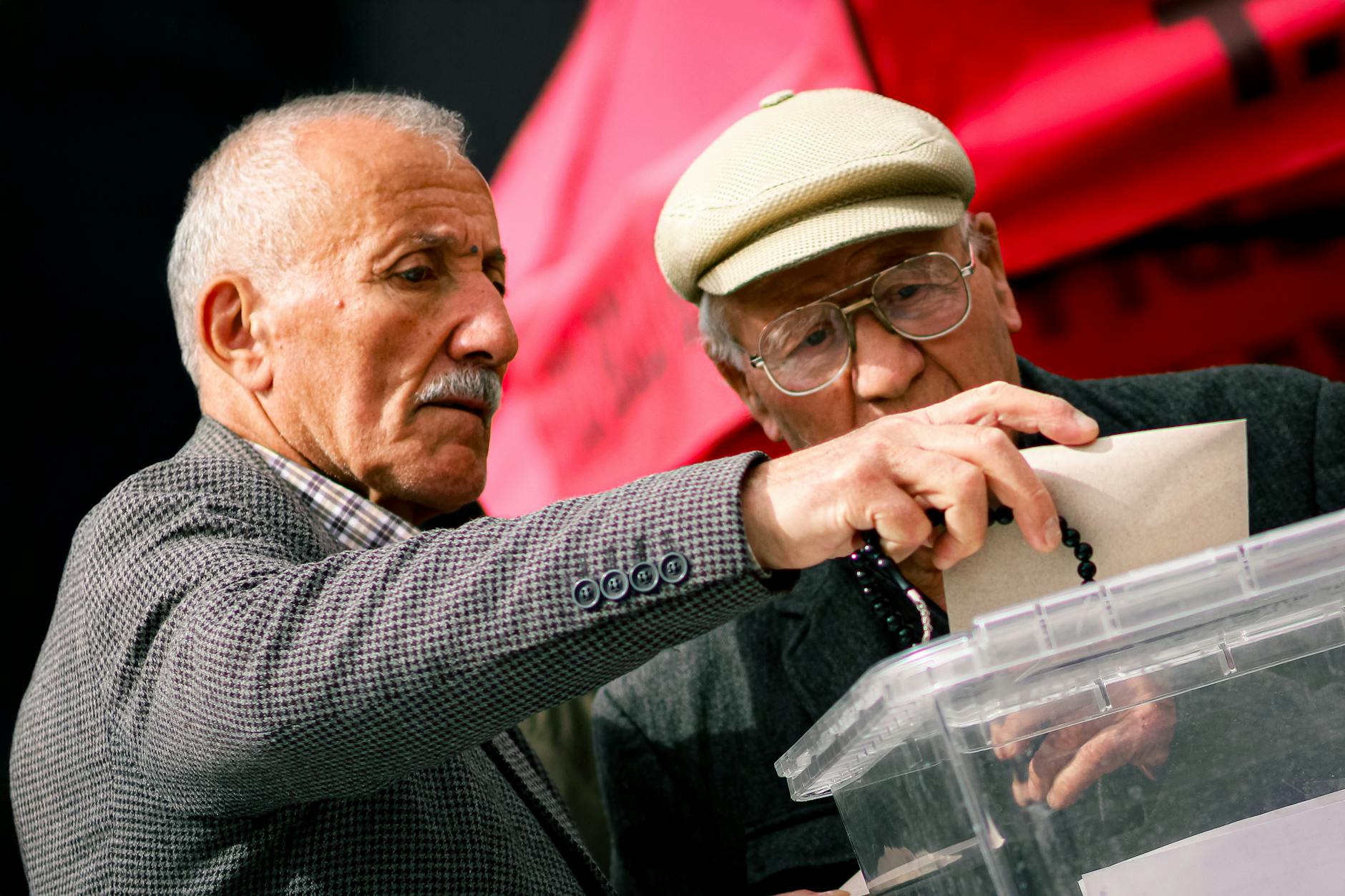
One hundred thousand people fled Nagorno-Karabakh in 72 hours. That is not a metaphor. That is what happened in September 2023, and it is the brutal fact against which everything Nikol Pashinyan does next must be measured.
Pashinyan’s Civil Contract party winning approximately 54% in Armenia’s snap parliamentary elections is a mandate — clear, democratic, internationally validated. The OSCE/ODIHR called it broadly free and fair. His nearest rival, the pro-Russian Armenia Alliance under former President Robert Kocharyan, limped home at roughly 9%. The election wasn’t close. But elections are the easy part. What Pashinyan now faces is something far more dangerous: signing a peace agreement with a neighbor that just ethnically cleansed 100,000 of his people, rewriting a constitution that enshrines a national dream, and pivoting his entire country away from Moscow — all while staying alive politically. The next four years will define whether Armenia survives as a coherent state or becomes a case study in what happens when small democracies try to rewrite their geopolitical DNA under direct military threat.
How the Fall of Karabakh and Three Decades of Russian Dependency Set the Stage for Pashinyan’s Gamble
To understand what Pashinyan inherited, you need to understand the weight of what was lost. The 44-day Nagorno-Karabakh War of September–November 2020 was a military catastrophe. Azerbaijan, armed with Turkish Bayraktar drones and Israeli Harop loitering munitions, dismantled Armenian defensive lines with a precision that exposed decades of military stagnation. Armenia lost significant territory. Pashinyan, who had swept to power in the 2018 Velvet Revolution on a wave of anti-corruption energy, suddenly looked like a leader who had walked his country into disaster.
He survived that humiliation. Then came September 2023 — and surviving the second blow was harder. Azerbaijan’s 24-hour offensive dissolved the enclave entirely. The speed was almost incomprehensible. What had been a frozen conflict for 30 years was unfrozen, resolved, and erased inside a single news cycle. The 100,000 ethnic Armenians who fled represent one of the fastest forced displacements in modern European history — a demographic collapse that arrived in Yerevan with nothing but the clothes on their backs and a catastrophic claim on Armenia’s already-strained public services.
The Russian failure was total. Armenia had been a CSTO member — the Collective Security Treaty Organization, Moscow’s answer to NATO — for decades. Russian peacekeepers were literally stationed in Nagorno-Karabakh under the 2020 ceasefire agreement. They did nothing. Pashinyan said so publicly, which in the context of Armenian-Russian relations was roughly equivalent to a declaration of war. Armenia subsequently froze its CSTO participation and began making moves that would have been unthinkable three years earlier.
| Key Event | Year | Strategic Impact |
|---|---|---|
| Velvet Revolution; Pashinyan takes power | 2018 | Democratic mandate; anti-corruption reform begins |
| 44-Day War; major territorial losses | 2020 | Military humiliation; Russian credibility damaged |
| Azerbaijan’s 24-hour Karabakh offensive | Sept 2023 | Enclave dissolved; 100,000 displaced; CSTO exposed |
| Armenia freezes CSTO participation | Late 2023 | Formal rupture with Moscow’s security architecture begins |
| EU deploys EUMA civilian monitoring mission | 2024 | First Western security presence in South Caucasus |
| €270 million EU macro-financial package announced | April 2024 | Brussels replaces Moscow as primary economic patron |
| Civil Contract wins snap elections (~54%) | June 2024 | Pashinyan receives four-year mandate for Western pivot |
| Armenia applies for EU candidate status | Early 2025 | Most dramatic geopolitical declaration since independence |
This is the context Europe too often skips. The EU’s accelerating engagement with Armenia — the EU political news cycle has covered it in fragments — is not charity. It is a calculated bet that a democratic Armenia anchored to Brussels is worth more to European security than a resentful Armenia drifting back toward Moscow.
Pashinyan’s Four-Year Mandate Meets Aliyev’s Four Unresolved Demands — The Peace Treaty That Still Doesn’t Exist
Here is the central absurdity of Armenia’s situation: Pashinyan won the election. He has the mandate. He has Brussels behind him, a €270 million assistance package on the table, and a domestic opposition reduced to single digits. And yet the most important document of his political career — a peace treaty with Azerbaijan — remains unsigned. As of mid-2025, that treaty does not exist.
The sticking points are not trivial. They cut to the bone of Armenian identity, sovereignty, and physical security:
- Constitutional amendment demand: Ilham Aliyev insists Armenia amend its constitution, which references the 1990 Declaration of Independence — language that implies territorial claims to Karabakh. Pashinyan has floated the idea. His opposition calls it cultural suicide. Holding a referendum on removing references to Karabakh from the Armenian constitution would be one of the most politically explosive acts any post-Soviet leader has attempted.
- The Zangezur Corridor: Azerbaijan and Turkey want a direct land corridor through Armenia’s Syunik region connecting Azerbaijan to its Nakhchivan exclave. Armenia refuses to accept provisions that would compromise its sovereignty over this stretch of territory. This is not an abstract dispute — Syunik is a narrow strip of Armenian land that, if a corridor were granted under Azerbaijani control, would effectively cut Armenia in two.
- Prisoners of war: Hundreds of Armenian POWs and civilians remain in Azerbaijani detention. This is not a bureaucratic matter. These are sons, fathers, brothers. Every week this goes unresolved is a week Pashinyan’s domestic critics use against him.
- Border demarcation: The physical border between Armenia and Azerbaijan remains undemarcated in multiple sections. Shooting incidents continued as recently as late 2024. People are still dying.
The EU has invested enormous diplomatic capital here. Charles Michel facilitated multiple rounds of Pashinyan-Aliyev talks in Brussels. Ursula von der Leyen pledged the €270 million package. The EU-Armenia Partnership Agenda launched in 2024. The European Union Monitoring Mission (EUMA) — the first Western security presence ever deployed in the South Caucasus — now patrols Armenia’s borders. Brussels is all-in. The question is whether Aliyev sees any incentive to finalize a deal when the status quo already gives him everything he wanted. Armenia is not in a position to take back Karabakh by force. Time is on Baku’s side. Just as Brussels has been learning with Ukraine’s EU bid — where the clock is already running and the politics are ferociously complex — promising a path to integration is far easier than delivering one.
Pashinyan, Aliyev, Kocharyan, and Putin: Four Men Shaping Whether Armenia Has a Future
Nikol Pashinyan
Pashinyan is a former journalist who led a street revolution and became prime minister with no prior executive experience. His political gift is reading the moment. His vulnerability is that reading the moment correctly and selling it to a traumatized public are entirely different skills. He understands, with cold clarity, that Russia failed Armenia and that the EU represents the only realistic path to security and economic modernization. He has said this publicly, repeatedly, at cost. What he has not yet demonstrated is the ability to lead Armenia through the constitutional referendum that Aliyev demands — a vote that would require Armenians to formally bury the dream of Karabakh in law. That test is still coming.
Ilham Aliyev
Aliyev holds the stronger hand and knows it. He has reclaimed all the territory his father lost. He has shattered the CSTO’s credibility. He has Turkey — NATO’s second-largest military — as a full strategic partner. His preconditions for a peace treaty are not negotiating positions; they are demands issued from a position of complete dominance. The question analysts ask is whether Aliyev actually wants a finalized peace treaty, or whether keeping the process unresolved gives him perpetual leverage over Yerevan and perpetual justification for military readiness.
Robert Kocharyan
Kocharyan — former president, twice, from 1998 to 2008 — is the face of pro-Russian opposition in Armenia and Pashinyan’s most persistent domestic antagonist. His 9% result in the election was a humiliation. But don’t write him off. Kocharyan’s argument — that Pashinyan has capitulated, that abandoning Russia leaves Armenia naked against Azerbaijan, that constitutional changes are national betrayal — resonates with a segment of Armenian society that cannot reconcile itself to the loss of Karabakh. If Pashinyan’s peace process stalls, or if Azerbaijan presses militarily again, Kocharyan’s narrative gets oxygen.
Vladimir Putin
Putin has been largely sidelined from South Caucasus mediation since 2023, a development that would have seemed impossible five years ago. Russian troops remain at the Gyumri base in Armenia under a basing agreement, but that arrangement is visibly living on borrowed time. Russia’s Ukraine war has consumed its diplomatic bandwidth, degraded its military prestige, and made it a radioactive partner for any country trying to court the West. Moscow’s influence in Armenia has not evaporated — but it has collapsed from the defining force in Armenian security to a background noise of resentment and residual dependency.
Why Pashinyan’s Critics on All Sides Are Missing the Actual Problem
Let’s be honest about what everyone is getting wrong here.
The pro-Russian opposition — Kocharyan’s camp — talks about capitulation as if there is an alternative. There isn’t. Armenia does not have the military capability to retake Karabakh. Russia demonstrated in September 2023 that it will not fight for Armenian interests when doing so conflicts with its own calculations. Staying inside the CSTO while Moscow is neck-deep in Ukraine would mean staying inside a security structure that offers no security. Kocharyan’s argument is emotionally resonant and strategically bankrupt.
But Pashinyan’s Western supporters deserve equal scrutiny. Brussels has deployed monitors, pledged money, and issued statements. What it has not done is provide hard security guarantees. The EUMA mission is civilian. It has no mandate to stop Azerbaijani tanks. The €270 million package is real money for a small economy, but it does not alter the military balance of power in the South Caucasus by a single caliber. Europe applauds Armenia’s pivot without taking the hard step of actually defending it — a pattern that, as observers tracking Europe’s most difficult security conversations have noted, runs through nearly every EU engagement in contested post-Soviet space.
Azerbaijan, meanwhile, presents itself as the aggrieved party demanding legitimate constitutional changes from a neighbor that still harbors irredentist language. That framing obscures what actually happened: the forced displacement of 100,000 people in 72 hours. You do not get to ethnically cleanse an enclave and then claim the moral high ground in a peace negotiation. Aliyev is negotiating from strength, not from right.
And Russia — now reduced to sulking from the Gyumri base — is running an influence operation premised on the idea that Armenia has nowhere else to go. That bet is losing, slowly and then all at once.
The actual problem that nobody wants to say plainly: Armenia is attempting a 180-degree geopolitical turn while its stronger neighbor holds prisoners, occupies disputed borders, and issues constitutional ultimatums. As Carnegie’s Thomas de Waal has noted, this is an almost unprecedented challenge for a small, landlocked state. The EU can offer a destination. It cannot guarantee safe passage.
Four Scenarios for Armenia’s Peace Process and EU Path Over the Next 18 Months
The next 12 to 18 months will determine whether Pashinyan’s mandate produces a historic peace or a historic collapse. Concrete scenarios, in descending order of optimism:
- Scenario 1 — Treaty signed, constitutional referendum called: Pashinyan uses his parliamentary majority to push through a constitutional referendum removing Karabakh references. Aliyev accepts this as sufficient. A peace treaty is signed in Brussels in late 2025. Armenia formally exits the CSTO. EU candidate status advances toward a 2026 confirmation. This is the best-case scenario. It requires Aliyev to actually want a deal, and Pashinyan to survive the domestic political firestorm of the referendum.
- Scenario 2 — Partial deal, frozen on corridor and constitution: A framework agreement is reached on prisoner releases and some border demarcation, but the Zangezur Corridor and constitutional questions remain unresolved. Pashinyan claims partial victory. The EU deepens financial engagement. The full peace treaty is delayed to 2027. This is the most likely scenario — incremental progress masquerading as diplomacy.
- Scenario 3 — Domestic political crisis derails the process: The constitutional referendum triggers street protests. Kocharyan’s opposition finds new energy. Pashinyan’s coalition fractures. Negotiations stall. Azerbaijan interprets the paralysis as an opportunity to press harder on border incidents. This scenario ends Pashinyan’s political career and potentially Armenia’s EU trajectory.
- Scenario 4 — Renewed military conflict: Azerbaijan, frustrated by the pace of constitutional change, uses border incidents as pretext for a limited military operation against Syunik. Russia watches. The EU issues statements. Armenia, with no hard security guarantee, faces an impossible choice between capitulation and a war it cannot win.
| Scenario | Probability | EU Integration Impact | Russian Influence |
|---|---|---|---|
| Treaty signed, referendum succeeds | 20% | Candidate status by 2026 likely | CSTO exit formalized |
| Partial deal, process continues | 45% | Gradual deepening, no formal candidacy yet | Marginalized but present |
| Domestic crisis stalls process | 25% | EU engagement paused, reassessment | Kocharyan-aligned forces gain leverage |
| Renewed military conflict | 10% | Crisis response mode; integration suspended | Gyumri base becomes critical leverage point |
The EU’s approach to post-Soviet democratic transitions — encouraging, financially supportive, militarily absent — is being stress-tested in Armenia in ways that should be making Brussels genuinely nervous. The pattern repeating across summits, from EU-Western Balkans gatherings to South Caucasus engagement, is the same: Europe offers process, not protection.
Pashinyan won the vote. He won it decisively. He has a four-year mandate and a 54% plurality from a population that has been through military catastrophe, mass displacement, and geopolitical abandonment — and still chose the man pointing west. That is not nothing. That is, in fact, remarkable. But the peace test ahead has no good options, only less bad ones, and the margin for error is a country of three million people sandwiched between two regional powers that have already demonstrated they will act without consequence. The question is not whether Armenia can afford to make peace with Azerbaijan. The question is whether it can survive the terms.
About The Author