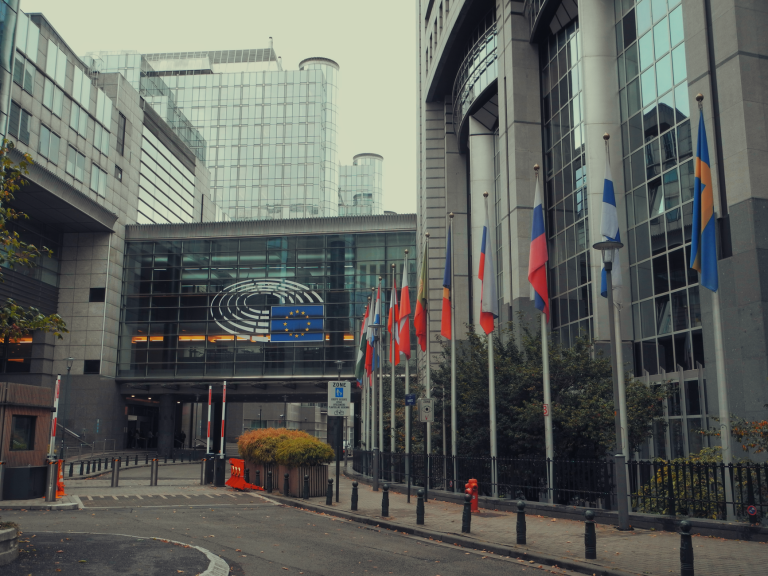
Europe’s Fractured Politics and What They Reveal About Democracy
 Sophie Gesture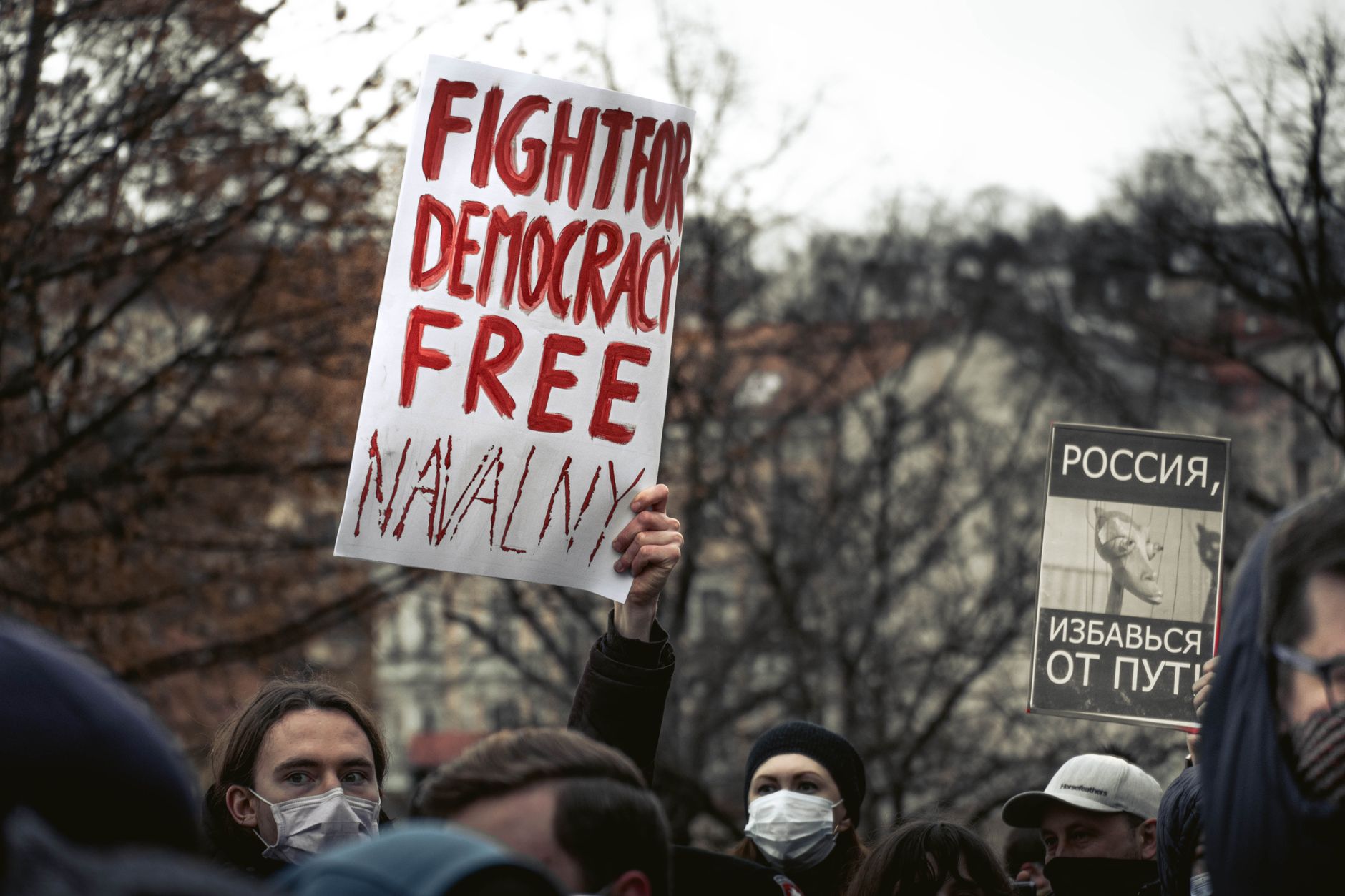
The AfD — a party whose leading figures have casually questioned Germany’s postwar democratic consensus — came second in the February 2025 German federal election with 20.8% of the vote. The best result for a far-right party in postwar German history. In the country that invented the word Vergangenheitsbewältigung. Let that register.
What is actually at stake here is not a temporary disruption to European politics. The fracturing playing out from Paris to Warsaw, from Berlin to Budapest, is a live stress test of whether liberal democracy — with its independent courts, its free press, its inconvenient minority protections — can survive contact with electorates that have been genuinely failed by the institutions claiming to protect them. The answer is not obvious. And anyone who tells you it is has not been paying attention.
How Austerity, Migration, and 15 Years of Broken Promises Built the Far-Right Surge Across Europe
The fracturing did not begin in 2024. It did not begin with Viktor Orbán winning his supermajority in 2010, or with the refugee crisis of 2015. It began much earlier, in the slow erosion of trust that followed the 2008 financial crash, when eurozone austerity hollowed out public services, suppressed wages, and handed mainstream parties an almost comical gift to their opponents: proof that the center could not hold. Eurozone inflation peaked at 10.6% in October 2022, arriving on top of a decade of wage stagnation. Over 1 million asylum seekers reached Germany alone between 2015 and 2016. The housing crisis that followed — Munich apartments now sell at 18 times the average annual salary — compounded a sense of displacement that was economic as much as cultural. Far-right parties did not manufacture these anxieties. They simply arrived with answers when the center offered spreadsheets.
The structural forces driving fragmentation break down into three interlocking failures, each feeding the next:
- Economic discontent: Post-2008 austerity destroyed the credibility of center-left parties that once owned the economic security argument. The center-right absorbed the blame for inequality. Both wings of the old consensus collapsed simultaneously in multiple countries.
- Migration and identity: The EU’s failure to produce a coherent, humane, and enforceable asylum policy for a decade gave nationalist parties a permanent campaign issue. The New Pact on Migration and Asylum, finally adopted in May 2024 after years of fractious negotiation, arrived too late to neutralize the politics.
- Democratic erosion from within: Hungary under Orbán and Poland under Jarosław Kaczyński’s PiS demonstrated something genuinely alarming — that elected governments could systematically dismantle judicial independence, capture public media, and rewrite electoral rules while remaining inside the EU and continuing to receive EU funds. The EU’s Article 7 mechanism, invoked against both countries, proved largely toothless.
| Country | Far-Right Party | 2024 EP Vote Share | Governing Status | Democratic Concern Level |
|---|---|---|---|---|
| Hungary | Fidesz | ~44% | Majority government | Critical — Article 7 active |
| France | Rassemblement National | ~31% | Opposition (largest party) | High — hung parliament |
| Italy | Fratelli d’Italia | ~28% | Leads coalition government | Elevated — press freedom concerns |
| Germany | AfD | ~15.9% | Opposition (second largest) | High — firewall under pressure |
| Slovakia | Smer (Fico) | ~24% | Leads coalition government | High — anti-Ukraine, pro-Russia tilt |
| Netherlands | PVV (Wilders) | ~17% | Leads coalition government | Elevated — rule-of-law scrutiny |
| Poland | PiS | ~36% | Opposition (post-2023) | Reduced — Tusk reversing damage |
| Sweden | Sweden Democrats | ~13% | Supports minority government | Moderate — normalized, not governing directly |
Brookings analyst Célia Belin frames this not as democracy dying but as political competition reorganizing along a new axis — national identity versus globalism — replacing the old left-right economic divide that structured European politics for 70 years. That reframing is intellectually honest. It is also, for those who care about the EU’s democratic architecture, not particularly comforting.
Germany’s Historic AfD Vote, France’s Hung Parliament, and the European Parliament’s New Far-Right Bloc
The year between June 2024 and February 2025 reshaped European politics more dramatically than any comparable period since the early 1990s. The speed matters as much as the substance.
On June 9, 2024, Marine Le Pen’s Rassemblement National won approximately 31% of the French vote in European Parliament elections — more than double Emmanuel Macron’s Renaissance party. Macron’s response was to immediately dissolve the National Assembly and call snap elections. A gamble that failed spectacularly. The July 2024 legislative elections produced a hung parliament, with the left-wing NFP alliance winning the most seats but no majority. France has operated under minority governments since, making sustained policy essentially impossible.
Key developments in the current moment:
- European Parliament, June 2024: The combined far-right blocs — Identity and Democracy plus European Conservatives and Reformists — claimed roughly 25% of seats, their strongest performance in the parliament’s history. Ursula von der Leyen was re-elected Commission President in July 2024 only by cobbling together an uncomfortable coalition that included Giorgia Meloni’s ECR group in all but name.
- Germany, February 2025: After the Scholz coalition’s collapse in November 2024 — a budget dispute that exposed the fundamental incompatibility of its three constituent parties — Friedrich Merz won snap elections on February 23. The AfD came second with 20.8%. Merz was then forced into a procedural vote that passed only with AfD support, shattering the so-called Brandmauer (firewall) that German parties had maintained against any cooperation with the far right.
- Slovakia, May 2024: Prime Minister Robert Fico survived an assassination attempt. He has continued governing, maintaining his pro-Russia foreign policy tilt and blocking EU military aid packages to Ukraine — demonstrating that physical attacks on democratic leaders do not automatically shift political trajectories.
- Ukraine-EU accession: Formal accession negotiations opened in June 2024, a landmark moment. Hungary has repeatedly vetoed or delayed aid packages, using its EU membership as a lever to frustrate collective action. Full membership for Ukraine likely requires a decade minimum and institutional reforms the EU has not yet agreed to pursue.
- Poland’s democratic reversal: Donald Tusk’s return to power in December 2023 offered the most significant counter-narrative — proof that democratic backsliding is not irreversible. Poland hit 74.4% turnout in October 2023, the highest since 1989. Democracy can self-correct. But the repair work is slow, contested, and the Constitutional Tribunal packed by PiS continues to obstruct.
Orbán, Le Pen, Meloni, Macron, and Merz: Five Leaders Defining Democracy’s European Stress Test
Personalities matter in politics. The current moment in Europe has produced a cast of figures who are not simply responding to structural forces — they are actively shaping what democratic norms mean in practice. For the latest analysis on these developments, our EU political news coverage tracks the key shifts as they happen.
Viktor Orbán
Viktor Orbán has run Hungary since 2010, controls a two-thirds parliamentary supermajority, and has used it to pack courts, buy up independent media, rewrite the constitution, and gerrymander electoral districts into a system that makes him nearly unremovable through normal democratic means. He calls it “illiberal democracy.” What it actually is, as leading research on autocratization documents, is competitive authoritarianism — elections that happen but cannot be lost. His repeated vetoes of EU aid to Ukraine have given him leverage far beyond Hungary’s size, exposing the fundamental design flaw of unanimous decision-making in a bloc that now contains bad-faith actors.
Marine Le Pen
Marine Le Pen is simultaneously the most powerful opposition politician in France and a defendant in a criminal trial for alleged misuse of EU parliamentary funds. A conviction — verdict expected in 2025 — could bar her from standing in the 2027 presidential election. Watch that verdict carefully. If she is convicted and barred, her supporters will call it lawfare. If she is acquitted or the sentence suspended, the Rassemblement National enters 2027 with its strongest position ever. Either way, French democracy faces a test of whether its institutions can adjudicate fairly on a figure whose entire political brand is contempt for those institutions.
Giorgia Meloni
Giorgia Meloni has performed a version of normalization that should concern democratic analysts more than it does. She governs Italy as a relatively conventional right-wing prime minister — maintaining NATO commitments, not dismantling courts — while chairing the European Conservatives and Reformists group that provides ideological cover for harder-edged authoritarians across the continent. She has shown that far-right parties can assume power in a G7 country without immediate institutional collapse, which makes the far right elsewhere look more electable, not less dangerous.
Emmanuel Macron
Emmanuel Macron‘s project — the remaking of French and European centrist politics around a post-ideological, pro-EU, technocratic liberalism — is visibly failing. His dissolution gamble cost him his parliamentary majority without gaining anything. He remains president until 2027, but governing in a constitutional system designed for executive dominance while lacking legislative support is a slow-motion constraint. The centrist bet that competence and European solidarity would outperform nationalism has not paid off.
Friedrich Merz
Friedrich Merz is the new German Chancellor, having won on a CDU platform that moved substantially rightward on migration to compete with the AfD — and still needed AfD votes to pass a procedural motion in the Bundestag. His challenge is the defining German political question of this decade: can you govern effectively while maintaining the firewall against the far right, or does governing effectively require, at some point, legitimizing them? He has not answered that question. He has only made it more urgent.
Why Both the Far Right and the Mainstream Are Failing European Democracy — Just Differently
The comfortable liberal narrative runs like this: far-right populists are cynical demagogues exploiting anxious voters to gain power they will then use to dismantle the democratic guardrails that protect everyone. There is substantial truth in this. Orbán is not a misunderstood democrat. The systematic hollowing out of Hungarian judicial independence since 2010 is documented, deliberate, and ongoing.
But the counter-narrative — that mainstream parties are simply the responsible defenders of democratic norms — deserves harder scrutiny than it usually receives. Consider:
- The center-left and center-right governed Europe through the 2008 crash, the austerity years, and the inflation shock of 2022. They did not lose voters to the far right because of disinformation alone. They lost them because of genuine policy failures on housing, wages, and migration management that were foreseeable and largely unaddressed.
- The EU’s democratic enforcement mechanisms — Article 7, rule-of-law conditionality — took years to deploy against Hungary and Poland and have still not produced structural change in Budapest. The Commission’s willingness to release frozen funds to Hungary in late 2023 to secure Orbán’s approval on Ukraine aid was, charitably, a pragmatic trade-off; less charitably, it was democratic conditionality being sold for geopolitical concessions.
- Macron’s decision to call snap elections in June 2024 was a unilateral executive gamble that produced a constitutional crisis in the world’s sixth-largest economy. That is not a far-right assault on democracy. That is a centrist leader making a catastrophic miscalculation with democratic institutions as the collateral.
Ivan Krastev of the European Council on Foreign Relations identifies a “sovereignist wave” that threatens EU cohesion precisely when geopolitical unity against Russia is most needed. He is right about the timing. But the sovereignists did not create the conditions that made their arguments persuasive. And Anna Grzymala-Busse at Stanford is also right that Poland’s democratic reversal — achieved at 74.4% turnout — proves the system can self-correct. The question is whether European electorates will choose that correction before the damage becomes structural rather than merely severe.
Four Scenarios That Will Determine Whether European Democracy Stabilizes or Splinters by 2027
The next two years are not abstract. There are specific decision points — elections, verdicts, accession votes, coalition negotiations — that will either arrest or accelerate European democracy’s fracturing. Here is what to watch and what each outcome likely means.
- Le Pen’s trial verdict (2025): Conviction with ineligibility ends her 2027 presidential candidacy but creates a martyrdom narrative that could boost RN’s base. Suspended sentence or acquittal puts her on a direct path to the Élysée. Either outcome reshapes French politics for a decade.
- Germany’s AfD firewall (2025–2026): Merz’s CDU-SPD coalition is functional but arithmetically thin on issues requiring special majorities. Each vote where AfD support becomes tempting tests whether the firewall holds or gradually dissolves through incremental normalization. The precedent of February 2025’s procedural vote has already been set.
- Ukraine’s EU accession path: If Hungary continues to veto at critical junctures, the EU faces a choice between changing its own voting rules — requiring treaty reform — or accepting that enlargement is effectively hostage to illiberal member states. The Western Balkans accession process has already demonstrated how prolonged ambiguity corrodes rather than incentivizes democratic reform in candidate countries.
- The 2027 French presidential election: If a far-right candidate wins the French presidency — the scenario that seemed unthinkable in 2017 — the EU’s political center of gravity shifts permanently. France and Hungary in alignment would constitute a blocking minority on virtually every significant EU initiative.
| Scenario | Trigger Event | Probability (Est.) | Democratic Impact | EU Cohesion Impact |
|---|---|---|---|---|
| Le Pen barred, RN surges anyway | 2025 conviction with ineligibility | Medium | Institutional crisis narrative intensifies | France remains paralyzed through 2027 |
| Germany’s firewall collapses incrementally | Multiple procedural AfD votes 2025–26 | Medium-High | Far-right normalization in core EU state | Severe — Germany shifts EU balance |
| Ukraine accession stalls indefinitely | Hungarian vetoes + no QMV reform | High | Enlargement credibility destroyed | Moderate — existing members unaffected short-term |
| Far-right wins French presidency 2027 | RN candidate faces weak centrist field | Medium | Existential for EU democratic identity | Critical — France + Hungary = blocking bloc |
| Poland model replicates elsewhere | High turnout anti-populist coalitions | Low-Medium | Proof of democratic self-correction | Positive — restores rule-of-law credibility |
Europe’s fractured politics are not a passing turbulence. They are the result of compounding failures — economic, institutional, and moral — that accumulated over two decades while the people responsible for addressing them convinced themselves that liberal democracy was the natural terminus of history rather than a fragile, contingent achievement that requires constant maintenance. The AfD at 20.8% in Germany, Le Pen at 31% in France, Orbán still in power after 15 years of documented democratic erosion — these are not anomalies. They are the bill coming due. The question Europe faces now is not whether it will pay. It is whether the currency it pays in will still be recognizable as democracy when the transaction is complete.
About The Author