The 14-Point US-Iran Peace Plan, Annotated: What Each Clause Actually Means
 Sophie Gesture
The most consequential document in Middle East diplomacy since the 2015 JCPOA has fourteen points. Fourteen. The agreement that could reshape oil markets, redraw Lebanon’s political geography, cap Iran’s nuclear program, and fundamentally alter the security architecture of the Persian Gulf — and it fits on a page count that wouldn’t satisfy a college term paper.
What actually matters here isn’t the number. It’s the weight each of those fourteen clauses carries, and more urgently, what they conspicuously leave out. The 14-point US-Iran peace plan, whose full text was published in June 2026, is simultaneously a genuine diplomatic breakthrough and a document riddled with ambiguities that Iran’s hardliners and Washington’s hawks will spend the next decade trying to exploit. Understanding what you’re actually reading requires reading between the lines.
From Maximum Pressure to Fourteen Points: How the Trump Administration Reversed Course on Iran in 18 Months
The diplomatic whiplash is genuinely dizzying. Donald Trump withdrew the United States from the Joint Comprehensive Plan of Action (JCPOA) in May 2018, reimposed crippling sanctions, and oversaw the January 2020 assassination of General Qasem Soleimani. When he returned to office in January 2025, his opening position was more of the same — a maximum pressure campaign that by mid-2025 had driven Iranian oil exports to their lowest levels since 2019, with Brent crude spiking above $95 per barrel partly on Gulf tension premiums.
Then something shifted. Oman, the quiet diplomatic Switzerland of the Gulf, began hosting backchannel talks between US envoy Steve Witkoff and Iranian counterparts in late 2025. By March 2026, those channels had widened. The election of Masoud Pezeshkian as Iran’s president in July 2024 — a relative pragmatist operating under the ultimate authority of Supreme Leader Ali Khamenei — created a window that previous hardline Iranian administrations had slammed shut.
The comparison with prior US-Iran frameworks tells you exactly how much has changed — and how much hasn’t.
| Framework | Year | Nuclear Enrichment Cap | Sanctions Relief | Regional Provisions | Congressional Approval |
|---|---|---|---|---|---|
| JCPOA (Obama) | 2015 | 3.67% enrichment, 300kg stockpile | Phased, UN/EU/US | None | Executive agreement, reviewed under INARA |
| JCPOA Revival Attempt (Biden) | 2021–2022 | Similar to 2015 | Similar | None | Never finalized |
| 14-Point MOU (Trump) | 2026 | Reportedly capped below 20% | Staged, oil sector first | Strait of Hormuz, Lebanon clauses | Contested — see below |
The critical architectural difference between the 2015 deal and this one isn’t the enrichment numbers. It’s the regional scope. For the first time in any US-Iran framework, provisions addressing Lebanon and Strait of Hormuz navigation rights appear in the same document as nuclear restrictions. That’s either a masterstroke of comprehensive diplomacy or a catastrophic overreach that binds together issues that have fundamentally different verification mechanisms. Probably both.
What the 14-Point Plan Actually Contains: Strait of Hormuz Guarantees, Hezbollah Restraints, and the Nuclear Numbers That Matter
The full text released in June 2026 covers more geopolitical territory than any previous US-Iran framework. Here’s the architecture of what the plan reportedly addresses, point by point across its major thematic clusters:
Nuclear provisions (Points 1–5, approximately):
- Iran agrees to cap uranium enrichment at a level below weapons-grade (reported at under 20%, versus the 60%+ Iran had reached by 2023)
- IAEA inspection access restored, including to previously restricted Fordow and Natanz facilities
- Iran’s existing enriched uranium stockpile — estimated at over 800 kilograms by late 2025 — to be diluted or transferred to a third country within 18 months
- No explicit prohibition on centrifuge research and development, a gap nonproliferation experts are already flagging loudly
Economic and sanctions provisions (Points 6–8, approximately):
- Phased lifting of US oil sector sanctions, with the first tranche releasing approximately $6 billion in frozen Iranian assets within 90 days of signing
- European banking access for Iran reopened in stages contingent on IAEA compliance reports
- Iranian crude exports allowed to rise to an estimated 1.5 million barrels per day — roughly double the 2025 suppressed level
Regional security provisions (Points 9–14, approximately):
- Strait of Hormuz: Iran provides written guarantees of unimpeded commercial navigation; a joint US-Iranian monitoring mechanism is proposed, with Omani facilitation
- Lebanon: Iran agrees to reduce direct weapons transfers to Hezbollah to zero within 12 months, with a monitoring mechanism involving UN observers
- Yemen: Iran commits to ceasing IRGC advisory presence supporting Houthi forces — the most contested and likely unverifiable provision in the document
- Prisoner exchange: at least 6 American nationals held in Iran to be released within 30 days
- A US-Iran diplomatic hotline established — the first since 1979
- A formal commitment to future negotiations on Iranian ballistic missile programs (crucially, this is a commitment to talk, not a commitment to limit)
The detail that will haunt this agreement for years: Point 14 kicks the ballistic missile question entirely down the road. Iran’s missile arsenal — which currently includes systems capable of reaching Tel Aviv, Riyadh, and US bases throughout the Gulf — is subject to future negotiation only. That’s not a provision. That’s a placeholder.
Trump, Witkoff, Khamenei, and Pezeshkian: The Four Architects Whose Interests Don’t Fully Align
Donald Trump
Trump is selling this deal as proof that his brand of transactional, threat-backed diplomacy produces results where Obama’s multilateralism and Biden’s proceduralism failed. The political logic is clean: he withdrew from the JCPOA, maximum-pressured Iran into economic pain, then negotiated from a position of strength. That narrative is defensible on its face. The problem is that Trump is already losing ground with core domestic constituencies on economic issues, and a deal that delivers lower oil prices — a consumer benefit — might be one of the few tangible wins he can point to heading into the 2026 midterm cycle. That political incentive is real, and it means Trump has reasons to oversell the deal’s verification mechanisms.
Steve Witkoff
Steve Witkoff, Trump’s special envoy who also negotiated the Gaza ceasefire framework in early 2025, is the operational architect of this agreement. His approach is fundamentally transactional rather than ideological — he’s a real estate lawyer by background, and it shows in how the deal is structured. Phased deliverables. Staged sanctions relief tied to compliance benchmarks. The problem with Witkoff’s framework is that it treats Iranian nuclear compliance like a commercial contract, when the enforcement mechanisms available to Washington are far more blunt and slow than anything available in a business dispute.
Ali Khamenei
Supreme Leader Ali Khamenei is the ultimate veto player on the Iranian side, and his endorsement of this deal — if genuine — represents a major departure from his decades-long posture of treating any accommodation with Washington as regime-threatening capitulation. The most plausible explanation is economic desperation. Iranian inflation hit an estimated 45% in 2025. The rial had lost over 90% of its value against the dollar since 2018. The IRGC’s regional operations are expensive. Sanctions relief isn’t just desirable for Khamenei; it may be existentially necessary for regime stability.
Masoud Pezeshkian
President Pezeshkian is the public face of Iranian diplomatic engagement, but his actual power relative to Khamenei and the IRGC is limited. He’s the one who will take domestic political fire from hardliners if the deal is perceived as a humiliation. The Hezbollah and Yemen provisions are the ones most likely to generate serious IRGC resistance — those proxy networks represent decades of Iranian strategic investment, and the IRGC doesn’t answer to Pezeshkian. It answers to Khamenei. And Khamenei answers to his own survival calculus.
Why Both Washington Hawks and Tehran Hardliners Are Reading the Same Document and Calling It a Betrayal
Here’s the uncomfortable reality that neither side’s cheerleaders want to acknowledge: the 14-point plan contains serious structural weaknesses that its critics — from both Sen. Tom Cotton and the IRGC simultaneously — are not wrong to identify.
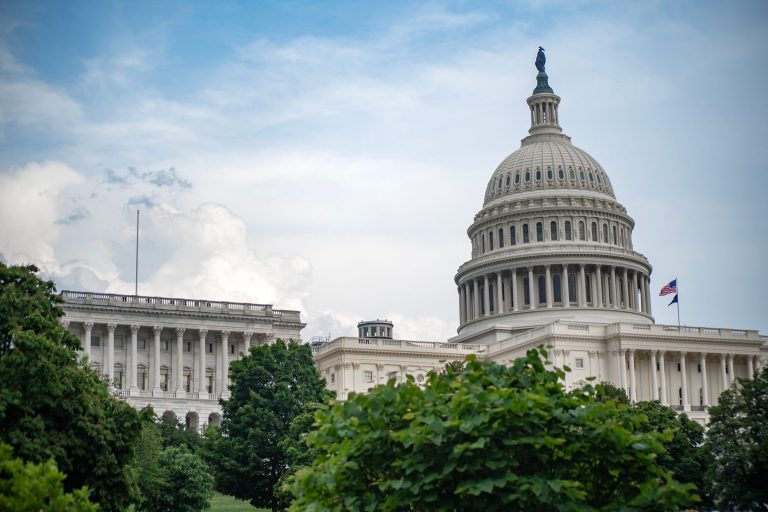
The Republican anxiety in Washington is not purely performative. When Cotton, Sen. Lindsey Graham, and their allies warn that the deal doesn’t eliminate Iran’s enrichment infrastructure — only caps it — they have a point. The Iran Nuclear Agreement Review Act (INARA) of 2015 gives Congress a 30-day window to review nuclear-related executive agreements, and a Congressional resolution of disapproval is already being drafted. Trump can likely ignore it if structured purely as an executive MOU, but the legitimacy fight will be loud. For context on how Trump handles political opposition, the pattern of using institutional pressure to silence critics — visible in everything from questions about his political capacity to the DOJ controversy — suggests the White House will steamroll Congressional resistance rather than negotiate with it.
The deal’s defenders, meanwhile, are papering over three genuine problems:
- Verification asymmetry: IAEA inspectors can monitor declared nuclear facilities. They cannot monitor undeclared ones. Iran has a documented history of operating undeclared enrichment sites — Fordow itself was a covert facility exposed by US and Israeli intelligence in 2009.
- Lebanon enforcement gap: The provision requiring Iran to halt weapons transfers to Hezbollah has no specified consequence for violation. What happens on Day 366 if a weapons shipment is intercepted? The text reportedly calls for “consultations” — which is diplomatic language for nothing enforceable happening.
- The missile omission is not minor: Iran’s ballistic missile program is arguably more immediately threatening to regional stability than its nuclear program, simply because the missiles are operational now. Deferring this to future talks means the deal’s security benefits are incomplete on arrival.
On the Iranian side, IRGC-aligned media immediately attacked the Lebanon and Yemen provisions as surrendering the “axis of resistance” — the network of proxy forces that constitute Iran’s primary strategic deterrent against Israeli and Saudi power. They’re not wrong that this represents a significant concession. Whether Iran’s government can actually deliver compliance on Hezbollah weapons transfers without triggering a domestic political crisis is genuinely unknown.
Four Scenarios for What Happens to the 14-Point Plan in the Next 24 Months
- Scenario 1 — Fragile hold: The nuclear provisions hold, IAEA confirms initial compliance, sanctions relief begins flowing, and oil markets stabilize around $75–80 Brent. But the Lebanon provisions collapse within 12 months when a Hezbollah weapons shipment is intercepted. The US issues a formal complaint. Iran says it wasn’t a government transfer. The deal survives technically while becoming meaningless on its most ambitious provision.
- Scenario 2 — Congressional kill: The Senate passes a resolution of disapproval under INARA, Trump ignores it as a non-binding executive agreement, but the legal battle creates enough uncertainty that European banks refuse to reopen Iranian accounts. Sanctions relief stalls. Iran accuses Washington of bad faith and begins enriching past the agreed cap by month 8.
- Scenario 3 — Full collapse via IRGC sabotage: The IRGC, operating outside Pezeshkian’s authority, facilitates a major weapons transfer to Hezbollah or a maritime incident in the Strait of Hormuz within 6 months. Trump — facing domestic political pressure and a base that never trusted the deal — uses the violation as justification to reimpose sanctions and declare victory on “proving Iran can’t be trusted.”
- Scenario 4 — Durable partial success: The nuclear cap holds for 3–5 years, prisoner exchanges happen as promised, oil markets respond positively with Brent dropping $8–12 per barrel, and the Lebanon provisions remain in legal limbo — technically operative, practically unenforced. The deal becomes what the JCPOA was: a temporary ceiling, not a permanent solution.
| Scenario | Probability (Analyst Estimate) | Key Trigger | Oil Price Impact | US-Israel Relations |
|---|---|---|---|---|
| Fragile hold | 35% | Lebanon provision failure | Brent -$5 to -$8 | Strained but manageable |
| Congressional kill | 20% | INARA review + Senate action | Brent +$4 to +$6 | Netanyahu claims vindication |
| IRGC sabotage | 25% | Maritime or proxy incident | Brent +$8 to +$15 spike | Severe strain, possible military coordination |
| Durable partial success | 20% | Sustained nuclear compliance | Brent -$8 to -$12 | Deep crisis — Netanyahu publicly opposes |
For ongoing analysis of this and related stories, see our US Political News coverage as this deal moves through Congressional review and its first compliance checkpoints.
Fourteen points. That’s what forty-seven years of hostility, two wars-by-proxy, three assassination attempts, and five previous failed frameworks have produced. Whether this document becomes a genuine turning point or the most expensive diplomatic fiction of the decade depends on one thing that no text can guarantee: whether the people who signed it actually intend to honor it — and whether the institutions on both sides that didn’t sign it will let them.
About The Author